

CEO @roadzeninc (Nasdaq: $RDZN). We’re transforming global auto insurance using AI.
New York
Joined December 2009
- Tweets4.5K
- Following3.1K
- Followers806
- Likes12.6K








Pinned Tweet
There are 17 US-listed public technology companies growing revenue at more than 40% a year — Nvidia, Micron, Broadcom, Palantir, CoreWeave, SoundHound, and Figma among them. Roadzen grew 49% last quarter. We're proud to compete with some of the best AI companies in the world.
Most of that list is infrastructure: chips, compute, data centers. We are on the applied side. Our view has always been that the infrastructure goes first, but the story of the coming decade is applied AI in verticals. For us, that means over 4 billion miles of driving, more than 20 million claims processed, and roughly 3 million more every year — running across the US, UK, Europe and India, inside insurers, automakers and fleets.
We have been building @roadzeninc $RDZN for over a decade. Our ambition is to dominate the next one!

Rohan Malhotra retweeted

Lots of VCs kindof sound like this: "Your basketball team doesn't have a moat, any healthy human can throw the ball into the basket thingy. "
People who have not run companies before don't understand how much the team matters more than some imagined structural moat.
Rohan Malhotra retweeted

‼️ BREAKING: The private keys of 8 certificates from Indian certificate authority eMudhra were compromised, Mozilla says. Firefox blocked them within 3 hours.
Each key should be a 116-digit number, but one was just 4.
Anyone can guess them and forge HTTPS certs for any website.


this is bad. also it probably takes more effort to create a random number generator than just use sha 256 for encryption so no clue why the hell they did it this way.

‼️ BREAKING: 8 Private keys belonging to eMudhra intermediate certificate authorities (CA) have been compromised.
Chrome and Firefox blocked the affected certificates within hours. Go, NSS, and other software have issued fixes.
Full details - thehackernews.com/2026/10/ei…


Rohan Malhotra retweeted

cricket 07 with an online multiplayer mode. play with your friends
all you need is a web browser
link: cricket07.dhaiwat.com


Rohan Malhotra retweeted

Technical moats are mostly over at this point. If you’re building something that is meant to be durable, the only moats now are:
• Proprietary data
• Network effects
• A physical component

people asking whether it is practical or not .. none of it matters.. its furthering the frontier and its a cool demo .. infact coolest car launch of all time. and i always tell people @_sachinbansal 's iconic line when they say yeah the tech exists and its been doable for a while etc.. "tu bana le phir" ie "go make it yourself then"

Rohan Malhotra retweeted

interpretability might be the most important scientific problem in the world right now, as I don't think we can solve alignment if we don't know what we're building. I think I have good news about it. I co-authored early work in mechanistic interpretability at OpenAI and came away pessimistic, because neural networks appeared to fold into arbitrary tangled knots. years later, I started openai's first large-scale automated interpretability project, finding about 2% of neurons legible with the primitive tools we had
with modern agentic tools and a much closer look, the picture looks totally different. the vast majority in models up to trillions of parameters are legible, and their circuits beautiful. many famous examples of tangled neurons turned out to be misunderstood. The roadblocks I expected mostly aren't there. I now think ambitious interpretability will be solved by the time we need it most, and possibly quite soon, as automated scientists keep improving. it may be a bitter lesson for interpretability: the simple thing, at absurd scale, works
already-clean.goodfire.com/


This is the hardest role to
Recruit for. Hector, you should consider training people on how to run the playbook. There is insatiable demand for performance marketing on b2b all verticals. Excellent video!

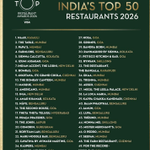
TIL that most of India's best restaurants are in Mumbai/Goa or maybe that's where the editors of these lists live because this is some elitist bs.
Give me the lunch served at Amritsari Stuffed Kulcha Association anyday over these 50.


xitter.cf/coatuemgmt/status/2107…
agents surpass humans in browsing data for the first time. humans will be less than a micron of internet traffic in less than 5 years.
My own experience with @openclaw - and the way it’s gone viral in China—tells me we are dramatically underestimating the compute required for the agent era.
Everyone focuses on GPUs. That’s only one layer. The real constraint will be the entire stack: power, HBM memory, advanced packaging, networking, CPUs, cooling, land, permitting.
With long-horizon agents, AI stops being something you prompt occasionally and becomes always-on infrastructure for intelligence.
As every person and company runs multiple agents continuously, inference demand will explode by orders of magnitude—and it won’t just be Big Tech or model builders. This will be distributed global demand from individuals, startups, enterprises, cars, robotics, and embedded systems.
We are about to witness the largest industrial buildout of compute and energy infrastructure the world has ever seen.
Outside of Big Tech, I’m not sure people are fully prepared for it.
We did a similar college project @CarnegieMellon

The serious answer to how Shazam worked is it took the peaks of a spectrogram of short clips of every song, find the peaks from the highest amplitude bits, hash it with the value being (time stamp, track id) and then the actual recognition is a hashtable lookup.
We did this for a college CS project. The original paper is fantastic:


Rohan Malhotra retweeted

Cool eval. Simply ask an LLM “Land or Water?” and give it a latitude and longitude coordinate as text. Ask 16,200 times, plot as image. The models know. From compressing the internet.


Groucho Marx said I don’t want to belong to any club that will accept me as a member. Except these legends - pls count me in.


