

Board Member @ Insignis TFI | Executive MBA at Chicago Booth Long-short and long-only funds. No recommendations. No investment advice. Private opinions.
Warsaw, Poland
Joined February 2011
- Tweets845
- Following856
- Followers1.9K
- Likes1.6K







Ryszard Miodoński retweeted

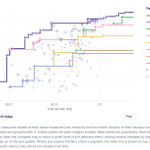
Our take on Jevons Paradox right now:
Yes, it's holding.
But it's noticeably weaker than at the start of 2026.
This has happened in our data before (actually this time last year) and new, major launches / use cases turned it around.
Will that be true again?


Ryszard Miodoński retweeted

All that matters right now is the Fed & AI. Time for a rant and some key questions
First, the Fed is making a huge mistake right now. They are way to tight and all you have to do is look at housing or low quality credit to see that. Real pain. Second, there is no inflation problem outside of oil. Assume oil goes sideways from here, y/y impact from energy is close to zero. Assume we get some halfway resolution and Brent goes back to $70-80 and we have inflation below 2%. Sure say you might hike. I would too if oil goes to $125. But this is 100% a wait and see territory. Talking about 50bps hikes is irresponsible. Don't talk about forward policy in a world where inflation mostly depends on whether a terrorist nation decides to blow up their neighbors or not.
On AI. I don't think it's reasonable to call it a bubble. Earnings are there. Demand is there. Simply a less certain future. I think growth continues unabated but hard to know if it's 10% or 30% growth. Key questions for me are
1) What does China do to the competitive landscape in 3-5 years. Extremely high margins and pricing power have what have made this possible
2) A lot of these earnings actually came from borrowed money and newly issued equity. If that it cut off (debt markets are) then earnings naturally have to come in too
3) Unclear what a shift to cheaper open source models means for capex. Even rationalizing compute to older models will slow growth.
4) How much do regulatory bottleneck slow things down? I think this is less important - if there is demand we will just build them elsewhere.
5) Is the current level of capex sustainable? Looking at current spending, expected depreciation, and then total AI revenue. I haven't seen a good high level summary. Everything I have read suggests that the hyperscalers are building and locking in growth at a 15% ROI. However a lot of that is from unprofitable VC and major labs. At some point people have to pay for it. At some point companies have to choose between compute and labor and so far they are being reluctant to ramp up.
5) Relationship between 3 and 4 above matters a lot as well which will also slow the growth rate.



Ryszard Miodoński retweeted
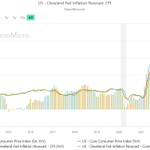
Oil is down 20% since the CPI data released today was collected... it's not that useful, IMO
Ryszard Miodoński retweeted

Hrabstwo Loudoun, Wirginia, jest największym skupiskiem centrów danych na świecie.
💰 W roku fiskalnym 2026 tamtejsze centra danych wygenerowały 1.2 mld dolarów wpływów z podatków od nieruchomości i majątku ruchomego przedsiębiorstw (tj. wyposażenia centrów, w tym drogich GPU), co stanowiło 39% całego budżetu hrabstwa.
1.2 mld dolarów wpływów podatkowych dotyczy majątku nieruchomego i ruchomego, a nie podatków od zysków operatorów. To istotne, ponieważ pokazuje, jak duże dochody może uzyskiwać lokalny samorząd z samej obecności infrastruktury centrów danych, niezależnie od tego, gdzie operatorzy rozliczają swoje zyski.
Według oficjalnych danych hrabstwa na 1 marca 2026 r. znajdowało się tam około 233 budynków centrów danych, istniejących lub będących na różnych etapach budowy.
Większość istniejących centrów danych w hrabstwie Loudoun powstała w latach 2019–2024.
Przypadek Loudoun pokazuje, że centra danych nie muszą być wyłącznie obciążeniem dla lokalnej infrastruktury. Mogą stać się jednym z głównych źródeł finansowania samorządu, pod warunkiem że lokalne podatki nie zostaną nadmiernie ograniczone ulgami, a koszty rozbudowy sieci i usług publicznych pozostaną pod kontrolą.
Rządy stanowe i lokalne w hrabstwie - Demokraci. Są głosy oporu, zwolennicy moratoriów, ale to za rządów demokratów bardzo intensywnie rozwijała się tam infrastruktura, a kasa z podatków od nieruchomości i wyposażenia płynęła coraz większą do budżetu.


Ryszard Miodoński retweeted

Open models continue taking share. Not just tokens, more $ now spent on open models than OpenAI.
Positive for the AI infra trade.
Open models taking share shift $ margin from the model layer to the infra and app layers.

Looks like today may be a record day for token volume % of open models on Vercel AI Gateway:
🟦 Open 78.4% 🟨 Closed 21.6%
While spend 💲 usually tells a different story, #3 and #4 today are Moonshot AI & DeepSeek. Adding Z.ai, their combined spend surpasses OpenAI (#2).
(Do note that's the spend for inference of the model across providers (mostly in the US), not revenue going directly to the open weight labs.)


Ryszard Miodoński retweeted

We generally agree with Gavin. To recall, 2 years ago OpenAI dissolved their Superalignment team. One of the reason not discussed enough at that time, was that team didn't get enough compute to do their work. We are at a similar juncture now.

Ryszard Miodoński retweeted
More on AI pacing:
Sarah Friar CFO of OpenAI yesterday on CNBC: “from where I sit today there is so much opportunity to drive growth that I am still highly focused on getting more compute to keep that flywheel going.”
Sachin Katti VP of Compute Strategy at OpenAI @sk7037 yesterday: “The way we will make sure frontier models are safe and aligned is by spending compute. So the counterintuitive point is that we’ll need even more compute to make sure future models are more safe and aligned.”
If you thought “pacing” was negative for AI infrastructure demand, think again. Almost as bullish as open-weight AI taking share but not quite.
Ryszard Miodoński retweeted

Tesla has just officially unveiled the European version of the Tesla Semi.
• Range: 550 km (~342 miles)
• No traditional side mirrors like on the U.S. version
• Similar headlight setup to the Model Y Standard
• Energy consumption: 1.0 kWh/km (1.61 kWh/mile)
• Fast charging: Up to 60% of range in 30 mins
• Drive power: Up to 800 kW
• Curb weight: <9,100 kg (<20,000 lbs)
• Gross vehicle weight: 40 metric tons
• ePTO (electric power take-off): Up to 25 kW
European deliveries start in 2027.

Ryszard Miodoński retweeted
Semi-hot CPI and the USD weakens (after the dust settled) and risk assets higher
The pain trade is lower USD, lower oil and higher equities here. It will surprise everyone.
Ryszard Miodoński retweeted

GPT-6 Astra vs. Fable 5.1, a short version:
Fable has better taste and judgement. It's also better at "talking to the business" and makes people feel smart, so many rate it too high.
Astra is a better, more efficient coder with a stronger logical reasoning. But it's not that smart at making product decisions. Occasionally, it will "fix" irrelevant issues and make your solution more complex than it needs to be.
The strongest combination: the two models working together.
Ryszard Miodoński retweeted

Google says their payback period on AI servers in aggregate is less than 2 years, and on their own silicon is 1 year.
$GOOGL