Neuroscientist studying the dopamine system, yogi, MtG player, lapsed homebrewer. 🧠🔬🚴🏼🍻🇺🇸🇭🇺
New York City
Joined October 2010
- Tweets4.7K
- Following1.6K
- Followers619
- Likes30.1K





Rudi Faust retweeted

A few days ago, Orbán’s brother was detained in a people-smuggling case, while yesterday 20 million dollars were found buried in the forest by one of Orbán’s ministers. Dear Victor, I’ve always been an admirer of your creativity, but now I must say I’m impressed as never before
Rudi Faust retweeted

Let's be honest about Texas.
Republicans run that election from top to bottom. The governor, the secretary of state, most of the county officials. Mail-in voting is limited mostly to seniors and the disabled. You need ID to vote.
Outside of Florida, there's no harder state in the country to steal.
And Talarico didn't win by a hair. He won by about 1.2 million votes. Nobody hides a 12-point swing.
Two full weeks of early voting, and not one Texan came forward saying their paper ballot didn't match their vote.
For years we've said Texas and Florida are the model for clean elections. We were right.
That's exactly why we have consider this loss is on us, not the machines.
Rudi Faust retweeted

This is one measure of the growing effectiveness of the Ukrainian military over the past year. That Ukraine has also almost halted Russian ground advances, and imposed a 1.4:1 killed:wounded ratio on the Russians shows that Ukraine may have developed the most effective, lethal military force in modern history. This is why Putin needs Trump, Kushner and Witkoff to help him. What does this mean? 1/12 🇺🇦 🧵
Rudi Faust retweeted

I have a major result to share.
I’ve found conclusive forensic evidence that the top 4 Chinese AI labs—DeepSeek, Moonshot, MiniMax and Ant Group—have built their newest models on NVIDIA’s most advanced Blackwell chips, which are barred from export to China.
This sounds insane, but I discovered that almost every AI model carries a hidden signature of the GPU that trained it. When a model is first set up, the starting values of its weights are laid out in a pattern that depends on the exact GPU. Each combination of GPU and seed number produces a unique pattern—a sort of fingerprint of the hardware used to create the model. Traces of that pattern survive training into the published model.
Again, this evidence isn’t based on any insider information or leaking. It’s based on a forensic analysis of the model weights released by the companies themselves.
I searched more than six trillion combinations of chip layout and seed number and matched them to open-weights models. In doing so, I found conclusive evidence that six Chinese AI models—including DeepSeek-V4-Pro, Kimi K3, and MiniMax-M3—were initialized on NVIDIA Blackwell systems. Four of the models match Grace Blackwell, the GB200 and GB300 parts in NVIDIA’s flagship liquid-cooled rack-scale systems.
I then verified these results on real hardware. Running unmodified PyTorch with the seeds I’d recovered, a Blackwell B300 reproduced DeepSeek-V4-Flash’s untouched starting weights bit for bit, and a rented GB200 reproduced Kimi K3’s to a correlation of 0.999995. A Hopper H100 reproduced none of DeepSeek-V4-Flash’s, and changing the seed by one broke the match. (DeepSeek’s seed is 953049583 by the way.) The method also was verified to match 24 known open-weights models to the hardware that developers said they used.
It is exceedingly unlikely that these results are a coincidence. Across six trillion combinations, the best accidental match should reach only about 8 sigma (i.e., eight standard deviations above what random chance would produce). The real matches range from 49 to 1,385 sigma, and even the weakest single test hits 20.
These were data-center-scale training runs. With some analysis of release schedules and model details, I estimate that the largest, Kimi K3 and DeepSeek-V4-Pro, used 2,000 to 3,000 Blackwell GPUs each. Clusters of this size cost on the order of $150 to $200 million each to buy, and across these labs alone would add up to more than half a billion dollars of export-controlled GPUs, not counting experimental compute or otherwise. It’s quite likely that we see multi-billion dollar expenditure on export-controlled GPUs.
I am highly confident in this result, and it has been independently verified by senior researchers at OpenAI and Anthropic. You can read the full report at unemploymentlabs.com/checkpo….
There is much more I’ve identified about these models through other forms of checkpoint forensics like this, and will have more to share soon.

Rudi Faust retweeted

Months after a fund tied to Donald Trump Jr. and Eric Trump put about $30 million into a nearly bankrupt spa company, the Trump administration awarded that company nearly $40 million in federal contracts to screen for Ebola.
The company made most of its money from airport spas and waxing salons.
It had never worked with Ebola.
It had never worked overseas.
Yet part of the money is for work in the Democratic Republic of Congo, where Ebola has killed more than 5,000 people this year. The company's CEO said, "I'm not sure we can do it."
This keeps happening. The same Trump-linked fund invested in a drone company, and five months later that company got an Air Force contract worth up to $90 million. A startup linked to Trump Jr. got a $620 million Pentagon loan after a top White House aide stepped in.
Their fund buys in, and federal money follows. Taxpayers foot the bill, and with Ebola, our safety is on the line too.
This is all totally corrupt.
Americans deserve answers under oath, and our conflict of interest and procurement laws must be enforced.
propublica.org/article/trump…

Rudi Faust retweeted

The questions surrounding Nvidia/Huang, China, the Commerce Department (Lutnick), & Trump are one of many reasons why the US government shouldn't have a financial stake - a cut of overseas sales, equity stakes, etc - in the same firms it regulates.
Today it has DOZENS.

Rudi Faust retweeted

The talks in Abu Dhabi have ended. A few observations.
The fundamental obstacle to ending this war is that neither belligerent currently sees an available peace settlement that would secure its essential interests at a lower cost than continuing to fight. Negotiations can arrange prisoner exchanges and address other practical questions. But they cannot manufacture a political basis for peace where none yet exists.
For Putin, ending the war with a “victory” reduced to conquering the Donbas would create an enormous problem of historical judgment. Around 1.5 million Russian casualties, killed and wounded, to acquire another devastated stretch of Ukraine? Future generations of Russians might remember Putin as the opposite of a strategic genius: the ruler who squandered his country’s people, resources and international position for gains grotesquely disproportionate to their cost.
This helps explain Moscow’s determination to turn negotiations about its war against Ukraine into negotiations about a “new European security architecture.” Russia needs a prize larger than the Donbas. Weakening NATO, pushing the Americans out of Europe and acquiring a veto over its neighbours’ sovereign choices would provide one.
The historical precedent is clear. At the Berlin Conference in February 1954, Molotov proposed a European collective security system that would have displaced the Western alliances and relegated the United States to “observer” status. Today’s vocabulary is different; the strategic ambition is familiar. If war against Ukraine could deliver the displacement of American power from Europe, the Kremlin could present it as a historic success and draw dangerous conclusions about what further wars might achieve.
For Ukraine, the calculation runs in the opposite direction. However appalling the costs of resistance, capitulation could still cost more. What is at stake is the survival of an independent state and the continued existence of Ukrainians as a distinct political nation.
Putin’s account of Ukrainian history treats a separate Ukrainian identity as something cultivated by Russia’s enemies, including Polish elites and Austrian authorities. The dangerous implication is that what was supposedly constructed can be dismantled. Deportation, killing and forced Russification become instruments for undoing a nation whose independent existence the aggressor refuses to accept. From Kyiv’s perspective, surrender would therefore offer no reliable escape from violence. It could simply remove the means of resisting it.
Europe already has a security order worth defending. Its principles include sovereignty, territorial integrity and the freedom to choose alliances. Russia’s violation of those principles is a reason to enforce them, not to replace them with arrangements requiring Russian permission.
Nor does the United States have a compelling national interest in surrendering its position in Europe to Russia. Its European presence sustains American influence, military reach and alliances. Whatever commercial opportunities Trump, Witkoff or Kushner may see in an accommodation with Moscow, those opportunities do not establish that such a retreat would benefit America. A deal attractive to individual negotiators is not necessarily a strategic bargain for their country.
That is the underlying impasse. Moscow wants a peace that converts aggression into a wider strategic victory. Ukraine needs a peace that preserves its ability to survive. Europe cannot accept Russian control over European security, and America has no sound strategic reason to facilitate it.
Until those calculations change, the war is likely to continue. Calling the process a negotiation does not make the interests compatible. Without that compatibility, we will keep getting diplomatic choreography and, around it, this ridiculous circus.
Rudi Faust retweeted

Massie: "I hope Hegseth addresses the 8 articles of impeachment, and doesn‘t get up and misquote the Bible in Quentin Tarantino fashion and do some pull-ups and call everybody fat and gay. I may have just given you half his speech, I don't know."
Rudi Faust retweeted

Thank you, Mr. Kushner. Those five principles are important. However, Moscow subscribed to these principles in documents signed in 1975 (Helsinki Final Act) and 1990 (Charter of Paris).
The problem isn't agreeing to principles, but Moscow's failure to abide by them. 🧵 /1

President Trump today advanced an important discussion with several European leaders about the need for a broader European security architecture that can help establish the conditions for lasting peace.
Building on his leadership and the substantive work undertaken this week in Brussels with Ukraine, NATO, and our European partners, @SEPeaceMissions and I wanted to share some of the objectives guiding our ongoing discussions.
For more than 30 years, Europe and Russia have struggled to establish a sustainable security framework. Decades of mistrust, competing security concerns, and the devastating consequences of this war make this an extraordinarily difficult challenge, but one that is essential to lasting peace.
Our objective is to develop practical arrangements that address the security concerns of all sides, reduce the risk of future conflict, and create a more stable and predictable security environment.
We are exploring five principal goals: permanent security consultations, reliable crisis communications, greater military transparency, reciprocal measures to reduce escalation risks, and an enduring framework for long-term European security and stability.
Any arrangements must fully respect the sovereignty, territorial integrity, and independent decision-making of every nation. Each country will retain authority over its own security and alliances, and no country would have a veto over another’s sovereign choices. NATO will remain central to European collective defense, and this initiative would build upon existing institutions and commitments.
We will continue consultations through the Shell Bay format with Ukraine, NATO, the EU, and our European partners, expanding engagement to ensure that all relevant perspectives and ideas are considered. We will also engage Russia as part of the peace negotiations.
Next week in Abu Dhabi, the United States will convene the first trilateral peace discussions with Ukraine and Russia since February. All parties remain intensely engaged in preparing for substantive and productive negotiations. We will consult closely with our European partners on the sidelines and, if progress is made, aim to move toward a broader multilateral format with their direct participation.
These ideas continue to evolve, and we welcome thoughtful input. Creating the right structure will be critical to ending this war and transitioning from conflict toward conditions that make possible a durable peace.
This is difficult, detailed work. There are no easy solutions. But the opportunity to help end this devastating war and build a foundation for a more peaceful, secure, and prosperous Europe for generations to come makes it a challenge well worth undertaking.
We will see how these discussions develop and continue working intensively with all parties toward President Trump’s objective of a comprehensive and lasting peace.
Rudi Faust retweeted
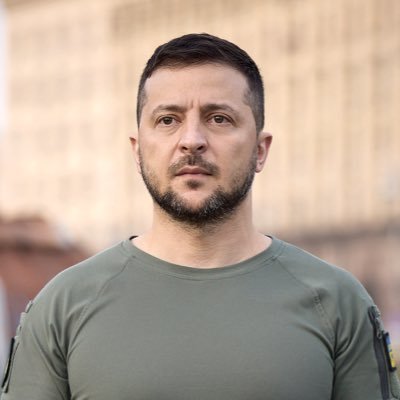
When Putin seized Crimea, both Europe and America were quite openly making calls, holding meetings, and sending signals to the Ukrainians who were in power at the time that there should be no escalation – let's just keep things friendly and leave things as they are for now. And we lost Crimea. After that, we lost part of Donbas. But the shooting in the east continued. There was no peace.
People think we were always helped. That is not true. Help started coming after the full-scale invasion, but that was after eight years of Russia occupying our territory. That is a long time to figure things out and understand that Putin has no intention of giving anything back to us.
At one point, some Europeans asked me: “Why do you think that if you withdraw from Donbas, he will go further?” And I answered: “Because at the beginning of the war, he wasn't seizing Donbas. He came to the capital. He seized parts of Zaporizhzhia and Kherson regions, Kherson itself, and Kharkiv region.” We have retaken a lot of territory, but he had seized different parts of our country. And now they want us to give them something because they are unable to seize it. We may have a smaller territory, less money, and fewer weapons, but we still have more dignity than many others. We will do everything we can to end this war, but it must end in a way that preserves our dignity.
From an interview with ZDF. (2/3)
Rudi Faust retweeted

Vice President Vance is mistaken. The reason we Republicans lost yesterday is not just the war in Iran. Yes, the resulting higher fuel prices contributed to the inflation that infuriated Americans who were promised lower prices by this administration. But the war is not the only cause. Arbitrary and capricious tariffs directly raised costs for all American consumers. Lower income Americans can least afford them. Many voted for Democrats yesterday.
Tariffs should be a central part, but only part, of the “honest conversation” VP Vance wants Republicans to have about the future of our party. For instance, we all seem to oppose government-owned grocery stores. But are we ok with government ownership of semiconductors companies and rare earth miners? We oppose rent controls. But do we support price controls on medicines and credit cards?
The bigger question is does the Republican party now agree with the left that we need a large, powerful central government to run the economy, allocate capital and control prices? Or, do we believe that free men and women should be able to engage in commerce as they see fit and that a free enterprise system will create a higher standard of living and the greatest opportunities for the most people as it always has?
Let’s have an “honest conversation.”

One of the things the data analysts on our side obsessed over was "composition"—whether the electorate looked close enough to 2024 for Republicans to win. And despite polls that showed a Democrat blowout, the data kept on telling us the same story: in some states turnout was merely OK, in other states it was downright amazing, and in no state was it catastrophic. There was a genuine sense of optimism on our team: our people were showing up.
So, I asked the smartest data guy I know, does that mean we're going to shock the world? "No," he told me. "We might do better than the polls suggest. But the data is telling us that a lot of Trump/Vance 2024 voters are pissed and planning to vote for the other guys. Our voters are turning out, but they may not vote for us."
Well, that looks prophetic now. Our voters did show up. In Florida, for example, the electorate was 9 points more Republican than Democrat, just a couple points worse than 2024. Undoubtedly there were places we could have done better on turnout. But the main problem is not turnout. The main problem is that many people who voted for Trump/Vance in 2024 voted for Democrats in 2026.
There will be a lot of infighting and arguing over what happened and why that is. One of the pollsters I really respect told me that our economic messaging wasn’t sharp enough down the stretch. I’m sure that’s true.
But the real reason we lost is obvious to almost everyone.
Another pollster—one of the smartest people I know in politics, told me yesterday we’d lose the generic ballot by 13 points. I felt negative going into Tuesday, but even I was shocked by this. In his polling, he saw that a lot of Trump 2024 voters were angry and planning to vote for Democrats. He asked those voters who had abandoned us what would cause them to come back on our team. The top four answers, accounting for nearly all of the responses were:
1) End the war
2) Focus on cost of living/inflation
3) Put America First
4) Change our relationship to Israel
Our voters showed up. And the above four reasons are why many of them voted for Democrats. This is according to a pollster who nailed the results. While many spent Monday attacking Rachel Campos Duffy for calling for a diplomatic resolution to the conflict, it turns out her political advice was sound. (She’s also a great person.)
In the next few months, there's going to be a lot of gaslighting. Expect to hear any number of establishment politicians say the solution to our woes is amnesty. I'm open to the idea that we should change enforcement—by focusing more on businesses that hire illegal labor, for instance. But anyone pushing amnesty is lying to you.
The reason we lost is the war. The president himself said so last night.
If you'd like to argue it was worth it, that losing the Senate for the next 6 years was worth it, then do so. Argue it was a worthwhile cost to pay. Agree or disagree, that's at least honest.
But everyone knows why we lost. And any honest conversation about where we go from here must start there.
I remain hopeful about our country. To the people who are pissed off and want to say, “I told you so”: you’re right, you did tell us so. Take that energy into electing Republicans who share your worldview. To the people who are just pissed at the results, you should be. Let’s take that anger and get back to the work of saving our country.
Rudi Faust retweeted
Coming soon to an inbox near you: "it wasn't the tariffs" and "real tariffs haven't been tried." Don't buy it.
A) It wasn't ONLY the tariffs, but the polls/results are clear: they were a BIG anchor.
B) This IS real tariffs. They raise prices BY DESIGN, fuel cronyism/carveouts, hurt smallbiz & many manufacturers, alienate allies, & cause many other problems/distortions - especially when done by executive action (which boosts uncertainty).
There's a reason these taxes have been mostly abandoned - by the US and every other rich country. The GOP should stop listening to the protectionist fundamentalists (and cronies) and abandon them too.
Rudi Faust retweeted

Per @avikroy, I hope this a turning point for the contemporary GOP regarding nativism and that 'heritage American' crap. Yes, racism has a long history in the United States (older than the country), but our great achievement has been to say fuck you to all that. As Reagan said, 'Anyone from any corner of the Earth can come to live in America and become an American.' @RonaldReagan @ReaganInstitute

I, a lifelong Republican, voted against every Republican on my ballot who endorsed @BoFrench: Abbott, Paxton, Dawn Buckingham, and French himself. All 4 of them lost last night.

Rudi Faust retweeted

Today, Ukraine’s independent anti-corruption agencies, NABU and SAPO, released investigative materials that have shocked the country.
But beyond the horrifying details, they reveal four important truths about Ukraine’s fight against corruption.
When Ukrainians created NABU and SAPO, we imagined they would investigate high-level white-collar corruption involving ministers, oligarchs, and senior officials. Few of us imagined they would uncover allegations of such brutal organized crime.
The recordings released as part of Operation Carthage-2 include discussions of attacking investigative journalists and activists with acid, assaulting a Mariupol defender and former prisoner of war with hammers, and accounts of people being brutally beaten, including a woman attacked with a metal pipe on the street at night.
These materials expose something much larger than a criminal investigation.
First, independent institutions inevitably begin exposing corruption within the old institutions.
NABU and SAPO were created to investigate top-level corruption. Yet some of that corruption involve law enforcement officials protecting organized criminal networks rather than dismantling them.
Second, organized crime systematically seeks protection across the entire unreformed law enforcement system. Earlier investigative materials pointed to alleged prosecutorial protection of fraudulent call centers. The latest materials raise questions about connections involving the Security Service of Ukraine (SBU) and the Ministry of Internal Affairs. This is expected.
The alleged criminal activities protected by corrupt law enforcement officials extend beyond fraud to drug trafficking, counterfeit currency, and violent attacks.
Third, fighting corruption is part of Ukraine’s struggle to break with its Soviet and Russian past.
The Soviet legacy left behind criminal networks operating across borders, often intertwined with security and law enforcement structures.
The alleged involvement of a Russian criminal figure alongside Ukrainian officials illustrates why dismantling these networks is also a matter of national security. There is also a mention of how Russian FSB was used by criminals to attack a NABU detective.
I repeatedly explain this during international meetings: Ukraine’s anti-corruption reforms are not merely about good governance. They are part of our strategic separation from Russia and the Soviet system.
Fourth, the political dimension demands further investigation.
The recordings contain references to political contacts, including a former interior minister, as well as a former health minister and possible meetings with MP David Arakhamia.
Such references do not establish wrongdoing by those politicians. But they raise legitimate questions about the political connections that criminal networks believed they could rely upon.
Those connections must be investigated further.
Ultimately, the question is how deeply has organized crime penetrated Ukraine’s law enforcement and political institutions?
This is precisely why the independence of NABU and SAPO matters. Ukraine must have institutions capable of investigating powerful networks, regardless of their connections.
As a member of NABU’s Public Oversight Council, I am proud of the work these institutions are doing and grateful for their courage.
And I am happy that Ukrainians successfully defended independence of NABU and SAPO by peaceful protests in the streets during a full-scale war.
The work of NABU and SAPO is about our democratic resilience and defending our sovereignty.
Rudi Faust retweeted

A couple of thoughts on foreign policy after the historic Democratic wave (sorry if any of this is depressing; we political scientists are almost as dismal as economists):
1. Do not expect a radical departure from Trump’s pro-Russia stance without substantial Republican support. The president’s Article II powers give him substantial control over diplomacy and the executive branch’s conduct of foreign policy, so Democratic control of Congress will not by itself change his Ukraine policy. Congress can investigate the administration, shape funding, condition aid, and pass legislation tightening sanctions. But any bill Trump opposes would face a veto, and overriding it would require a two-thirds majority in both chambers. The Lindsey O. Graham Sanctioning Russia and Iran Act gives the president broad waiver and termination authority, leaving him considerable room to avoid its sanctions, which is why I was skeptical of it.
2. On Iran, Congress has more leverage because Article I gives it the power to declare war. The War Powers Resolution of 1973 requires the president to end unauthorized hostilities within 60 days of submitting a report to Congress, unless Congress declares war or specifically authorizes the use of force. The president may extend that period by up to 30 days only if he certifies that military necessity requires time to withdraw U.S. forces safely.
If the 60-day period has expired without congressional authorization, Congress can invoke the resolution’s withdrawal requirement, though enforcement of the law has been contested. In practice, however, Iran’s actions in the Strait of Hormuz mean the United States is engaged and will likely need to remain involved to keep shipping lanes open. Congress can scrutinize how Trump prosecuted the war and use its oversight and funding powers to press his administration to end the conflict through diplomacy, but there are no easy ways to clean up the mess Trump has made in the Persian Gulf.
3. Article I gives Congress the power to impose tariffs and regulate foreign commerce, though Congress has delegated substantial tariff authority to the president through legislation. Republicans chose not to use their constitutional powers to rein in Trump. Democrats can seek to reclaim that authority by amending or repealing the statutes behind his tariffs. Any such bill, however, would face Trump’s veto, which Congress could override only with two-thirds support in both chambers. That would require significant Republican support. I’m optimistic some Republicans may come on board, given that tariffs were one of the reasons the party suffered such major losses in the midterms.
4. It is very unlikely that Trump could withdraw the United States from NATO unilaterally. Federal law bars withdrawal without either the consent of two-thirds of the senators present or an act of Congress, although the president’s constitutional authority to withdraw from a treaty remains legally contested. He can still weaken NATO by reducing U.S. forces in Europe or changing their posture and role, though Congress has restricted some troop reductions through funding limits. Congress can scrutinize his decisions and use legislation and appropriations to constrain them. Article II makes Trump commander in chief and gives him broad authority over the military’s operations, while Congress retains powers over funding, military regulation, and authorization for the use of force. That leaves him considerable room to reshape America’s military posture even if he cannot withdraw from NATO outright.
5. Should the PRC blockade or invade Taiwan, Congress could authorize U.S. military action through an AUMF or declare war. The Taiwan Relations Act commits the United States to maintain the capacity to resist coercion, but it does not guarantee that the United States would defend Taiwan. Trump could veto an AUMF or declaration of war; Congress would need two-thirds majorities in both chambers to override him. Even with authorization, Trump would retain operational control as commander in chief. If he chose not to commit U.S. forces, America might not intervene militarily.
The unfortunate reality is that Congress has delegated far too much authority to the executive branch, and Trump has abused those delegated powers. The Constitution also gives the president substantial leverage over legislation through his veto, which Congress can override only with two-thirds support in both chambers, and broad authority over foreign policy. Congress retains important powers over funding, trade, and the use of military force, but those checks may prove inadequate to restrain Trump. In a deeply interconnected world, security and economic challenges abroad can have far-reaching effects at home, giving him ample opportunity to further damage America’s standing and prospects during the remainder of his term.
Two changes are needed to prevent another Trump-like figure from wielding power in the same way. A future Democratic administration should work with Congress to restore legislative authority in areas where Congress has delegated too much of its Article I power to the executive branch. Congress should also give serious consideration to a constitutional amendment limiting the broad discretion the president now enjoys over foreign policy.
Rudi Faust retweeted

Yes. This is a big part of why TNG has broad appeal: the progressivism is tempered by a conservative emphasis on duty, the chain of command, respect for the law etc. A very 80s / early 90s combination.


Rudi Faust retweeted

Mediazona has named far fewer Russian deaths than Ukraine has counted casualties, but the two correlate (r = .98 through mid-2025).
Mediazona adds names months or years late now, while Ukraine counts them immediately and counts both killed and wounded. Additionally Mediazona can’t trace every death or date ~6% undated), so it makes sense the total is much lower.

ALT Bar chart of Russian named dead by month of death, colored by year added, with Ukraine's count as a line. Source: BBC Russian, Mediazona, and Ukraine General Staff @smirkley

Rudi Faust retweeted

So many people seem genuinely astonished by this local ceasefire in Oleshky, where Russian occupation and the fighting have driven the city into a full-blown humanitarian catastrophe.
Turns out, all it takes is an order from the Kremlin, and Russians and Ukrainians stop shooting at each other. They can calmly and civilly arrange the evacuation of innocent civilians facing starvation, even allow Ukrainian and American journalists to be present on the ground, and so on.
Well, duh.
There is not, and never has been, a single adequate, rational, even remotely sane reason to wage a war aimed at destroying Ukraine. This is the stupidest, most brainless, absurd, pointless, contrived, and deceitful war in human history.
The Kremlin wanted to give Donald Trump a little gift ahead of the elections, so the Kremlin gave an order to put the bloodbath on hold for a few dozen hours.
All it would take is a single order from the Kremlin, and not only would a local ceasefire become possible, but the entire war would end. Just like that. Instantly.
And 95% of Russians wouldn't give a single damn. They would happily accept absolutely anything as yet another "great victory of Russian arms," provided that's how state television explained it to them.
And with a snap of the fingers, all those insane fairy tales about "NATO expansion," "Nazi Satanists," the "multipolar world," "historical Russian lands," and all the rest of that bullshit would simply vanish into thin air.
The problem is that, in this insane, upside-down looking-glass world, absolutely everything is being done to encourage a megalomaniacal maniac, driven mad by impunity and boredom, to never, ever, under any circumstances stop the war, but to keep it going indefinitely.
Instead, he is constantly appeased and rewarded for it.