

find me on bluesky- https://teapawt.org/t.co/ui8mJXzfDw 🥳
tweets/rts/likes all my own
Joined July 2021
- Tweets2.2K
- Following459
- Followers320
- Likes2.8K




Just here to say that yep, I survived intern year and am into R2 year, and that the REBOA debates still give me a chuckle hehe
1
67


Sandra Loza, MD MPH (she/hers) retweeted

Many residents, when asked what they’re going to do after finishing, answer by saying ‘just’ general surgery.
No one ever says ‘just’ pediatric or ‘just’ vascular surgery.
General surgery seems to have an identity issue and it either needs to be legitimized or to disappear.
Sandra Loza, MD MPH (she/hers) retweeted

📊 Mirizzi's Syndrome Classification
Types I-V: Progressive compression of biliary tract
Type I: External compression
Type II: Fistula <⅓ duct diameter
Type III: Fistula >⅔ duct diameter
Type IV: Complete wall destruction
Type V: Complex with cholecystoenteric fistula



Sandra Loza, MD MPH (she/hers) retweeted

The looming physician shortage!
The numbers are from the American Association of Medical Colleges or AAMC.
• The number of active physicians is 1,010,892
• The number involved in direct patient care is
851,282
• 23.4% are 65 and older
Almost 1/4 of all physicians are senior citizens and will retire soon or become unable to work.
There has been a residency cap since 1997.
We need to reduce physicians' regulatory and bureaucratic burden and increase the number of residency spots.
Sandra Loza, MD MPH (she/hers) retweeted

Acute cholecystitis physiopathology 💥🔪👁️⤵️🪢 by @JAMASurgery @JAMA_current ! @SWexner @PipeCabreraV @pferrada1 @juliomayol @TomVargheseJr

Sandra Loza, MD MPH (she/hers) retweeted

Progress for historically minoritized populations has never taken place w/o those populations being in the room advocating for them.
Health equity conversations began with doctors and med students of color speaking up about the problems they and their communities face. 3/
Sandra Loza, MD MPH (she/hers) retweeted
One simple way to help treat your imposter syndrome is to spend some time watching your colleagues in the OR in real-time where you can see that they struggle in the same ways that you do.
Remember that online videos tend to show a sanitized version that omits much of this.


Sandra Loza, MD MPH (she/hers) retweeted
This 🧵 will consider elements of the trauma resuscitation, hospital stay, and rehabilitation of the case of Vito Corleone.
Also, since Don Vito was a geriatric patient, we will determine the Trauma Specific Frailty Index (TSFI) to validate it in the Corleone population.
(1/ )


I’m definitely alive and thriving and can’t believe I’m ONE THIRD done with intern year?!!!!!!!!!
2
110
Sandra Loza, MD MPH (she/hers) retweeted

Con-argument:
- BZDs are tried and true; proven benefit in large RCTs. No such data for PHB.
- meta-analysis does not support reduced intubation risk or LOS
- BZDs are likely better for seizures, a frequent complication of EtOH withdrawal
#CHEST2024


Sandra Loza, MD MPH (she/hers) retweeted
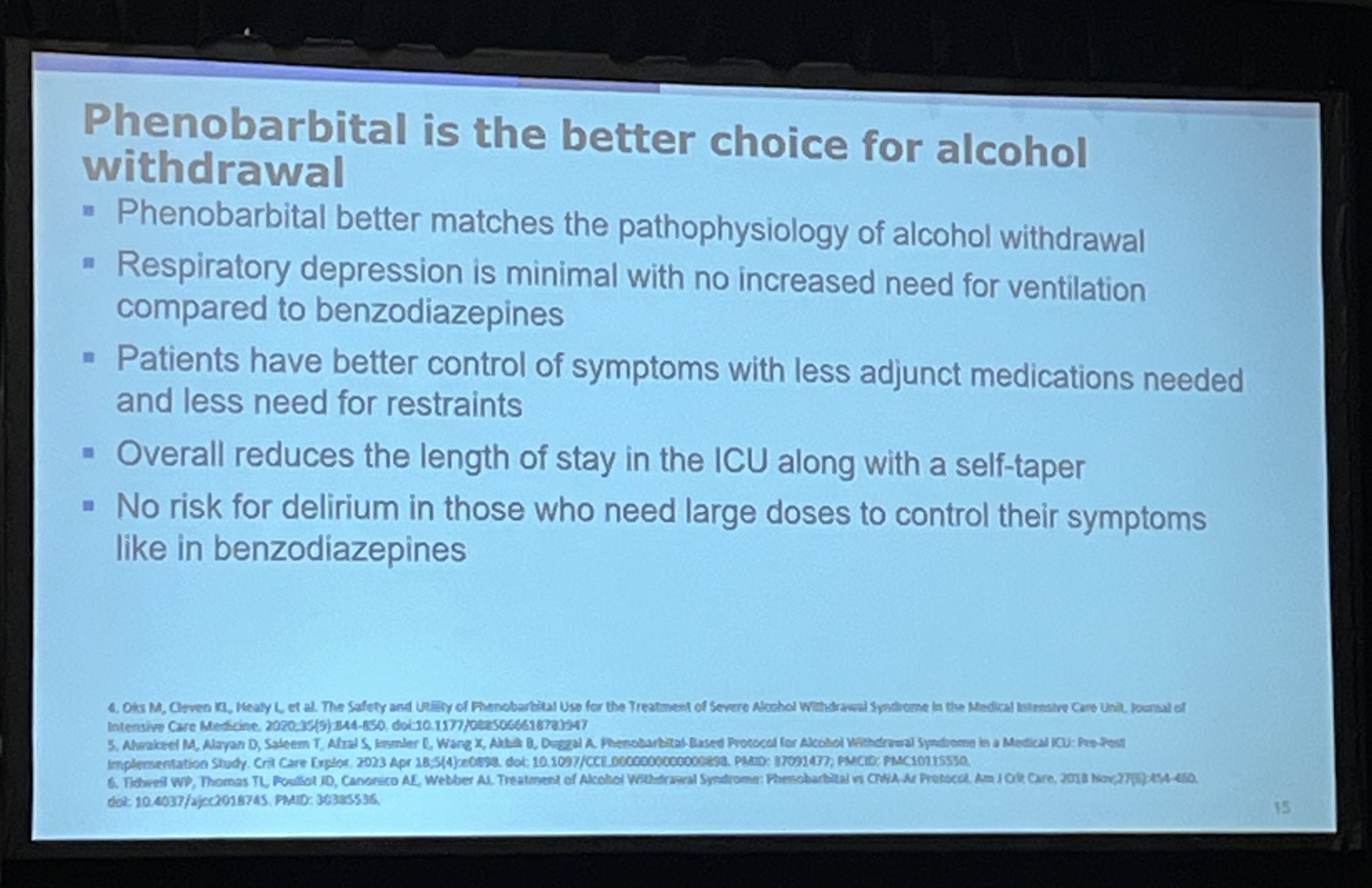
Pro-argument:
- better pharmacokinetics (longer acting, self taper) & anti-NMDA effects make PHB superior to BZDs
- less respiratory depression with PHB
- (limited) studies suggest PHB results in fewer additive meds & restraints, as well a 40% reduction in LOS
#CHEST2024


Sandra Loza, MD MPH (she/hers) retweeted

On #NationalLatinoPhysicianDay, we celebrate the strength and dedication of Latino doctors across the country. With only 6% of physicians in the U.S. being Latino, we must continue striving for greater representation in medicine. ¡Juntos Adelante! Let’s move forward together!
Sandra Loza, MD MPH (she/hers) retweeted
Example #152,457 of:
Technology is great. Don’t become completely dependent on it. Learn and remember the established, basic ways because you may need them when stuff like this happens. 👇

I’m one of the 27% that said Gen Surg the whole time and was lucky to make it ❣️❣️❣️

Most medical students change their intended specialty over the course of medical school. Only 27% end up in the same specialty they said they were most considering at matriculation.
But interestingly, that proportion varies widely by specialty.

ALT Graphic adapted from AAMC Report on Residents Table A1.
1
5
420