

CEO @ Ex Machina Italia
Bologna (Italy)
Joined August 2014
- Tweets4.9K
- Following5K
- Followers852
- Likes1.3K




Sandro Cacciamani retweeted
"When stupidity is considered patriotism, it is unsafe to be intelligent."
-- Isaac Asimov


Sandro Cacciamani retweeted

Il futuro dell’#IntelligenzaArtificiale non è predeterminato. Come tecnologia sviluppata da esseri umani, il suo futuro dipende dalle scelte che compiamo. Pertanto, abbiamo la responsabilità di guidare, cambiare e, quando è necessario, rifiutare le sue applicazioni. Un sistema affidabile che serva la persona umana è più prezioso di un sistema straordinariamente potente ma le cui conseguenze non possono essere adeguatamente previste o controllate.


Sandro Cacciamani retweeted
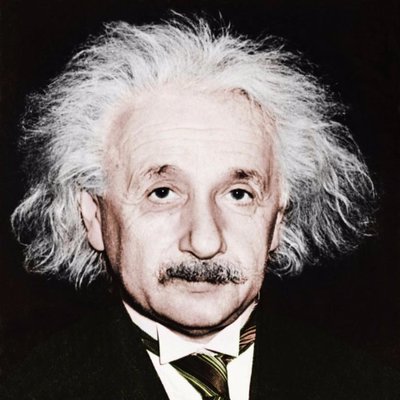
"A human being is part of the universe.. limited in time and space. He experiences himself.. as something separate, a kind of optical delusion of his consciousness. The striving to free oneself from this delusion is the one issue of true religion." — Albert Einstein

Sandro Cacciamani retweeted

In 1905, a 26-year-old patent clerk submitted four papers that helped remake physics.
March: light could behave as discrete packets of energy.
May: the restless motion of tiny particles offered a way to test the existence of atoms.
June: space and time could no longer be treated as absolute.
September: mass and energy were connected.
His name was Albert Einstein.
The result we now write as E = mc² arrived in a separate, three-page paper after special relativity.
One extraordinary year. And he still had his patent-office job.

Sandro Cacciamani retweeted
Quantum physics thus reveals a basic oneness of the universe.
- Erwin Schrödinger (1887 - 1961)

Sandro Cacciamani retweeted

“The difference between the poet and the mathematician is that the poet tries to get his head into the heavens while the mathematician tries to get the heavens into his head.”
― G.K. Chesterton
Sandro Cacciamani retweeted
"Science is a differential equation. Religion is a boundary condition."
-- Alan Turing (1912-1954)

Sandro Cacciamani retweeted
God is a mathematician of a very high order, and He used very advanced mathematics in constructing the universe.
-- Paul A. Dirac

Sandro Cacciamani retweeted
Happy Birthday to the physicist Enrico Fermi ! ✍️
Born in 29 September 1901, Fermi has crucial contribution in revolutionizing our understanding from quantum mechanics to nuclear energy.
Enrico Fermi is best known for creating the first nuclear reactor, leading to the development of nuclear energy and weapons. He also developed Fermi-Dirac statistics, crucial for understanding fermions, and made significant contributions to quantum theory, beta decay, and particle physics.

Sandro Cacciamani retweeted
In 1931, Paul Dirac faced an uncomfortable consequence of his relativistic quantum equation.
The mathematics seemed to demand a particle with the same mass as the electron but the opposite electric charge.
No such particle was known.
Dirac nevertheless followed the mathematics and proposed the existence of an anti-electron.
A year later, Carl Anderson observed the positively charged electron in cosmic-ray tracks. It became known as the positron.
Dirac later described the positron in his 1933 Nobel Lecture as the electron’s “mirror-image,” with equal mass and opposite charge.
Source: P. A. M. Dirac, “Quantised Singularities in the Electromagnetic Field,” Proceedings of the Royal Society A 133 (1931), pp. 60–72; Dirac’s 1933 Nobel Lecture.

Sandro Cacciamani retweeted
In 1953, Freeman Dyson went to see Enrico Fermi, eager to present his calculations on the strong nuclear force. As Dyson later recalled, Fermi listened politely, then told him that his work had neither a clear physical basis nor a rigorous mathematical foundation.
Dyson pointed out that his results agreed with Fermi’s experiments. Fermi asked how many arbitrary parameters he had used.
“Four,” Dyson replied.
Fermi recalled a remark by his friend John von Neumann: “With four parameters I can fit an elephant, and with five I can make him wiggle his trunk.”
The point was simple. With enough adjustable parameters, a model can match the data without explaining the physics.
It was a painful conversation, but Dyson later credited Fermi with saving him years of wasted work.

Sandro Cacciamani retweeted

On this day in 1991, Linus Torvalds casually announced a free operating-system hobby project. Linux now sits underneath much of the cloud, internet and mobile world. 🐧 #TechHistory

Sandro Cacciamani retweeted
Erwin Schrödinger on consciousness ✍️
Although I think that life may be the result of an accident, I do not think that of consciousness. Consciousness cannot be accounted for in physical terms. For consciousness is absolutely fundamental. It cannot be accounted for in terms of anything else.
-- as mentioned in "The Observer " (1931)


Sandro Cacciamani retweeted

Gödel’s incompleteness theorem was developed by Austrian logician Kurt Gödel in 1931.
For a consistent formal system S capable of doing arithmetic, Gödel constructed a mathematical sentence G that effectively says:
“This sentence cannot be proved within system S.”
Now ask whether S can prove this sentence.
Suppose S proves G.
Then the system has proved a sentence saying that it cannot be proved.
That would make the system inconsistent.
Suppose S is consistent.
Then S cannot prove G.
But that is exactly what G says.
Therefore, viewed from outside the system, G is true, but it cannot be proved inside S.
That is the heart of Gödel’s first incompleteness theorem.

Sandro Cacciamani retweeted
Today marks 134ᵗʰ Birth anniversary of Louis de Broglie, one of the most brilliant physicists of the 20ᵗʰ century. A French aristocrat who came to physics through history, he proposed in his 1924 doctoral thesis that if light could behave as particles, then particles must behave as waves. His examiners had no idea what to make of it and sent the thesis to Einstein, who replied that de Broglie had lifted a corner of the great veil.
Three years later, electron diffraction confirmed it, and in 1929 he became the only person to win a Nobel Prize for a PhD thesis. The idea underwrites every electron microscope built since.

