
Quant researcher | Ex-SocGen exotic derivatives | African private credit strategies | Occasional thoughts on markets, finance and programmable economies
France
Joined June 2009
- Tweets517
- Following424
- Followers162
- Likes1K


Serge Boupda retweeted

MAYBE I WAS WRONG ABOUT BLOCKCHAIN TECHNOLOGY
I wrote about how I always used to make fun of the guys who said things like "Bitcoin is speculative, but the underlying blockchain technology is interesting." And now I think maybe they kinda had a point.


Serge Boupda retweeted

The Gulf Oil Paradox: Restoring Crude Is Not Restoring Fuel
@robin_j_brooks is right to highlight the IRGC's impact on freight, but the bigger story is market fragmentation. Gulf crude flows have recovered to 91% of pre-war levels; refined-product exports remain below 50% (IEA). Freight has hit $34/bbl and Hormuz war-risk premiums 6–9% of hull value. Oil can flow while diesel stays scarce and expensive. The risk premium is not just military: it's embedded in damaged refineries, thin inventories and a global tanker shortage.

Crude oil exports out of the Persian Gulf are almost back to pre-war levels based on data from the great team at @TankerTrackers. Reason oil prices aren't down is IRGC attacks on ships, which have spiked shipping costs. Time to shut IRGC gunboats down...
robinjbrooks.substack.com/p/…

Serge Boupda retweeted

This chart has been doing the rounds in tech for years. Everyone draws the same conclusion from it: prices go up where government interferes, so we need a freer market, right? (Right?)
But, with all due respect, Marc is wrong. The causality runs the other way. Tech advances where companies can win more customers by bringing prices down, as with TVs or video games.
By contrast:
• In health care, consumption is decoupled from payment, so a cheaper provider has little to gain.
• Education and care, meanwhile, are labor-intensive proximity services where increasing returns are hard to achieve, no matter how hard you try.
To make matters worse, the two sides are connected, like communicating vessels. What Americans save on electronics gets sucked into housing, health care, and tuition. Cheap TVs and expensive health care premiums are part of the same phenomenon. @RajaKorman made this case a few months ago in @FT Alphaville.
As for government, it steps in precisely because these markets were broken to begin with. And yes, it then gets captured by the health care industry, NIMBYs in local communities, and teachers’ unions. But that doesn’t mean the government caused the market failures in the first place.

Marc Andreessen reveals why housing, health care, and education keep getting more expensive while everything else gets cheaper
"There's basically three components to the American dream. A house near great job opportunities, great health care for you and your family, and sending your kids to good schools"
"If you disaggregate the economy over the last 25 years, everything that technology touches basically collapses in price. Television sets, computer games, anything with electronics in it. But if you chart housing, education, and health care, the prices of those things are skyrocketing"
"The government restricts supply, zoning laws and university certifications. And then the government responds to the political pressure caused by the rising prices by subsidizing demand. And of course, if you subsidize demand and a fixed supply, you get skyrocketing prices"
Serge Boupda retweeted

So much of banking and insurance is basically dark pattern exploitation. Agents are an enormous threat to them.

Interesting perspective from Torsten Slok at Apollo today. It complements my Telegraph piece last week about whether economists are properly accounting for the inflationary impact of the great unbundling, and the growing customer preference, especially in banking, to stop being the product.
In this case Slok identifies a financial stability risk associated with everyday normies finally figuring out what they’re actually worth and not being ripped off. Though it’s a bit depressing if true, since it implies financial stability is entirely dependent on most people being a mug. [Tho I think monetary and finance scholars have always known this.]

Serge Boupda retweeted

As engineering, product, design, DS, etc. melt into a new kind of role, I was reflecting on what roles might look like in the future. For example, when I look at the Claude Code team I see what I think is five archetypes:
1. Prototyper: comes up with brand new ideas; churns out many ideas, most of which don't ship
2. Builder: quickly turns a prototype/idea into production-grade product/infra
3. Sweeper: cleans up the UI, simplifies the code and system, unships, optimizes performance
4. Grower: takes a product that has been built and iterates on it to improve Product-Market Fit
5. Maintainer: owns a mature system to make it secure, reliable, fast, and efficient as it scales
Many people span across 2 roles, and sometimes 3 roles. I also notice that these roles are not really tied to job function -- eg. across Anthropic, some designers match category 1, some 2, some 3; same for engineers, PM, DS.
A healthy team needs a mix of these, depending on the product:
- A product that is new and pre-PMF needs people that are strong at 1+2+3
- A product that is growing and has found PMF needs 2+3+4 and some 5
- A product that has strong PMF needs 3+4+5 and some 2
Maybe product roles of the future will look more like this, and less like the domain-specific roles of today?
Serge Boupda retweeted

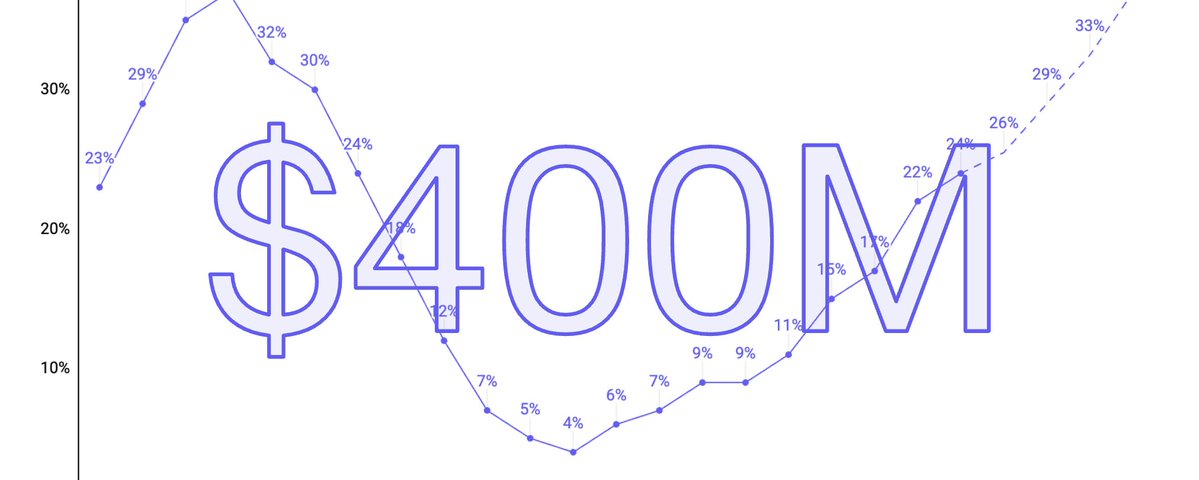
Today we announced Fence’s $20M Series A, led by @GalaxyHQ and joined by @paraficapital & @crane_vc
We’re using it to rebuild the operating infrastructure for asset-backed finance: the systems that verify assets, enforce facility rules, calculate obligations, and move capital.

Serge Boupda retweeted

There is a real cyclical manufacturing recovery taking place.
People consistently miss the manufacturing turn, especially during large inventory cycles like we've had since COVID. The manufacturing PMI has been below 50 for 3 straight years. One of the longest manufacturing recessions on record.
To be clear, we have a structural re-industrialization trade AND a cyclical manufacturing recovery trade. These are different. Ex-China manufacturing has been getting run over by Chinese manufacturing, especially after China's credit surge to manufacturing designed to make up for weak FAI from property. But even with structural headwinds, manufacturing can have strong cyclical moves.
We've gone through an inventory whipsaw since COVID. Severe destocking, then double ordering and excess inventories, and now after 3 years of destocking, inventories throughout the supply chain have been worked down to levels we haven't seen since the GFC (outside of some areas with tariff-related hoarding).
Most people look at inventory to sales ratios, but that measure is misleading bc of the circularity problem. The sales number is impacted by the inventory cycle itself, which gets compounded the further down the supply chain you go.
I use an inventory measure created by Julien Garran @MacrostrategyP called the supply chain whip. The logic is to measure how much of a commodity is actually being used vs how much is being bought. The difference between actual usage and apparent consumption is the supply chain restocking or destocking. This lets you track inventory levels through individual supply chains rather than relying on aggregate ratios.
Inventories have become extremely low. Combine that with the strategic government stockpiling that is coming and you have the recipe for a sharp move.
When everyone destocks at the same time, it compounds down the value chain. Take this copper example from 2012:
China homebuilders see a 4% fall in sales, cut starts 13%. A 9% destock.
China AC manufacturers see a 14% fall in sales, cut production 24%. A further 10% destock.
Copper semifabs destock 700kt copper metal. Another 10% of Chinese copper demand gone.
Combined, copper saw a 29% destock along just the AC value chain in 2012.
People get surprised by manufacturing turns because they think in stocks when they should think in flows. One of the biggest ever inventory contributions to GDP came in early 2009 when the stock of inventory was still declining. But it was declining at a slower rate than it had been. After large destocking cycles, all it takes is less destocking to see a surge in orders. The second derivative.
To get a picture of how this works I'm going to borrow the wine cellar example from Julien Garran, who has been using it since his days as the Materials/resource analyst at UBS in the early 2010s.
Imagine you have a wine cellar (see the attached image):
Year 1. You have 100 bottles, drink 100, buy 100.
Year 2. Your consumption ticks up 10% to 110 bottles. But you think the trend might continue so you decide to hold more safety stock. You end up buying 130 bottles. That's 30% more than last year even though your actual consumption only grew 10%. Your cellar grows from 100 to 120 bottles.
Year 3. Consumption grows another 4.5% to 115 bottles, but you're happy with your 120 bottle inventory level. So you only buy 115 bottles. An 11.5% DECLINE in purchases despite consumption still growing.
Year 4. You decide 120 bottles is too much inventory. You drink 115 but only buy 95, drawing down your stock to 100. Your purchases fall 17.4% while your consumption is flat.
Year 5. You're done destocking. You drink 115 and buy 115. Your purchases surge 21.1% even though consumption is still completely flat.
The key point is that purchase volumes are far more volatile than consumption because they reflect both consumption AND inventory changes.
We're in a Year 5 situation now. People always get surprised by manufacturing improvement in these situations because end demand isn't accelerating and manufacturers are deeply pessimistic, right before they get a surprise surge in their orders. But you have to think in flows. Just LESS destocking leads to an improvement in orders.
This cyclical manufacturing recovery is driving the violent market rotation we're seeing...much more so than the Warsh nomination. Investors weren't positioned for it. They were completely offsides on this trade and have been forced to abruptly reposition for this new reality. Just look at the manufacturing stocks that haven't benefited from AI or caught a reshoring bid. These are the manufacturing industries where the US is long/already a large net exporter. Chemicals are the perfect example. After years of going nowhere, they've finally come alive.
The manufacturing cycle has turned.

Serge Boupda retweeted

"Discipline is doing what you hate to do, but doing it like you love it"
That quote from Mike Tyson really resonates—particularly the 'like you love it'
It's one thing to do painful work poorly
It's another thing to do it w/ vim & vigor
One checks boxes, the other compounds


Serge Boupda retweeted

All the people freaking out about liquidity are completely missing the point that we are where we are BY FED DESIGN. It is a function of QT.
Sudden spikes in overnight repo at year-end are not evidence of policy failure; they are a predictable outcome of: balance sheet constraints, regulatory leverage costs (SLR, G-SIB buffers), and seasonal window-dressing.
This is qualitatively different from the 2019 repo shock, which occurred without standing facilities and outside a QT endgame framework.
Moreover, the Fed is openly striving to destigmatize liquidity distribution through standing facilities (and even the discount window). This is because it knows that in a modern digital and real-time financial system day-to-day and intraday swings can be very hard to anticipate. All the more so when everything has to be prefunded and collateralised.
These days, how much liquidity is being distributed via such facilities is far less important than at what cost.
The real indicator of banking distress today is the inability of a bank to fund or operate profitably.
Aka not being able to borrow at rates that are lower than a bank can lend at, loan book deterioration to the point all bank capital has been eaten up or a bank finding itself in negative equity for any other reason (sudden fines, trading losses, fraud yadda yadda).
While funding stress can precede equity collapse, especially for highly levered or duration-sensitive banks, a far more reliable indicator of banking distress is going to be a bank’s equity price.
Happy New Year.
P.S. The take below is correct 👇

YOU people are INSANE
December 31st is the single most predictable liquidity crunch of the year. Banks need to window dress balance sheets for regulatory reporting. Money market funds rebalance. Treasury positions get squared up.
Quarter-end is always tight; year end is quarter end on steroids.
The Fed's Standing Repo Facility (SRF) exists specifically for this. Overnight repos spike every quarter-end, especially Dec 31. This isn't crisis intervention, it's scheduled maintenance. The plumbing works exactly as designed.
Serge Boupda retweeted
Nine years ago I warned that fake news hinted at the true cost of web.
I said the internet age only felt revolutionary and productivity enhancing because the true cost of so many services was being disguised by two-sided business models, where the user was ultimately the product.
Being the product meant what you gained in low cost information services and “connectivity” you lost in many other economic variables. Everywhere else you were leaking data that could be used against you by vested interests. Especially politically.
Eventually, I argued, people would wise up to the fact that these services weren’t really cheap at all. And when they started pulling back their custom or demanding not to be ripped off elsewhere, the system would become unstable.
Moreover, the subsidies themselves would become untenable and the true cost of quality news and information would be revealed.
Nine years on, the cost of being informed has never been higher. Almost every “quality”publication that started off free now has a paywall of some sort. Substack fragmentation has made it more costly than ever to follow your favorite authors. Professional analysis costs even more.
On top of that there’s the cost of high quality aggregation and information retrieval (ie knowing who to follow in the first place and beating the algorithms that want to manipulate you).
The good news is that this is, overall, leading to a market that is quality led, and no longer agenda subsidised. The bad news is, the news environment is becoming extremely partisan and siloed. Advertiser or proprietor agendas are mostly being replaced with users’ own preconceived agendas.
That means if you have a natural inclination to think outside of the box or to seek out the perspectives of others (or trend towards genuinely non partisan titles), you will be better served than ever.
If you don’t, you will end up in a bubble.
As an economic agent that means if you happen to pick the “right” world view for now you could win handsomely at the game of life. If you pick the wrong one, you stand to lose everything.
The outcomes, essentially, are increasingly on the all or nothing scale.
Ai can’t help as true intelligence lies in the questions you think to ask not necessarily in the answers you receive.
None of this is sustainable, not least because those who can’t afford quality information, will be increasingly disadvantaged and misled.
Now more than ever the English speaking world needs a non partisan operator that’s both publicly funded and protected from political interference. A broadcaster/news provider that every user pays for equally but at a very low rate. A body which represents all, without fear and without favour. An outlet that helps you make informed choices not tells you what to think or what to consume. An editorial board which is simultaneously accountable and resistant to elite capture or group think.
Ai can be a tool that helps package or create the news but it can’t and never should replace journalists. Because the real value in the news process is the editorial discourse. AI by definition cannot have this on our behalf. Editorial decisions are not swayed by logic alone. Empathy, anger, sorrow and human interest, all play their part.
There is no free lunch. If being sensibly informed is not to become a luxury good, accessible only to the rich, we must build a new institutional framework that can resist politicisation while preserving quality and coherence.
Journalists who step up to serve that body should consider themselves public servants. Apolitical at best. Juxtaposed by rival perspectives at worst.
That’s not to say all views should be equally weighted. Flat earthers needn’t be invited to every debate. And fringe views in general shouldn’t be regularly elevated to the mainstream, unless, topical or growing quickly.
But, overall, we need a socially-wide perspective. AI fails at this.
on.ft.com/3IddSCb
Serge Boupda retweeted

Yesterday @shopify and @coinbase launched Commerce Payments Protocol: a new standard for scalable, trust-minimized commerce that uses USDC on @base.
Over 400 payments processed so far, with around $1.5k net settled. Still early, but with Shopify integration, this becomes a good place to track real commerce crypto payments adoption.
Check our @Dune dashboard to track the protocol (link below).

Serge Boupda retweeted
Founder's Journey: The Problem with Solutions
Call me crazy, but after spending the last 17 years as a Venture Capitalist, I've finally returned to my roots and am sitting once again in the Founder’s seat. At the ripe old age of 54, I've traded my seat as an Investor for the rollercoaster ride in the Founder's seat. Consider this post the first in a series of field notes from the trenches: Equal parts confession, revelation, and therapy session.
Today's revelation? The asymmetry of certainty between problems and solutions.
Let’s start with a very basic framework that I used every day in my role as an Investor. It didn’t take hearing thousands of pitches to realize that at the core of each Startup is the pairing of a problem statement and a solution statement.
The problem statement is the Founder’s way of explaining a problem they’ve discovered and an articulation of why it’s a gigantic and profoundly painful problem.
The solution statement is the Founder’s way of articulating a better way of solving the problem they described in the problem statement paired with a narrative explaining why their users are likely to agree.
But I’m reminded of something both obvious and profound now that I’m back in the Founder’s seat:
Even though I can present my problem and solution statements with equal story telling elegance, the certainty behind the problem and solution statements aren’t close to the same!
When you spot a problem worth solving, it's like discovering a new continent. You can map it precisely, document its features exhaustively, and articulate exactly why it matters. The problem statement becomes your north star: Clear, compelling, and unwavering.
But solutions? They're mirages. What looks solid and complete from a distance reveals itself to be merely an outline when you get closer. That brilliant solution you're ready to shout from the rooftops? It's mostly wishful thinking wrapped in confident packaging.
I find myself in this exact position as we speak. My problem statement feels bulletproof. It’s backed by research, validated through countless conversations and supported by data. My solution seemed equally solid...until I started peeling the onion with my co-Founder and early ride-or-die team.
Every day reveals new questions and problems I haven't considered. The elegant solution I’ve been pitching feels like a child's drawing compared to the architectural blueprints it will need to become.
The temptation is to keep the illusion alive and to maintain the facade of certainty when speaking to potential team members and Investors. After all, who wants to follow a Leader into battle who admits they're not entirely sure where they're going?
But the truth is that we need to find talent that embraces this uncertainty. They’ll need to understand that the initial solution is merely a hypothesis. The real solution will emerge through iteration, experimentation, and the collective wisdom of a team looking at the problem through different lenses.
And even then, it’s only the starting line for the ultimate reality check: Users. They'll take our precious solution and use it in ways we won’t have imagined and highlight flaws we’re blind to. That’s when the real work begins.
This journey from problem certainty to solution discovery isn't a bug in the founding process: It's what it’s all about. It's where the magic happens, where true innovation emerges, and where I’m hoping to earn some new battle scars as a Founder.
So my advice? Fall in love with your problem statement, not your solution statement. Be humble about what you know and honest about what you don't. And remember that the gap between your initial solution concept and what eventually works is where the real journey takes place.
Onwards and Upwards.
April 28, 2025


Serge Boupda retweeted
When Winning Feels Impossible
A few weeks ago I introduced a simple but powerful framework: People make seemingly irrational choices when they believe they're playing an unwinnable game. When the probability of success approaches zero through traditional means, people don't just give up. When p(win)=0 they change the rules, seek alternative games, or embrace strategies that might look nonsensical to outside observers.
(link to original post: teapawt.org/fintechjunkie/status/1…)
But there's a darker side to this phenomenon that deserves deeper examination. When people believe that p(win)=0, it fundamentally alters not just their strategies, but their entire moral framework and relationship with society.
The PvE Mindset: When Everyone Else Becomes NPCs
In the gaming world, there's a crucial distinction between PvP (Player versus Player) and PvE (Player versus Environment) games. In PvP, players compete directly against other human players, fostering a community where success often requires cooperation, respect for rules, and consideration of others' experiences. In PvE, players face off against computer-controlled enemies—mere obstacles to be overcome through any means necessary.
When people perceive society as a low p(win) environment, they increasingly adopt a PvE mindset. Other people cease to be fellow players and become NPCs (Non-Player Characters) - background elements in one's personal quest for success. This shift manifests clearly in modern financial markets, with the pinnacle example being the explosion of memecoins and speculative tokens.
Take the recent surge in the family of Trump tokens. Everyday people are piling into these obviously manipulated tokens fully aware that they're participating in a rigged game designed to enrich a small inner circle. They just want their piece of the riches even knowing it comes at the expense of other people’s wallets.
The traditional investment ethos of creating value through productive enterprise gives way to a pure zero-sum mentality: "I don't care if others lose, as long as I win." This isn't just greed; it's a rational response to perceived systemic unfairness. When the conventional path to success feels blocked, any path to victory becomes acceptable, regardless of its impact on others.
The Fortress Mentality: Protecting Your Win at All Costs
Perhaps even more telling is what happens to people who do succeed in a low p(win) environment. Rather than feeling secure in their success, they often develop what we might call a "fortress mentality"—an aggressive defensive posture against any perceived threat to their position.
This explains the fierce opposition to policies that might level the playing field: NIMBY resistance to affordable housing, antagonism toward student loan relief, and pushback against minimum wage increases. When success feels like a rare and precious resource acquired against impossible odds, the natural instinct is to guard it jealously. The ladder-pulling behavior we often criticize in successful individuals isn't necessarily hypocrisy - it's a predictable outcome of achieving success in a system you believe is fundamentally stacked against success.
Redefining Victory: The Path Forward
The solution isn't to moralize about greed or selfishness. If our analysis is correct, these behaviors are symptoms, not causes. The real challenge is to restore people's belief in the possibility of success through constructive participation in society.
This is where political leadership becomes crucial. Instead of focusing solely on wealth redistribution or regulatory frameworks, we need to rebuild faith in p(win) > 0. This means:
1. Creating clear, achievable definitions of "winning" that don't require taking on extreme risk
2. Establishing transparent rules and pathways to success that are "fair" and "equitable"
3. Demonstrating that cooperative behavior and societal contribution can lead to personal victory
The good news? We've been here before. Throughout history, societies have faced moments when the social contract seemed to be unraveling—when individual success appeared impossible through traditional means. The Progressive Era emerged from the Gilded Age's excesses. The New Deal reshaped American society's relationship with economic opportunity. The post-war boom created the largest middle class in history.
These transformations didn't happen by accident. They were the result of conscious societal choices to rebuild faith in the possibility of success through participation in the system. Today's challenges—wealth inequality, technological disruption, climate change—may seem unique, but they're not insurmountable.
The key is understanding that when people stop believing in the possibility of winning through constructive participation in society, they don't just give up—they change games entirely. Our task isn't to condemn these choices but to rebuild systems where success feels achievable without requiring either exceptional luck or disregard for collective welfare.
Modern society has proven remarkably adaptable, consistently finding ways to realign individual incentives with collective prosperity. The current disconnect between personal success strategies and societal welfare isn't a permanent condition—it's a signal that we need to rebuild confidence in p(win) > 0 through legitimate participation in the system.
The game isn't over. It's just time to rewrite the rules.


The Game Matters
Everywhere you look, you can find people making choices that look absolutely bonkers from the outside. Many people dismiss these choices under the false narrative that “most people are stupid”. But it takes a deep examination of a person’s history, mindset and holistic situation to understand why they’re doing what they’re doing.
And in many cases, things start to make sense when you ask the question: “Are their choices irrational if they’re losing the game they’re playing?”
The human mind is fundamentally a problem-solving machine that tries to make sense of its place in the world. When faced with making decisions, people tend to be rational when they can clearly map out their objectives and see a viable path to success. It’s easy for someone to make rational choices when they understand the rules of the game they’re playing AND they believe that they have a chance of winning the game.
Take a professional athlete. Their entire life becomes a carefully calculated game with clear rules. They know exactly what metrics matter: Speed, strength, technique, etc. They can see how each decision they make matters. What to eat, how to train and how to recover are decisions that directly impact their probability of winning. The game is transparent, the rules are clear, and most importantly, they believe they can win. That's when human behavior becomes laser-focused and supremely rational.
In contrast, look at systems where the rules feel opaque or rigged. The modern career path often feels like a game with hidden rules. Young professionals might get advice from older generations that doing well in school, getting a job at a well-known company, buying a house and starting a family is the path to a happy life. But many people are experiencing a different reality. Crippling debt, stagnant wages, an impossible housing market, and constantly shifting job requirements define their lives.
So it isn't a surprise that many young people are making non-traditional life choices. If the game feels unwinnable, people look for alternative strategies.
One of the best examples of “changing the game” comes from Star Trek's lore. The Kobayashi Maru is a legendary no-win training scenario at Starfleet Academy designed to test a cadet's character when facing certain defeat. The simulation presents a starship, the Kobayashi Maru, which appears to be disabled and stranded in the Klingon Neutral Zone. Cadets must decide whether to attempt a rescue, knowing that any intervention will likely result in their own ship's destruction. The scenario is intentionally unwinnable - approaching the Kobayashi Maru triggers an overwhelming Klingon attack that will inevitably destroy the rescue ship. Most cadets either freeze or accept defeat, methodically playing out their inevitable destruction.
But when an upstart cadet (Captain Kirk!) realized that the game’s rules led to defeat, he cheated by reprogramming the simulation's computer to make victory possible. When confronted about his cheating, Kirk argued that the test wasn't measuring a Captain's ability to accept defeat, but rather their creativity in confronting seemingly impossible challenges. This moment became legendary in Starfleet mythology and a symbol of Kirk's core philosophy: There are always alternatives if you're willing to challenge existing constraints and think beyond the established rules.
The Kobayashi Maru example is perfect because it illustrates a fundamental human response. When faced with a no-win scenario, the truly rational actor doesn't just accept defeat. They look for ways to redefine the game itself. Kirk didn't just accept the simulation's impossibility - he changed the underlying assumptions.
This could explain why people are choosing high risk financial instruments like leveraged options, crypto and memecoins over stocks, bonds and savings. If it’s increasingly difficult to save money and the buying power of money is being inflated away, then is it irrational to seek out high risk/high return opportunities? If one click could wipe out a few hundred dollars or make you comfortable for the rest of your life, is it irrational to click the button? Maybe not if you’ve already determined that P(win) = 0 if you play the game that’s on the field.
The truth is that most people aren’t inherently risk-takers or gamblers. It's that they're fundamentally rational actors trying to optimize their chances in a system that often feels incomprehensible. The more opaque the rules, the more desperate the strategies become.
They’re playing to win by playing a different game than what’s been put in front of them. Looking for cheat codes, for side quests and for entirely new game boards is a reflection of how they plan on tweaking a P(win) = 0 game to P(win) > 0 game!

Serge Boupda retweeted
"Africa risks becoming a mausoleum of missed opportunities, untapped potential, and dreams deferred — unless stakeholders across the continent and the global community work together to unleash its potential."
Link to the letter on FT's website 👇🏽
ft.com/content/b4cc7a32-7b3e…
Serge Boupda retweeted

Magic Johnson used to go stupid teapawt.org/RealTalk900/status/150…
Serge Boupda retweeted

The path to the TAM in your pitch deck starts at seed with a "killer wedge."
It's not a GTM strategy or PMF, but it sets the direction for both.
It's a critical point that's worth thinking through deeply. NFX has been doing a deep dive into this strategy.
Our findings below:
Serge Boupda retweeted
If you're a Founder building a Startup in an out-of-favor category, the truth is you need to be seen as the exception that proves the rule.
Don't just be different, be better in ways that matter.
✅Focus relentlessly on solving real problems for real customers, and do it in a way that's demonstrably superior to existing solutions.
✅Deliver proof points that tangibly de-risk the business and increase the odds that you're on the path to building a large and profitable business. Your learning agenda needs to be focused on "now" proof more than the learning agendas are for Startups building in hot categories.
✅Your metrics need to sing because being a "solid and improving" company isn't what's going to capture attention in an out-of-favor category. Exceptional is the only option.
✅And your vision needs to be crystal clear. If you can't paint a picture of becoming an "essential player" in the future state of your ecosystem then it will be challenging to attract the capital or the talent you need to succeed.
Remember, Investors aren't just betting on a market - they're betting on you to defy the market's expectations. So, when the world says your category is dead, make sure your company is undeniably great.