

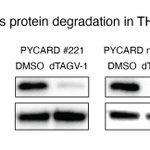


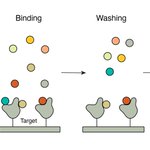


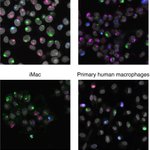


Can AI-designed binders degrade, aggregate, stain and enrich endogenous proteins in human cells? Check out our new preprint!
biorxiv.org/content/10.1101/…

We are grateful to the Hans und Ria Messer Stiftung and the cluster of excellence @ImmunoSens for supporting our research at @UniBonn @UniklinikBonn
Please also check out another exciting work on AI-based protein design, which was a fantastic team effort with Michael Hölzel, Gregor Hagelueken, Tobias Bald and many colleagues at @UniklinikBonn
biorxiv.org/content/10.1101/…

How could we identify key genes involved in any biological process and cell type? Please read on about Nuclear In-Situ Sequencing (NIS-Seq)
nature.com/articles/s41587-0…

6| Thanks to the entire team including @p_knp_33, @AlexH_UB, @blumenstock_k, and the labs of @FISchmidtLab, @eickelatz, @Doc_Bald, @RaykBehrendt, and @appsilon. Thanks to @ImmunoSens @UniBonn @UniklinikBonn for supporting our work.
7| Please also see very exciting complementary approaches by the @eric_lubeck, Aviv Regev and @GaublommeL labs, improving optical perturbation screening using different tricks. nature.com/articles/s41587-0… nature.com/articles/s41587-0….
Jonathan Schmid-Burgk retweeted

NIS-Seq enables cell-type-agnostic optical perturbation screening go.nature.com/3P35toD

Jonathan Schmid-Burgk retweeted

My favourite discovery ever has just come online. Can I please tell you about some seriously wacky molecular biology? The story starts with a reverse transcriptase that SOMEHOW defends bacteria from viruses.
(👇 I recommend sound ON for the video 🎹)
1/
1/8 How can we enrich cells with a defined transcriptional state, but without killing them? Please read on!
biorxiv.org/content/10.1101/…
7/8 This project was inspired by previous work by the Hagelueken lab (@gha14, @NielsSchneberg1) and @ChristopheRoui9, characterizing the CRISPR-associated Lon protease CalpL nature.com/articles/s41586-0….

8/8 Also please check out a fascinating related work by the @doudna_lab biorxiv.org/content/10.1101/…