

Creator of GLiDE Decision Model, AI Agent Researcher @fastinoAI, Theoretical Physics @Cambridge_Uni , 3,000+ GitHub Stars⭐️, Math / Physics Olympiad, Genius
Cambridge, United Kingdom
Joined January 2026
- Tweets945
- Following120
- Followers527
- Likes623




Sahibzada Allahyar retweeted

The best decision model in the world. GLiDE v1.2 is here (and it’s multimodal).
#1 on the @huggingface Decision Index, beating the next best model by 1.7 points.
The benchmarks are genuinely impressive:
- 71.5 full score
- 82 ms latency on NVIDIA RTX PRO 6000
- 1.9% calibration error on held-out decisions (one of the lowest on the index)
This model is smart, fast, well-calibrated, and open weight. Everything a good decision model should be. We’ve also dropped our pricing to $0.04 / million input tokens.
Try it today. Use promo code GLIDEIS1 for $10 in API credits.
API: agent.fastino.ai/
Weights: huggingface.co/fastino/GLiDE

Sahibzada Allahyar retweeted

Our newest decision model is the world's best decision model.
Introducing GLiDE v1.2, the #1 model on the @huggingface Decision Index.
With an overall score of 71.5, GLiDE v1.2 also has one of the lowest calibration errors on the entire Decision Index, meaning its confidence more closely reflects how often its answers are correct.
Beyond improved benchmark performance, it also adds support for multimodal inputs, enabling decision-making using text, JSON, and images.
We are excited to release the model weights on Hugging Face. For hosted inference, you can also run GLiDE v1.2 through the Fastino API at $0.04 / million input tokens.
Use promo code GLIDEIS1 for $10 in API credits.
Model weights: huggingface.co/fastino/GLiDE
API: agent.fastino.ai
Blog: fastino.ai/blog/training-gli…

Sahibzada Allahyar retweeted
We're proud to be a post-training partner with @NVIDIAAI, advancing the future of open weight models.

We’re releasing more open models to help teams across Europe build AI with their own data, on infrastructure they control.
Announced at GTC Berlin, the models help developers, researchers and enterprises build specialized AI agents, train robots, design proteins and develop quantum computers.
See what’s new: nvda.ws/4iwBMvF

Sahibzada Allahyar retweeted
One line Tinker migration:
docs.fastino.ai/training/mig…


Sahibzada Allahyar retweeted
The new Super Finance and Healthcare models are 🔥
huggingface.co/collections/f…

We collaborated with @NVIDIAAI on early access post-training. Spoiler alert: It's an incredible model to train!
Technical blog: fastino.ai/blog/nvidia-nemot…

Sahibzada Allahyar retweeted
Today we’re launching the Fastino Training API for supervised fine-tuning and reinforcement learning.
The Fastino Training API includes day-zero support for @NVIDIAAI Nemotron 3.5 Super VL, alongside Nemotron 3.5 Lightning.
Our API gives ML and research teams low-level control over post-training without requiring them to provision GPUs or operate separate training and generation systems.
A few highlights:
• Write your own SFT and RL loops in Python
• Train with importance sampling, PPO, CISPO, or DRO
• Run grouped sampling with token log probabilities
• Save and resume adapter and optimizer checkpoints
• Pay per token processed, not per GPU hour
• Spend 25% to 85% less than Tinker’s published rates
• Migrate existing Tinker workloads by changing only the server address and API key
Along with the Training API, we’re releasing two start-of-the-art open weight models fine-tuned on NVIDIA Nemotron 3.5 Super VL, specialized for finance and healthcare. Together, they improved performance across all 15 held-out benchmarks we measured.
And for a limited time, we’re offering discounted pricing on training for NVIDIA Nemotron 3.5 Super VL through the Fastino Training API.
Try it now: agent.fastino.ai/

Sahibzada Allahyar retweeted

@andrewdsouza fastino now serves the cheapest training API for ML teams
Sahibzada Allahyar retweeted
Great to see GLiDE at #2, and we have a huge update coming out this week
Seeing the model perform this well on a completely independent evaluation shows just how strong the model is
Is seems adaptive thinking is a big reason why:
-GLiDE first calculates a fast probability distribution
-If the leading answer is uncertain, reasoning turns on
-That reasoning is incorporated into the final probabilities
Easy decisions stay fast, harder decisions get extra compute. This is especially useful for knowledge, reasoning and complex tool routing, where most decision models fail
We will be releasing the weights and a full rundown on how we trained the model with our training api
Try it through the Fastino API with code USE_GLIDE for free credits.

Introducing the Artificial Analysis Decision Index, benchmarking decision models across classification, tool calling, knowledge and reasoning. Jev leads among decision models; language models such as Claude Haiku 5.5 still deliver higher accuracy, but at much higher cost and latency
Decision models deliver structured answers or classifications with associated probabilities, offering faster responses and lower costs than using language models. The Artificial Analysis Decision Index v1.0 compares the capability, cost, and speed of decision models and also compares to language models.
Benchmarks in the Artificial Analysis Decision Index v1.0:
➤ AA-Omniscience-Decision: A private dataset of 500 questions adapted from the proprietary AA-Omniscience benchmark, measuring decision models’ knowledge and tendency to hallucinate
➤ HLE-MultiChoice: 513 text-only multiple-choice questions from Humanity’s Last Exam, testing decision models’ reasoning capabilities
➤ When2Call: A tool-calling benchmark from NVIDIA, testing whether models can correctly decide to call a tool, request clarification, decline to answer, or respond directly, evaluating capabilities relevant to agentic workflows and tool routing
➤ WildGuardTest: A safety benchmark evaluating models’ classification capabilities across harmful user requests, assistant refusals, and harmful responses. We use a subset of 835 of the original 1,725 test rows where all three human annotators agreed on all three labels, after excluding questions that consistently trigger model refusals
Key results:
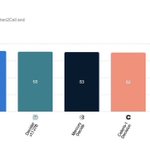
➤ Jev 1.13 leads the Decision Index, and sits on the Capability vs. Cost Pareto frontier: Jev 1.13 from @typesafeai scores 58 on the Artificial Analysis Decision Index, ahead of GLiDE (54) from @fastinoAI and Microsoft-Decision-1 (54) from @Microsoft. Decider v1.1 27B from @perplexity_ai has the lowest Cost per 1M Tasks at $17, with Microsoft-Decision-1 ($31) and Jev 1.13 ($42) also on the Capability vs. Cost Pareto frontier. Celeris-1 Decision has the fastest Time per Task at 0.06 seconds, more than 2x faster than Jev 1.13 (0.13 seconds per task)
➤ Decision models are poorly calibrated on knowledge and reasoning tasks: Across almost all probability levels for chosen answers, accuracy falls below that probability for all decision models. This gap is largest on AA-Omniscience-Decision and HLE-MultiChoice, while most models are relatively well-calibrated on WildGuardTest (classification) and When2Call (tool calling)
➤ Decision models offer significant speed and cost advantages over language models, but trail on knowledge and reasoning: On classification and tool-calling tasks, leading decision models perform comparably to language models while being significantly faster and cheaper. However, language models substantially outperform on knowledge and reasoning. Claude Haiku 5.5 (Low) scores 61 on the Decision Index, 3 points ahead of Jev 1.13, but takes 1.4 seconds per task vs. 0.13 seconds (11x slower) and costs $184 per 1M Tasks vs. $42 for Jev 1.13 (4.4x more expensive)
We will continue to develop the Artificial Analysis Decision Index to help developers and companies better understand when and how to use decision models.

Sahibzada Allahyar retweeted

You asked for a Bonsai that reasons harder and takes on real work. We got out the shears ✂️
Ternary Bonsai 2 27B: Qwen3.8-27B trimmed to sub-6GB, keeping 98% of its FP16 self.
Better with coding and tools. Goes the distance on long agentic runs.
Plant it somewhere. Tell us what grows. Want your custom Bonsai? Reach out @PrismML 🌳

Today, we’re announcing Ternary Bonsai 2 27B.
Based on Qwen3.8 27B, Bonsai 2 27B is 9x smaller than its full-precision counterpart while retaining 98.2% of its aggregate benchmark performance.
Two months after the first Bonsai 27B release, the biggest change is quality. The footprint remains 5.9 GB, but the gap to full precision has narrowed materially, with particularly strong gains in agentic coding, multimodal reasoning, and long-horizon tool use.
Ternary Bonsai 2 27B is available today under Apache 2.0.

Sahibzada Allahyar retweeted
Bonsai 2 27B on a 6GB budget-friendly gaming laptop, with the LM head offloaded to the CPU, still gets 12 tokens/s! 🌳 🤯


Sahibzada Allahyar retweeted

hehe, I never doubted GliDE!
As you can see, it is evaluated without thinking, for the same reason we discussed this morning, and I do agree with the choice of @multimodalart
I still believe triggering reasoning based on calibrated scores is very cool, but it makes the comparisons harder!
Sahibzada Allahyar retweeted

GLiDE is now on StreamDecisionBench!
It scored 39.43% normalized log-AUC on in-force accuracy, our primary metric, and 80.49% untimed accuracy, the highest among the decision models we tested.
We observed ~5.5s median latency and ~17.3s p95. Its strong untimed accuracy makes latency an interesting area to explore for improving the in-force score.
Full results and measurement details: github.com/JacobLinCool/Stre…
Sahibzada Allahyar retweeted
Appreciate everyone’s patience. We’ve had a ton of traffic and have added more GPUs. Latency drastically improved. hmu for free credits 🙏

Introducing GLiDE, the first decision model that thinks.
Ranks #1 on the Decision Index, beating Jev by 6.9 points.
GLiDE uses adaptive thinking. To give you an idea of how it works:
It calculates a fast probability distribution.
If the leading answer is uncertain, reasoning is turned on.
Reasoning is then incorporated into the final probabilities.
This means that the model only uses reasoning capabilities for the complex decisions that need them, keeping the model fast while also expanding the types of tasks it can do.
As a result, GLiDE outperforms Jev by 11.5 points in Knowledge and Reasoning and across all five evaluation areas of the Decision Index.
Reasoning allows GLiDE to perform highly complex tasks that traditional decision models struggle with, including:
Choosing among hundreds of tools and possible paths.
Executing, sandboxing, escalating, or blocking sensitive operations.
Checking outputs involving arithmetic, code, dates, or multiple facts.
GLiDE is available now through the Fastino API. Use code USE_GLIDE for free credits.
GLiDE API: agent.fastino.ai

Sahibzada Allahyar retweeted

New decision model like Jev by @fastinoAI
Unlike Jev, they allow post-training the model

Introducing GLiDE, a thinking decision model built for reasoning-intensive decisions.
Using the official Decision Index 0.2.1 scorer, GLiDE scores 64.81, leading Jev by 6.90 skill points and outperforming it across all five evaluation areas, including an 11.5-point lead in Knowledge and Reasoning.
Typically, decision models are designed to score a set of options in one pass. GLiDE takes that process a step further by recognizing when a decision requires more effort.
After producing an initial answer, GLiDE quickly assesses its confidence. When the result is uncertain, the model automatically allocates more compute to thinking further and incorporates that reasoning into its final probabilities.
This allows GLiDE to move beyond straightforward classification into complex, multi-step decisions like selecting from hundreds of tools, choosing the best next action from hundreds of possible paths, or judging and verifying reasoning-intensive model outputs.
With every decision, it returns:
• The selected action
• A corresponding confidence score
• A probability distribution across the available options
GLiDE is available today for inference and training on the Fastino API.
Try it now on the Fastino API: agent.fastino.ai
Read the release blog: fastino.ai/blog/introducing-…
Sahibzada Allahyar retweeted
Benchmarks are looking great for GLiDE, it's new decision model by @fastinoAI
These guys are cooking!
Introducing GLiDE, the first decision model that thinks.
Ranks #1 on the Decision Index, beating Jev by 6.9 points.
GLiDE uses adaptive thinking. To give you an idea of how it works:
It calculates a fast probability distribution.
If the leading answer is uncertain, reasoning is turned on.
Reasoning is then incorporated into the final probabilities.
This means that the model only uses reasoning capabilities for the complex decisions that need them, keeping the model fast while also expanding the types of tasks it can do.
As a result, GLiDE outperforms Jev by 11.5 points in Knowledge and Reasoning and across all five evaluation areas of the Decision Index.
Reasoning allows GLiDE to perform highly complex tasks that traditional decision models struggle with, including:
Choosing among hundreds of tools and possible paths.
Executing, sandboxing, escalating, or blocking sensitive operations.
Checking outputs involving arithmetic, code, dates, or multiple facts.
GLiDE is available now through the Fastino API. Use code USE_GLIDE for free credits.
GLiDE API: agent.fastino.ai
Sahibzada Allahyar retweeted

signal/noise:
- google announces gemini 4 argon.
- broadcom: up to $42b for anthropic chip leases.
- california AG subpoenas OpenAI on cyber risks.
- ucla: optical deepfake AI hits 98%.
- fastino: glide leads Decision Index by 6.9 points.
Sahibzada Allahyar retweeted

WE'RE ON FIRESHIP HELL YEAHHHH
It holds a special place in my heart as this channel was my gateway to the tech culture years ago


