Sola Charles🇳🇬 (@solazed) header
Sola Charles🇳🇬 (@solazed) profile picture

NMMA Most Innovative Reporter of the year/Public Health Reporter of the year | HIV/AIDS+SRHR advocate | Health Editor Vanguard Newspaper | Great father &husband

Vancouver, British Columbia
Joined December 2008
Photo by Sola Charles🇳🇬 (@solazed)Photo by Sola Charles🇳🇬 (@solazed)Photo by Sola Charles🇳🇬 (@solazed)Photo by Sola Charles🇳🇬 (@solazed)Photo by Sola Charles🇳🇬 (@solazed)Photo by Sola Charles🇳🇬 (@solazed)Photo by Sola Charles🇳🇬 (@solazed)Photo by Sola Charles🇳🇬 (@solazed)Photo by Sola Charles🇳🇬 (@solazed)Photo by Sola Charles🇳🇬 (@solazed)
Enter this month with faith, not fear; with hope, not anxiety; and with gratitude, not complaints – at Igbologun, Nigeria
11
Nigeria has asked to be considered as an early demonstration country for #OneSCD a new global partnership seeking to transform #SickleCellDisease care, citing the country’s high disease burden, technical expertise and locally developed solutions healthnewsextra.blogspot.com… – at Igbologun, Nigeria
5
Japanese researchers have successfully removed extra copy of chromosome 21 from human cells associated with #Downsyndrome raising possibility of a new approach to tackling #trisomy21 The researchers used CRISPR-Cas9 gene-editing technology healthnewsextra.blogspot.com… – at Igbologun, Nigeria
5
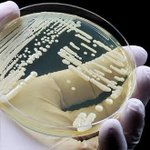
Scientists have warned that rising global temperatures could increase the risk of deadly #Fungalnfections in humans by enabling more fungi to survive at body temperature, weakening one of humanity's natural defences against #infection healthnewsextra.blogspot.com… – at Igbologun, Nigeria
8
Sola Charles🇳🇬 retweeted
🚨 THE FRUIT SCIENTISTS SAY COULD HELP FIGHT CANCER... What if a simple plum is hiding an incredible health secret? Research suggests that natural polyphenols in plums may help trigger apoptosis—the process that allows damaged or cancer cells to destroy themselves. While plums are not a cure for cancer, they are packed with antioxidants, fiber, and nutrients that support overall health. Sometimes the most powerful foods are the ones we overlook. Source: Plant Foods for Human Nutrition. (Study on plum polyphenols and apoptosis)
7
101
2
333
7,798
Sola Charles🇳🇬 retweeted
Early-life stress leaves a lasting scar inside brain cells, loosening how DNA is packaged and priming the brain to be more sensitive to stress. But blocking one enzyme reversed the effect in mice. Researchers at Washington University School of Medicine in St. Louis and Princeton University studied dopamine-producing neurons in the ventral tegmental area, a brain region that processes rewards and adversity. Early-life stress boosted an enzyme called SETD7 in these cells. The enzyme adds a chemical tag to the proteins that DNA is wound around, which loosens the packaging and makes genes easier to switch on. Raising SETD7 in unstressed young mice produced the same loosened packaging, along with lower stress tolerance and more anxious behavior in adulthood. Blocking SETD7 after early stress kept the packaging closed, and those mice stayed social and exploratory, with normal dopamine neuron activity, like mice raised without stress. T he researchers see the tag as a possible future treatment target, since nothing treats these brain effects today, and the university notes that more than half of the world's children face early-life stress. This was done in mice and no treatment has been tested in people, but it offers a concrete molecular clue to how childhood adversity can stick. source: Kim, H. J. J., et al. (2026). Early-life stress alters H3K4me1 in VTA to prime stress sensitivity. Neuron.
4
18
1
75
4,530
So our average body temperature is gradually dropping ... – at Igbologun, Nigeria
Your body heat is the reason most fungi can't infect you. That shield is getting thinner, and the result could be catastrophic. Could this be The Last of Us? Most of the millions of fungus species on Earth can't infect us for a simple reason: our bodies, at about 37°C (98.6°F), are too hot for them. But that gap is shrinking from both sides. A Stanford study of records going back to the 1800s found that average body temperature in American men has fallen about 0.59°C since then, roughly 0.03°C per decade. Meanwhile, a warming planet is pushing fungi to tolerate more heat. In a new paper, researchers Carla Schuh and Chaitanya Gokhale point to Candida auris, a drug-resistant fungus first identified in 2009 that grows happily at body temperature and survives up to 47°C, as a warning sign of what's coming. Fungal infections already hit about 6.5 million people a year worldwide, and most fungal diseases mainly threaten people with weakened immune systems. But that is changing. Now, experts say better surveillance and new antifungal drugs are needed before more species learn to live inside us. Of course, getting sick and dying isn’t the same as being a fungus-driven zombie, like in the “The Last of Us.” But frankly, the outcome isn’t all that much better. source: Schuh, C. E., & Gokhale, C. S. (2026). Candidozyma auris (Candida auris) as a harbinger of novel fungal pathogens. EcoEvoRxiv.
21
Sola Charles🇳🇬 retweeted
Researchers just transformed old blood cells into young brain cells. Sixty years were erased – scientists in Germany literally reset the molecular clock of an 80-year-old's cells. Researchers at the University of Bonn took red blood cell precursors from elderly donors, including an 80-year-old and a 101-year-old, and reprogrammed them directly into neural stem cells, the kind that can go on to become neurons. Instead of first turning them into all-purpose stem cells, the team converted them in one step and tracked them for more than 100 days. Using epigenetic clocks, which estimate a cell's age from chemical tags on its DNA, they found the 80-year-old's cells ended up with a molecular age of less than 20. Because the rejuvenation happens slowly with this method, scientists can watch aging reverse step by step and look for the switches behind it. That could help them study brain diseases using a patient's own cells and, one day, design therapies. This was done in a dish, though, not in people, and there's no treatment yet. But it's striking proof that the age written into our cells isn't fixed. source: Berg, L. J., Franzen, J., Buness, A., Konang, R., Sheng, C., Peitz, M., Till, A., Wagner, W., & Brüstle, O. (2026). Protracted fate acquisition and epigenetic de-aging during induced neural stem cell conversion of human blood cells. Aging Cell, 25(10), e70751.
2
54
7
176
6,487
Great feat! 22 countries have reached this milestone, #eMTCT of #HIV means transmission has been reduced to very low levels and sustained public health targets have been met. In Africa, only Botswana and Namibia have received recognition for progress on WHO's Path to elimination – at Lagos, Nigeria
Barbados has eliminated mother-to-child transmission of HIV as a public health problem. 🎉 A major milestone, built on years of sustained action to help ensure babies are born free of HIV. Read about this public health good news!: bit.ly/4sHGvOH
29
Although all 46 human chromosomes can be potentially edited, it cannot be done safely, accurately and reliably in a living human being, nevertheless, #chromosome scale engineering is advancing #CRISPER #DNA #autosomes – at Lagos, Nigeria
🧬 Scientists Have Removed an Extra Chromosome From Cells Linked to Down Syndrome What if scientists could remove the extra chromosome responsible for Down syndrome? In a remarkable laboratory experiment, researchers at Japan's Mie University used CRISPR-Cas9 gene-editing technology to remove an extra copy of chromosome 21 from human cells obtained from people with Down syndrome. The results were fascinating. Under specific experimental conditions, researchers successfully removed the extra chromosome in up to 37.5% of tested cells. Even more interesting, cells that lost the extra chromosome showed improvements in gene activity, cell growth and other biological functions. But there is an important limitation. This experiment was performed on cells in a laboratory, not inside the human body. Scientists still need to overcome major challenges involving safety, unintended genetic changes and delivering the technology to the right tissues. This is not a cure for Down syndrome, but it opens an exciting new direction in chromosome research. Could chromosome editing one day help address some of the biological effects of genetic conditions? Scientists are only beginning to explore this possibility. Source: Hashizume, R., et al. (2025). Trisomic rescue via allele-specific multiple chromosome cleavage using CRISPR-Cas9 in trisomy 21 cells. PNAS Nexus, 4(2), pgaf022.
17
It really works! – at Lagos, Nigeria
Warming your feet triggers a biological shortcut to deeper, more restorative sleep. Slipping on a pair of socks before climbing under the covers might be the simplest biohack for a better night's rest. When your feet are warm, your blood vessels undergo a process known as vasodilation. This expansion allows heat to redistribute from your core to your extremities, effectively lowering your internal body temperature. This physiological shift serves as a critical biological signal to the brain that the body is ready to transition into a sleep state, making it easier to drift off without tossing and turning. The benefits go beyond just falling asleep quickly; they also impact the duration and depth of your rest. Researchers at Seoul National University discovered that participants who wore socks to bed not only fell asleep significantly faster but also enjoyed longer sleep cycles with fewer interruptions throughout the night. For those who frequently struggle with cold feet or insomnia, this low-cost habit supports the body's natural circadian rhythms, ensuring a more seamless and refreshing sleep experience. source: Ko, Y., & Lee, J. (2017). Effects of feet warming using bed socks on sleep quality and thermoregulatory responses in a cool environment. Journal of Physiological Anthropology.
12
Sola Charles🇳🇬 retweeted
🚨 SCIENTISTS JUST DISCOVERED SOMETHING INCREDIBLE ABOUT THE HUMAN HEART For years, doctors believed heart damage after a heart attack was permanent. But a new world-first study has revealed something shocking — the human heart may actually regrow some of its own muscle cells after injury. This hidden healing ability could change the future of heart treatment and give hope to millions worldwide. Scientists say the heart may be far more powerful than we ever imagined. Your heart might already be trying to heal itself… and science is only now catching up. Source: Bertero, A., et al. Nature. Human heart regeneration study on cardiomyocyte renewal after myocardial injury.
22
105
28
378
8,542
Sola Charles🇳🇬 retweeted
BREAKING: NAFDAC has secured the conviction of a businessman in Aba, Abia State, for manufacturing and selling counterfeit Goya Extra Virgin Olive Oil, sentencing him to five years’ imprisonment with an option of a ₦5 million fine.
317
242
177
985
110,375
Sola Charles🇳🇬 retweeted
A 25-year-old scientist could change millions of lives if this gel helps damaged hearts heal. Imagine the possibilities!
10
36
378
8,347
Sola Charles🇳🇬 retweeted
The #HPV vaccine is highly effective. It can prevent 9 in 10 cases of the most high-risk strains of human papillomavirus (HPV) – the #1 cause of cervical cancer.
19
49
6
135
35,069
Sola Charles🇳🇬 retweeted
🚨 “A Single Injection That Could Restore Feeling?” Scientists at MIT have developed an experimental injectable gel that may help repair damaged nerves. This gel mimics natural body tissue and supports nerves as they regrow and reconnect. In early studies, it has shown restored sensation and movement, something traditional treatments rarely achieve. While still in early research stages, the results are giving hope for future treatments of nerve injuries. Source: Massachusetts Institute of Technology. (n.d.). Research on injectable hydrogels for nerve regeneration.
16
135
52
514
15,320
Ebola: NCDC hotline receives 500 calls daily @NCDCgov receives nearly 500 calls daily on its toll-free hotline as Nigerians seek information and clarification about the #Ebola outbreak, highlighting the growing demand for reliable #PublicHealth info healthnewsextra.blogspot.com… – at Lagos, Nigeria
31
Sola Charles🇳🇬 retweeted
Trade Forex, Gold and more on HFM. Get instant withdrawals, low spreads and up to 1:2000 leverage. Download the app and get started today. 👇
Link preview

1,041
780
19
7,748
37,658,616