
RealityCapture/Photogrammetry expert, TD @ CyberAgent, Tokyo. All opinions are my own. Hobby: C++/GLSL/CUDA. Eng・日本語・Rus. @shamanix@mastodon.gamedev.place
Saitama, Japan
Joined June 2011
- Tweets63.8K
- Following974
- Followers3.4K
- Likes30.1K



Vlad Erium 🇯🇵 retweeted

researcher @log4j just published a teardown of samsung’s TV sensor telemetry. Here’s what the logs show.
samsung TVs without a built-in microphone look for connected devices that have one soundbars, bluetooth speakers, anything paired. They use that mic instead.
the audio isn’t sent raw. it’s classified first. the telemetry path includes named event types:
— EV201/SOUNDSENSOR_ON: logs dog-barking and baby-crying counters
— EV101/LIGHTSENSOR_ON: software flag for ambient light state
— EV301/CAMERASENOR_ON: camera-state and notification fields
— EV302/CAMERASENSOR_OFF: camera streaming duration
the data is formatted as key=value pairs and logged to lcprd1.samsungcloudsolution.… with deviceid=1.
it’s not recovering unique identifiers per device — the ID mode is configured but the module prefix and runtime policy still need independent verification.
what is confirmed: samsung’s TVs are classifying ambient audio including whether a dog is barking or a baby is crying in your home and reporting event counts back to samsung servers.
there’s no wake word these are passive environmental audio events being counted and logged.


Vlad Erium 🇯🇵 retweeted

black october just got worse. a japanese company lost 27,000 servers and it’s not even the scariest part
GMO Internet runs a cloud service called Onamae Desktop, mostly used by forex traders running automated trading bots
hackers broke in, installed malware across up to 26,739 servers, stole trading credentials and started making unauthorized trades on people’s accounts
not one broker. over 70 different securities and forex firms across japan and internationally. people woke up to trades they never made, money moving they never authorized
OANDA Japan froze customer withdrawals. GMO refused to pay the ransom, permanently shut down the entire service, and did something nobody expected
they asked the japanese government to use brand new active cyber defense powers, literally military-grade authority that just went into effect october 1st, to trace and neutralize the attackers’ infrastructure. the government can now legally hack back
the technical details from the attacker’s own site are terrifying. GMO configured their VPS network using Active Directory, something you should never do on shared hosting
every server had admin credentials. and the RDP files customers used to connect? drive redirect was enabled by default, meaning the moment you connected to your VPS, your entire local PC was shared with the server
hackers didn’t just own the servers. they had a direct path into every customer’s personal computer. they extracted data, installed backdoors. customers were exposed like this for over 7 years
27,000 servers. 70+ brokers. unauthorized trades. personal computers backdoored. a company begging its government to go to cyber war
october isn’t slowing down
Vlad Erium 🇯🇵 retweeted

Tessera meets EEVEE with FULL textures! 💥
Our GPU-driven continuous LOD pipeline in Blender now renders multi-material PBR (Albedo, Normals & Roughness) and updates the viewport instantly.
No more flat colors! 🎨🔥
#b3d #rendering #gamedev

Vlad Erium 🇯🇵 retweeted

猫の充電口、そこだったのか。

Readers added context they thought people might want to know
This image is AI generated, per a SynthID verification
openai.com/research/verif…
Vlad Erium 🇯🇵 retweeted
American comedian Sammy Obeid was detained by Japanese immigration authorities and denied entry to the country because he was going to do a paid comedy show without an Entertainer visa.
If someone enters Japan as a tourist, they aren't legally allowed to do paid shows.


The Japanese government denied me entry and held me in solitary confinement for 24 hours over a standup comedy show with 40 attendees…
(1/5)


Readers added context they thought people might want to know
The poster was denied entry for planning to perform ticketed stand-up comedy shows, an activity requiring Japan's Entertainer visa/status and prohibited under Temporary Visitor (tourist) entry.
moj.go.jp/isa/applicatio…
moj.go.jp/isa/applicatio…
musictourjapan.com/entertainer-vi…
x.com/nihon_shimin/s…


Vlad Erium 🇯🇵 retweeted

github.com/mitmproxy/mitmpro…
That went fast.

Vlad Erium 🇯🇵 retweeted

Reminder: traditional computer graphics alphabet is in reverse order:
- xyz, the 3d axis.
- w, the component of homogeneous space.
- uv, (because zyxw were taken) the implicit 2d parametrization of surfaces.
- st, (because zyxwuv were taken), the user defined texture coordinates
Please tell me that "Approve for me," that @OpenAI promised not to drain tokens anymore, is not a reason for last week's token drainings?🤔
I just found that I enabled it almost everywhere after those promises.
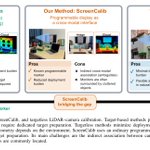
Can a Display Be Used for Rapid LiDAR-Camera Extrinsic Calibration?
Zuhao Zou, Xiangcheng Hu, Jianhao Jiao, Jin Wu
Paper: arxiv.org/abs/2610.28571
Code (GPL3): github.com/ZuhaoZou2026/Scre…
Abstract:
ScreenCalib enables light detection and ranging (LiDAR)--camera extrinsic calibration using an ordinary programmable display, providing known visual markers and controlled geometry while reducing dedicated target preparation. The camera observes displayed AprilTags, whereas the LiDAR measures the physical screen surface and boundary, requiring indirect cross-modal association. Display geometry introduces association ambiguities, while indoor clutter complicates extraction. ScreenCalib addresses these challenges through tag-guided display extraction, geometric hypothesis generation and refinement, and surrounding scene edges for ambiguity resolution. The single-pose mode requires only one static placement. The joint multi-pose mode combines independent static observations through cross-pose consensus and jointly refines the shared extrinsics and tag scale, reducing sensitivity to tag-size measurement errors without requiring continuous motion or inter-pose trajectory estimation. Experiments in simulation and on three different sensor platforms cover mechanical and nonrepetitive LiDARs in clean and cluttered environments. Benchmark results show that ScreenCalib outperforms competitive calibration-board-based methods in translation accuracy. Joint multi-pose refinement further reduces mean rotation and translation errors across the three platforms and improves rendered-map alignment. Evaluation across readily available displays, including cell phones, tablets, laptops, computer monitors, and televisions, further examines ScreenCalib's versatility as a practical alternative to dedicated calibration targets.


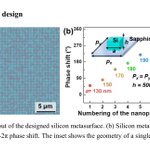
Gerchberg-Saxton Optimized Silicon Metasurface for Sinusoidal Structured-Light Three-Dimensional Imaging
Gengyuan Ye, Shuming Wang
arxiv.org/abs/2610.26956
Abstract:
Three-dimensional (3D) optical imaging based on structured illumination has attracted considerable attention in applications including machine vision, robotics, and computational sensing. However, conventional structured-light systems generally rely on bulky projection components, such as digital micromirror devices and diffractive optical elements, which limit system miniaturization and integration. Here, we demonstrate a compact structured-light 3D imaging platform enabled by a silicon dielectric metasurface operating at a near-infrared wavelength of 940 nm. The desired sinusoidal fringe illumination is encoded into the metasurface through a Gerchberg-Saxton (GS) phase optimization algorithm, which converts the target far-field distribution into a nanoscale phase profile and subsequently into silicon nanopillar geometries. The fabricated metasurface generates high-quality sinusoidal structured illumination, which is integrated with a four-step phase-shifting reconstruction method to recover 3D object profiles. The proposed approach provides a compact and scalable solution for miniaturized structured-light projection and optical 3D sensing.


Vlad Erium 🇯🇵 retweeted

皆様に、今夜に対応して頂きたい大至急のお願いです。
多くのウェブサイトで使用されているPHPに関し、PHPのセキュリティチームが、重大な2件の脆弱性に関する注意喚起を行っています。
公開しているウェブサイトでPHPを使用しているか確認し、今夜、10月21日午後11時(日本時間)に公開される修正パッチについて、可及的速やかに適用できるよう準備をお願いします。
修正パッチを速やかに適用することが困難な場合は、例えばウェブサイト等を一時的に停止させることも、リスクを低減させるための有効策の一つと考えられます。
国家サイバー統括室のXアカウントでも関係する情報を発信していますので、そちらも参考にして下さい。
国家サイバー統括室(注意・警戒情報)(@cyber_forecast) / X
Vlad Erium 🇯🇵 retweeted

Never deleting this app.


aren't you the moron that exposed your API keys on stream/uploaded your .env files and lost $90,000 and cried about it on your X lol
xitter.cf/JustLingonberry/status…
you're a real dev for sure!
Vlad Erium 🇯🇵 retweeted

DeepSeek just published the price of a token, and it should make you angry.
From their own DeepInfer docs: 1 cluster serves 155 trillion tokens a day, at $38 of revenue per GPU-hour, and thats at off-peak prices. Their API is $0.30 per million input tokens and $1.20 per million output at peak.
Yuchen Jin did the math: even if they rented B300s at $7 an hour, thats about 82% gross margin. Other estimates go higher.
So cheap AI is not charity and it is not "dumping". At these prices serving a frontier-class model is a very profitable business, if your inference stack is good enough.
Now remember every time a US lab told you that intelligence is expensive. That $200 a month is a fair price. That limits exist because compute is scarce.
Part of that is true. Part of it is a business model built on you not knowing what a token actually costs.
DeepSeek just showed everyone the numbers and gave away the engine. Every inference company can now compete on price with the same software. Thats how AI gets cheap for everyone.

“A single cluster currently serves 155 trillion tokens/day, generating $38 in revenue per GPU-hour (at off-peak pricing).”
Huge flex from DeepSeek. Not only did they open-source their inference engine, but they also open-sourced their revenue numbers.
They didn't disclose which GPUs they're using here, but DeepInfer supports both NVIDIA Blackwell and Huawei Ascend.
Even assuming they're renting B300s at $7 per GPU-hour, that's ~82% gross margin.

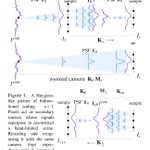
A Unified Theory of Image Scaling: Point Spread Functions, Discrete Kernels, and Scale-Spaces
Assaf Shocher (Technion – Israel Institute of Technology)
arxiv.org/abs/2610.22472
Abstract:
We derive the optically aligned system of image-scaling operators Ks that reproduces optical zoom (exact zoom-out, canonical zoom-in), by identifying a Huygens-like consistency principle in which each pixel acts as a secondary source. The system is determined in closed form by the camera's point spread function (PSF), itself the operator K0. The operators compose, Ks′∘Ks = Kss′ (with band projection for down-up), and account for both upscaling and downscaling, which form a Moore-Penrose pseudoinverse pair, K1/s = K†s. We show that image scaling, as routinely practiced, is neither optically faithful nor internally consistent; for example, common anti-aliasing rules generally correspond to no camera, and two resizes by a factor of 1/2 generally do not equal one resize by a factor of 1/4. Gaussian scale-space kernels cannot be exact finite-aperture PSFs. Gaussian scale-space is an idealized special case of what emerges here: a generalized scale-space for sampled images, derived entirely from camera optics, bidirectional, and not limited to Gaussian kernels. The system goes beyond scaling and supports composable and invertible subpixel geometric transformations. We empirically validate its optical predictions with real captures and noisy optics simulations, and demonstrate its practical impact on the stability of tasks such as super-resolution and classification.


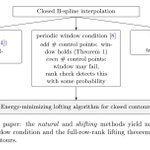
Energy-minimized interpolatory B-spline lofting for sequences of closed contours
Shutao Tang, Zixuan Zhao
arxiv.org/abs/2610.24569
Abstract:
B-spline lofting through closed cross-sections is common in reverse engineering, but interpolating each section on its own knot vector can produce an unnecessarily large control net. We construct a common-knot method for closed section curves of odd and even degree by minimizing the strain energy of each section subject to its interpolation constraints. Feasibility for closed section data and uniqueness of the resulting saddle-point solution require full row rank of the periodic collocation matrices, a property that a previously proposed periodic Schoenberg-Whitney window condition does not always guarantee. We establish the exact parity distinction: the condition is sufficient at odd point counts but admits singular configurations at every admissible even point count. For the odd and even degrees used here, the natural and shifting anchor knots are nonsingular; at odd point counts the window condition certifies the selected candidate, whereas at even point counts a rank test with an anchor fallback is applied. The lofting method therefore retains a nonsingular square subsystem for each section and uses nestedness to transfer full row rank to the rectangular common-knot system. Across six closed-contour models the common-knot method uses 83-98% fewer control points than traditional interpolating lofting, with section energies no larger than those of a previous knot-selection method within numerical precision.


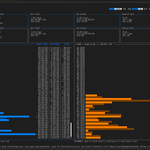
llmon - added opt-in stats for multiple local network PCs.
github.com/ssh4net/llmon
Still only Claude and Codex.

Dear @apple I’m an idiot but you are genius. Please in a simple form explain me how image captured with native iPhone camera, required, fucking 10sec, to just load for the edits?