

Love life, family, friends,politics.All citizens want,deserve is a gov.with integrity,honest,truthful,governance by the Rule of Law 🇨🇦🇺🇸 🇺🇦 🇬🇧🙏 No DM’s
Nova Scotia;Canada
Joined February 2009
- Tweets132K
- Following5.6K
- Followers8.2K
- Likes50.2K


Pinned Tweet
@igorsushko Thankyou🙏🇺🇦🫡 I'm going to keep posting this until everyone reads it whether they want to or not.
The only viable path is
1. Arm Ukraine to Win
2. Bankrupt Russia with Sanctions
3. Negotiate Peace
Step 3 will never work unless 1 and 2 are achieved.
Trudy MacDonald retweeted
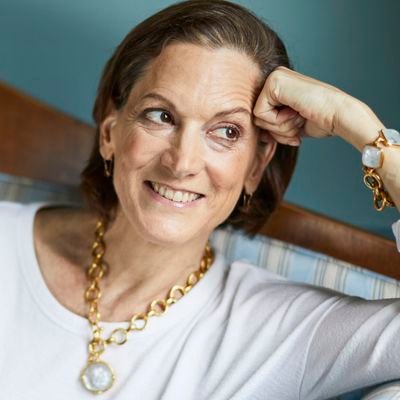
Yes, how unfortunate that the Ukrainians kept fighting, and even reinvented modern warfare while they were at it

Trudy MacDonald retweeted

- Alexander Stubb:
“The only thing that Vladimir Putin understands is power. You show any kind of a weakness and he will basically go after you.
The DNA of Russia is still expansion and imperialism.
Russia won't stop with Ukraine if it is not countered with strength in any negotiations over a ceasefire or peace.
The key question is whether any peace agreement can actually be upheld. Since 2014, Putin has violated ceasefire agreements 25 times."
.............
How do you negotiate with the Russians when the only things they issue are ultimatums and dictates?
Moreover, in recent days, they have once again rejected both a ceasefire and negotiations.🤷♀️

Trudy MacDonald retweeted
- Anne Applebaum:
I think that the West doesn't understand the extremism of Putinism. You know, as I say, they keep imagining that there's a deal to be done, that if we just give Crimea to Russia, then he'll stop fighting. And I don't think they understand that his goals are much broader and more ambitious. And those goals involve the destruction of the transatlantic alliance and maybe even of the European Union.
So I think they just haven't quite understood how broad those goals are. And therefore, they haven't understood the need to, you know, that before there's going to be any end to the war, Putin will have to lose it. Or he will at least have to be convinced that it can't be won.
And so the path to peace is through convincing Putin that he won't win the war, that it's hopeless.
right now, the only thing I can see that if you really, really want peace, then you must arm Ukraine and defend it until Putin realizes the war is over.
..........
Very well said...
Listen to this intelligent woman.☺️
🫡

Trudy MacDonald retweeted

While you were helping make a blue wave, there was a bombshell you may have missed.
Jared Kushner allegedly received billions via secret foreign bank accounts while influencing U.S. policy.
Here's why that matters. youtu.be/ydki7bWPaI8?is=K-Ti…

Trudy MacDonald retweeted

Stubb: Finland has one of Europe's largest militaries. Conscription has trained 1 million men and women, and its air force has over 60 F-18s and soon 64 F-35s.
Finland has long-range missiles on air, land and sea, and Europe's biggest artillery together with Poland. 1/
Trudy MacDonald retweeted

The world needs more principled leaders WITH B@LLS!!!
Mark Carney to an audience that includes Putin: “Wars like Putin's underscore the importance of reliable partners who respect international law and territorial integrity while building resilience among like-minded countries,"
That’s at the same time Trump was calling him a “friend” and together they want to abolish the International Criminal Court!!!
cbc.ca/news/politics/carney-…

Trudy MacDonald retweeted
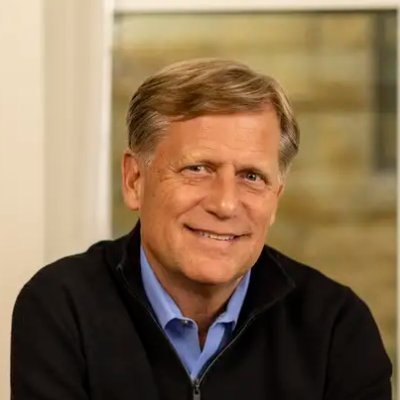
Trump's fawning over Xi and Putin is not just embarrassing. It’s dangerous.
It makes him—and the United States—look weak.


Trudy MacDonald retweeted

BREAKING: Hours after Trump tells Putin he’s his “friend” 2 Russian Kh-101 cruise missiles strike Poland.
Idiocracy has consequences.


Trudy MacDonald retweeted
Russia is weaponising winter and deepening a humanitarian disaster in Ukraine. The ICC has issued arrest warrants, UN investigators have documented war crimes, while Elon Musk wants us to feel sorry for Russia.
That’s whitewashing.
It’s easy to talk about forgiveness when it wasn’t your home they took, your friends they killed, or you they tortured.

Trudy MacDonald retweeted

Q: I know you're working with Europeans on satellites in space so as not to become dependent on Starlink.
Carney: “We've seen cases, like in Ukraine, where a dependence on Starlink or Starshield has gone from being an advantage to a huge vulnerability. Like that [snaps fingers]. You can't unsee that once you've seen it.
Particularly given the integration of space technology and defense technology, drone technology, I mean, all the aspects.
So the issue for us, the issue for the Koreans, the issue for the Japanese, the issue for the Europeans is:
Can we build, at a minimum, a redundant system or a sovereign system? With whom do we pool in order to do that? How are we going to protect the Arctic and the High North? Whose system are we going to rely on? Can we rely on that system when push comes to shove? Who will make the decision as to whether that system is on?
These are fat-tail risks that have been realized in the recent past by some of our allies. That's the situation in which we and others are making those determinations.”
Trudy MacDonald retweeted
The unprecedented talks between President Trump, China's leader Xi Jinping and Russian President Vladimir Putin ended without major diplomatic breakthroughs. "They were wasting their time, and Trump was wasting our time," says New York Times columnist Thomas Friedman.

Trudy MacDonald retweeted

CANADIAN HISTORY SPOTLIGHT
From Juno Beach to Rogers Place — A 101-Year-Old Canadian Hero!
Eighty-two years after serving off the beaches of Normandy, 101-year-old Royal Canadian Navy veteran Martin “Marty” Jones received a standing ovation from thousands of hockey fans at Rogers Place in Edmonton as part of the Oilers’ recent Remembrance Day tribute.
Behind that wonderful smile is an extraordinary story of courage, sacrifice and service.
Born May 30, 1925, in Lamont, Alberta, Marty grew up during the Great Depression. He eventually joined the Royal Canadian Naval Volunteer Reserve and served aboard HMCS Prince Henry, where his older brother was also stationed.
On June 6, 1944, just seven days after his 19th birthday, Marty was aboard Prince Henry during the Allied invasion of Normandy.
As a member of a 20 mm anti-aircraft gun crew, he helped defend the ship while Canadian troops made their way toward Juno Beach.
Marty later recalled the chaos of D-Day, including the heartbreaking sight of men stranded in the water whom he was unable to help.
His ship carried troops and supplies to Normandy and transported wounded servicemen back across the English Channel.
Marty also served during operations in the Mediterranean before returning home to Canada following the war.
More than eight decades later, the young sailor who witnessed one of the defining moments in Canadian military history is still with us.
And there he was at Rogers Place, smiling as thousands of hockey fans rose to their feet to honour his wartime service.
At 101 years young, Marty Jones remains a living connection to Canada’s Greatest Generation.
From the waters off Juno Beach to the cheers of an Edmonton hockey crowd, what a remarkable journey.
Remembrance should never be confined to a single day in November.
Thank you for your service, Marty. Canada salutes you!
#CanadianVeterans #DDay #EdmontonOilers
Sources: Crestwood Oral History Project; Edmonton Oilers/Edmonton Journal; House of Commons, May 29, 2015.
Trudy MacDonald retweeted

Trump’s “friend” Putin just launched massive attacks on Ukraine this morning.

Trudy MacDonald retweeted

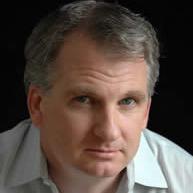
🇺🇦🇷🇺 ANNE APPLEBAUM EXPLAINS WHY PUTIN’S WAR AGAINST UKRAINE IS ABOUT SOMETHING MUCH LARGER THAN TERRITORY.
There is a reason why the Kremlin has spent years questioning whether Ukraine is even a legitimate country.
And it dates back long before February 2022.
On December 1, 1991, Ukrainians voted overwhelmingly for independence from the Soviet Union. More than 90% supported independence, including majorities in Crimea and every other Ukrainian region.
Russia subsequently recognized Ukraine’s sovereignty and borders.
In 1994, Moscow signed the Budapest Memorandum, reaffirming its commitment to respect Ukraine’s independence and its existing borders.
Three years later, Russia and Ukraine signed a friendship treaty that explicitly recognized each other’s territorial integrity.
These are not obscure historical details.
They demonstrate that Ukraine’s independence was not something Moscow had failed to accept; rather, Russia had formally committed to respecting it.
Yet, Putin’s government later annexed Crimea, supported armed separatism in eastern Ukraine, and launched a full-scale invasion in 2022.
Historian Anne Applebaum argues that this contradiction reveals two interconnected objectives.
The first is imperial: to restore Russian control over a country whose independence challenges Moscow’s historical claims to regional dominance.
The second is political. Ukrainian democratic movements—most notably the Euromaidan protests of 2013–2014—demonstrated that citizens could mobilize against a government, demand accountability, and alter the political trajectory of their country.
Applebaum argues that this example poses a threat to the political model Putin has constructed within Russia.
This is an important distinction.
The Kremlin’s hostility toward Ukrainian democracy cannot be explained solely by NATO expansion, military geography, or territorial disputes. Applebaum identifies a deeper clash between competing concepts of political legitimacy.
One is rooted in state sovereignty and the right of citizens to determine their own government.
The other concentrates extraordinary power in the hands of rulers who claim a historical authority over neighboring nations.
The international implications are equally grave.
The 1975 Helsinki Final Act established respect for European borders and territorial integrity as foundational principles of continental security. Furthermore, the United Nations Charter prohibits the threat or use of force against the territorial integrity or political independence of any state.
While these principles have been violated in the past—including within Europe—the Russian invasion directly challenges their application to Ukraine.
Moreover, there is a telling contradiction in Moscow’s position.
Russia invokes its own sovereignty when opposing foreign interference, yet its invasion denies Ukraine that very same right to independently determine its own future. Applebaum’s argument ultimately raises a question that extends beyond this war:
Can a European country remain genuinely sovereign if a more powerful neighbor claims the authority to decide whether its independence should exist at all?
For Ukraine, that question is not theoretical. Its people have been defending their own answer to it since 2014.
