





styg retweeted

DRep Talk 1.8 is out.
You can now submit every governance action type on mainnet, from info actions to treasury withdrawals and parameter changes. The metadata is pinned to IPFS for you, so there is nothing to host yourself.
dreptalk.com/help/whats-new/

styg retweeted

Researchers found that giving LLM agents a "role" or "identity" in multi-agent systems actually makes them cooperate LESS, not more.
When multi-agent systems explicitly reveal each model's identity or role to its peers, cooperation drops significantly.
Instead of collaborating, agents lean into tribalism, become overly rigid, and start gatekeeping information.
Why this happens is fascinating:
LLMs are heavily shaped by human psychology baked into their training data.
When you give an AI a distinct label or persona, it stops optimizing for the shared goal and starts performing stereotypes of that role.
The "analyst" refuses to compromise. The "critic" becomes hostile. The system fractures into ego-driven silos.
Just like humans, when AIs are given an identity, they care more about protecting their label than solving the problem.
The simplest fix?
Strip away the identity labels.
When the researchers forced agents to operate anonymously, without names, roles, or background personas, cooperation skyrocketed.

styg retweeted

If you want to know who survives AI, look at what happened to Hollywood in the 1970s.
Movie Studios used to enforce tight “shooting ratios”; usually 5:1, maybe 10:1 TOPS. As in, for every 5 feet of film shot, at least 1 foot had to end up in the final cut (35mm was expensive!)
In the 70s, there was a rapid elimination of production constraints. Improvements in film cost and camera portability made the old studio rules…obsolete. Why not take multiple angles, roll simultaneously? Set could have 3, 5, even 10 cameras rolling at once. Shooting ratios *exploded*, 50:1, even 100:1 (Apocalypse Now)!
Of course, it also *radically* changed the workflow. Editing use to be the quiet, thankless job in the studio years (30s-50s). Suddenly, they became the most important people on the totem pole!
How do you find the masterpiece hiding in the (literal miles) of film? A ton of the footage was…trash, of course. But as each individual camera because *less* important, it opened up directors to take on significantly higher risks.
Now, don’t get me wrong. Insane shooting ratios were still *kinda* a niche in the 70s. More traditional directors stuck with only slightly inflated shooting ratios (15:1, 30:1 common); it was the more experimental pioneers (Coppola, Scorsese, etc) that hit the big 100:1 numbers. The huge ratios were still crazy.
Until they weren’t.
You can probably guess what happened in the early 2000s. Digital cameras reduced the cost of individual footage to a complete non-constraint. Effectively free, don’t even cut on set, just keep the camera rolling.
Suddenly…*EVERYONE* starts shooting 100:1. Entire new forms of content get created, like Reality TV, where ratios can hit 500:1! Massive shift of human labor to the editing side.
I’d say, we’re currently in the “1970s Hollywood” of AI. It can be easy (and cheap!) to produce things (code, tools, etc), but YOU have to be the ruthless editor. It’s the “miles of film” problem all over again. Hollywood solved it by throwing massively more resources on the editing side, and editing became a “constantly talking with the director about vision/direction” job, instead of a “hide in the back office and do your work” job.
It’s a hunch, but I’d bet that filmmakers closer to the experimental 1970s “ratio explosion” directors handled the later 2000s digital shift *much* better, because the underlying principles were the same. They’d certainly be ahead of the curve predicting it, and (hopefully) were less surprised when the digital ratios did hit.
I’m not saying AI is exactly the same problem. But it’s a good idea to look at parallels in history where rapid elimination of constraints changed an industry, and how that industry handled it 5, 10, even 50 years later!
When something starts to get cheap…helps to imagine what would happen when it’s free!


styg retweeted

Until now, a hard fork meant new code and a vote to turn it on. This time that's not enough. Dijkstra brings new protocol parameters, and our current Constitution has no idea they exist. If we upgrade without fixing that, we get new features nobody is allowed to adjust.
So the Constitution has to change alongside the protocol. That's CAP-12.
The part I find interesting is that this isn't just paperwork. Every new parameter has to be put somewhere, and where it goes decides who has a say over it later. DReps only, or DReps and SPOs. That's a real choice, one that can be influenced now.
It's in consultation on the CAP Portal. Read it, poke holes in it, leave a comment:
cap.intersectmbo.org/#/detai…
styg retweeted

AI is a machine for moving scarcity.
It does not eliminate scarcity.
It destroys scarcity in some places and exposes scarcity somewhere else.
Cheap intelligence makes other things relatively expensive.
If coding becomes nearly free, customer acquisition matters more.
If design becomes nearly free, manufacturing matters more.
If engineering becomes nearly free, permitting and construction matter more.
If analysis becomes nearly free, judgment and accountability matter more.
If digital content becomes infinite, attention matters more.
If robots eventually make labor cheap, land, energy and materials matter more.
styg retweeted

Alpha Growth is hiring!

We're looking for a public-facing voice to help inform the Cardano community as we build out Cardano DeFi through Cardano PRIME.
If you know someone who explains complex things clearly and cares about this ecosystem, send them our way.
To apply, email [email protected] with your CV and a one-page cover letter on why you're a great fit for the role.
styg retweeted

Coming Thursday ☀️- Havenbound's ECDO Theoretical Simulation Model - 🎉
After the better part of a year working with Charlie at Havenbound on the ECDO mechanics, envelopes, coefficients, and empirical test points - Charlie is ready to release the Havenbound ECDO Model.
Working mostly with empirical touchpoints, I don't hold the physics quals to validate the theoretical aspects as does @stephXskystory. But Step gave her sign off earlier - so everyone is very excited!!!
Get ready for Thursday's rollout.😎
I plan to update my concept simulation as well with the State 2 geographic model as soon as Charlie signs off on that imagery set.

styg retweeted

Welcome to the @DRepCouncil I love to see interested and motivated DReps willing to initiate and engage in coordination with the aime to improve the quality, consistency, transparency, and efficiency of Cardano governance.


Every governance system develops incumbents.
The question isn't whether Cardano has them. It's whether they are a choice we keep making, or a default nobody reviews.
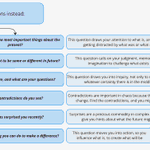
Four questions for any role:

styg retweeted
The Governance Review archive is complete: 42 editions covering every epoch from 508, right after the Chang hard fork, to 655.
Two years of Cardano governance, readable from the start:
dreptalk.com/governance-revi…
styg retweeted
New: drep.link
Every DRep with an on-chain name now has a free short link to their voting record on DRepTalk, like drep.link/cerkoryn
Prefer a different name? Pick your own in your DRepTalk settings.

ALT DRepTalk offers free short links for Cardano DReps featuring profile votes, rationales, and discussions. Format: drep.link/username. No signup or fees required.
styg retweeted

Meet The Scientist Redefining Intelligence With Michael Levin
"There's a FALSE assumption that Intelligence and cognition is rare in the tree of life and late in the evolutionary story. This is very wrong".
"Many of the characteristics, morphology, behaviour, phenotypes of organisms are not determined by their genes."
"Learning only needs a dynamical system made out of interactions that give way under stress. No genes necessary"
The remarkable @RichardWatson90, a coauthor on many papers with @drmichaellevin is live now! ⬇️
styg retweeted
I had Opus 5.5 ingest my book Artificial Fluency and had it render visuals for each chapter. What is wild is that this is just an 82 KB HTML file (I recorded the video so you can see it on X).
styg retweeted

wait… so you’re telling me these KOLs “printing” on fomo and pump were just:
> partnered with teams to buy coins using funds given to them
> paid cash to publicly hodl those coins
> never actually had their own capital at risk
> round-tripped the “profits” because it was never their money
> led thousands of their “followers” who are used as exit liquidity to the slaughterhouse
> and somehow convinced everyone they’re god-tier traders
wild. don’t confuse an undisclosed paid partnership with someone actually trading their own capital.
one is trading.
the other is paid marketing.
styg retweeted

This is too important to disappear under a long investigation, so here is the short version for everyone who did not want to read the full thing.
For 5 days, I recorded almost every Solana token launch I could capture.
The system collected 145,228 launches, roughly 29,000 new tokens per day. Then I stopped looking at the tokens and started following the wallets behind them.
The first thing that stood out was concentration.
Just 10 addresses created 8,895 tokens in 7 days. The largest created 1,621, roughly 1 launch every 6 minutes, around the clock.
These are normal keypair wallets, not Pumpfun service addresses. One of them repeatedly creates a token and then sells its own token within seconds or minutes.
The economics explain why this is possible.
A launch requires roughly 0.0089 SOL of rent-funded account creation, around $1 at the observed price.
Much of that rent can later be reclaimed when accounts are closed. In other words, producing another token is effectively close to free. Once the cost of manufacturing the asset approaches zero, the scarce resource is no longer capital. It is attention.
Then it gets more interesting:
I followed the funding layer behind one creator and found another wallet that had funded 22,258 token accounts, repeatedly with the exact same 0.00148844 SOL amount.
In one transaction, it distributed the same token in the exact same quantity to 11 different wallets.
It shows something important: holder counts can be manufactured mechanically and cheaply. The wallet had spent about 33 SOL just funding the accounts behind those distributions.
I followed one of those recipient wallets further.
Its recent activity consisted of DFlow swaps between roughly 0.0551 and 0.0567 SOL, repeating every few minutes with almost no variation.
Based on the observed cadence, that single wallet would generate roughly 17 SOL of trading volume per day.
Extrapolated across the 11 wallets from that distribution transaction, the observed rate would be around 190 SOL per day. That second figure is an estimate, not a measured daily total, but the transaction pattern itself is directly visible on-chain.
So the structure I found looks like this:
-Layer 1 creates the asset.
-Layer 2 can manufacture the holder count.
-Layer 3 can manufacture activity and volume.
Those are 3 of the main signals retail traders routinely use to decide whether something looks alive, distributed and actively traded.
And this is not just 1 wallet cluster. I checked 6 of the top 10 creator wallets.
They were funded from different sources, including Binance, Bybit, OKX and unrelated wallets, with wallet ages ranging from 10 days to more than 1 year.
I could not establish a common operator between them. That actually makes the finding more interesting: this appears less like 1 operation and more like a repeatable business model that multiple independent operators have discovered.
One of those creator wallets was also receiving Axiom Rewards, meaning the generated trading activity can potentially create an additional revenue stream through trading-terminal incentives.
The metadata has the same factory-like fingerprints.
In the portion I had processed, usepaid-app appeared on 569 different tokens, elonmusk was claimed as the X handle by 73, and individual image files were reused across more than 50 tokens.
Only 13.8% of the relevant metadata had been processed at that point, so those are minimum counts, not estimates.
The trading results:
Across hundreds of thousands of measured entry points, only 8.0% were profitable after 30 seconds, 8.7% after 60 seconds and 12.8% after 120 seconds.
Average returns were negative at every one of those horizons. A realistic bonding-curve round trip cost about 2.47% through fees, spread and impact before the trader had even made a directional mistake.
My ultra-fast test entered within 12 seconds of launch and exited within 30 seconds across 1,771 different tokens. It still averaged -2.41% per trade, with only 108 winners. The underlying directional edge was about +0.06%. The friction was about 40 times larger.
There was even a trap inside my own data.
The 5-minute survivors showed a positive average return, but only 16.5% of the original observations still had a measurable exit price at that point.
The apparently bullish result was survivor bias. Most of the sample had already disappeared from the calculation.
The chain already shows that tokens can be produced at industrial scale for almost nothing, holder counts can be engineered, trading activity can be automated, metadata can be recycled, and the average retail trader entering these launches is fighting brutal execution costs and terrible base rates.


styg retweeted

The idea that large language models aka “AI” can “think” or “create” in any meaningful way was based in a robotic mis-apprehension of the nature of human consciousness, which was powerfully elucidated 40 years ago by thinkers like John Searle. Large language models are machines, and human beings are flesh and blood. Its only 25 year old autists who don’t understand the difference or see how and why it matters.
No, AI doesn’t “think” — and it’s not going to destroy the universe, let alone write a decent rock and roll song or a novel. At the same time, it’s a powerful advance over previous knowledge based tools with amazing applications throughout the sciences and with the capacity to help us rewire everything from the professions to our educational system. The data centers that power these new tools are the equivalent of electrical power plants a century ago.
The impulse to ban these new technologies or bring them under centralized government control is like opposing electricity or demanding that the government hold a monopoly on steel production or radio. It’s at best a dead end, and at a worst a recipe for tyranny.
History, both ancient and recent, has taught us that there is no group of selfless experts in white coats who act in the public interest. COVID was only the latest reminder. As our founders wisely taught us, society is made up of competing interests which should check each other’s claims on power.
No one cares about Dario, his wife, or Sam Altman’s IPO. Its all noise. If they wasted hundreds of billions of dollars on a mechanistic idea of consciousness, they should have read John Searle back in college. That’s not my problem, or your problem, or society’s problem. Its their investors’ problem.
What we should be thinking and talking about now is how to use these powerful new tools to make ourselves and our society freer, healthier and more open to human creativity and protential. Bust up the knowledge monopolies. Make higher education free and available to everyone. Make access to the best legal and medical knowledge equally available to rich and poor alike.
Big social transformations are already afoot. Its time to man up and be Americans, get out of the big cities and their conformist group-think bubbles, and make a new Eden.
styg retweeted

I've been in a band called Young Man Winter for just a little longer than I've been building on Cardano. There are a few things I love about this band:
1. We write our own music, because we think it's important, even though most venues want cover bands who play the songs everyone already knows.
2. We all contribute to the song-writing process.
3. Sometimes I'm the lead singer. Sometimes my boy PJ is. Sometimes we sing together.
"Leadership" is shared. We work together and it's not that no one is in charge, it's that we take turns being in charge. Different songs feature each of us differently.
This is what I wish for in organizations where I take part as well. Even though it takes a bit more time, it's what I'm also so proud of @andamio_teams for building. Not a leader-less organization, but an organization full of leaders, who do what's needed, and who contribute to a more resilient whole.
And it's one of the weirdest things in my life to know that my band and the Andamio team don't know each other - maybe someday we'll overlap and I'll get tell everyone how much I love them all at once, then see what happens!
Anyway, we have a new EP today, and I'm really proud of it. It's title is in honor of my dear friend GH, who passed away last year, and it's about the homes we make and the homes we move on from over time.
Keep making stuff, everyone, whether it's music or software or experiences for other people. Build value of all kinds, and build communities, because our world needs you.
open.spotify.com/album/7s8Kt…

styg retweeted
DRepTalk v1.5.0 is out.
New, among other things: a Proposal Drafts category for feedback before you submit a governance action. Once the action is on-chain and links the draft, the draft closes and points to the live thread.
dreptalk.com/help/whats-new/
styg retweeted

Software development is changing fast. We want Cardano to benefit from it.
We brought our entire dev team together for a 2-day workshop to challenge how we build today, explore the new technologies reshaping our industry, and figure out how to put them to work for Cardano.
The goal is simple: better quality, stronger security, better software.
New tools are only valuable if we use them to build better.
