

Machine learning; genomics; jazz guitar.
Cambridge, MA
Joined August 2010
- Tweets35
- Following95
- Followers309
- Likes27

Pinned Tweet
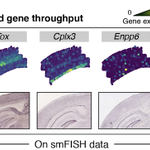
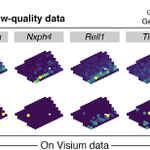
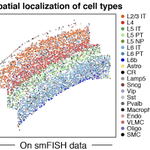
Excited to share Tangram, our method for mapping scRNAseq data on spatial data. Our work is part of the #BICCN and #HubMAP consortia. Collaboration led by Aviv Regev, between @broadinstitute, @Harvard, @skunkworksneu and @unifi.
biorxiv.org/content/10.1101/…


Tommaso Biancalani retweeted

It’s been a dream to measure single-cell genomics profiles in live cells. We are thrilled to share our latest work Raman2RNA (R2R) with Aviv Regev, led by Koseki Kobayashi @kjkk_beta, and our collaborators Tommaso Biancalani @tbyanc, Peter So, and Ramnik Xavier.

Raman2RNA: Live-cell label-free prediction of single-cell RNA expression profiles by Raman microscopy biorxiv.org/cgi/content/shor… #bioRxiv
Tommaso Biancalani retweeted

Excited that our PHAGE-ATAC work is now online in @NatureBiotech ! We engineered nanobody-displaying phages for single-cell protein profiling and present a single-cell platform to measure protein, chromatin and mtDNA genotypes. 1/n
nature.com/articles/s41587-0…

Tommaso Biancalani retweeted

I am so excited to share the news that our research work is finally out as pre-print. Thanks to @marcologgia1 @MGHMartinos and @KingsCollegeLon for making this happen! It's been an incredible beautiful journey working on this together.

The Pandemic Brain: neuroinflammation in healthy, non-infected individuals during the COVID-19 pandemic medrxiv.org/cgi/content/shor… #medRxiv
Tommaso Biancalani retweeted

Excited to share 'compositional perturbation autoencoder', our new tool for single-cell response modeling. Led by @MohammadLotfol1 & @AKlimovskaia @FacebookAI, we
combine interpretability of linear models with flexibility of DL. biorxiv.org/content/10.1101/…
ai.facebook.com/blog/ai-pred…


Tommaso Biancalani retweeted
Landscape of intestinal organoid regeneration just published @nature by @priscaliberali lab - 400k organoids imaged&assayed with 2.8k compounds. Amazing achievement+resource of organoid variation! See Prisca talk at @singlecellomics seminar this Friday. nature.com/articles/s41586-0…

Tommaso Biancalani retweeted

.@JoeBiden has a plan to build our country back better and create millions of jobs—jobs that can help working families get ahead. Joe helped manage the Recovery Act, which jumpstarted the longest stretch of job growth in our history. And he’ll do it again.

Tommaso Biancalani retweeted

We've been working on Seurat v4 for almost two years, and are excited to share it with you soon!
In a webinar w/@10xGenomics on 10/20, I'll introduce new methods to analyze multimodal single-cell data (i.e. from CITE-seq or the 10x multiome ATAC+RNA kit): 10xgenomics.com/event/integr…
Tommaso Biancalani retweeted

Wow! Evgenij told me about this when he started working on it, but he really made it work! I can imagine tons of applications!
Single-cell multimodal profiling of proteins and chromatin accessibility using PHAGE-ATAC biorxiv.org/content/10.1101/…

Bayesian segmentation of spatially resolved transcriptomics data biorxiv.org/content/10.1101/…
A microstructural neural network biomarker for dystonia diagnosis identified by a DystoniaNet deep learning platform pnas.org/content/early/2020/…

Tommaso Biancalani retweeted

Wonder which cells in the human body #SARSCoV2 could infect? Our international @humancellatlas team used millions of single cell measurements across human organs to see which cells make ACE2 & either TMPRSS2 or CTSL, key genes for viral entry. biorxiv.org/content/10.1101/…
Tommaso Biancalani retweeted
Excited to share Tangram, our method for mapping scRNAseq data on spatial data. Our work is part of the #BICCN and #HubMAP consortia. Collaboration led by Aviv Regev, between @broadinstitute, @Harvard, @skunkworksneu and @unifi.
biorxiv.org/content/10.1101/…
Tangram also spatially resolves chromatin accessibility patterns using SHARE-seq data. The key insight is to use multi-modal data (here, scRNAseq + scATACseq), map via the transcriptome, and transfer “the other modality” onto space.
