




The first time AI made me tear up I was biking, listening to a 15-min podcast Claude generated, connecting my journals, sleep and finances.
Six months in, I wrote up how to try it (alongside guardrails and the ~10% hallucination rate) 🧵
The context engineering trick to get high quality output is not giving the model all of your notes, but only what changed (think track changes).
I use Obsidian to take notes, which already snapshots every edit. I made a plugin to turn a week of those a single file that can be given to any LLM to make connections. @obsdmd
About 10% of the sentences are made up (e.g. one had my dad recovering from surgery in Estonia lol), so need to listen with vigilance.
Guardrails: no memory across sessions, no follow-up questions (avoid reassurance-seeking), a fresh session every 5-10 weeks. And it can't replace therapy.
Curious what you think if you end up taking a look :)
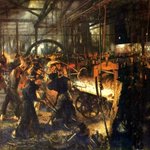
Burning tokens in 2026 = shoveling coal into the furnace in 1875
Making @DarioAmodei @sama and Jensen happy, the new oligarchs of our generation :)

Jaan Altosaar, PhD retweeted

What a week for China. Here's the thread 🧵1/10

China unleashed supercharged stimulus measures to reverse the country's economic slump. But is it enough?
@RChoongWilkins takes a closer look trib.al/9ZOeFAk
Jaan Altosaar, PhD retweeted

Recently overheard a Groq employee: apparently their per-token costs are 1-2 orders of magnitude higher than what they charge, and the new chip won't materially help. There's no credible plan to fix this. This is why they aren't raising rate limits. Very bearish.
Jaan Altosaar, PhD retweeted

A VC firm I had a Zoom meeting with used Otter AI to record the call, and after the meeting, it automatically emailed me the transcript, including hours of their private conversations afterward, where they discussed intimate, confidential details about their business.

Jaan Altosaar, PhD retweeted

I just discovered something called accidental baroque which are photographs that feel like baroque paintings.
I love this as a genre so much. Send me your accidental baroques.


Jaan Altosaar, PhD retweeted

Linear Algebra I

ALT 7 Spider-Man pointing at each other. The Spider-Man are captioned "det(A) != 0", "columns form basis", "rank(A)=n", "no free variables", "0 not an eigenvalue", "A invertible", and "Ax=b unique solution".
Jaan Altosaar, PhD retweeted

100% behind this.
Every student’s trajectory is different. Those in the middle of the class can overcome those at the top with time, if exposed to the right ideas.
There is no way to tell who is the best student until a decade passes and we see their contributions to the world.

Jaan Altosaar, PhD retweeted

College football is among the most exploitative and harmful institutions in the US. Coaches, AD officials, presidents and members of the sports media complex richly benefit as players bear the life-altering costs.
Our solution? Abolish it. For @thenation
thenation.com/?post_type=art…

Jaan Altosaar, PhD retweeted

WTF i literally just run this on the terminal:
$ pip install moshi_mlx
$ python -m moshi_mlx.local_web -q 4
and now have a fully voice to voice ai running locally on my mac 🤯

Moshi is a very nice/fun conversational AI audio 🔊 model release from @kyutai_labs .
Are you slowly losing faith in the objective reality and existence of Advanced Voice Mode? Talk to Moshi instead :) You can talk to it on their website: moshi.chat/
Or even locally on your Apple Silicon Mac with just:
$ pip install moshi_mlx
$ python -m moshi_mlx.local_web -q 4
I find the Moshi model personality to be very amusing: it is a bit abrupt, it interrupts, it is a bit rude but somehow in a kind of endearing way, it goes off on tangets, it goes silent for no reason sometimes, so it's all a bit confusing but also very funny and meme-worthy. This video "it's just the pressure" / "i just like working on projects" is a good example, soooo funny:
xitter.cf/AdrianDittmann/status/…
But in any case, it's really cool that I can even run this kind of voice interaction with my Macbook, that the repo is out on GitHub along with a detailed paper, and I certainly look forward to effortlessly talking to our computers in end-to-end ways, without going through intermediate text representations that lose a ton of information content.


Jaan Altosaar, PhD retweeted

chain-of-thought
tree-of-thought
monte-carlo-tree-of-thought
graph-of-thought
backtracking-tokens-of-thought
vector-space-of-thought
oh-wait-that's-just-a-model-of-thought
hilbert-space-of-thought
non-euclidean-geometry-of-thought
covariant-general-relativity-of-thought
Jaan Altosaar, PhD retweeted

Did no one look at Figure 1?


Pretty strong evidence of negative mental health effects of doing a PhD.
Recent working paper by
@EvaRanehill, @annahsandberg, Sanna Bergvall, and Clara Fernström.
Paper link: swopec.hhs.se/lunewp/abs/lun…

Jaan Altosaar, PhD retweeted

i've been going on and on about this, but basically, AI flips electricity on its head.
previously, nearly half the cost of electricity to the consumer was allocated towards distributing it where (and when) you want it.
AI data centers want upwards of hundreds of megawatts of power in one place, most of the time. (and for training they don't care about latency)
The most constrained thing isn't even the energy itself -- there's a surplus during the solar peak -- it's often the sheer availability & the interconnection. It now can take multiple years to get a grid interconnect to draw power of this magnitude, if the location can even handle it.
The capital cost of the power infrastructure is just a tiny fraction (like 3%!) of the capex of the compute, and even just the depreciation of the compute exceeds the cost of even premium power.
Hence, AI hyperscalers and those that aspire to be in their class are traveling to where the power is, are building where power has been (and there's legacy transmission to support it, like old nuclear plants) and are getting into the business of actually building powerplants and reactors.
Utilities and transmission and distribution companies, interconnection queues, all are used to react much slower -- over many years -- unlike the top technology companies, now vying to compete at the highest levels of AI performance.
Since ~99% of energy technologies previously died withering while waiting for utilities to consider them bankable, this represents an extremely fertile, attractive new state of play if you're bringing a new energy technology to market (💁🏻♀️🔆).
Whereas before you'd have to brave what was once called a "green valley of death", now you have teracap companies like microsoft bidding on:
- Conventional, large nuclear fission
- Small modular nuclear reactors
- Engineered Geothermal
- Fusion!
- Stirling Engines 😬
- Who knows what else
- Maybe you, Anon!
Even Tesla is standing up gas generator arrays to burn fossil fuels for their AI power supply. Shit is getting real

BREAKING: BLOCKBUSTER MICROSOFT DATACENTER DEAL RESURRECTING THREE MILE ISLAND NUCLEAR PLANT
Microsoft and nuclear plant owner Constellation have agreed to a massive, unprecedented deal to restart the closed Three Mile Island by 2028 to power its datacenters, per the New York Times.
The deal? Microsoft purchasing as much power as possible from its 880 MW reactor over 20 years for prices rumored to be above $100 per MWh.
Most famous for its 1979 meltdown, TMI closed in 2019 because of cheap fossil fuels and tech companies refusing at the time to consider buying its electricity to meet clean energy goals.

ALT Three Mile Island Plans to Reopen as Demand for Nuclear Power Grows https://www.nytimes.com/2024/09/20/climate/three-mile-island-reopening.html
Jaan Altosaar, PhD retweeted

Here is my talk at @MIT (after some delay😅)
I made this talk last year when I was thinking about a paradigm shift. This delayed posting is timely as we just released o1, which I believe is a new paradigm.
It's a good time to zoom out for high level thinking.
(1/11)

