




Robert Y. Chen retweeted

BREAKING NEWS
The 2026 #NobelPrize in Physiology or Medicine has been awarded to Karl Deisseroth, Peter Hegemann and Georg Nagel “for their discoveries concerning light-gated ion channels and optogenetics.”

Robert Y. Chen retweeted

Today we're announcing ESMFold2, an open scientific engine to power prediction, design, and discovery across protein biology.
The new model delivers state of the art performance on protein interactions, especially antibodies, a critical modality for therapeutics.
We have designed and validated miniprotein binders and single chain antibodies across five therapeutic targets that are important in cancer and immunology. We are seeing very high success rates, and affinities at levels consistent with therapeutic activity.
We’re also releasing an atlas of 6.8 billion proteins, and 1.1 billion predicted structures.
ESMFold2 is built on a state of the art language model that has been trained on billions of protein sequences.
A world model of protein biology emerges through language modeling.
We’ve used the techniques of mechanistic interpretability developed to understand large language models to understand the concepts ESM uses to represent proteins.
The model’s representation space has a compositional organization of features across scales, levels of complexity, and abstraction, that reflects and mirrors the understanding of protein biology developed through a century of empirical science.
This understanding emerges without prior knowledge, just from language modeling of protein sequences.
Language models are becoming a powerful substrate to understand and program biology.
The design of protein interactions is one of the most fundamental problems in biophysics, and has critical implications for the discovery of new medicines. A simple gradient based search with the model was able to discover high-affinity protein binders.
I'm excited by the potential this has to accelerate basic science and the understanding of proteins. And especially for the new avenues it opens up for therapeutic design and medicine.
Robert Y. Chen retweeted

Judging by my tl there is a growing gap in understanding of AI capability.
The first issue I think is around recency and tier of use. I think a lot of people tried the free tier of ChatGPT somewhere last year and allowed it to inform their views on AI a little too much. This is a group of reactions laughing at various quirks of the models, hallucinations, etc. Yes I also saw the viral videos of OpenAI's Advanced Voice mode fumbling simple queries like "should I drive or walk to the carwash". The thing is that these free and old/deprecated models don't reflect the capability in the latest round of state of the art agentic models of this year, especially OpenAI Codex and Claude Code.
But that brings me to the second issue. Even if people paid $200/month to use the state of the art models, a lot of the capabilities are relatively "peaky" in highly technical areas. Typical queries around search, writing, advice, etc. are *not* the domain that has made the most noticeable and dramatic strides in capability. Partly, this is due to the technical details of reinforcement learning and its use of verifiable rewards. But partly, it's also because these use cases are not sufficiently prioritized by the companies in their hillclimbing because they don't lead to as much $$$ value. The goldmines are elsewhere, and the focus comes along.
So that brings me to the second group of people, who *both* 1) pay for and use the state of the art frontier agentic models (OpenAI Codex / Claude Code) and 2) do so professionally in technical domains like programming, math and research. This group of people is subject to the highest amount of "AI Psychosis" because the recent improvements in these domains as of this year have been nothing short of staggering. When you hand a computer terminal to one of these models, you can now watch them melt programming problems that you'd normally expect to take days/weeks of work. It's this second group of people that assigns a much greater gravity to the capabilities, their slope, and various cyber-related repercussions.
TLDR the people in these two groups are speaking past each other. It really is simultaneously the case that OpenAI's free and I think slightly orphaned (?) "Advanced Voice Mode" will fumble the dumbest questions in your Instagram's reels and *at the same time*, OpenAI's highest-tier and paid Codex model will go off for 1 hour to coherently restructure an entire code base, or find and exploit vulnerabilities in computer systems. This part really works and has made dramatic strides because 2 properties: 1) these domains offer explicit reward functions that are verifiable meaning they are easily amenable to reinforcement learning training (e.g. unit tests passed yes or no, in contrast to writing, which is much harder to explicitly judge), but also 2) they are a lot more valuable in b2b settings, meaning that the biggest fraction of the team is focused on improving them. So here we are.

Robert Y. Chen retweeted

Examining APA’s Proposed Redesign of the DSM
Can the future DSM overcome the epistemic arrogance of its predecessors?
psychiatrymargins.com/p/exam…

Robert Y. Chen retweeted

If a minimum of just two patients is required to go from plausible mechanism to pivotal study, the implications for all rare diseases are enormous.
Imagine spending $1M-2M over 1-2 years in biotech and making a 100X return on a PRV sale worth $100M-$200M.
Can’t speak for anyone else, but I sure see the opportunity to make medicines for rare disease kids and, at the same time, make a massive return for investors.
Robert Y. Chen retweeted
In the March cover story for Psychiatric Times (@PsychTimes ), I provide an overview of the proposed changes to the future DSM, accompanied by some personal commentary and suggestions of my own.
My suggestions revolve around the following points:
· Diagnostic Formulation Needs to Be Linked to Treatment
· The Missing Domain: Psychological Factors and Personality Traits
· DSM’s Notion of Dimensionality Is Underdeveloped
· Major Categories Should Not Become the New “Unspecified”
· The Definition of Disorder (and the Proposed Name Change)
· Indicate the Degree of Empirical Validation for Specific Diagnoses
· Explain Why Diagnostic Thresholds Are What They Are
· Include HiTOP in the DSM Appendix

Robert Y. Chen retweeted
Your brain on stimulants vs your brain on ADHD
There is more to what ADHD is than what stimulants do, and there is more to the clinical use of stimulants than the boundaries of ADHD
psychiatrymargins.com/p/adhd…

Robert Y. Chen retweeted

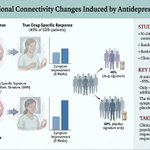
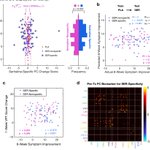
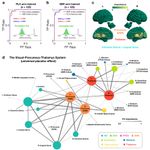
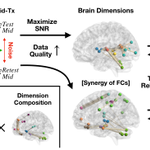
Researchers have identified two #biomarkers that could distinguish between people with and without #schizophrenia, according to a study published by Drs. Robert Chen (@therealRYC) and Debby Tsuang at @UWMedicine.
Learn more: bit.ly/45lTxXI


Robert Y. Chen retweeted
Sure, so am I - how that translates into what we convey to patients should reflect that.
“SSRIs are neurotoxins that destroy synapses. They cause terrible withdrawal and can kill you, you’ll never get off of them if you start.” You can easily find a panel of studies that you could point to that say this.
“SSRIs cause synaptic growth in human brains and are life saving. Your depression will get better in at most, 6 weeks - maybe even in just two weeks”. You can also find studies that point to this.
“SSRIs cause changes to the brain and we don’t know the significance of that - what we do know is that after many clinical trials in patients who also suffer from X, it may help with Y. Here are the common and rare side effects. How can I help you make the best decision for your health? Are there other questions you have, or other things you’ve heard about them?” This is the average of the studies in the literature.
My take is you should be using examples that represent the totality of the literature as best you can (to the limit of your knowledge, nobody can know everything). Build trust with a patient and when you do, never sacrifice it for an ideology. Just do right by patients.
I don’t think that’s a controversial take. If it is, let me know.
Robert Y. Chen retweeted

That is a thoughtful way to put it @therealRYC Psychiatry sits in real tension between benefit and harm, and reasonable takes will inevitably unsettle people who have lived on either side of that divide. Polarization often says more about accumulated pain, mistrust, and broader social strain than about any single argument. Sitting with that discomfort, rather than rushing to defend or dismiss, is probably where the field actually learns and moves forward.
Robert Y. Chen retweeted

I have written this in response to several ongoing debates, both on and off social media, about diagnosis, different clinical classification systems, countertransference, and subjectivity.

Robert Y. Chen retweeted
Antipsychotic tapering appears to help long-term in a new trial but not for the obvious reason…
And considerable uncertainty remains
My discussion of the HAMLETT study by Sommer et al. (October 2025, JAMA Psychiatry)
psychiatrymargins.com/p/anti…

Robert Y. Chen retweeted
I think this thought process is worth talking about.
You're proposing that because some people get better, we shouldn't throw the baby out with the bathwater.
In many cases, I agree!
There's a BUT, though...
There is one area that you need to also be able to defend if you believe that we should ignore treatment means:
The placebo arm also has a range of people who get better - significantly so.
Does that mean we should be offering Placebo to patients? Following the line of reasoning you propose, the answer is yes.
So - how do we make sense of this?
I think we need to use averages as a Bayesian prior as a foundation for starting to make a treatment decision. Yes, the best clinicians will be (and really, all clinicians should be) taking into account a holistic picture of the patient's individual factors to come to a shared decision about next steps.
Throwing out randomization is a sure path to bias. I don't use bias pejoratively - we all have bias. The question is how to reduce it in ways that maximize the chances of response in the most number of people (very utilitarian).
Combine a utilitarian view with consideration of personalized factors and, in my view, you get a pretty good form of patient care.
Robert Y. Chen retweeted
The much, much scarier result is the large increase in psychiatric hospitalizations.
Within 4 years of starting a PhD, psychiatric hospitalizations rose by 150%

Robert Y. Chen retweeted
ADHD, Boredom Proneness, and the Pills That Make Tedium Tolerable
psychiatrymargins.com/p/adhd…

Robert Y. Chen retweeted

New US adult psychotropic prescribing data from HHS:
Since 2005:
- SSRIs up 39%
- Stimulants up 182%
- Antipsychotics up 58%
- Mood stabilizers up 53%
These numbers align with perceptions of increased prescribing, though less than some suggest. We're desensitized to such figures, but they remain high. Mood stabilizer data may be skewed due to non-psychiatric uses.


Robert Y. Chen retweeted
Up to 90% of patients with ADHD experience at least one comorbidity, from anxiety to substance use disorders (Kessler et al., 2006).
These overlaps complicate diagnosis and treatment, making it essential for clinicians to recognise and address them effectively.
Here are 10 key ADHD comorbidities and evidence-based strategies to navigate them. 👇🧵

Robert Y. Chen retweeted

🧵STAR*D and the Cost of Neglecting Phenomenology in Depression 🚨1/11
Finished a talk for GPs on 👉Depression and its forms – over 300 registrations.
Today was about spotting the various forms of depression.
Patients come with signals.
Our role is to see the wrapper around those signals - is it embedded within a wider construct?
That’s where the answers lie. 👇

Robert Y. Chen retweeted
Hm..
Think about what you’re saying.
You’re saying if a mom has a medical condition, it’s horrific to tell them to continue their medication.
Pregnancy is hard enough as it is. The body changes in ways that are immensely stressful. Men don’t ever have to go through this change.
And yet much of society takes it for granted that women should just bear the burden.
Then add on putting more risk to them by making statements like “it’s horrible” to take their meds.
As a doctor, I simply cannot say something so irresponsible.
Our job is weigh the evidence about harm to mother and harm to fetus.
To present the data.
To help moms make a sometimes impossible choice.
If that’s horrible, then sign me up.