

Plant-Soil Interactions Group at @Agroscope, and the Agroecology & Plant-Microbiome Interactions Group at @UZH_ch led by Prof. Marcel van der Heijden.
Zur
Joined July 2019
- Tweets1.3K
- Following635
- Followers8K
- Likes2.8K



Pinned Tweet
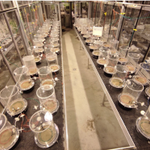
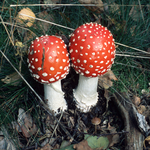
Do you want to know why we are so fascinated by the #symbiosis between #mycorrhizal #fungi and land plants? Have a look at this picture. Left a grassland microcosm inoculated with arbuscular mycorrhizal fungi and right a microcosm without. Initially they were exactly the same!

van der Heijden Lab retweeted

Endolichenic fungi—microbes living inside lichens—are emerging as a powerful source of bioactive natural products. This updated review summarizes advances since 2015.
doi.org/10.3390/jof10020099
#EndolichenicFungi #NaturalProducts #DrugDiscovery #FungalDiversity

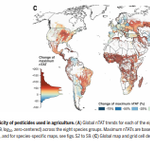
The Toxicity of applied pesticides is increasing worldwide reports an important new paper by Wolfram et al. published this week in Science.
It appears that especially in Africa, parts of the USA, Asia and South America toxicity levels have increased greatly (see figure below).
see: lnkd.in/gdXce4fT
It links to our recent paper reporting widespread occurrence of pesticides in Europe and that pesticides have a major impact on soil biodiversity (lnkd.in/gHt5Dzzx).

Some further reflections on our recent findings that 70% of the soils in Europe contain traces of pesticides and that pesticides have a major impact on soil ecosystems and soil biodiversity:
rdcu.be/e1bBm
1) our study demonstrates that pesticides have a clear impact on soil biodiversity and are a major disturbance to soil ecosystems (some organisms benefit, like a range of bacteria, while others are suppressed (like beneficial mycorrhizal fungi)
2) a wide range of pesticids are very persistent in soils and can stay there for years, even decades. Many pesticides are much more persistent as their half-life time indicates.
3) Unfortunately, many pesticides are not very specific and not only target pests but also other organisms including several beneficial soil organisms (such as mycorrhizal fungi).
4) if a farmer sprays pesticides, large amounts (up to 70%) do not only reach the targeted pest, but fall on the soil or end up in the air.
5) If we had used more sensitive methods, probably 90% (or more) of the tested soils in Europe contained traces of pesticides. We do not see them, but they are there.
6) There is a good reason why pesticides are so widely used. Many of them can effectively combat diseases, pests or kill weeds. It is important to know that for many crops there are disease resistent cultivars available (such as fungi resistance grape cultivars). If farmers would grow such resistent cultivars or have more extensive crop rotations, they can drastically reduce pesticide use which also can save money because pesticides are not always cheap. It is important that consumers buy such resistent cultivars and support organic farmers or farmers with integrated production aiming to lower pesticide use.
7) organic farmers also use specific pesticides (natural substances allowed in organic farming). Farming is about producing enough food, so pests need to be suppressed.
8) Pesticides are very regularly detected in streams, rivers and even in our drinking water. Some are linked to human diseases.
9) in Switzerland the governmental agencies have banned many pesticides considered to be toxic or risky (over 225 substances have been banned in the last 20 years).
10) other farming practices like tillage or fertilisation also have a big impact on the soil ecosystem. The difference with tillage is that the soil can recover, while some pesticides, once applied stay in the soil for decades. It is not well understood and investigated what these traces are doing. Are they simply sitting there (covered within aggregates) or are they "silent" background actors that influence soil biodiversity and soil functioning?
11) Pesticides are an integral part of agriculture in many parts of the world. I (MH) personally do not understand it why (big) companies still sell specific synthetic pesticides (e.g. in Africa) that have been banned in many countries and where risk assessment procedures in different countries (and by various independent organisations) show clearly they are problematic for humans or for the environment. Several of these companies are very succesful and have many other succesful products. Hence, is it really worth the money?

van der Heijden Lab retweeted

Thanks to @CropGlobal the the support for @ICOM2026
@Prof_Braj_Singh @mycorrhiza_ims
#Mycorrhiza @vandeHeijdenLab #JanJansa

🚨NEW AWARDS🚨
🌾Supported by the Journal of Sustainable Agriculture and Environment and @CropGlobal
🍄Low-Income Delegate Registration Awards for #ICOM2026
🏅Student (2) and ECRs (1)
⌛Deadline: February 14
📝Application form and info 👉 icom2026.org/

van der Heijden Lab retweeted

Pleased to share our article in @Nature
'Pesticide mixtures harm soil biodiversity'.
Along with @alpedrinhoBR we highlight policy implications& future research of new pub from @vandeHeijdenLab for pesticide regulations & soil biodiversity protection
rdcu.be/e1aHs

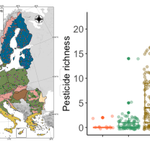
Over 70% of the European soils are contaminated with traces of pesticides. Our new study published in "Nature" demonstrates that pesticide residues influence soil biodiversity and negatively impact several groups of beneficial soil organisms.
nature.com/articles/s41586-0…
Statistical models revealed that pesticides were the second strongest predictor of soil biodiversity after soil properties. Earlier work demonstrated that several pesticides negatively affect aboveground organisms like bees, specific bird species and insects. This study, now extends these findings to the “underground” measuring at continental scale in Europe.
It appears that pesticides are a major disturbance to the soil ecosystem and change the composition and diversity of belowground soil communities. Some microbes benefit (like the richness of bacteria) while others such as beneficial arbuscular mycorrhizal fungi are suppressed and show negative relationships with pesticides. The observed negative impact of pesticides on arbuscular mycorrhizal fungi confirms earlier work we did (e.g. Riedo et al. 2021, ES & T; & Edlinger et al. 2023, Nature Ecology & Evolution).
It is important to stress that in our work we searched for the relationship between pesticides and soil biodiversity metrixes using statistical tools (general lineair models and variance partitioning). Thus, using this very large data-set we searched for links and associations between variables aiming to identify drivers. Further experimental studies, with direct pesticide application manipulation, ideally performed at multiple locations in Europe and ideally using sites or soils without pesticide traces need to confirm these findings. Also, this work demonstrates that risk-assessment studies and pesticide regulations need to consider whole soil ecosystems and include arbuscular mycorrhizal fungi, when evaluating the effects of pesticides on the environment, rather then a few selected model species.
A big accomplisment by Julia Köninger & Maeva Labouyrie in collaboration with many colleagues including Cristiano Ballabio, Olesya Dulya, Vladimir Mikryukov, Ferran Romero,
Antonio Franco, Mo Bahram, Panos Panagos, Arwyn Jones, Leo Tedersoo, Alberto Orgiazzi and Maria Briones

van der Heijden Lab retweeted

We are looking for a Head of Proteomics Unit at our international and dynamic Max-Planck-Institute of Molecular Plant Physiology in Potsdam Germany. Applications are welcome until 30.September 2025. jobs.mpimp-golm.mpg.de/jobpo…
van der Heijden Lab retweeted

New paper alert!
Seven years later: native AMF inoculation improves grassland successional stage, floristic quality index, and diversity, while suppressing weeds academic.oup.com/femsle/arti…
#amf #mycorrhizae #restoration #biodiversity

van der Heijden Lab retweeted
A new PhD position is available in our lab to explore organic and metabolic inputs to improve farms, via our recent funded @SmartHortCentre
Open for both domestic and international candidates
Application deadline- 31 August, 20025.
Details below
westernsydney.edu.au/schools…

van der Heijden Lab retweeted

We have changed! The International Mycorrhiza Society has a new logo and website featuring award winners, all our newsletters, searchable program abstracts from past ICOMs, info on future ICOMs, and beauty shots of fungi from our community. Enjoy!

🎉 We’ve got a new look! New logo & a fully refreshed website 🌱✨
Check it out at mycorrhizas.org/ — we’re super excited to share it with you.
Hope you love it as much as we do! 💚

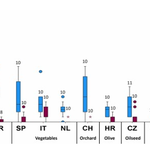
Highly relevant new study demonstrates that pesticides are widespread in harvested crops across Europe. Samples from 17 different crops in 10 countries were collected and pesticide residues were detected in 86% of sampled crops under conventional managment and in 40% of harvested crops under organic management. Also, most harvested products under conventional management contained multiple pesticide residues (on average app. 4 residues). It looks like we have to accept that it is hard to eat pesticide free food, especially if produced conventionally.
See: Tourinho et al. 2025:
lnkd.in/ej_RZMU2

van der Heijden Lab retweeted
This is a significant outcome for @CropGlobal and @WileyGlobal . It is also a reflection of high quality submissions, hard work and professionalism of reviewers, editors and editorial staffs! We look forward to your continuing supports and high quality submission.

The 1st @Clarivate Impact factor of Journal of Sustainable Agriculture & Environment is out- it is 3.6- places it among the Q1 ranked journals in Multidisciplinary Agriculture We look forward to continuing high quality submissions & reviewing supports from research community

van der Heijden Lab retweeted

New online! A genomic perspective on fungal diversity and evolution nature.com/articles/s41579-0…

van der Heijden Lab retweeted
New paper from lab-
Microbiome-facilitated plant nutrient acquisition. in @cellhostmicrobe
Focusing on emerging insights, we evaluate potential opportunities to harness plant microbiomes & metabolites to sustainably supply nutrients in ecosystems'
sciencedirect.com/science/ar…


Our new paper demonstrates that soil microbial diversity plays a key role in driving plant growth, decomposition and carbon substrate use. Interestingly, pesticides application alters the role of microbial communities, especially fungi in driving ecosystem functions.
doi.org/10.1016/j.soilbio.20…
Pesticide application reduced the relative importance of fungal richness in explaining variations in plant biomass production and litter decomposition. Conversely, pesticide application increased the relative importance of bacterial richness in explaining carbon substrate utilization, particularly for carbohydrates and amino acids. Great work by Ferran Romero in collaboration with Shuo Jiao.

A fourpartite protist-bacteria-fungal-plant symbiosis as a driver of the mycorrhizal symbiosis?
our study indicates that mycorrhizal fungal hyphae not only associate with specialised bacterial communities (see link.springer.com/article/10…) but also associate with specific protist communities.
See: rdcu.be/dTuof
doi.org/10.1007/s00572-024-0…
By Changfeng Zhang; @RL_Berendsen;
@stefan_geisen

Polygamy in trees?
New paper shows that dual associations with ecto- and arbuscular mycorrhizal fungi improve the host range and environmental niche of trees.
Ecology Letters: Rog et al.: dx.doi.org/10.1111/ele.70132
When trees and soil fungi form close associations with each other, both partners benefit. Many tree species have further enhanced this cooperation by forming a concurrent symbiosis with two different groups of mycorrhizal fungi. Those trees cope better with water and nutrient scarcity, which is an important trait for forestry in the face of climate warming.
Despite having enormous root systems, trees often are unable to take up enough water and nutrients from soil to grow in a healthy manner. That’s why most terrestrial plants have formed symbiotic associations with fungi over the course of evolution. These mycorrhizal fungi, which either wrap themselves around roots or penetrate the cells of root systems, receive part of the sugar produced by plant photosynthesis from trees as a source of energy. In exchange, trees receive nutrients like phosphate and nitrate as well as water from the fungi in an unromantic marriage of convenience of sorts.
Using more than 400 different tree species spread around the world as a basis, researchers at the University of Zurich (UZH) and Agroscope have shown that many of them have further improved this cooperation system. Although most tree species form an association only with certain single members of different groups of mycorrhizal fungi, “some woody plants form an alliance with two fungus varieties simultaneously,” says Ido Rog from the Department of Plant and Microbial Biology at UZH. The researchers now show that “bigamy” of this kind improves tree fitness, making trees less sensitive to drought and rendering them better able to cope with nutrient scarcity. “They thus are able to colonize a much larger territory than tree species that form a symbiosis with only one fungus type can,” lead author Rog says. The broader geographical range and the expanded environmental niche space occupied by those trees are independent of their phylogenetic architecture and evolutionary history.
In forestry, this knowledge could be helpful in the future for selecting tree species specialized in dual fungal associations because they are likely to be better at coping with ongoing global warming and could be used to colonize dry climate zones,” UZH professor Marcel van der Heijden explains.
Literature: Ido Rog, David Lerner, S. Franz Bender, Marcel G.A. van der Heijden. The increased environmental niche of dual‐mycorrhizal woody species. Ecology Letters. 15 May 2025. DOI: doi.org/10.1111/ele.70132
Contact: Dr. Ido Rog
Department of Plant and Microbial Biology
University of Zurich
[email protected]

van der Heijden Lab retweeted

The figure in this article illustrates exactly how most biology papers are secretly p-hacked. A large number of hypotheses is explored, and only the ones that form a coherent story are reported.
This is actually the main reason behind the replication crisis in biology IMO.


Discovery requires an openness to new ideas and unexpected insights go.nature.com/4i1wQf5
rdcu.be/ej7H7
Pesticides and Copper in Swiss Vineyards. Our new paper by Barmettler et al. is out and just published (lnkd.in/egBeX6mT):
We analysed 146 synthetic pesticides and copper in 59 organic and conventional vineyards in Switzerland.
On average we observed 29 different synthetic pesticides in conventionally managed vineyards. The highest number of pesticides was 60, found in a few grams of soil in one vineyard. Up to 32 pesticides were found in long-term organic fields, where no synthetic pesticides had been applied for many years.
Copper concentrations did not vary between organic and conventional vinyards – it has often been thought that organic farmer stronger pollute the soil with copper (because they are not allowed to apply synthetic pesticdes). However, our study indicates that this not correct.
More to come soon. Currently Elias analysis the link between pesticides and copper with the soil microbiome.
Excellent work and analysis by Elias Barmettler and a very great team effort (1+1=3) at Agroscope (various departments and locations) and University of Zurich with Thomas Bucheli, Steffi Lutz, Katie Mackie Haas, Pierre Henri Dubuis, Andrea Rösch, Lina Egli-Künzler, + further team members.
