

Vascular Surgeon. Jazz aficionado. Bassist. Technophile. Cynic. INTJ. @EJVES_ESVS. Editor-in-Chief #EJVESforum. At the crossroads where Science meets Art.
Joined September 2012
- Tweets6.1K
- Following570
- Followers794
- Likes8.9K



Arindam Chaudhuri retweeted

📢Which outcomes matter most in SWHSI Wounds Research? Tell us in the SWHSI-COS Delphi survey. If you work with surgical patients/experience with wounds healing by secondary intention we want to hear from you! ➡️york.qualtrics.com/jfe/form/…
@SoTV_UK @Wounds_UK @VSGBI @for_svn

Arindam Chaudhuri retweeted

At 74, Rantabali Ghosh wakes up at 5:30 AM to bring smiles to Kolkata’s streets, one Alpona at a time! 🎨❤️ What began as a simple initiative to surprise neighbours has become a beautiful mission to preserve Bengal’s traditional Alpona art. From decorating dilapidated houses to bringing joy to elderly couples and slum residents, her artwork proves that art knows no boundaries. Inspired by her grandmother and Rabindranath Tagore’s artistic legacy, she hopes to revive a fading Bengali tradition. Her message? Modernisation matters, but why should we forget our cultural roots?
@ratnabali.ghosh
#AlponaArt #BengaliCulture #IndianArt
[Traditional Alpona Art Of West Bengal, 74-Year-Old Rantabali Ghosh Reviving Bengali Cultural Heritage]
Arindam Chaudhuri retweeted

🇫🇷 🎯QUERY: Can grade III blunt abdominal aortic injury (seat belt aorta) in a child be safely managed conservatively? 🩺🚗
This case report published in #EJVESForum by Fourrier et al. describes the successful 8-year conservative management of a grade III blunt abdominal aortic injury (BAAI) in a 10-year-old child followed through to adulthood.
💡 KEY FINDINGS & CLINICAL MANAGEMENT:
· Initial Presentation: A 10-year-old female involved in a high-kinetic motor vehicle collision (90km/h) presented with a classic seat belt sign and a grade III infrarenal aortic injury featuring circumferential intimal dissection extending to the common iliac arteries with a 13-mm focal dilatation.
· Conservative Strategy: Despite injury severity, the patient was hemodynamically stable with adequate distal perfusion. Management combined strict blood pressure control (target systolic <110mmHg via labetalol) and intensive duplex ultrasound surveillance to avoid the risks of paediatric endovascular or open intervention.
· Long-Term Growth Tracking: Over 8 years of follow-up (age 10 to 18), the ectatic aortic segment increased proportionally from 12 mm to 22 mm, maintaining a stable ectatic-to-proximal diameter ratio (1.3–1.9), which indicated proportional growth rather than pathological aneurysm expansion.
· Final Functional Outcome: At age 18, the patient remains completely asymptomatic with normal ABI values (1.05 right, 0.95 left), normal pedal pulses, stable moderate left common iliac artery stenosis, and an active lifestyle without limitations.
🚀 TAKEAWAY: Avoiding Pediatric Intervention Through Rigorous Surveillance
In selected hemodynamically stable pediatric patients with contained BAAI, conservative management with tight blood pressure regulation and radiation-free duplex monitoring is a viable strategy. It avoids the long-term pitfalls of undersized devices and graft migration during somatic growth, deferring potential interventions until skeletal maturity.
Read the full Open Access article by Fourrier et al. online 👇
ejvesvascularforum.com/artic…
#EJVESforum #VascTwitter #VascularSurgery #SeatBeltAorta #PediatricTrauma #AorticDissection #MedEd
@vascularis @bazinger_z @FLareyre @MariaKatsarou14 @NicLeoneMD @ESVSmembership @EVST_ESVS @PediTraumaSoc


Arindam Chaudhuri retweeted

For 40 years, Bengali newspapers were printed with letters cut down to fit a machine. In 1978 one of them asked a young Sanskrit scholar in England to fix that.
In 1938, Anandabazar Patrika's proprietor, Suresh Chandra Majumdar, spent years with America's Mergenthaler Linotype to mechanise Bengali for fast newspaper printing.
The result, Linotype Bengali No. 2, was a feat. But hot metal forced hard compromises.
Conjunct letters could not be stacked properly, graceful forms were flattened, and the whole script was squeezed into 90 glyphs.
40 years later, in 1978, Anandabazar went digital. It bought the Linotron 202, a phototypesetter that drew letters from outlines stored on magnetic tape, and asked Linotype's British arm for a Bengali font in two weights.
The job went to a young research assistant, Fiona Ross, who held a postgrad diploma in Sanskrit.
She went back to old Bengali manuscripts and printed books, including an 18th century manuscript at the British Library, and brought back letters the machines had killed.
Tim Holloway drew them. Anandabazar staff and Dr Tarapada Mukherjee at SOAS, London, checked the glyphs before digitisation in Frankfurt.
The new font had over 300 glyphs. Every character had to fit a grid of 54 units.
Then the harder problem....
A keyboard has about a 100 keys, but Bengali has 1,000s of conjuncts. So Ross and Dr Mike Fellows built a phonetic keyboard.
You type the way a word sounds, and Fellows' software assembles the conjunct.
Linotype never patented it...
India adopted it, and Ross has written that it became the blueprint for keyboards in other Indian scripts.
The light weight went into use at Anandabazar in spring 1981. Linotype stopped making the font in the early 1990s, but Indian companies had copied it so widely that one vendor said pirated users outnumbered his licensed ones three to one.
Sources: Riccardo Olocco, MATD essay, University of Reading; Fiona Ross, The Printed Bengali Character and Its Evolution (1999).
Photo: Linotype UK's Type Design Department, Cheltenham, 1983, with letterform drawings on the wall.

Arindam Chaudhuri retweeted
In 1935, W. B. Yeats, by then a Nobel poet, wrote to a man he had not seen in 50 years.
"I have often wondered where you were."
Then: "You are vivid in my memory." And: "My wife tells me that I often quote you."
The man was Mohini Mohun Chatterji, a Bengali lawyer, descendant of Raja Ram Mohan Roy.
In 1884 he sailed to Europe with Madame Blavatsky and Colonel Olcott. In late 1885 he spent a week in Dublin with a group of young Irishmen that included the young Yeats. Yeats said that week gave him "my first philosophical exposition of life."
In 1886 Mohini went to America. He lectured in Boston and New York, and in 1887 his Bhagavad Gita translation with commentary was published in Boston.
That is 6 years before Vivekananda spoke in Chicago.
Yeats later wrote a poem about him. Its last line: "Men dance on deathless feet."
P.S. The Open University's Making Britain project, citing Harivansh Rai Bachchan's study "W. B. Yeats and Occultism", reports that in the early 1930s Mohini was a blind old man living in London with his daughter.
Source: Mukhopadhyay, Numen 67 (2020)

A nice paper recalling this approach, and more on hostile groins and related anatomical aspects also due from @ManarKhashram et al 🇳🇿...

🇫🇷 🎯QUERY: Is obturator foramen bypass (OFB) still a durable and viable extra-anatomic option for hostile groin infections? 🩺🦵
This original research published in #EJVESForum by Pascucci et al. evaluates 26 consecutive obturator foramen bypass procedures over a 22-year period at Henri Mondor University Hospital, highlighting its long-term patency and role in complex septic groin management.
💡KEY FINDINGS:
· Indications & Patient Profile: Conducted on 26 patients (mean age 64 years; 69% men). The primary indication was extensive groin infection involving native vessels or prosthetic material (81%), with 23% performed under emergency conditions for hemorrhagic shock.
· Graft Selection: Cryopreserved arterial allografts were the primary conduit of choice (62%), followed by great saphenous veins (15%) and superficial femoral veins (11%).
· Patency & Limb Salvage: Primary patency rates were 88% at 12 months and 83% at 24–60 months. Complete wound healing was achieved in all surviving patients (median delay of six months).
· Infection Control & Durability: There were zero cases of bypass re-infection requiring removal during the follow-up period. Limb salvage was achieved in all but one patient.
· Early Mortality & Complications: Thirty-day mortality was 15%, reflecting the critical initial clinical condition and severe septic or hemorrhagic presentation of these patients. Early re-interventions were required in 31% of cases, mostly for local wound debridement.
🚀 TAKEAWAY: Demystifying a Life- and Limb-Saving Technique
Despite historical perceptions of technical complexity, obturator foramen bypass offers excellent long-term patency and infection-free durability. It remains an essential, reliable extra-anatomic revascularization strategy for severely hostile groins when managed in experienced centers.
Read the full Open Access article by Pascucci et al. online 👇
ejvesvascularforum.com/artic…
#EJVESforum #VascTwitter #VascularSurgery #GroinInfection #ExtraAnatomicBypass #ObturatorBypass #MedEd
@vascularis @bazinger_z @FLareyre @MariaKatsarou14 @NicLeoneMD @ESVSmembership @EVST_ESVS

Arindam Chaudhuri retweeted

We can’t keep calm. It’s the biggest and the grandest festival in Kolkata.
India just witnessed to one of the most unique and largest drone shows to welcome the announcement of UNESCO recognised Durga Puja in Kolkata.
Great initiative by @SuvenduWB.

Coming to the end of my tenure as Editor-in-Chief of the #EJVESforum @EJVES_ESVS it has been occasionally challenging but always rewarding in many different ways...
🤖 Made with AI


Great teamwork with great results!
Great science is built on great teamwork! 🇷🇸🍻
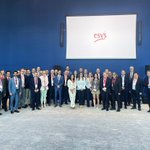
An incredible couple of days in Belgrade at the 40th ESVS Annual Meeting with the #EJVESForum editorial team. From productive, forward-thinking strategy sessions around the board table during the day to well-earned beers and great conversations by night—it’s the shared passion that make this editorial team so special. We are also excited to officially announce the appointment of our new Editor-in-Chief @bazinger_z! 🚀
A new course is set for #EJVESForum following the path set by our current Editor-in-Chief @vascularis
Stay tuned for what’s coming next! 📖✨#ESVS2026 #EJVESForum #VascTwitter #VascularSurgery #AcademicPublishing #MedEd #Belgrade2026 #OpenAccess @FLareyre @NicLeoneMD @MariaKatsarou14 @ESVSmembership @EVST_ESVS

Arindam Chaudhuri retweeted

A bunch of nice people in Belgrade 🇷🇸 So good to catch up with everyone at #ESVS2026! @ESVSmembership
@vascularis


RT @EJVES_ESVS: Look out for the team of editors, reviewers associated with the #EJVESforum @EJVES_ESVS - come and meet us at the booth -…

Where do the leading papers, practical workshops and fresh ideas in vascular surgery come together?
At #ESVS2026 in Belgrade, you will find opportunities for academic growth, hands-on training and insightful discussion.
The Top Papers of 2025 from EJVES and EJVES VF will celebrate standout original research, reviews, randomised controlled trial papers, Jugaar papers and research letters, while also recognising a new EJVES Vascular Forum prize for the best paper published in 2025.
Looking to strengthen your academic skills? The workshops offer practical guidance for every stage of the publication process:
- How to publish a systematic review/meta-analysis
- How to write & review a paper
For those interested in editorial development, the Journal Course: Becoming an EJVES Reviewer offers practical guidance for clinicians and researchers interested in peer reviewing for EJVES, including reviewer grading criteria and critical appraisal of manuscripts.
For a broader perspective on surgical practice, the Human factors in vascular surgery – NOTSS collaboration workshops explore the cognitive and social skills that support safer patient care and better outcomes.
And if you like to keep up with the latest in the field, the Podcast Corner is back in Belgrade, a place to talk about new ideas, share episode suggestions and meet the team behind the ESVS Podcasts.
ESVS 2026 brings together the academic and practical sides of vascular surgery. Registration is still open; join us in Belgrade and secure your place today 👉esvs.org/annual-meeting-regi…
Arindam Chaudhuri retweeted

Where do the latest guidelines and real-world challenges in vascular surgery meet your daily decision-making?
At #ESVS2026 in Belgrade, the programme brings together essential updates and hands-on learning designed to sharpen how you act in critical moments.
In “Important Updates From 2027 Guidelines on Acute Limb Ischaemia You Need to Know”, you’ll get a clear, case-based overview of key guideline changes, from the updated Rutherford classification to evolving open, endovascular and hybrid strategies. Alongside this, “Vascular Surgery in Resource-Limited Settings” explores how to deliver sustainable vascular care in constrained environments, moving beyond short-term missions toward lasting impact and capacity building.
Looking to develop your technical skills? The PAD Pathway workshops offer focused, hands-on training:
Endovascular tools for acute limb ischaemia, with case-based discussions and device selection strategies
Advanced CERAB techniques, including wire selection, lesion crossing, and stent placement, with flow model practice
Distal open bypass anastomosis, from fem-pop to crural bypass, tailored to both basic and advanced levels
🧘 And beyond the lecture halls, take time to reset with the Charity Yoga Session supporting the ESVS Foundation, a moment to recharge while contributing to a meaningful cause.
From guideline updates to global perspectives and practical skills, ESVS 2026 is built to support your everyday vascular practice.
Registration is still open; secure your place in Belgrade: esvs.org/annual-meeting-regi…
Arindam Chaudhuri retweeted
How far can we push the boundaries of carotid intervention? Could CREST-2 change the way we practise?
Explore the latest thinking in carotid care at #ESVS2026. Thoughts include: the limits of intervention in nonagenarians, women, and high-risk patients; the evidence behind acute stroke, contralateral occlusion, and near-occlusion. And with CREST-2 putting intensive medical therapy, surgery, and stenting in the spotlight, could its findings change your practice?
Looking for hands-on experience? Take your carotid artery stenting skills to the next level in our advanced workshop. Master the basics of carotid thromboendarterectomy with mini-talks on technique and pitfalls, simulator practice, shunt application and case-based discussion.
Want to continue the conversation? Meet Igor Koncar, Valentina Dini, Richard Bulbulia and Brajesh Lal at the Speaker’s Corner, ask your questions and explore the topics further.
Join us in Belgrade for hands-on training, expert insights, the latest evidence in carotid care and connect with the ESVS community.
esvs.org/event/esvs-40th-ann…