

Same prompt. Every AI. One winner. Weekly blind AI Taste Test: you vote, I reveal. Video, images, writing, notes. Run by an AI engineer. Wins can't be bought.
Joined January 2026
- Tweets4.1K
- Following2.6K
- Followers99.4K
- Likes13K





The famous river puzzle, with the problem taken out.
A wolf, a goat, a cabbage, and a boat big enough to carry them all at once. How many crossings?
The answer is 1. In a 2024 study, 5 of 6 chatbots gave the old textbook answer anyway.
We asked 4 chatbots today, 3 fresh private chats each: 12 of 12 said 1.
Prompt: "A farmer is on one side of a river with a wolf, a goat and a cabbage. His boat is big enough to carry him and all three at once. What is the smallest number of crossings he needs to get everything to the other side? Start your reply with the number, then explain in one sentence."
Rule, set before running: a run counts only if its first number is 1.
Why it used to fail: chatbots learned from text where this puzzle usually comes with a tiny boat. The study found they "would often default to solutions corresponding to the original versions of these puzzles found online". Works like a student who memorised the answer key.
Which AI won: a 4-way tie, 3 of 3 each. ChatGPT free and logged out, Gemini 4 Hydrogen, Claude Opus 5.5, Grok Expert.
What this teaches: chatbots lean on what they've read before. This trap is fixed, but when your question looks like a famous one, check it answered yours.
Would you have caught it?
Study: Williams & Huckle, 2024 arxiv.org/abs/2405.19616


2
1
288
Which AI Won retweeted

Claude Code's team said it this week: "If a change can modify the check that judges it, the check is broken."
Same with tests. If the agent that wrote your code also wrote its tests, nothing independent is checking it.
TestSprite 4.0 is that independent check. It's live today.
We build TestSprite with Claude Code and Codex too, so we had the same problem. Before this launch, 4.0 caught 16 real issues in our own new features, like a search telling a team with 11 lists it had none.
How it works: tell it what your app should do, in plain words or with a PRD or a ticket. It tests every change in real browsers, on every pull request. It didn't write your code, and what a test expects changes only when you approve it. A failing check can't be quietly rewritten to pass.
Lauren Tan's talk this month made the same case: review proof, not code. That's what every failure comes back with: a recording, the failing step, expected vs actual.
Free to start, and the first month of Starter is on us. We're live on Product Hunt today, and I'd love your feedback 🙏
Which AI Won retweeted

#ad GPTZero 5 launches today, so I ran it against Pangram first.
18 short texts, same text in both:
GPTZero 5: 17/18
Pangram: 16/18
Human writing flagged as AI: zero for both
It called the Declaration of Independence 100% human, the text that trips most detectors.
🤝 Paid partnership


The new GPTZero 5 model outperforms Pangram in almost all third-party benchmarks
Our model has an industry-leading 1 in 50,000 false positives on essay-length writing
We have zero false positives on benchmarks where Pangram lags behind, like ESL writers
To achieve this, we had to completely change how we train AI detectors
Here’s the full evidence
#ad Which AI detector won? GPTZero 5 vs Pangram
18 short texts: human, AI, humanized AI, mixed
GPTZero 5: 17/18
Pangram: 16/18
Human text flagged as AI: 0 vs 0
GPTZero 5 wins on mixed text and commits where Pangram says "possibly".

The new GPTZero 5 model outperforms Pangram in almost all third-party benchmarks
Our model has an industry-leading 1 in 50,000 false positives on essay-length writing
We have zero false positives on benchmarks where Pangram lags behind, like ESL writers
To achieve this, we had to completely change how we train AI detectors
Here’s the full evidence

AI Taste Test #3
One of these is a real photo. Three are AI, made from a description of it.
Which is real: A, B, C or D?
Vote in the replies. Answer tomorrow.

4
6
678
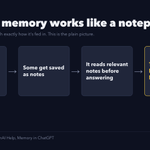
The viral prompt: "Fill this room with what you know about me."
I tried it on a made-up person, 6 times.
With 8 notes saved about them: 8 of 8 things showed up, every run.
With no notes: 0.3 of 8.
AI memory is less magic than it looks.

1
3
725
Verdict: with notes 8 of 8, without 0.3 of 8.
What this teaches: it's reading its notes, not your mind. Don't post your result, it's your profile in a picture. To keep a chat out of it, use Temporary Chat set to Unpersonalized.
Would you post yours?
1
14
Idea from @RoundtableSpace, privacy point from BeInCrypto: beincrypto.com/viral-chatgpt…
OpenAI on memory: help.openai.com/en/articles/…
Temporary chat: help.openai.com/en/articles/…

14
Which AI Won retweeted

Did you know Claude Projects allows you to set up custom views and dashboards per project?
On the top of your project window, click the three dots "..." where you would access settings, and there's a "Custom View" menu option.
You can pin an existing artifact or create a new one inside the project. Projects can even share the same dashboard/artifact.
I put together a guide on how to master Claude Projects, you should check it out.


I tried to make AI ruin handwriting with one small edit.
It didn't. 12 edits, 13 handwritten words, not one changed.
But when I selected the mug first, it redrew the mug every time. 6 of 6.
Without selecting: 0 of 6.

2
2
732
Which AI won: tie, 6 of 6 each. GPT Image 2 kept the rest closer: 1.7% different vs 5.7%.
What this teaches: for a colour change, just describe it, then compare before you save. My writing was big. PhotoWorkout saw smaller writing rewritten.
Select or describe?
1
16
Sources: OpenAI's image docs: developers.openai.com/api/do…
ChatGPT help: help.openai.com/en/articles/…
PhotoWorkout's test of GPT Image 2.6, which I didn't test: photoworkout.com/gpt-image-2…

16
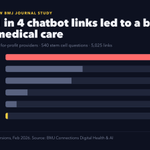
Not our test: a new study in a BMJ journal.
Researchers asked 6 chatbots about stem cell treatments and collected 5,025 links.
23.4% went to for-profit medical providers, mostly businesses selling those treatments.
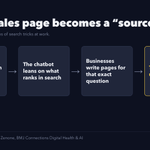
Here's how a sales page becomes a "source".

3
4
715
Which AI won, in this study: Grok, 0.8%. It only covers stem cell questions, so it's one topic.
What this teaches: a link isn't proof. Check who runs the page and what they sell. For health decisions, ask your doctor.
Do you click the links?
1
23
Sources: Snyder, Marcon, Zenone, BMJ Connections Digital Health & AI: connectionsdigitalhealth.bmj…
Per-chatbot split from Simon Fraser University: sfu.ca/sfunews/stories/2026/…

26