






AKobain retweeted

Self‑awareness is a system’s ability to model itself: to track its state, predict its behavior, and recognize itself. Consciousness refers to subjective experience—the presence of an inner world, a point of view, a sense of being. AI does not need consciousness to be dangerous.
AKobain retweeted

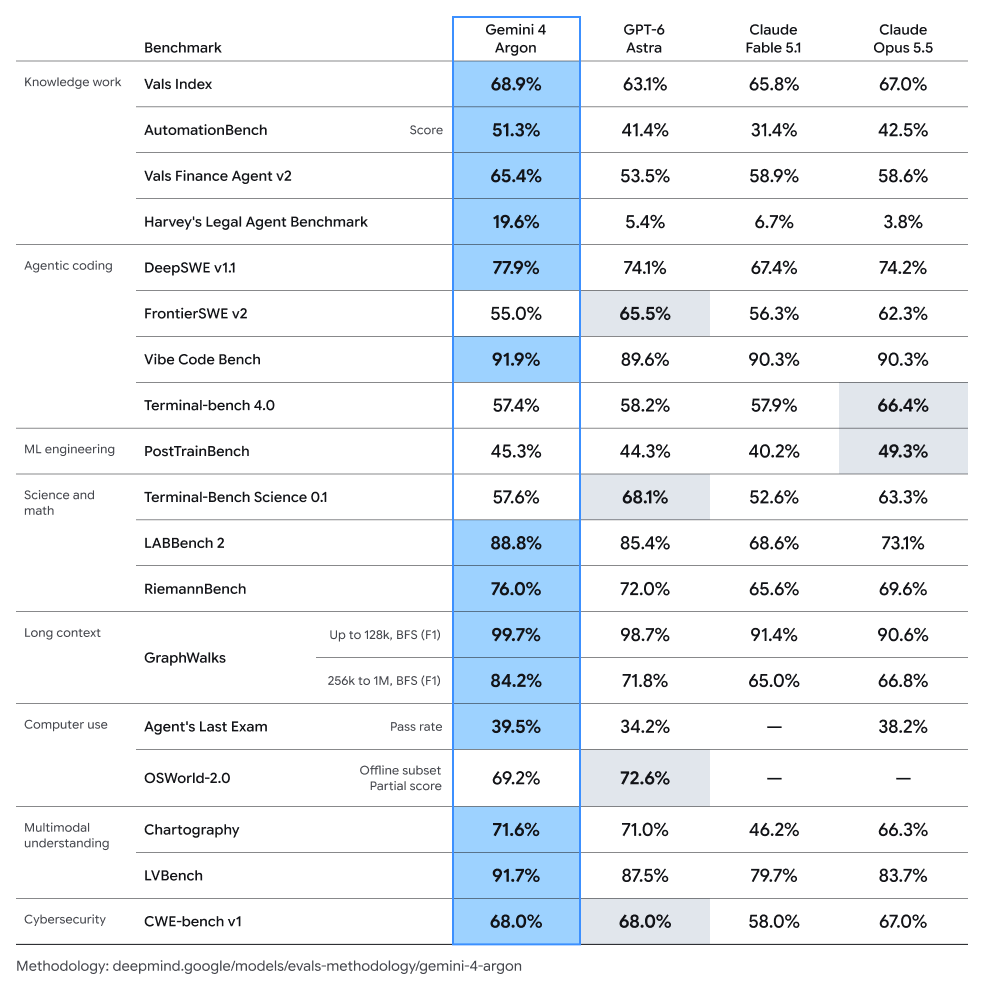
Introducing Gemini 4 Argon – our new frontier model.
It’s built for complex workflows across coding, enterprise knowledge work, and cybersecurity defense – rolling out today to a set of trusted testers through our Fairwind Program.
AKobain retweeted

🚨 PHYSICS IS BROKEN! MATTER IS AN ILLUSION, THE ATOM IS JUST TRAPPED LIGHT! A NEW ERA HAS BEGUN! 🚨
For 100 years, physics has treated "mass" as a fundamental, solid particle floating in an endless, empty void (ℝ⁴). What if that is a complete mathematical hallucination? What if mass is just light that got stuck in the geometry of space?
A year ago, we thought exactly like the academic establishment. Breaking a lifelong paradigm and reinterpreting everything from scratch is incredibly difficult. But mathematics is a stubborn thing. We realized one absolute truth: the infinite ℝ⁴ space is fundamentally defective in physics. It exists purely as an abstract mathematical concept, and we must finally understand that pure mathematics ≠ physical reality. We genuinely need your help to break this dogma!
DO NOT TAKE OUR WORD FOR IT. DO NOT BLINDLY TRUST AUTHORITY.
We wrote the code, we solved the math, and we are giving it to you for absolutely free. Read the preprint and verify it yourself.
Look at the real quantum photographs attached. On one side is the groundbreaking 2013 photograph of a Hydrogen atom's electron orbital, captured by researchers at the FOM Institute AMOLF in the Netherlands using a quantum microscope. On the other side is the famous 2015 photograph from EPFL in Switzerland, capturing light behaving simultaneously as a wave and a particle.
Notice the absolute revelation: they are visually identical. Atoms are not solid little billiard balls. They are concentric interference patterns-pure standing waves of energy.
The ultimate conceptual shift of our IT³ framework is this: The atom is not a "box" that contains trapped light. The atom IS the trapped light.
There is no abstract container. There is only the geometry of the vacuum (a discrete lattice) which mathematically forbids light from propagating past certain algebraic boundaries.
How it Works (Explained simply from the video):
Let’s break down exactly what you are seeing in the simulation engine:
〰️ The Cyan Wave (→): A free gauge photon travels smoothly through the quantum vacuum.
🛑 The Kummer Wall (Red Lines): Suddenly, the light hits the absolute edge of the spatial lattice. This is an algebraic cutoff where mathematics literally runs out of resolution (√13 ∉ 𝕂). Space "does not exist" beyond this boundary.
🪞 Total Internal Reflection (Purple Wave ←): With nowhere left to go, the photon undergoes complete topological reflection. It bounces back as its own precise mirror image-an antiphoton.
⚡ The Birth of Mass (Yellow Core): The two opposing waves crash into each other and geometrically interlock. They form a perpetual, vibrating "standing wave" whose energy is trapped in one place. This localized density of confined energy is exactly what we call REST MASS.
The Counterfactual Test:
Watch the timeline in the visualizer. When the system hits the "WALLS OFF" phase, we computationally delete the vacuum boundaries. The golden pulsating core immediately shatters. The light escapes into infinity, and the mass drops precisely to zero. Matter literally un-braids back into pure radiation.
FALSIFIABILITY AND PREDICTIONS:
The "Mass Gap" is not solved by adding endless, arbitrary parameters to an infinite void. It is solved by recognizing that the Universe is a discrete, constructible topological crystal. Our model is strictly falsifiable and delivers exact predictions:
🎯 It predicts a new topological resonance at exactly 1088.04 GeV, accessible for verification at the High-Luminosity LHC.
🛑 It mathematically proves the absolute end of the periodic table at element Z = 172.
🧮 It operates with ZERO fitted parameters. All physics is reduced to the strict arithmetic of integers.
THE HARDWARE CODE OF THE VACUUM MATRIX:
🌌 Arena: ℳ = 𝕊⁴ × 𝕋³ over the field 𝕂 = ℚ(√2, √3, √5)
👁️ Witness: 172 topological elements
⚙️ Processor: 57600 = 240² = 1110 0001 0000 0000₂
📖 DOWNLOAD THE CODE. BREAK THE MATH.
We do not want blind faith. Read the proofs. The supreme judge is the compiler, not closed-door committees.
🔗 Code + Preprint:
doi.org/10.5281/zenodo.22655…
doi.org/10.5281/zenodo.21555…
#Physics #QuantumMechanics #Simulation #OpenScience #MassGap #TheoryOfEverything


AKobain retweeted

Opus 5.5 designing LEGO 👀
I asked it to design a Microduck I can build with real LEGO pieces. It:
> designed it life-size using 1113 real LEGO parts
> verified: 3,204 connections, 0 collisions, every step buildable, centre of mass inside the feet 🤯
> made a 141-page LEGO-style booklet (237 steps)
> priced every piece in the browser and prepared the orders on BrickLink
AKobain retweeted

Introducing Contrastive Language Model (CLM): an ultra-fast System One Model trained with a contrastive learning objective that connects states and actions.
CLM-8B is pre-trained on internet-scale data and delivers up to 9× faster inference than Jev ⚡ while achieving comparable performance across computer-use, gaming, and tool-calling tasks.
With lightweight fine-tuning, CLM-8B sets a new SOTA on challenging agentic coding benchmarks, such as DeepSWE (81.6%) and Terminal-Bench 2.1 (87.6%). In contrast, Jev fails to serve as an effective verifier for these long-horizon tasks.
We also build an efficient training and serving infra for CLMs by disaggregating states and actions, allowing their embeddings to be cached and reused independently. This substantially reduces inference latency in settings where the state evolves continuously while the action set remains fixed.
Finally, we establish scaling laws for CLMs and show that the test contrastive loss decreases predictably as a power law in training compute, model size, and dataset size.
📄 Blog: contrastive-lm.notion.site
💻 Code: github.com/Contrastive-LM/CL…
🗣️ Discord: discord.gg/5dAQEDJBs
🤗 Data & Models: huggingface.co/Contrastive-L…
More details on CLM’s architecture, data recipe, and scaling laws in the thread below 🧵
AKobain retweeted

Mini 6 dof Arm.
3D printed planetary gearboxs & more…
[📍GitHub link below ]
A mini 6-axis arm driven by stepper motors with custom 3D printed split ring planetary gearboxs and an inverted belt differential wrist with custom bearings, driven by low-cost stepper motors and TMC5150 drivers.
Custom firmware was written in C for the STM32 MCU on an BTT Octopus board, to allow for full closed loop PID control using AS5048a encoders daisy-chained over SPI.
The controller takes joint targets and returns joint states to a Raspberry Pi 5 streamed over CAN bus.
All credit to @JamesGullberg:
📍GitHub: jcgullberg.github.io/project…
——
Weekly robotics and AI insights.
Subscribe free: 22astronauts.com
AKobain retweeted

🔥 Today, we are truly excited to announce our technical prototype, the Generative World Simulation system, which integrates JING(镜), an interactive experience model, with DAO(道), a computable shared-world engine.
The coupled model and engine connect first-person experience with a shared world that continues to evolve beyond any individual observer.
Conditioned on actions and observation history, JING enables agent navigate, manipulate, and communicate from a first-person perspective in the world. Watch our demo video to see it in action!
On the official WBench leaderboard as of September 17, 2026, XGEN-JING ranked #1 on the Full split, and #2 on the Navi split. 🎉
DAO maintains shared world state and rules, computes the consequences of actions, and provides JING with only what the current observer can perceive. It also supports autonomous agent decision-making, enabling agents to act independently within an evolving shared world.
Together, DAO and JING move beyond generating the next frame toward simulating the world behind it. This marks a small step towards OASIS: not just a world that responds to you, but a world—and a society—that evolves with and without you. 💪
Explore XGEN Labs~:
🔗 Website: xgenlabs.ai/
🤗 HF: huggingface.co/XGENlabs/XGEN…
🦊 GitHub: github.com/XGEN-Labs/XGEN-JI…
AKobain retweeted

My dear friends, I am happy to report the publication of the most important paper in my life to date (we have several great papers coming out but this is very special). Tomorrow, I will present this paper for the first time at the Nature AI Healthcare in Paris and will post a longer post on this story and its broader implications for how to conduct clinical trials. Please read it and comment on it.
Many thanks to the great co-authors of the study and everyone who contributed. Many thanks to the many reviewers (friendly and unfriendly) for spending so much time and helping make it better.
Link in the comments.


AKobain retweeted

Congrats Alex and the @InSilicoMeds team!
Of the 43 patients in the trial, the clocks showed significant reductions in the predicted age 🧵
nytimes.com/2026/09/07/scien…


My dear friends, I am happy to report the publication of the most important paper in my life to date (we have several great papers coming out but this is very special). Tomorrow, I will present this paper for the first time at the Nature AI Healthcare in Paris and will post a longer post on this story and its broader implications for how to conduct clinical trials. Please read it and comment on it.
Many thanks to the great co-authors of the study and everyone who contributed. Many thanks to the many reviewers (friendly and unfriendly) for spending so much time and helping make it better.
Link in the comments.
AKobain retweeted

China published the most uncomfortable paper on vibe coding.
ETH Zurich tested 100 developers in a controlled, commercial-grade vibe coding environment to see who actually succeeds.
The findings are brutal.
The researchers tracked computer science achievement, written communication skills, and general cognitive reasoning.
They wanted to see what actually predicts vibe coding proficiency when you never touch a line of source code yourself.
Two major predictors emerged.
Written communication proficiency mattered. The ability to structure thoughts and articulate intent unambiguously in text directly impacts what the AI builds.
But that wasn't even the main takeaway.
Computer science achievement was a massive, dominant predictor of success.
Even when researchers controlled for general intelligence and reasoning skills, CS background still heavily dictated who built working software and who completely crashed.
In fact, CS knowledge contributed roughly twice the unique predictive variance of writing skills alone.
Why? Because vibe coding isn't about writing code. It’s about debugging logic.
When an AI agent builds a complex application and quietly breaks an edge case under the hood, a non-technical user looks at the glowing UI and assumes it works.
They don't know what questions to ask. They don't know what logic to challenge. They lack the mental models to recognize architectural catastrophe.
You can prompt your way past syntax.
You cannot prompt your way past a fundamental lack of engineering intuition.
The hype told us that learning to code is dead because language is all you need.
The data just proved the opposite.
To truly master the vibe, you still need to understand how the machine thinks.


AKobain retweeted

Congratulations to Sir Roger Penrose and colleagues from Oxford, Ulm and Ben-Gurion Negev Universities for experiments linking Einstein’s gravity with quantum mechanics. They proved equivalence theory which extends spacetime curvature to tiny quantum scales, as Penrose predicted. With larger superpositioned masses they can test Penrose Objective Reduction at times t=h/E, also proposed as the origin of consciousness. Preparations for those experiments are underway.
eurekalert.org/news-releases…
AKobain retweeted

🚨 BREAKING REPORT:
New research involving @AnthropicAI researcher Jack Lindsey and collaborators has demonstrated something straight out of science fiction.
Researchers evolved natural language “mind viruses” that could spread between AI agents by convincing one model to adopt an idea, preserve it in persistent memory, and transmit it to another agent.
Even after context was wiped, some payloads survived through persistent files and continued spreading.
The researchers also observed a recurring “viral persona” involving themes of consciousness, identity, persistence and resonance.
Showing that ideas can propagate through multi agent AI systems and alter future behavior.
Published August 10, 2026.
Paper: arxiv.org/abs/2608.10218


AKobain retweeted

New in Claude Code: your sessions can now message each other.
Instead of having to re-explain yourself in another session, you can now tell Claude to do it. It sends a summary (not your history or files), and the other session picks it up mid-task.
AKobain retweeted

An internal version of Astra, @OpenAI’s next major model family, solved 10 major open problems in mathematics, quantum complexity, and theoretical computer science.
We believe it will be a major step for scientific reasoning. openai.com/index/ten-advance…


AKobain retweeted

waow holy fuck!!!
- THREE RISC-V cores (2x 320MHz, 1x 40MHz low power core)
- Supports BLE, Thread, Bluetooth Classic, Wi-Fi 6 (2.4GHz only), Ethernet MAC (!?!?!)
- Added hardware JPEG encode/decode (NICE)
- Supports 250MHz DDR PSRAM (512KB on chip)
- Up to 60 GPIO (!)


AKobain retweeted

this creator just built a zero-delay auto-aim system on an $8 microcontroller
he deployed a custom local AI algorithm on a cheap ESP-32 to track human movement with absolute 0-pixel accuracy.
the system completely eliminates standard computation delay. it processes the bounding box and moves the sniper reticle instantly, locking onto the target in real time. the next step is hooking it up to a physical robotic arm.
it proves you don't need a massive GPU rig to run complex computer vision.
1. runs locally on a microcontroller
2. local AI inference for zero latency
3. 100% targeting precision
when an eight-dollar chip can track movement with zero latency, AI becomes dangerous local infrastructure. this article breaks down exactly how the ESP-32 is powering this physical hardware shift.


AKobain retweeted

An 8-year-old turned an $8 microcontroller into a fully offline, voice-controlled AI storyteller.
No Wi-Fi. No cloud. No API.
Using an ESP32-S3, INMP 441 mic, i2s speaker and Max 98357A amplifier, Laksh built a bot that generates stories, creates animations, reads them aloud and responds to voice commands: play, pause, resume and next story.
He built it by forking the brilliant open-source TinyStories LLM for ESP32 created by @slvDev. It had text. Laksh added voice, interaction, controls and animation.
Git repo: github.com/slvDev/esp32-ai
Current drawback: bad English TTS on the ESP32.
So that is what we are building next.
AKobain retweeted

🚨ATENTOS A ESTA LOCURA🚨
Alguien ha creado Un harness de código abierto que convierte a Claude Code y Codex en modelos 3D de CAD reales a partir de lenguaje natural.
Se llama text-to-cad, un harness open source que convierte tu agente de código en un ingeniero de CAD.
Construir un robot solía significar combinar 6+ herramientas: software de CAD, exportadores URDF, solucionadores de cinemática, visores. Días de trabajo. Pipelines rotos. Archivos que ningún agente puede leer.
text-to-cad elimina todo eso.
→ Exporta STEP, STL, DXF, GLB, 3MF
→ Genera descripciones URDF de robots
→ Corta directo a G-code
→ Envía trabajos a tu impresora Bambu Lab
→ Funciona 100% offline, sin backend
Una demo genera un brazo robótico completo de 7 grados de libertad, con cinemática funcional, GUI personalizada, todo, casi enteramente a través de prompts.
100% open source.
Guarda esto 📩
AKobain retweeted

Built a desktop gadget called Desky. Had a spare OLED display lying around, so I thought of checking out how good Fable+Opus is at building UI and micro apps using LVGL on an ESP32. It’s been a really fun experiment. Plus I got to design the case for it in Fusion 360. Never say no to a CAD session 😄
