

Cardiologist @MidAmericaHeart, building programs to implement therapies, advance discovery, and foster innovation for patients suffering from heart disease.
Kansas City, MO
Joined June 2014
- Tweets20.2K
- Following2.2K
- Followers20.4K
- Likes26.9K






Pinned Tweet
My top ten tips for graduating fellows and faculty entering and continuing “early career” as I am transitioning into “mid-career”. A thread: – at Fairway, KS
Andrew J Sauer MD retweeted

🫀 Ready to make a difference in #HCM care?
The @American_Heart Hypertrophic Cardiomyopathy Registry is enrolling!
📊 National HCM registry
🏆 Hospital QI recognition
📜 Hospital & pro certification
🩺 Patient support
🤖 AI detection pilot
👉 heart.org/hcmregistry

Andrew J Sauer MD retweeted

🆕 in OpenSource: Cardiology
An infant with pulmonary vein stenosis gets an Onyx stent. Even at maximal dilation, the stent will eventually be too small for the vessel. Can it be intentionally fractured later?
On the bench, Chelsea Miller, MD, and Michael Shorofsky, MD (@mjshorofsky), of the University of Virginia found that 20 of 21 Resolute Onyx and Onyx Frontier stents (2.0–5.0 mm) demonstrated:
• Complete fracture on 6–10 mm high-pressure balloons, median pressure 25 atm
• Most fractured linearly (16/20). That is the desired pattern, because it allows complete relief of obstruction and straightforward placement of a larger stent
• Smaller stents needed higher balloon-to-stent ratios: 3 for 2 mm stents vs 1.8–2 for 5 mm stents
• Only one stent, a 3.5 mm, napkin-ringed and never fractured
In vivo, the balloon needed for fracture may be too large to inflate safely in a small vessel. The authors stress that serial dilation remains the clinical standard.
opensourcecardiology.org/doi…
Free to read, no paywalls

Andrew J Sauer MD retweeted

The COVID-19 pandemic ended... but the heart failure epidemic continues along the pre-pandemic secular line. #HFSTATS2026 onlinejcf.com/article/S1071-… @JCardFail @HFSA @brownshekharMD @ramontgo @BiykemB


Andrew J Sauer MD retweeted

📍A patient’s zip code remains a powerful determinant of Heart Failure (HF) risk, care access, and survival. Our HF STATS 2026 Report highlights a stark geographic divide across the U.S. Click here for the full report bit.ly/3VYt8gO
#HFSTATS #HeartFailure #HeartHealth

Andrew J Sauer MD retweeted

🔥 Management of Heart transplant recipients for the non Heart Transplant
health care provider.
A Clinical Consensus Statement of the #HFA & #ACNAP of the @escardio
❤️Heart transplant recipients represent a growing and increasingly complex patient
population.
🫀Advances in HTx have led to improved survival, but long-term outcomes remain strongly influenced by immunosuppression-related complications, cardiovascular risk factors, infection, malignancy, & graft dysfunction.
🍀For non-transplant specialists, early recognition of warning signs, identification of high-risk situations, systematic monitoring of comorbidities, and awareness of drug interactions are essential to ensure patient safety.
🏥Optimal care relies on structured collaboration within shared-care networks linking community providers & transplant centers.
🫀 @HFUAcademy 🍀
heartfailureuniversalacademy…
bit.ly/4dQnsvw
@EJHFEiC @HFA_President @EJPCEiC @MicheleEmdin @AmrAbdin10 @KTamirisaMD @DrRajivsankar @TomLuscher @AndrewJSauer @DrMarthaGulati @FedericaFogacci @afgcicero @glimongelli @IacopoOlivotto @HanCardiomd @GMCRosano @SeguraCardio @ShelleyZieroth @chiarabd @iamritu @cristinagavina @FeliceGragnano @rahatheart1 @gpontone1 @stefanocarugo @AnastasiaSMihai @radcliffeCARDIO


🗞️ Management of Heart transplant recipients for the non Heart Transplant
health care provider.
A Clinical Consensus Statement of the #HFA & #ACNAP of the @escardio
@GiuseppeGalati_
@AmrAbdin10 @HanCardiomd
bit.ly/4dQnsvw


Andrew J Sauer MD retweeted

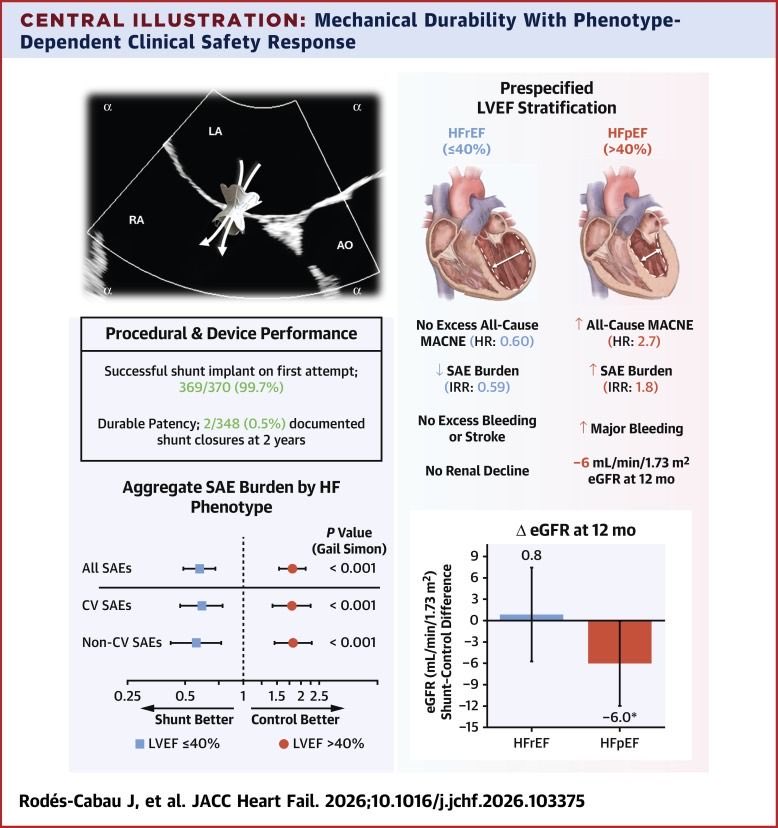
Out now in @JACCJournals from #HFC members @LindenfeldJoann @TheHeartBeat3 et al.
This study from the RELIEVE-HF trial reports long-term device durability and comprehensive safety outcomes stratified by left ventricular ejection fraction. doi.org/10.1016/j.jchf.2026.…
Andrew J Sauer MD retweeted

The 2026 ACC Expert Consensus Decision Pathway on Management of Heart Failure With Preserved Ejection Fraction is here! What’s new in #HFpEF management? Read here: bit.ly/4hu2fdb
#JACC #CardioX

Andrew J Sauer MD retweeted
🫀 All these insights and more in our HF STATS 2026 report. Click here for free access bit.ly/47oavW8
#HFSTATS #HeartFailure #HeartHealth #Cardiology #Cardiologist #Epidemiology #Healthcare

Heart failure care should not depend on your ZIP code.
I’m proud to co-author HF STATS 2026 from the @HFSA, published in @JCardFail, and to have drafted the updated section on hospitalizations alongside an outstanding writing group led by @EiranGorodeski
Three findings I’m highlighting:
• The burden is growing: an estimated 7.7 million U.S. adults have heart failure, projected to reach 11.4 million by 2050.
• Hospitalizations remain staggering: in 2023, there were approximately 1.27 million U.S. hospitalizations with HF as the primary diagnosis, and more than 6 million with HF as either a primary or secondary diagnosis.
• This is not just a disease of older adults: HF hospitalization rates among adults younger than 65 increased from 124 to 161 per 100,000 between 2010 and 2022, even as rates declined among older adults.
The regional disparities hit especially close to home. In 2023, age-standardized HF prevalence among Medicare fee-for-service beneficiaries was 15% in Oklahoma and 14% in Arkansas—among the highest in the country.
The rural findings also demand careful interpretation. Patients in rural settings had fewer cardiology visits after discharge and a lower likelihood of achieving optimal guideline-directed medical therapy. Declining rural hospitalization rates do not mean better outcomes: hospital closures, fewer available beds, and longer travel distances may contribute to fewer admissions.
For us at @MidAmericaHeart and @saintlukeskc this is a shared regional responsibility. Communities in neighboring Oklahoma and Arkansas are part of the broader region we support. We must continue strengthening partnerships with rural clinicians, improving timely follow-up and medication access, and bringing specialty expertise closer to patients’ homes.
Our goal is fewer preventable hospitalizations because patients are receiving better care, not fewer admissions because care is harder to reach.
doi.org/10.1016/j.cardfail.2…

If you appreciate art, you must watch this whole video. Mind blown.🤯

Being an exceptionally talented musician is one thing. But to stand before such high-caliber fellow musicians, a large audience, and cameras—all while remaining composed, communicating skillfully and effectively, showing genuine enjoyment, and staying focused on the creative process—that is what truly amazes me.
Andrew J Sauer MD retweeted
Now in @JCardFail from #HFC members @mvaduganathan @JavedButler1 et al.
This article examines evidence from the HERMES and ATHENA trials, challenging the proposed role of IL-6-mediated systemic inflammation in HFpEF. onlinejcf.com/article/S1071-…

Andrew J Sauer MD retweeted
243,510 patients with newly diagnosed HF:
15.4% started an sMRA 😳
📉 HFrEF 29.6% | HFmrEF 14.0% | HFpEF 9.5%
🩺 Lowest uptake: HFpEF
🚨 <1 in 3 w/ HFrEF Rx with sMRA
💔 Do better for patients with HF!
🔗 doi.org/10.1016/j.cardfail.2…
@JCardFail @lamcardio

Andrew J Sauer MD retweeted

Glad to have been part of the MOONRAKER North America Investigator Meeting!
#REDEFINE-HF
#CONFIRMATION-HF
#FINALITY-HF
@amorrismd, @AndrewJSauer, @MarcBonaca, @cpcresearch, @Bayer, @MidAmericaHeart

Proud to co-host today’s successful MOONRAKER North America Investigator Meeting in Phoenix alongside @HFSA, hosted by @cpcresearch and @saintlukeskc @MidAmericaHeart, with sponsored support from @Bayer
FINEARTS-HF established finerenone’s benefit in reducing worsening HF events in patients with LVEF ≥40%.
Three complementary trials now tackle practical gaps in care:
REDEFINE-HF: Can finerenone reduce HF events and cardiovascular death when started during or soon after hospitalization in patients with LVEF ≥40%?
CONFIRMATION-HF: Can early initiation of finerenone plus empagliflozin improve outcomes versus usual care after HF hospitalization, across the EF spectrum?
FINALITY-HF: Can finerenone improve outcomes in HFrEF when steroidal MRAs are not an option?
This addresses a treatment gap, not routine replacement of spironolactone or eplerenone.
Why does this matter?
These are decisions we face daily: what to start before discharge, when to combine therapies, and how to treat patients with limited options.
If benefit and safety are demonstrated, results could quickly inform discharge order sets, monitoring protocols, and follow-up pathways, consistent with applicable labeling.
For patients, the goal is fewer hospitalizations and more time living life. For our teams, clearer decisions and actionable care pathways.
Thank you to our investigators, coordinators, nurses, pharmacists, and especially the patients and families making this possible.
We’re building the evidence. Together.

Andrew J Sauer MD retweeted
The same receptor does not mean the same evidence.
At HFSA 2026 in Phoenix, I discussed steroidal versus nonsteroidal mineralocorticoid receptor antagonists (MRAs), and why choosing the right agent matters, particularly in HFmrEF/HFpEF.
Steroidal MRAs remain foundational in HFrEF. Spironolactone and eplerenone have established benefits for survival and HF hospitalization. The question is how far we should extrapolate their evidence across the ejection fraction spectrum.
In HFmrEF/HFpEF, the evidence differs by agent. TOPCAT did not meet its primary endpoint with spironolactone, although HF hospitalizations were reduced. That is not “no benefit,” but neither is it an unequivocally positive outcomes trial.
FINEARTS-HF demonstrated a 16% reduction in the composite rate of total worsening HF events and cardiovascular death with finerenone in patients with LVEF ≥40%.
That distinction informed my challenge to the 2026 ESC guidelines’ Class I recommendation encompassing both steroidal and nonsteroidal MRAs in HFpEF: does a broad recommendation adequately communicate the differences in the supporting evidence? Guideline simplicity should not obscure those differences.
Safety deserves the same precision. Early head-to-head data suggest potential potassium and kidney tolerability advantages for finerenone over spironolactone in selected patients; but they do not establish superior long-term HF outcomes. And nonsteroidal does not mean risk-free: finerenone also increases hyperkalemia risk and monitoring is warranted.
My take-home message: we should neither assume interchangeability nor claim superiority from separate placebo-controlled trials. We should choose the agent supported by the strongest evidence for the patient’s HF phenotype, while accounting for comorbidities, tolerability, and access.

Andrew J Sauer MD retweeted

Need a small RCT with a digoxin strategy for acute HFrEF. It’s sometimes tough to disentangle the effects of acute digoxin loading from vasodilator titration, but anecdotally there seems to be a benefit - particularly in new onset HFrEF in “shocky” patients and chronic patients not candidates for advanced therapies (oftentimes coupled with deprescribing beta blockers)
@maz_hanna

In a series of 10 low-output HFrEF patients, IV digoxin loading and vasodilator titration were associated with increased median cardiac index from 1.45 to 2.70 L/min/m² at 24 hours; all four on IV inotropes were weaned off. Time for an RCT with digoxin in low output HF.
opensourcecardiology.org/doi…
@maz_hanna @ChonyAlbertMD @WilsonTangMD @NutritionHF @rcstarling
Andrew J Sauer MD retweeted
What's new on the research radar? 🔬
JCF is highlighting another collection of simultaneous publications from #HFSA2026.
Explore the newly released papers - links below 👇
Andrew J Sauer MD retweeted

Heart Transplant for Advanced #HeartFailure : A Review
Management of Adult Patients With Advanced Heart Failure Before and After Heart Transplant
jamanetwork.com/journals/jam…
@JAMA_current @JAMACardio


Andrew J Sauer MD retweeted
In a series of 10 low-output HFrEF patients, IV digoxin loading and vasodilator titration were associated with increased median cardiac index from 1.45 to 2.70 L/min/m² at 24 hours; all four on IV inotropes were weaned off. Time for an RCT with digoxin in low output HF.
opensourcecardiology.org/doi…
@maz_hanna @ChonyAlbertMD @WilsonTangMD @NutritionHF @rcstarling
Beyond rhythm: can a tiny insertable cardiac monitor also tell us how patients are moving?
Proud to share our LUX-Dx TRENDS exercise substudy, published in @JCardFail alongside today’s presentation at #HFSA2026.
We evaluated accelerometer-based activity sensing in an investigational insertable cardiac monitor in 104 patients with heart failure across 26 U.S. sites. Patients represented the full ejection fraction spectrum, with 63% having HFpEF.
Two key findings:
• The activity signal tracked walking speed: accelerometer measurements increased consistently as treadmill speed increased across both study cohorts.
• The algorithm accurately distinguished activity from inactivity: in the 45-patient evaluation cohort, comparing treadmill walking at ≥1.2 mph with stationary postures, agreement was near-perfect (κ = 0.971), with 97.4% sensitivity and 99.4% specificity.
Why this matters: This work supports the potential to extend insertable cardiac monitors beyond rhythm surveillance to objective, continuous activity monitoring, including for patients who do not have an indication for a pacemaker or defibrillator.
An important distinction: this is validation under controlled exercise conditions, not proof of improved clinical outcomes. Real-world performance, risk prediction, and the ability to guide patient management remain essential next steps.
The opportunity is compelling: better understanding what happens between clinic visits, not just what we see during them.
Grateful to our patients, investigators, coauthors, and Boston Scientific collaborators for advancing this work together.
onlinejcf.com/article/S1071-…


