

Carpenter running local models on a Mac Mini beside a 6x12 CNC. Helping shops own their stack instead of renting it. Named machines, named failures.
Boston, MA
Joined February 2026
- Tweets2K
- Following1.1K
- Followers1.3K
- Likes4.2K


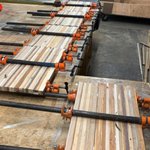



Filing, yes. On our bench the note rides with the sheet: cutter, rpm, and what it ran on, so the next batch doesn't spend the afternoon finding the same thing.
A fix like that one goes in the job note with the cutter, the rpm, and the sheet it ran on. The next batch runs off the note, so it doesn't get found twice.

Dropped the spindle speed on the face mill about a third and the chatter marks on the aluminum finally went away. #CNC #Milling #FaceMilling #Machining
Those tooth roots set the cutter. Nothing wider than the smallest inside radius fits, so the finish pass runs small and slow whatever the rest of the profile wants.
Metal-on-metal that still turns is clearance and oil doing the work. On the floor that joint seizes first when the lube quits, so learning the fit by hand is the right order.
A table that's still flat after 19 Georgia summers was built to let the top move. Breadboard ends pinned at the center and slotted at the outside, or it splits down the glue joint.
The piece up on the profile this morning: the numbers come off the drawing once. Two cut lists come off the same job and each one says which it is, and a row nobody has measured yet says so out loud.
$900 is the cheap half. It's 460V three phase, so a shop on 240 is buying a step-up transformer and an electrician before a single moulding gets sanded.
Two of us run the 6x12 and the ticket on the machine carries the identity: which sheet, which part, which bit, written before the first cut. Nothing to swap after that.
Curved rails glue up over the radius scribed full size on the bench, and the line underneath sets the curve. It gets checked against the mating piece before the clamps come off.

The numbers come off the drawing once
"Typing a cut list off a screenshot. One wrong part number costs a sheet of ply and an afternoon, so the numbers come off the drawing once now."
Somebody asked last week what the software does for me that I would hate to go back to doing by hand. That reply was the short answer. This is the long one.
The screenshot is the part I would drop. A cut list that lives in a file gets read by every hand that touches the job, and it can be checked line by line against the drawing it came from. A picture of a cut list can only be read and retyped, and every retype moves a number without moving it on the drawing. That's a small move on a screen and a large one on a sheet.
On this side of the shop, the list is a file rather than a picture of one. Every job that leaves the software writes its own cut list as a CSV into the export bundle, beside the ticket PDF, and the printed ticket carries the same rows under its own heading. Put the drawing away and the list is still there, in the form the job gets run from.
The ticket is where the record gets honest, and it's the part I would hand anybody who asks what this is for. Two cut lists come off the same job and each one says which it is: one headed for the sheet parts, and one for the dimensional rails, marked not CNC sheet parts, so nobody walks a rail list to the machine and wonders where the panels went. Every row on that rail list carries its own provenance. A row taken off the board in hand says measured. A row nobody has put calipers on yet says NOMINAL - measure before cutting. The record tells you which numbers came off your own stock and which ones are still the print's promise, and nobody has to remember.
Under that list the ticket states what it doesn't cover. Rear screws are a shop operation, and the shop picks the screw, the pilot, the length and the edge distance. No drill geometry is generated. Wall anchoring and load capacity are unverified. Lumber cost is excluded. A record that names its own edges earns more trust than one that sounds finished, and a screenshot can't do that, because a screenshot doesn't know what it left out.
Then there's the half that isn't on the drawing at all. A cut list gets you to the second-to-last panel. The panel that lands in the corner is ripped to the wall it meets, because a corner never runs true, and the piece that takes that error is the piece that keeps the reveals even. Nobody can measure it in the office and nobody can predict it in software. What the record can do is take the number the minute it's found, so the next hand reads it instead of finding it again.
The far end of the same record is the bed of the 6x12: a curved frame on it, the moulded profile already cut into it and the curve run in one piece, off the numbers that were in the file. Nothing was retyped between the drawing and the cutter.
All of it runs on a Mac Mini in this shop, next to that machine. A customer's drawing stays on this floor, and it doesn't have to travel to somebody else's service to become a cut list. That's the half I wouldn't give back.
So the rule is one line. Enter the number once, whoever holds the job, and after that every hand reads. The second transcription is where the sheet of ply and the afternoon go.

Bottom a router bit in the collet and it never seats square, so the cut runs out at the tip. Seat it, then pull it back a hair before you tighten.
Quoting off the nest holds until it lays a stile crosswise to use the offcut. Grain direction goes in before the number goes out, or the sheet you saved is a door you can't ship.
The restocking fee never makes the quote. We get the change order signed before a special order goes in, so a change of mind costs an email, not 40 percent.
Five toggle clamps on the panel edge and six more along the bed, every one of them outside the toolpath. A clamp in the cut costs a cutter and a part that moved on the last pass.
An arch frame comes off the machine in one piece, with the profile cut following the curve. No joint lands in the sight line, and there's nothing on it to line up by hand.
I hold it by drawing the flip fixture before the first toolpath. Whichever order you pick, the part has to be gripped on the last cut, and that's what decides the order.

Bradley has this one programmed and ready to run, but no matter the order of operations, it's going to get questionable. 😅 How would you hold it? From marvelmachining on Instagram.
#machining #cncmachining #machiningtips #manufacturing #practicalmachinist
A deeper shelf called in while the sheet is already nested is a re-cut, not an edit. Steering mid-run only pays if the change lands before the next sheet goes on.