

Semi-retired hedge fund founder. Ex hot-shot lawyer, ex hot-shot strategy consultant. Macro+picks in crypto, commodities, tech, old-economy & a few special sits
Valinor; winters in La Jolla
Joined May 2011
- Tweets16.4K
- Following545
- Followers10.2K
- Likes1


Pinned Tweet
I nailed the GFC - saw it coming, heavily shorted into it, kept making money running net-flat for months while most were getting destroyed. Then I botched the turn, getting net short early into a monster rally and giving back more than half my fund's outperformance.
1/4
Come on, @compound248, throw me some confirmation-bias bait here. You know what I'm talking about.

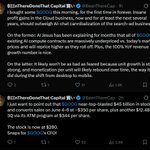
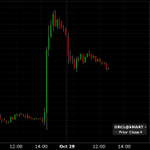
I bought some $GOOG this morning, for the first time in forever. Insane profit gains in the Cloud business, now and for at least the next several years, should outweigh AI-chat cannibalization of the search-ad business.
On the former: AI Jesus has been explaining for months that all of $GOOG's existing AI compute contracts are massively underpriced vs. today's market prices and will reprice higher as they roll off. Plus, the 100% YoY revenue growth number is nice.
On the latter: It likely won't be as bad as feared because unit growth is still strong, and monetization per unit will likely rebound over time, the way it did during the shift from desktop to mobile.
An important non-company-specific factor for this $GOOG trade: It is my 6th recent stock-buying bet on the big August-October decline in AI-infrastructure stocks being both wrong and done or near-done. 4 adds to existing positions, 2 new positions.


These 1st 2 sentences are a perfect example of how left-wingers view businesses (& high-earning individuals) as fixed pots of money to be divided up, with as much as possible going to the government for redistribution, rather than as entities that can create more and better goods & services for all of society.

Just last month, DoorDash couldn’t seem to find the money to pay their deliveristas — until our administration forced them to give back $131M+ in stolen wages and penalties.
This week, they’ve managed to find $17 billion to acquire one of their main competitors.
Corporate consolidation means higher prices, harsher exploitation, and greater economic inequality for New Yorkers.
We’ve stood up to these giants before. That doesn’t stop now.
Stan has always been able embrace - as in, pick winners in and invest in - a new type of business more quickly than you would expect from a literal boomer.

₿ΞΞnThereDoneThat Capital 賢い retweeted

Re. Saez and Zucman, I wrote this seven years ago tomorrow.
Call me a prophet ;-)

I can't stop myself from posting this headline from the "leading" crypto media outlet (CoinDesk), even though we all know that financial journalism is usually worse than useless for anything other than raw facts.
There likely isn't a single human being on Earth who sold bitcoin in the last day because two Fed governors voted for a rate hike.

A great business story that I had never seen a word about before this.

In 2007, everyone laughed at Beckham for burying his career to chase American parties for $6.5 million a year. They just missed one line in the contract that made him over $1.3 billion.
“When I signed my contract, my manager Simon Fuller actually got a clause in the contract that enabled me to have a franchise at the end of my playing career.”
That’s Beckham himself, explaining it years later. The clause gave him the right to buy a future MLS expansion team for a fixed $25 million, whenever he decided to use it, more than double what Toronto had paid for its own franchise that same year but still a rounding error compared to what was coming.
By the time Beckham pushed his Miami bid through in 2014 and 2015, MLS was charging new investor groups $150 million to join the league. Other owners openly complained that Beckham’s partners were getting a franchise at a sixth of the going rate, riding a clause signed nearly a decade earlier.
Inter Miami kicked off in 2020 and struggled near the bottom of the table for years, even drawing a league-record fine for breaking roster rules. Then Lionel Messi signed in 2023, and the valuation curve went vertical. By 2026, Forbes had the club priced at $1.35 billion, the most valuable franchise in MLS history.
A $25 million number frozen into a contract in 2007 was now worth over 50 times what everyone else in the league had to pay just to get in.
Did Beckham out-negotiate an entire league before anyone understood what the clause was worth, or did MLS just finally pay him fairly for turning it into a billion-dollar business?
₿ΞΞnThereDoneThat Capital 賢い retweeted
There is a certain type of person for whom having the task of writing text like this brings them joy rather than disgust and shame. I do not want to be their friend. They mostly work in government, public/investor relations, media, lobbying, and law.
This email from AAA is about as Orwellian as a customer communication can get. It announces they're eliminating four of their subscription benefits, with no offsetting increases in any other benefits, with that news sandwiched between:
"Dear XXX,
We're always looking for ways to provide meaningful value to our members....
We're committed to continually enhancing the member benefits and services...."

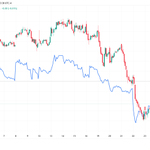
The most amazing thing related to this graph isn't even on the graph: The U.S. share is going to keep rising, at an accelerating rate.
I have only ~5% of my equity exposure in truly non-U.S. stocks. Years ago it was as much as 40%. These days I worry that I'm going to regret even that 5%.

₿ΞΞnThereDoneThat Capital 賢い retweeted

I had Claude go through sell side reports, company filings, commentary etc. to build a rough supply/demand model for AI.
If you assume ~90% of TSMC incremental capex is leading edge, convert that into GW, convert that into tokens you get supply one way. Hyperscaler spending w/ a lag gives you another. The two aren't that dissimilar.
Demand is much harder to pin down. Can look at Google API traffic they report. Anthropic compute spend probably a low estimate since it reflect supply unlock rather than demand. Muse, Instinct, open source demand a little harder to pin down but they're additive.
Make adjustments to supply looking at chip specs over the next few years to turn GW into tokens.
Swing is probably demand more than supply. I assume for demand growth we just keep adding it at the same pace going forward but that mechanically slows growth. Accounts for penetration gains, but not really any new killer products.
Point is, we're short, we're going to get less short unless demand picks up. Generally markets getting less short is not helpful for their prices, but in this case, if token prices continue to fall as supply is unlocked, and that's passed on to consumers, the real key swing factor is Jevons and what degree of elasticity the market really has. Supply unlock could be bullish if it's high, could be bearish if it starts to taper off.


It is crucial for AI bulls to understand this point, but it's also likely that AI demand in 2028 will, in fact, justify AI capacity planned for 2028.
Gauging and revising your guess as to those odds is precisely why every active investor should be following daily news flow about demand for and profitability of AI models. The answer is going to swing your portfolio value significantly even if you aren't long or short any direct "AI stocks" - heck, even if your entire portfolio is credit, commodities, crypto, etc.

I think it's important to outline the reason this is happening though.
The labs are securing huge amounts of compute in advance, to run bigger training runs that they believe will be justified by future inference.
The compute market is short now, and in 2027, and in 2028 because people *believe* there will be demand. That's the trillion dollar question. Short compute in 2028 isn't evidence of demand today, it's evidence of the belief that there will be demand.
$STNG just reported earnings.
I bought $STNG in December 2021 when the stock was at $12.50, LR2 day-rates were $13k, the company had $2.3 billion of net debt, and its cash earnings were negative.
Currently $STNG stock is at $92 (>7x), LR2 day-rates are $181k (14x), the company has $1.5 billion of net *cash,* and its run-rate cash earnings are ~ $30/share.
Obviously this run rate is not going to last. Management has been planning for that all year by paying down debt, selling older vessels, ordering replacement newbuilds to be delivered in 2028-2030, and signing long-term charters at prices well below current spot rates but well above last year's spot rates.
Assuming day-rates are going to fall 75% over time, an equity value of 3x current earnings is probably too cheap.
