
Clinician scientist at AIM @MGB, radiation oncologist using AI and data to improve patient care, especially cancer and medical imaging | views=my own
Joined May 2018
- Tweets837
- Following695
- Followers1K
- Likes3.9K




Pinned Tweet
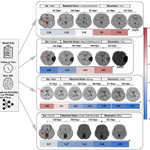
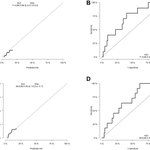
How can we better predict if a child’s brain tumor will return—before symptoms start?
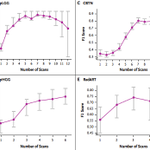
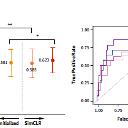
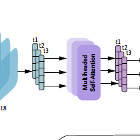
In our new study @NEJM_AI, we used deep learning to analyze longitudinal brain MRIs—learning how scans change over time—to predict tumor recurrence in children. Let’s dive in. 🧠📊 👇
🧵1/

Verifi-ability and the model “knowing what it doesn’t know” are incredibly important to safe and effective AI adoption cancer imaging

💻 #ASCOAI: Can an #AI model recognize when it doesn’t know the answer?
At the @ClevelandClinic A.I. Summit, @BenjaminKannMD discussed calibration, conformal prediction, validation, & monitoring as considerations for clinical imaging AI.
🔗 ascoai.org/articles/2026/10/…
@jamecancerdoc

Benjamin Kann, MD retweeted

Be careful to whom you give local Consolidation RT . Not after Nivo plus Ipi - probably not after any IO ? @DrewMoghanaki @StephenVLiu @IASLC

Thank you for hosting such a fascinating and thought-provoking symposium.

Thanks to experts from @OpenEvidence @McKinsey @BenjaminKannMD @DanaFarber @ClevelandClinic @VUMChealth ! @CIOCHIME @ASCOPost
Benjamin Kann, MD retweeted

The official response I got from the company is shocking: Allowing for radiation to the prostate (per STAMPEDE and/or PEACE) studies has the potential to confound the interpretability of the results, specifically the OS results which is a key alpha protected secondary endpoint.
Benjamin Kann, MD retweeted

AI-RAPNO Phase II begins
From framework to clinical impact in pediatric neuro-oncology.
Join us for the Community Kickoff Meeting.
#AIRAPNO @NeuroOnc @anahita_fathi @BenjaminKannMD
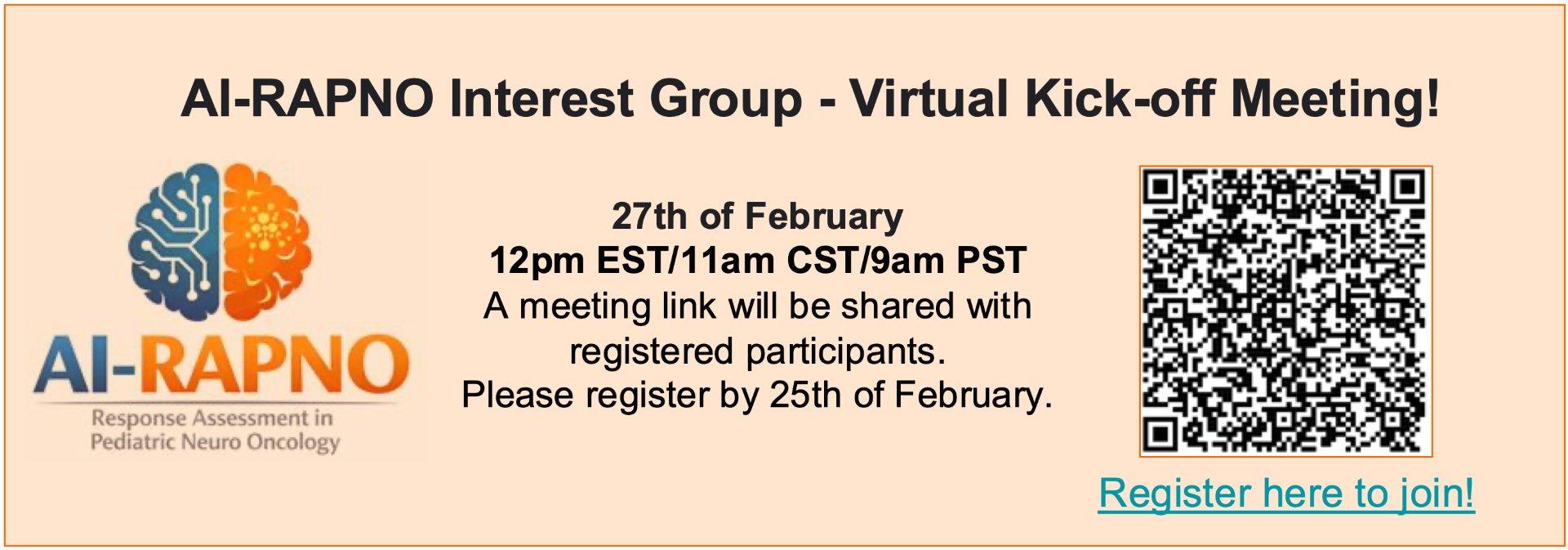
Come join us as we navigate the critical challenge of bringing AI tools into clinical care for pediatric brain tumors

AI-RAPNO Phase II begins
From framework to clinical impact in pediatric neuro-oncology.
Join us for the Community Kickoff Meeting.
#AIRAPNO @NeuroOnc @anahita_fathi @BenjaminKannMD
Benjamin Kann, MD retweeted

A new brain MRI foundation model predicts brain age, dementia, survival for brain cancer, and mutations of brain tumors @NatureNeuro
nature.com/articles/s41593-0…

Benjamin Kann, MD retweeted

More evidence that #immunotherapy works better in the morning.
In a prospective, randomized phase III trial, giving first-line chemo-immunotherapy earlier in the day (<15:00) nearly doubled PFS (11.3 vs 5.7 mo, HR 0.40) and improved OS (28.0 vs 16.8 mo; HR 0.42) in advanced NSCLC.
More effective, no added cost and easy to implement.
Likely reflects circadian immune rhythms with greater CD8⁺ activation and less T-cell exhaustion.
doi.org/10.1038/s41591-025-0… @OncoAlert


Benjamin Kann, MD retweeted

Excited to see this published in JCO CCI. Many thanks to @mirandalammd, @BenjaminKannMD, and others @BrighamRadOnc

Validation of Claims-Based Algorithms to Classify Thoracic Radiation Therapy Courses. Co-authored by @shaneneibart.
Read the full article. brnw.ch/21wZqzO

Benjamin Kann, MD retweeted

A new #AI tool from @MassGenBrigham researchers @BenjaminKannMD and colleagues offers enhanced prognosis for patients with head and neck cancer.
Read more: massgeneralbrigham.org/en/ab…

Benjamin Kann, MD retweeted

This should be getting WAY more attention than it is. Prenuvo tried to limit damages but got shut down. There are so many layers to this lawsuit and what it means for Prenuvo, and people who get these scans. A few thoughts:
- 37 year old man, who I assume is asymptomatic and has no risk factors, gets a preventive Prenuvo whole-body MRI (no medical indication).
- Radiologist is an independent contractor, who allegedly misses a ~60% moderate stenosis/narrowing of the right middle cerebral artery. Though a bunch of other incidental findings are noted.
- Patient has a devastating stroke months later, in the same spot as the original stenosis
- Patient sues Prenuvo, arguing if the stenosis had been appropriately described, the vessel "could have been treated with targeted stenting or other minimally invasive measures, thereby eliminating and preventing the catastrophic stroke."
I read the uploaded Prenuvo report that was given to the patient. To be honest, the entire report reads like AI generated slop with barely any details that I would see in an actual radiologist report, probably because these are just superficial level whole-body MRIs that can't actually evaluate every single organ in a dedicated fashion. It would not give me any comfort.
It does not specifically mention the 60% blockage. It just says "No worrisome intracranial lesion is identified within the brain parenchyma." But what does "worrisome" mean? It is used throughout the report. A moderate 60% blockage is not typically "worrisome" or alarming in the sense that it is not 90% (or severe). But is it enough to warrant aggressive medical therapy and further evaluation? Yes.
But I guess that depends on the definition of "worrisome" and what gets included in the report. Do you include every 20-30% blockage that many of us have, just sitting there not causing issues?
Regarding the actual blockage, I'm not a neurologist but as an interventional cardiologist I make an analogy for the heart. Let's say the stenosis wasn't actually missed. Someone gets a commercial CCTA scan of the heart and is found to have a 60% blockage in an artery. The ultimate question to answer here is - will that blockage actually cause the heart attack 6 months down the road, in the same area? No one can answer that with 100% certainty.
This is a chronic, stable, stenosis, though yes, aggressive at a young age of 37. The patient is asymptomatic, presumably without any known risk factors. The treatment for this is **aggressive medical therapy and lifestyle management**, NOT a stent. Stents **do not prevent** heart attacks for stable disease - aggressive medical management does. You can stent that area but they can still have a heart attack 1 year later at a different location. It is also possible they are treated aggressively with meds and STILL have the heart attack
I rail against "preventive" imaging, but ironically, in this case, this might have actually potentially prevented the stroke in the future. If this 37 year old was treated with aggressive medical therapies and lifestyle management, he may have been able to prevent this tragic outcome. If the patient was not indeed notified, he may not have sought further care, which is even more tragic.
People need to understand what they're getting into when they get these tests. Who is the service? Who is actually interpreting the scan? What does the scan actually mean and not mean for your health? What do you DO when you are handed a copy of your results? WHO is liable? Who do they have to answer to?

Whole-body MRI provider @Prenuvo loses bid to limit damages in high-profile malpractice case. @fuchsberglaw ow.ly/6jj550XNN5i

Benjamin Kann, MD retweeted

New research in @JCOOP_ASCO by @DanaFarber’s @BenjaminKannMD reveals a novel AI tool that can predict the likelihood that a type of #headandneckcancer will spread, thereby signaling which patients should receive aggressive treatment.
➡️ bit.ly/49pk6xw
Benjamin Kann, MD retweeted
In a pair of new policy review articles, researchers from @BrighamWomens and colleagues introduce an international initiative to bring #AI to clinic for pediatric neuro-oncology response assessments. The studies was published in @TheLancetOncol.
Read more: thelancet.com/journals/lanon… @BenjaminKannMD

Benjamin Kann, MD retweeted
AI RAPNO releases a blueprint @TheLancetOncol
to accelerate clinically reliable AI for pediatric brain tumor imaging. Grateful to work with
@anahita_fathi in partnership with global leaders in AI and neuro-oncology @BenjaminKannMD @fangusaro
@PennRadiology


Benjamin Kann, MD retweeted

Are you driven to use AI to transform patient outcomes in oncology? My lab in the AI in Medicine Program (Mass General Brigham, Harvard Medical School) is seeking Postdoc Fellows to pioneer applications of AI—especially LLMs—in cancer care. More here: linkedin.com/posts/danielle-…

Benjamin Kann, MD retweeted

My lab’s 5-year NIH R01 grant, awarded to study gene therapy for hearing loss, was abruptly terminated. I want to share how this action has been incredibly harmful and disruptive, not just to my lab, but to the scientific process itself. 1/15
Benjamin Kann, MD retweeted

Lean body mass–based oxaliplatin dosing reduces peripheral neuropathy in stage III colon cancer without compromising survival!
✅ Lower rates of grade ≥2 oxaliplatin-induced peripheral neuropathy
✅ Better quality of life
✅ No impact on relapse-free survival or overall survival
Proof-of-concept randomized trial (NCT03255434)
@OncoAlert @JCO_ASCO @realbowtiedoc #cancer #oncology #MedTwitter #MedX
doi.org/10.1200/JCO-24-02754

Benjamin Kann, MD retweeted

Here it is! KEYNOTE-689 primary publication online now @NEJM. It’s been an incredible journey with DAdkins @SitemanCenter @WUSM. All started in early 2010s / now with @US_FDA approval and a new standard of care! @DanaFarberNews @BrighamWomens @BrighamSurgery
It was a real honor working with @anantm and @CJTsaiMDPhD on this companion piece to our ASCO education session. Exciting things ahead for AI applied to #HNSCC clinical care

Thrilled to share new @ASCO Educational Book Chapter! 📖🤖
AI for head & neck cancer—diagnosis to personalized treatment.
🔹 Better tumor diagnosis & prognosis
🔹 Multimodal AI for survival prediction
🔹 Early toxicity & complication detection
Paper: tinyurl.com/4rd2c4kn

Benjamin Kann, MD retweeted

🧵1/
Big news in unresectable stage III NSCLC.
The InTRist study is the first randomized trial comparing NAC vs. neoadjuvant chemoimmunotherapy (NAC-ICI) prior to definitive chemoradiotherapy (CRT).
Early results are promising. Let’s dig in. 🔍
#LungCancer #RadOnc #ASCO25

