

@UN Resident Coordinator & Representative of the Secretary-General in Uruguay 🇺🇾 / Coordinador Residente de la ONU y Representante del SG en Uruguay 🇺🇾
Montevideo, Uruguay
Joined July 2011
- Tweets2.5K
- Following1.2K
- Followers1.8K
- Likes7.5K




Jean P Bernardini retweeted

Guterres' final #UN80 briefing. Monday, 14 December, 3 p.m New York-time.

Un honor presentar hoy mis cartas credenciales al Ministro de Relaciones Exteriores Mario Lubetkin como Coordinador Residente de las Naciones Unidas en Uruguay. Entusiasmado por la muy clara y transformadora vision del Gobierno uruguayo. 🇺🇾🇺🇳
Honoured to begin this new chapter as UN Resident Coordinator in Uruguay. Looking forward to working together to support the priorities of Uruguay and its people.

📄 El ministro de Relaciones Exteriores, Mario Lubetkin, recibió las cartas credenciales del nuevo Coordinador Residente de @ONUUruguay, Jean P. Bernardini.


Leaving New York today with a full heart & deep sense of gratitude. The honor of a lifetime to have served the Secretary-General @antonioguterres and Deputy Secretary-General @AminaJMohammed, alongside extraordinary colleagues.
No doubt these were complex times, with crises proliferating, inequalities rising and geopolitics complicating. But that’s precisely a world where the UN is more needed than ever. The reforms made to the @UN over the last decade renew my trust in our ability to make a difference in people’s lives.
Farewell #NYC - a city that gave me so much more than I could have imagined—including a family.
Now, a new chapter, with the same sense of purpose. ¡Nos vemos pronto, Uruguay! 🇺🇾


Jean P Bernardini retweeted

Secretary-General @antonioguterres has called the reinvigorated Resident Coordinator system the most important structural change of his tenure.
A few reflections on what we have built together, and the work still ahead to keep the promise of the SDGs.

Jean P Bernardini retweeted

(1) Although technical this is actually a useful initiative to streamline UN aid supplies.
(2) Nice to see @USUN acknowledge it.
(3) YOU try to keep a straight face and look interested for a whole 2.5 minutes while listening to a speech on supply chains.

Jean P Bernardini retweeted
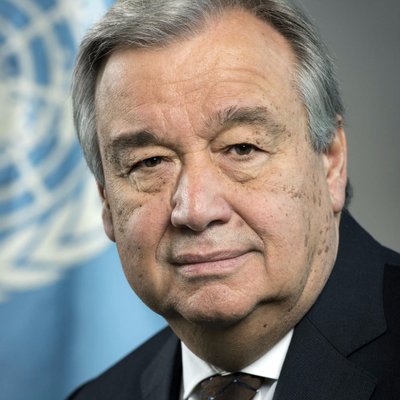
Our Resident Coordinators carry the promise of the @UN Charter around the world, often working in some of the most challenging places on Earth.
I thank them for their leadership & commitment to fighting for a world that is more peaceful, inclusive & just.

Jean P Bernardini retweeted

As the LAC Leaders Forum in Montevideo, Uruguay, comes to a close, I reflect on the more than 300 leaders from business, Government, finance, the UN and academia who joined us from across Latin America and the Caribbean.
With participation from all 11 Country Networks, the Forum was a truly regional effort. The launch of the Latin America Business Leaders Coalition (LBLC) marked an important step in bringing business leaders together around shared priorities, strengthening responsible business practices and scaling collective action across the region. I am particularly grateful to the founding members for their leadership and commitment to this effort.
I also extend my thanks to the Executive Directors and Country Managers from across Latin America and the Caribbean, alongside colleagues from our Regional Hub. I appreciate the engagement of Resident Coordinator a.i. Ernesto Fernández and UN Country Team members, as well as the more than 20 Board members from our Country Networks, in the bilateral discussions.
My appreciation goes to the Government of Uruguay, particularly Minister Ortuño, for the warm welcome and participation throughout the Forum.
Together, we can build on this momentum to advance responsible business and strengthen the contribution of the private sector to the region’s sustainable future.


Honoured and grateful to the Secretary-General for his trust. I take on this role with a deep sense of humility and responsibility.
Con mucha ilusión por llegar a Montevideo y el firme compromiso de sumarme a los esfuerzos del equipo de la ONU, junto al Gobierno y nuestros socios, para seguir avanzando hacia un desarrollo sostenible para todas y todos.
¡Hasta pronto, Uruguay! 🇺🇾🇺🇳

A warm welcome to @BernardiniJean, appointed by @UN Secretary-General as the new UN Resident Coordinator in #Uruguay.
Together with @ONUUruguay, he will lead UN efforts to support the country’s development priorities and deliver results for people.
bit.ly/JPBernardini

ALT Portrait alongside text announcing Jean P. Bernardini as United Nations Resident Coordinator in Uruguay, with United Nations Sustainable Development Group branding and Sustainable Development Goal icons.


Jean P Bernardini retweeted

"Resident coordinators system was the most important structural change of my tenure — and its success is recognized by all."
UN Secretary-General @antonioguterres
Remarks to Fifth Committee (Budget)
press.un.org/en/2026/sgsm233…

Felicidades querido @PabloRuizHiebra !
Appointed by @UN Secretary-General, @PabloRuizHiebra is the new UN Resident Coordinator in #Cuba.
He takes up his role amid an energy crisis affecting essential services & livelihoods, leading @ONU_Cuba in support of the country’s development priorities.
bit.ly/Pablo-Ruiz-Hiebra

9
583
Jean P Bernardini retweeted

Mic drop @UN_Spokesperson

"It's frail. It's been reformed. It's being reworked, but it is still standing."
Is @UN_Spokesperson Stéphane Dujarric talking about our #JUNGA tower or something else?
Watch the full episode on our YouTube channel!
#UNGA
Jean P Bernardini retweeted

Como sempre, os discursos dos líderes uruguaios nas Nações Unidas são poéticos. Desculpa por não conseguir a versão em espanhol. Segue a traduzida para o inglês
This assembly will hear an address by His Excellency Yamandu Orsi, president of the Oriental Republic of Uruguay. I request protocol to escort His Excellency and invite him to address the Assembly.
"Mr. president of the General Assembly, Mr. Secretary general Heads of State.
Ladies and gentlemen.
It is fitting that I begin by paying tribute to the people of the United States who, 250 years ago, a quarter of a millennium ago, decided and understood that people have rights, the right to life, to their liberty and to happiness, and that these rights should guide every government, and that it is the governed who should decide who should govern them.
We in South America.
Also Peoples of migrants inherited these same principles 50 years on.
And to that we say cheers.
I appear before this assembly on behalf of a young country, but one with deeply rooted traditions, a country that, over the course of its history, has learned that governing doesn't merely mean administering resources or institutions.
Above all, it means working for the well-being of people.
And that has been one of Uruguay's great purposes building a society in which dignity, freedom.
Peaceful coexistence and opportunities can be a part of people's everyday lives.
And if there is one word that sums up much of our vocation as a country, that word would be peace.
We do not view peace simply as an absence of war.
We understand it as something that has to be constantly built.
The possibility for people to live, to work, to educate their children, pursue their aspirations, and to look to the future without fear.
Uruguay.
With its virtues, but also, like every country with its darker times, has been a country that has sought to resolve its differences through institutions, through dialogue and through the quest for agreement.
In this assembly, we reaffirm our enduring willingness to contribute to peacekeeping missions with a deep sense of responsibility and solidarity.
Uruguayan men and women can bear witness to the value of this instrument in easing suffering and guaranteeing respect for the human lives of the most defenseless populations.
You can continue to count on Uruguay here.
We are not a country given to grand gestures We are a country of deeply held beliefs.
And one of these beliefs is that peace building is never finished.
We can't take it for granted.
Every generation has the responsibility to build it anew They can't be peaceful some and another peace for others.
No suffering matters more because it happens closer to home, and no lives are worth less because they were born in another country.
When people suffer, humanity as a whole bears a responsibility.
When a people is displaced, when a family loses its home, when young people can see no way out and their mental health is under threat.
When a child grows up under the sound of gunfire, when millions of people live in poverty or without any opportunities, we can't stand indifferent to that, nor can we stand indifferent to the pain caused by a state of endless war.
The fear and pain generated by organized crime, or the constant threat of terrorism, the repression born out of tyranny, or the suffering triggered by a rigid economic blockade such as that endured by the Cuban people.
We don't believe that taking one side or another in a war, confrontation or dispute necessarily contributes to resolving it.
Indeed, very often it only serves to further the divisions.
We have a different commitment, that is, to seek paths towards understanding, to open spaces for dialogue, and to help to ensure that conflicts find a peaceful resolution.
This doesn't mean indifference.
It doesn't mean downplaying suffering.
It doesn't mean overlooking responsibilities.
It means understanding that peace demands something more difficult than merely taking sides.
It means that we need to work so that that confrontation can be brought to an end as soon as possible.
And to do that, we also have to recover something that at times seems to have been lost in international debate.
Humility.
Uruguayans have an expression that sums up an understanding of coexistence.
No one is better than anyone else.
No country holds the absolute truth.
No nation has a monopoly on their solutions.
No society can claim that its historical experience is universal, and no people should be doomed to choose between models imposed from outside.
Our understanding of relations among countries stems from that notion of humanity humility.
This is a humility that doesn't mean weakness.
On the contrary, it means recognizing our own limitations, while at the same time trusting in the abilities of others.
We come from a country that is diverse in its opinions, but one that is deeply committed to the possibility of building a common future.
And we believe that this combination diversity of ideas and cohesion around the future can also serve as our contribution to the international community.
Today, we are living through a particularly difficult period.
Extreme inequality remains one of the great threats to coexistence.
Poverty continues to deprive millions of people of basic opportunities, and wars continue to destroy lives, communities, and hopes.
While we discuss growth, technology, artificial intelligence, the energy transition, or new forms of production.
There are millions of people who continue to ask themselves far more basic questions how will I feed my children?
How can I find housing?
How can I find a job?
Or how can I face tomorrow without fear?
We mustn't lose sight of that reality.
Development makes sense when it improves people's lives.
Economies make sense when they serve society.
Technology makes sense when it expands our freedoms and opportunities.
And politics makes sense when it is able to transform reality, to bring happiness to our people.
We are speaking from the experience of a small country removed from the great centers of power.
However, we are convinced that our size shouldn't determine our ability to contribute, much less affect our own dignity.
We need more effective, more representative multilateral institutions that are closer to the people and more able to respond to the challenges of our time.
We need cooperation.
We need solidarity and we also need to demonstrate austerity within these institutions.
But above all, we need to restore trust in our collective ability to change things, because at its heart, the very idea of well-being and progress springs from something that is profoundly human, that is the ability to recognize suffering and refuse to accept inertia.
Human beings are creative precisely because they refuse to resign themselves to things.
They sense what causes pain, they sense what could be different, and then they are able to sense the desire for change.
And this desire for change is perhaps one of the most profound expressions of our own freedom.
When our people's advance along the path of progress, they generally do so by wielding the powerful magic of freedom, knowing that freedom doesn't involve solely choosing between different possibilities.
It also means having being able to transform those things that we wish to for the good of the community as a whole.
Our freedom becomes fuller when we are able to expand the freedom of others.
When we change our societies through dialogue, when we build more, we build fairer institutions.
When we undertake significant projects that endure beyond our own lifetimes When school and new school opens its doors, when a child has an opportunity that was previously out of their reach.
When a community is able to overcome a division, when two countries that were at odds finally find a path towards understanding.
Today, there are more than 8 billion people living on the same planet, 8 billion different stories, 8 billion hopes, 8 billion possibilities.
We're not finished as such as humanity.
We are a humanity still in the making.
Every morning we have the chance to decide what kind of world we want to leave.
To those who come after us, we can choose to accept inequality as inevitable.
We could accept war as something permanent, accept poverty as our fate.
We could accept mistrust, replacing dialogue, or on the contrary, we could choose another path, the most difficult path, but also the most human one.
Uruguay, therefore comes before this assembly today.
With that belief, with the humility and respect of a small country, but also with the resolve of those who understand the value of their principles.
We've come to say that peace is no utopia.
It is an ongoing endeavor.
No conflict is ever definitively resolved through more conflict.
No society becomes safer when hopelessness becomes the norm.
No country can build its well-being in isolation.
The future of humanity will, to a large extent, depend on our ability to understand that we are profoundly interconnected.
We are different.
We think differently.
We have different histories.
We have different interests.
We are well aware that this isn't a struggle between the good guys and the bad guys.
All too often, the good guys quickly become the bad guys, or those that we harshly condemned yesterday magically become the standard bearers of our alliance for good.
But we share the same planet and ultimately the same destiny.
Every day.
The UN has an increasing reason to exist, and it must inevitably evolve in step with the geopolitical changes unfolding at dizzying speed.
Every nation within this organization must play an active role within it, each to the fullest extent of their capacities.
It's clear that our efforts should focus on ensuring that this is an up to date organization, properly supported, taking fair decisions that are respected countries borders cannot be subject to human whims.
They must be protected and respected as they represent the boundaries established to preserve identity, distinctive character, and a sense of belonging of their respective populations.
We cannot continue to be held hostage to the will of a handful of countries that can be counted on the fingers of one hand, nor can we yield to the economic expediencies of the time.
The aim here is clear to achieve lasting stability, to ensure that the efforts of our citizens and their governments are channeled towards generating prosperity.
Far removed, of course, from the destruction and suffering caused by war.
And we have made a commitment.
Let us honor it.
Right now.
The history that ultimately prevails will be the history that we write every day through our action.
For all of these reasons, Uruguay will continue to support dialogue, multilateralism, cooperation, international law, and the peaceful settlement of disputes and above all, for the dignity of every human being.
Humanity continues to refuse to regard itself as definitively complete And perhaps that's our greatest hope.
The hope that we can still change, that we can still learn, that we can still build, and that we can still choose peace.
And this mere fact ultimately reminds us of the clear purity of the idea that together we stand and together we change.
Little is contributed to the purposes of the UN by merely using this rostrum to accuse or attack fire, the fire doesn't need any more fuel.
Let us better harness this opportunity and let us give peace another chance, because relations among states, just like relations between good people, bring happiness.
If we refrain from trading blows or elbowing one another aside.
Thank you very much.
On behalf of the Assembly, I wish to thank the president of the Oriental Republic of Uruguay.
We shall now continue the general debate.
Overdue, yes, but critical milestone that required significant leadership and consistent focus by @antonioguterres and @AminaJMohammed for a decade. Gender parity needs determination and intentionality in every step. A legacy that succeeding SGs must nurture.

I'm proud to report that for the first time in history, the @UN has achieved gender parity across all senior leadership, headquarters & professional staff.
We removed barriers, challenged assumptions & refused to accept that power must look as it always has. And we never compromised on quality & competence.
If the UN can do it, so can governments, parliaments & businesses everywhere.

14
779
Jean P Bernardini retweeted

🇺🇾🇺🇳 “El desarrollo tiene sentido cuando mejora la vida de las personas”.
En su intervención ante la Asamblea General de las Naciones Unidas, el presidente Yamandú Orsi reafirmó el compromiso histórico de Uruguay con la paz, el multilateralismo y el derecho internacional.
En un escenario global marcado por guerras, desigualdad e incertidumbre, el desarrollo, la economía, la tecnología y la política deben tener como propósito central mejorar la vida de las personas, sostuvo.
🔗 gub.uy/presidencia/comunicac…

Jean P Bernardini retweeted
The @UN is more than a building with flags.
It belongs to all of us.
Its strength lies in our willingness to come together, across our differences, for our shared humanity.
At this 81st #UNGA session, let us rise to the occasion and make the promise of the Charter a reality for the people we serve.
#UNGA81


SG @antonioguterres final words to the General Assembly, on life after the end of his mandate on 31 December.
“Commitment to the values and principles of the @UN does not begin with a mandate.
And it does not end with one.
I will never - ever - give up” – at Manhattan, NY
