

2x Robotics Founder | Dad to 6 Kids | Angel Investor | Music Nut
Joined May 2012
- Tweets16.5K
- Following1.5K
- Followers871
- Likes21.6K




Hold on Mr. President, does this mean Ukraine forces Russia to help the Houthis blow up Saudi energy installations, to drive up fuel prices, to hurt American voters?

NEW: Russia is actively supporting Houthi operations to disrupt global energy markets by providing the Houthis with satellite imagery of Saudi oil and military infrastructure. Russian satellites have routinely been positioned above major Saudi energy and military sites in the days prior to and after Houthi attacks on those sites since July 2026. (1/2)


Milan Račić retweeted

Mark Cuban's advice for young people boils down to "there's gonna be two types of companies: those who are great at AI and those who have gone out of business."
"And then there's two types of people in how they use AI: those who use AI to learn anything, and those who use AI so they don't have to learn anything."
"And if you're one of those people who uses AI so that you can learn anything, and you realize what type of companies and problems aren't being solved by AI, don't be shy to just talk to your AI."
"And I say this not just to kids, but to 50 60, 70-year-old entrepreneurs. The biggest challenge right now with entrepreneurs using AI is the comfort level of talking to your AI... there's still a lot of hesitancy."
"Just like back in the day, those first spreadsheets, people still had their 10-key adding machine, and they would check it to make sure the spreadsheets were right."
"So when you ask me, is there one thing I truly believe, it's everything. Everything will change. This is the greatest transitional technology we have ever seen, and I've been around for all of them, right? This blows them all away."
@mcuban @julesyoo @eriktorenberg

Mark Cuban scaled Cost Plus Drugs from about 100 generics to roughly 4,000 at a flat 15% markup, forcing incumbents to change prices in ways decades of policy never did.
He thinks AI could transform healthcare, but it won't fix opaque prices and broken incentives on its own.
Mark sits down with a16z's Julie Yoo and Erik Torenberg to discuss what he's learned building Cost Plus Drugs, why trust is its core product, and how greater transparency could put pressure on healthcare costs.
They also explore why drugs designed for your DNA could cost close to nothing, the football field-sized drug plant his team shrank into tractor trailer-sized pods, his plan to make generics in Dallas for less than he pays manufacturers in India, and why every company will either be great at AI or go out of business.
0:50 Cost Plus beat decades of policy
3:15 111 generics to 4,000 drugs
5:00 A drug plant shrunk to 5K sq ft
5:55 $20M drug factories in a trailer
8:10 Hospital deals with zero denials
9:50 Why health plans are rigged
14:05 1,335 pages no human can check
18:35 "Where are they f**king me over?"
22:45 Making drugs cheaper than India
26:50 Why you still need entry-level hires
31:45 Nonprofit hospitals must offer aid
35:55 DNA-matched drugs for near $0
39:30 Why AI will mean more doctors
48:00 Mark's plan: "bye bye insurers"
52:25 Why AI labs' ads are useless
56:35 Get good at AI or go out of business
YouTube: youtu.be/5UWDUD6qaM4
@mcuban @julesyoo @eriktorenberg
Understand the systems.

I’ll say it again and again, we are entering an era that will reward systems thinkers.
Systems thinking is the ability to understand how the parts of a broader system connect and influence one another over time. It means recognizing feedback loops, anticipating consequences, and understanding how a decision in one area can create trade-offs in another.
The boundaries of our professions have always been narrower than the consequences of our work. As AI begins to blur these boundaries, and as our world becomes increasingly interconnected in non-linear ways, systems thinking will become essential.
I don’t think this signals the end of expertise, as some people proclaim. But the ability to zoom out and make connections across a broader system will be crucial.
Read my latest Substack on systems thinking (link in comments)
Milan Račić retweeted

London has a new Physical AI Lab. 🔥🇬🇧🇪🇺
And they have a legit claim to be soon a world leading one.
What MACHENTA does is close to heretical.
It's a completely different approach to building models, that doesn't require massive amounts of data, nor post-training, but can repeat a task after showing it only once.
It's a complete narrative violation to everything we know in robotics right now.
No absurdly large vision models.
No hours of post-training needed.
But it works instantly.
You show it. It can repeat it.
Not 20 video takes and then keeping the one that worked. You show it. And very very very likely it can repeat that new task after only that one demonstration.
Their technical approach is also fundamentally different. Heavy focus on in-context learning, explicitly 3D, and tons more that i am unsure if it's public information.
They is a non-zero chance that they will unlock autocomplete for the world. Do a task. Click a button. Get out of the way and the machine repeats it until it runs out of material.
And yes, one more time. This is real.
I have seen it multiple times myself (Investors since over a year). You demo it. And that's it. It can repeat it almost every time after only that one demonstration. 🤯
Kudos to @Ed__Johns and @vitalisvos19 for launching!
PS: If you want to join a breakout Physical AI lab -> Machenta is likely they one to apply to right now.
Milan Račić retweeted

Nothing says a country's not a dictatorship like having to issue grovelling apologies for mentioning that it was in the past.

Desde LALIGA lamentamos profundamente las declaraciones de Kylian Mbappé que han causado malestar y ofensa en China. Entendemos el daño ocasionado y, en nombre de LALIGA, quiero trasladar nuestras sinceras disculpas al pueblo chino.
Durante muchos años hemos construido una relación de respeto, confianza y cooperación con China, sus autoridades, sus instituciones deportivas, sus operadores audiovisuales y millones de aficionados al fútbol español.
No podemos permitir que una actuación individual empañe esa relación ni perjudique a los más de 20 clubes de nuestras competiciones profesionales y a millones de aficionados chinos.
Estamos adoptando las medidas a nuestro alcance y trabajando directamente con nuestros socios e interlocutores en China para superar esta situación.
Nuestro compromiso con China, su pueblo y sus instituciones es firme. Una relación construida durante tantos años no puede quedar dañada por un episodio individual.
Readers added context they thought people might want to know
Contexto importante: Mao Zedong fue efectivamente un dictador.
es.wikipedia.org/wiki/Mao_Zedong
Hold on, aren't these students who read going to have an advantage over students who don't? We can't have that! It works against equality and equity.

“It’s the only class I took at Harvard where people would call each other out for not having done the reading.”
Harvard students are lining up to take Hum 10:
“Applications (essays required) shot up 40% this fall with 180 incoming freshmen vying for 90 spots.”
“The class is definitely not for padding the GPA. Students read a hefty book a week and write regular essays. There is no pass/fail option. Digital devices are verboten, and attendance is taken in every lecture (pink slips for those who arrive late).”
“In their applications and in interviews, students expressed the urge to be forced to tackle classics they otherwise wouldn’t read, the need to combat frayed attention spans and the desire for an antidote to The Machine. Several mentioned with disdain that people who aren’t in the class wondered why they didn’t ‘just Chat the books,’ i.e., use AI.”

The generals have spoken. Now we can get started on fixing our "new" refinery problem.

If the US can have a nasty clown as President, why can't the EU have a bumbling fool as Commission President?

And this predictably proves to be yet another clusterfuck by the EU: they announce to much fanfare last month that Canada is to become the EU's first "associate member," only to come back weeks later and say "upon reflection, we didn't really think this one through, offer rescinded, our bad"
What happened is that the ever-horrendous Von Der Leyen literally improvised the offer into her speech - it wasn't in her prepared remarks (npr.org/2026/09/16/nx-s1-597…) - without consulting member states before, several of which were understandably furious, all the more because the term has no legal meaning.
Hard to overstate the sheer level of amateurism: we're used to the EU commission not giving a damn about what European citizens think - that's standard - but skipping the 27 governments is a whole new level.
And this is all the more absurd that Von Der Leyen, as per European treaties, has zero business doing foreign policy in the first place.
Long story short, the end result, which could be the slogan for the EU as a whole these days, is that nobody's happy and the EU ridiculed itself on the world stage.

Milan Račić retweeted
The Sept. U.S. trade deficit in goods was $134.9 billion, the highest ever recorded in Sept. There were only three months in history when the deficit was higher, all under Trump in 2025.
Here are the facts. Measured by the size of our trade deficits, Trump has been the worst president in history on trade. The tariffs have been a complete failure. Not only have they failed to bring manufacturing back to the U.S., but the U.S. is now more dependent than ever on foreign producers. Not only are we importing more than ever, but we are now paying Trump's tariffs on those imports.
Trump says trade deficits represent a loss. Judged by his own standard, Trump is the biggest loser in the history of the presidency. Also, if the economy is booming as Republicans claim, why have our trade deficits gone way up? Why are the trade deficits under Trump so much larger than they were under Biden, when, according to Trump, we had the worst economy in U.S. history?
Here are the facts. When you compare Trump's first two years to Biden's last two, GDP growth and job creation are slower, inflation is higher, and budget and trade deficits are bigger. If Trump is right that under Biden we had the worst economy in history, and the Trump economy is objectively worse on all counts, then the Trump economy is now the worst economy in history.


Milan Račić retweeted

In almost any large city on Earth, if the entire power grid collapses at three in the morning and every streetlamp and alarm goes dead, store owners board up their windows to stop looting.
At 3:08 a.m. on September 6, 2018, a magnitude 6.7 earthquake struck Hokkaido, Japan, knocking out one hundred percent of the electricity for all 5.3 million residents.
Every traffic light, ATM, and refrigerator across the island went dark at once.
Instead of locking their doors or raising prices, clerks at Hokkaido's local convenience store chain, Seicomart, opened their emergency kits before dawn.
Years earlier, the company had equipped every store with power inverters designed to plug directly into the twelve-volt car batteries of employees' vehicles parked outside the front doors, alongside propane gas rice cookers that do not rely on electric lines.
By sunrise, over ninety-five percent of their one thousand one hundred stores were open.
With cables running from idling cars into the registers, clerks cooked fresh, steaming hot salted rice balls over propane flames by lantern light and sold them for the exact same one-dollar price as the day before.
Outside in the dark, thousands of hungry neighbors stood quietly in single-file lines, counting out exact coins and bowing to the exhausted staff.
Civilization is revealed when the lights go out.

Milan Račić retweeted

I still have non-Brazilian friends who think São Paulo is fine to visit
We hired a great Uber driver to drive us to Florianopolis, like a 3 hour trip, cause was easier than flying then, very nice guy
While driving I sat in the back talking a bit with him and practicing my Portuguese
Then I noticed he didn't wear a seatbelt so I asked why
He said "so I can draw my gun quickly"
I said "desculpa the fuck what gun"
Then he showed he was wearing a holster on his right side with a gun it which he carried for safety because he said drive into and out of São Paulo often
So being a funny naive Dutch guy I asked "so did you ever kill someone?"
He said "yes I killed a guy last year who came at me and who tried steal my car in São Paulo"
And then he told me he was in a judicial trial about it and being prosecuted for it
I asked him again in the naive Dutch guy perspective "did you get like therapy after? like must be intense right, do you feel bad about that?
He said "no why? If I didn't kill him he would have killed me" ☠️
Foreigners especially Europeans have no clue how violent São Paulo and Rio are, it's just not in their mental framework to be able to understand the danger, Brazilians themselves are surprisingly honest and realistic about it
There a reason I stay the F out of São Paulo
I mpstly stick to South Brazil, it's safe, not as safe as Europe but mostly very safe and not really violent. The violence and crime there seems mostly isolated between gangs and in the few favelas there
About that too I asked Brazilians "why is South Brazil so safe?"
And they mostly agreed when a guy told me "because the police here shoot to kill" while in São Paulo and Rio the police is too scared to get prosecuted for killing people

如果你去南美第一大城市巴西圣保罗出差,抬头会看到全世界最魔幻的阶层隔离奇观
城市上空注册着超过 400 多架私人直升机,市中心两百多栋写字楼和豪宅顶层全焊着停机坪,每天有上千架次直升机像出租车一样在天上嗡嗡穿梭!
圣保罗的亿万富豪和跨国高管为什么宁可花几千美金包机飞 15 分钟去上班,也不肯坐劳斯莱斯走地面道路呢?
这是因为地面交通不仅堵成死水,更因为贫民窟与富人区犬牙交错。在地面红绿灯前一旦被堵死的话,骑摩托车的持枪劫匪可能会随时冲上来敲碎车窗抢劫甚至绑架!
这直接把巴西逼成了全球第一大民用防弹汽车(Blindados)市场,全国有超过 30 万辆私家车把车门和玻璃全改造成了能挡住 9 毫米手枪和左轮子弹的防弹装甲壳。
这可真是顶层在天上飞,中产在防弹铁壳里躲,底层在街角抢,拉美式折叠其实比科幻片还真实🌚

Milan Račić retweeted
"It's a beautiful thing, the destruction of words. Of course the great wastage is in the verbs and adjectives, but there are hundreds of nouns that can be got rid of as well." —George Orwell, "1984”


Milan Račić retweeted

So much of the climate hysteria is just aimless guilt roaming the earth in search of futile acts of atonement.


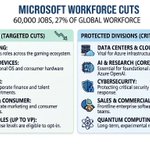
With six kids, the shape of the future is on my mind every day. What Microsoft is cutting is a good indication of what skills will be needed in the future.
The future looks much like the past.
If you want a bright future, focus on:
1. Communication - with customers, colleagues and systems
2. Big picture - technological, historical, geopolitical and psychological context
Solid foundations make exciting futures.


Who stays. Who goes. The Microsoft 27% workforce cuts give an excellent guide for young people which sectors to focus on for future jobs.
In
- Cyber/Security
- Sales / Marketing
- Critical Core Network Eng
- Datacenter Build Team
Out
- Xbox/Gaming
- AI Product Application Layers
- HR
- Finance
- Windows
Gives a pretty good guide to what MSFT think they can automate with AI and which human roles are crucial in the future.
Ie - your ability to communicate and persuade other humans is pretty high up there
Internal admin functions aren’t.


Milan Račić retweeted

Scottish gambler John Law was born in Edinburgh in 1671, the son of a goldsmith banker. His father died when he was a boy, and Law grew up to trade his inheritance for the card tables of London.
In 1694, he killed a man named Edward Wilson in a duel, received a death sentence, and broke out of prison to flee to the Continent. He spent the next two decades gambling across Europe and studying banks.
Scotland rejected his plan to fund the country with paper money. France said yes. Louis XIV died in 1715 and left the crown buried in debt, and in 1716 the Regent, Philippe d'Orléans, let Law open a bank that issued notes.
Law then folded Louisiana trade, tax collection, and the royal mint into the Mississippi Company and sold shares on promises of colonial riches that nobody had found. To keep buyers coming, the bank printed notes. Shares climbed from about 500 livres in 1719 to about 10,000 by early 1720, and the word "millionaire" entered the language.
Then the state enforced the fiction. After converting to Catholicism, Law became Controller General of Finances, banned most payments in gold and silver, and made it a crime to hold coin above a small sum. Citizens who wanted out of paper lost the right to leave. When holders rushed to cash in, the bank had printed far more notes than it held in coin.
In May 1720, the government decreed a cut in the value of notes and shares, panic forced a reversal within a week, and crowds fought in the rue Quincampoix. Law lost his post that spring and fled France in December. He died broke in Venice in 1729.
The recipe never changes: print to fund the favored project, lock the exits, and punish anyone who tries to leave with their savings.

Milan Račić retweeted
Outsiders sometimes assume that morning commuters in Tokyo are cold strangers who only stare at their phones and never get involved.
At 9:15 a.m. on July 22, 2013, at Minami-Urawa Station north of Tokyo, a woman in her thirties slipped and fell waist-deep into the eight-inch gap between the concrete platform and a thirty-two-ton steel train car.
She was pinned tight against the undercarriage, and the train could not move an inch without crushing her.
Modern Japanese commuter trains rest on pneumatic air-spring suspension bogies designed to tilt slightly when weight shifts.
The moment a station attendant blew his whistle and called for help, passengers inside the car immediately stepped off to remove ten tons of human weight.
Then forty strangers in business suits and summer shirts lined up shoulder to shoulder along the platform edge.
Without knowing each other's names, they pressed their bare hands high against the stainless-steel wall and pushed together on a single count.
The thirty-two-ton train car tilted backward on its springs by several inches, and attendants pulled the woman out without a single scratch.
The crowd clapped once, stepped back onto the train, and rode to work just eight minutes behind schedule.
That is what a high-trust society looks like when a stranger is in trouble.
