
Jeffrey High is a former editorial photographer based in Meadowdale, WA.
Meadowdale, WA
Joined February 2009
- Tweets28.9K
- Following1.1K
- Followers632
- Likes9.6K





Jeffrey High retweeted

El Nino Is Weakening and Rapid Sea Surface Cooling Off the Washington Coast
cliffmass.blogspot.com/2026/…
Jeffrey High retweeted

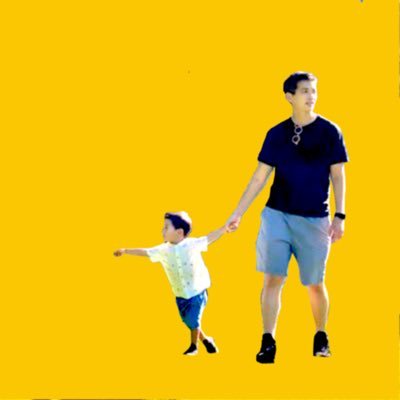
A mother in front of me at the grocery store handed her 2-year-old a lemon and said "smell this." The boy grabbed it with both hands, brought it to his face, inhaled, and made an expression so dramatic that the woman behind us started laughing. His eyes squeezed shut. His nose wrinkled. His whole body recoiled. And then he shoved the lemon back at his mother and said "again."
She handed it back. He smelled it again. Same reaction. Same recoil. Same "again." They did this 4 times before she put the lemon in the bag and moved to the onions. She picked up a yellow onion and held it under his nose and said "this one is different. Tell me what you think." He smelled it carefully. Looked at her. Looked at the onion. Said "not nice." She laughed and said "I agree. Let us find one you like."
They spent 40 minutes in the grocery store. He did not ask for candy once. He did not cry once. He did not reach for her phone once. He was too busy working.
The grocery store is the most underrated sensory classroom on earth and most parents speed through it with a screen propped on the cart handle trying to survive the trip.
Here is what that boy was doing while he was smelling lemons.
The produce section alone contains more sensory data than a $200 activity gym. A bell pepper is smooth, firm, hollow, and cold from the refrigerated display. An avocado is rough, soft, heavy for its size, and room temperature. A bunch of grapes is cool, round, and clustered in a pattern he has to figure out how to pull apart. A watermelon is enormous, heavy, smooth, and makes a sound when you knock on it.
Each object is a lesson in weight, temperature, texture, shape, and color. Each one requires his hands to adapt. The grip for a lemon is different from the grip for a banana is different from the grip for a bag of rice. His motor cortex is calibrating in real time. His tactile system is processing surfaces his playroom has never offered him. His olfactory system is cataloging scents that no candle and no toy and no screen can replicate.
And the language. The narration that mother was doing without thinking about it. "This is heavy. This is light. This is cold. This one is bumpy. This one is smooth. What color is this? How does this smell?" Every sentence was a direct deposit into his vocabulary. Contextual language. Words attached to objects he was holding in his hands. Not abstract. Not flashcards. Real words for real things he could see and touch and smell in the moment the word was spoken.
A study on language acquisition found that contextual narration, describing what the child is experiencing in real time, produces vocabulary gains 3 times faster than reading the same words from a book. Because the word and the experience are simultaneous. The brain does not have to imagine the lemon. The lemon is in his hand. The word and the object fuse together in memory.
The mother who hands her toddler a phone in the cart is solving a problem. I understand that. The grocery store with a toddler is hard. The meltdowns are real. The judgment from other shoppers is real. The phone makes it survivable.
But the mother who hands her toddler a lemon is solving a different problem. She is turning 40 minutes of potential chaos into 40 minutes of learning disguised as shopping. She is not spending extra time. She is spending the same time differently.
You do not need to be perfect. You do not need to narrate every aisle. Start with one thing. One piece of produce. Hand it to him. Say its name. Describe one thing about it. Let him hold it. Let him smell it. Let him drop it and pick it up.
You will look ridiculous talking to a toddler about the texture of a bell pepper in the middle of a crowded store. Your toddler will be learning more in that moment than he would learn from 2 hours of the most expensive educational app on your phone.
Both things are true. Look ridiculous. Keep teaching.
Jeffrey High retweeted

a certain kind of environmentalist will tell you we have ten years to decarbonize and then defend a review process that uses seven of them. the planet is on fire, please submit written comments before the close of the 90 day window
Jeffrey High retweeted

When I was a production assistant, I had to walk William Shatner from a parking lot to the studio where the set was located, and we had to ride an elevator between the two locations. It was just Mr. Shatner and I by ourselves, not saying anything to each other, and the elevator was quiet. He was focused on the work at hand, and I thought it was just cool being in his presence. During the ride, I finally got the courage to say something to him, so I thought what the heck, and said, "You were great in Kingdom of Spiders." Shatner didn't respond at all. I thought oh boy, I've really annoyed him.
The elevator doors finally opened where the producer was waiting for him. I politely waited for Shatner to step out first, but he didn't. Instead he turned to me, and without even smiling said, "I showed those little bastards who was boss didn't I." and walked out.
Jeffrey High retweeted

Beginning today, anyone arrested will be required to use Microsoft Teams instead of their one phone call.


Jeffrey High retweeted

You have to hand it to Heidi Klum. Every year she delivers. She takes the assignment seriously.



Jeffrey High retweeted

Owning a dog was linked to 40 percent lower odds of developing disabling dementia over four years, in a study of 11,194 older adults in Tokyo. Cat owners showed no difference at all.
Residents of Ota City, Tokyo, aged 65 to 84, filled out a detailed health survey in 2016. Researchers from the Tokyo Metropolitan Institute of Gerontology then followed them for about four years using Japan's long-term care records, where doctors rate whether someone's dementia is severe enough to need care. The study appeared in Preventive Medicine Reports in 2023.
Only 8.6 percent of these older adults owned a dog. Dog owners can differ from everyone else in health, income, and lifestyle, so the team statistically balanced the groups on physical, social, and psychological traits before comparing them.
Current dog owners had 40 percent lower odds of disabling dementia than people who had never owned a dog or no longer did. Cat owners matched non-owners. Dog owners who also exercised regularly had 63 percent lower odds compared with non-owners who didn't exercise, and dog owners who weren't socially isolated had 59 percent lower odds than isolated non-owners.
Walking a dog counts as moderate exercise, and the researchers point to both the physical activity and the social contact that come with daily dog care. Cats rarely need a walk around the neighborhood.
Healthier people may also be more able to keep a dog, and a study like this can't fully separate the two. Across 11,194 older adults, the lowest dementia risk showed up in dog owners who were also active and socially connected. pubmed.ncbi.nlm.nih.gov/3786…

Jeffrey High retweeted

"Thunder Dog"
Michael Hingson, blind since birth, was working as a regional sales manager for Quantum/ATL on the 78th floor of the North Tower on September 11, 2001.
Resting by his desk was his guide dog, Roselle, a 3 year old yellow Labrador Retriever.
At 8:46 am, American Airlines Flight 11 struck the building just above them.
The tower violently shuddered, tilted, and then righted itself as the smell of burning jet fuel began filling his office.
Confusion and panic gripped the room.
But Roselle remained calm, sitting quietly by Michael's side.
Trusting his dog's demeanor, Michael knew they could survive, but that they had to move.
Michael, his colleague David Frank, and Roselle made their way to a crowded, smoke-filled stairwell to begin the 1,4o63 step descent.
Because the stars were packed with people evacuating, Roselle couldn't walk ahead to lead Michael. Instead, she walked perfectly at Michael's heel, keeping him centered while he held the railing.
Realizing that his faithful dog would look to him for cues amid the rising panic and chaos, Michael continuously pattered Roselle's head, whispering, "Good dog, Roselle. You're doing a great job."
The journey down the stairs took nearly an hour.
Roselle's steady presence acted as a visual anchor of peace for the terrified people in that stairwell.
When a woman began to panic around the 68th floor, gasping that she couldn't breathe, the entire group paused. Roselle nudged her way over to the woman, and gave her kisses to calm her anxiety.
When David Frank became overwhelmed by fear around the 50th floor, yelling that they weren't going to make it, Michael firmly told him, "If Roselle can go down these stairs, so can you."
David focused on the dog, and kept going.
The group made it down the stairs, through the lobby, and onto the street just half an hour before the towers began to collapse, sending a massive wave of suffocating, toxic dust and debris toward them.
In the choking ash and darkness that followed, Michael felt a tug on the leash. Roselle stopped at the top of a flight of stairs and then guided Michael down into the subway station, sheltering them from the deadly cloud overhead.
Roselle remained by Michael's side for 6 more years before retiring.
She passed away peacefully in 2011, at the age of 14.
Her heroic legacy is honored in the National 9/11 Memorial & Museum, and Michael wrote a bestselling memoir, Thunder Dog, about their extraordinary bond.

Jeffrey High retweeted
This is why what @terryschappert does is so awesome.
Old dogs will lose their old owners, and instead of spending their last lonely days in a pound kennel after losing their best friend, they get Terry.

Jeffrey High retweeted

In 1946, Soviet Marshal Georgy Zhukov reportedly asked the United States for a clear, unbranded version of Coca-Cola so he could drink it without attracting Stalin’s suspicion. The company created a vodka-like variation in plain glass bottles marked only with a red star, which became known as “White Coke.”
After World War II, Soviet Marshal Georgy Zhukov reportedly developed a taste for Coca-Cola after being introduced to the beverage by General Dwight D. Eisenhower. Under Joseph Stalin’s rule, however, openly consuming an American product could be seen as a sign of sympathy toward Western capitalism, creating a political dilemma for one of the Soviet Union’s most celebrated military figures.
To avoid unwanted attention, Zhukov allegedly used diplomatic channels through General Mark W. Clark to request a version of Coca-Cola that resembled vodka. The request eventually reached President Harry S. Truman, who passed it along to The Coca-Cola Company. A chemist at a bottling plant in Austria removed the drink’s caramel coloring while preserving its familiar flavor.
The resulting clear Coca-Cola, later nicknamed “White Coke,” was placed in plain, straight-sided glass bottles with white caps featuring a red star instead of the company’s iconic branding. In 1946, a shipment of 50 cases was reportedly delivered discreetly to Zhukov, moving through Soviet-controlled areas without being inspected.


Jeffrey High retweeted

MIT filmed a calculus course in black and white decades ago and it still teaches better than most of what shipped this year. Almost nobody watches it.
This is Calculus Revisited, Unit 1, Lecture 1, taught by Herb Gross. Analytic geometry from the ground up, chalk on a board, 1 camera locked in place.
Gross built the course for adults returning to math after years away. No prerequisites assumed. Every idea earned in front of you instead of quoted from a textbook.
The opening move is simple division written on the board. From there he shows why coordinates work at all, the thing most courses skip and every student silently fakes.
Watch how slowly he goes. Each step spoken out loud, nothing left implicit, the pace of someone who expects you to actually follow.
A backend engineer I know rewatched Unit 1 twice before touching linear algebra and said it fixed a gap he'd carried for 12 years.
MIT put the whole course online free under Creative Commons.
Production value aged badly. The teaching didn't.


