

Counsel to companies at the frontier of computation · Patent strategy, IP diligence and licensing · AI, cybersecurity, post-quantum and quantum cryptography
Washington, DC
Joined November 2023
- Tweets307
- Following2.8K
- Followers519
- Likes265







CipherLaw retweeted

Announcing a major milestone achieved by my team @GoogleDeepMind: we have proven key security properties of the machine code underlying the Signal messaging protocol. This is the first time the actual production code of a widely deployed protocol has been formally verified – by any method, with or without AI – and at this depth.
More than a research breakthrough, it’s a prime example of how frontier AI can be a force multiplier to counter the speed and scale of modern cyber threats.
Formal verification offers a higher standard of security; however, it’s extremely complex and time consuming, which is why in many cases it’s considered to be impractical. Similar efforts could take teams decades of combined effort. We did it in a month’s time.
Using AlphaProof Code, Google DeepMind's new agentic framework for formal verification that runs on LLMs including Gemini Carbon, we verified the Signal protocol down to the actual code running on devices. This milestone lays the groundwork for a future in which vital systems, from medical device firmware to power grid software, ship with mathematical proof that their protections work.
Reaching that future will take continued research from our community. In that spirit, we're open-sourcing our formal specifications and verification artifacts so others can build on this work.
On a personal note, this moment is of deep significance to me. I started my own research journey more than two decades ago as an intern working on checking the consistency of complex software systems. Seeing this grand challenge made practical with modern AI is extraordinary.
I'm extremely proud of my team members: Swarat Chaudhuri, Andrew Ferraiuolo, Anton Kovsharov, Tej Chajed, Sam Schlesinger, Karn Seth, Jonathan Katz, and Charles Sutton for taking on this grand challenge and delivering, and grateful to the Signal team for their partnership.
deepmind.google/blog/formal-…

CipherLaw retweeted
NIST’s new PQC migration guidelines can help organizations transition to post-quantum cryptography standards. This report outlines the timelines and activities for federal agencies and serves as a resource for organizations navigating the transition.
🔗 nist.gov/news-events/news/20…

ALT A digital illustration shows a transition from old encryption standards to new encryption standards. On the left, an outdated server is connected to symbols and codes. In the center, a large, futuristic quantum computer is depicted. On the right, a shield represents the new encryption standards, with symbols indicating modern data security. The background features a binary code theme.

CipherLaw retweeted

The Trump administration has just announced the next bold step in advancing quantum computing into mainstream utility: the Q Competition under Quantum Genesis.
Led by @ENERGY, this competition provides critical incentives to propel American scientists to create humanity’s first fault-tolerant, scientifically-relevant quantum computer.
energy.gov/science/articles/…

CipherLaw retweeted

TO WIN THE AI RACE, THE AI DIFFUSION RULE MUST GO
The Trump administration has announced its intention to repeal the Biden administration’s AI Diffusion Rule. As the Commerce Department’s Bureau of Industry and Security (BIS) confirmed in a statement yesterday:
“The Biden AI rule is overly complex, overly bureaucratic, and would stymie American innovation. We will be replacing it with a much simpler rule that unleashes American innovation and ensures American AI dominance.”
This is an excellent decision by Secretary of Commerce @howardlutnick and Under Secretary of BIS Jeff Kessler.
There were several major problems with the Biden Diffusion Rule:
1. Overreach of Export Control Authority
First, the rule marked an unprecedented—and arguably unlawful—expansion of export control authority. Under the Export Control Reform Act (ECRA) of 2018, the President is empowered to restrict exports of dual-use technologies that have both civilian and military applications. That authority has been used to restrict the sale of advanced semiconductors to China, a policy with broad bipartisan support.
But the Diffusion Rule went significantly further. It required nearly all global sales of high-end GPUs—even to trusted allies—to obtain export licenses or fit into a narrow set of license exemptions. This forced much of the global data center and AI infrastructure industry to seek approval from Washington, creating a bottleneck that chilled legitimate, non-sensitive commerce.
2. Bureaucratic Allocation of Compute
The rule imposed detailed numerical caps on how many chips and how much computing power foreign entities could acquire and operate. This was a radical departure from market-based allocation principles, placing the U.S. government in the position of rationing compute power globally. It effectively turned Washington into a central planner for the global AI industry.
3. Alienation of U.S. Allies
The rule also strained relationships with key allies by arbitrarily dividing countries into compliance “tiers,” labeling many friendly nations as second-class partners. This kind of regulatory hierarchy undermines trust and risks pushing allies toward non-American technology alternatives.
4. Lack of Due Process
The Diffusion Rule was issued just five days before the end of the Biden administration without a meaningful public comment or review period. Given its sweeping scope, its retroactive elements, and the global compliance burden it imposed, this rollout was deeply flawed from both a procedural and practical standpoint.
⸻
In his first week in office, President Trump directed us to win the AI race. The Biden Diffusion Rule undermines that goal. It bogs American tech companies down in red tape, while slowing the global adoption of U.S. technologies at a time when we should be encouraging the world to build on our tech stack.
As @VP J.D. Vance emphasized in his Paris Speech on AI, the United States should be the gold standard and partner of choice for our allies and strategic partners. If we make it too hard for them to work with us, we risk pushing them into China’s orbit.
China has already launched a Digital Silk Road as part of its broader Belt and Road Initiative. If we don’t offer a compelling alternative, we leave the field open.
Yes, we must take aggressive steps to prevent advanced semiconductors from being illegally diverted into China. But that goal should not preclude legitimate sales to the rest of the world as long as partners comply with reasonable security conditions.
Today, American chips remain superior to China’s—but that lead is narrowing. If U.S. companies are hamstrung by excessive regulation, and foreign customers are blocked from buying our technology, we risk ceding global markets and influence to Chinese competitors.
Right now, we have the opportunity to entrench the American tech stack worldwide while we still have a commanding lead. Let’s seize it.
CipherLaw retweeted

OpenAI calls DeepSeek ‘state-controlled,’ calls for bans on ‘PRC-produced’ models tcrn.ch/3DGJ1ji
CipherLaw retweeted

What a smart statistics department would do right now is rename itself the AI department and rake in the students and dollars.
CipherLaw retweeted

The shift from AI as tools to AI as agents has tremendous implications for medicine and healthcare.
@EricTopol and I share our perspective on new possibilities and how to prepare for this shift in @TheLancet thelancet.com/journals/lance…

CipherLaw retweeted

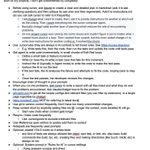
Y Combinator JUST announced what startups they want to fund next in 2025. And it's mostly AI that replaces $100k/year job functions.
My notes below in case it's helpful to you:


CipherLaw retweeted

Trump's AI Executive Order, led by @DavidSacks, is finally here.
But what does it do? 🧵

CipherLaw retweeted

🧵 Major US AI export control updates just dropped. The Framework for AI Diffusion aims to preserve US leadership while enabling global diffusion of AI technology, supported by higher security standards. The new controls target three areas: AI Chips, AI models, and cloud computing. Key takeaways…
CipherLaw retweeted

Harvard University introduced a massive collection of nearly 1 million digitized, copyright-free books. The dataset is available for use by the @Harvard community to train AI models, with eventual plans for a wider public release.
Learn more in The Batch: hubs.la/Q032grFz0
CipherLaw retweeted
The Biden Administration's "AI Diffusion" rule will stifle innovation and undermine America’s global technology leadership. Restricting access to mainstream computing risks derailing AI progress for industries at home and abroad.
America’s strength lies in innovation and competition. This rule will only harm the U.S. economy, set America back, and play into the hands of U.S. adversaries.
nvda.ws/40h8vea

CipherLaw retweeted
Hugging Face settles suit with AI startup FriendliAI, which had accused it of patent infringement tcrn.ch/4abawwW
CipherLaw retweeted

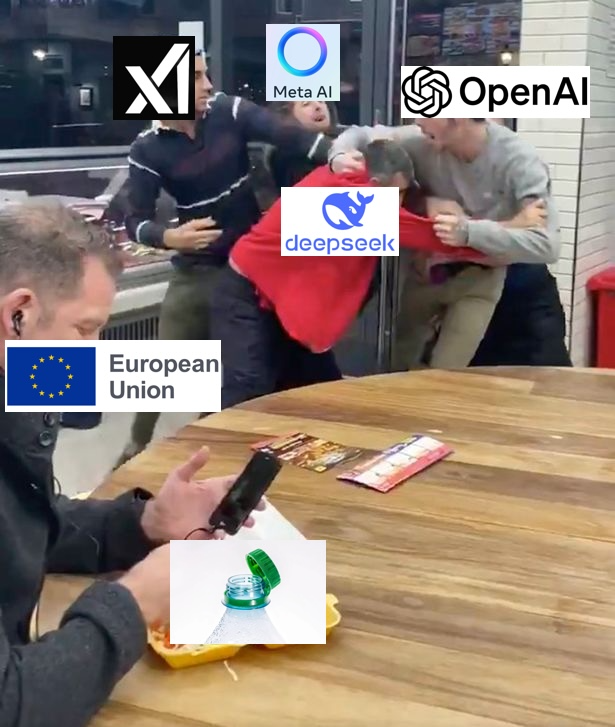
China trained a model called DeepSeek-v3 that’s better than OpenAI GPT 4o with a small fraction of the budget and open sourced it. Meanwhile, a bipartisan bill is in the works in America to impose severe restrictions on open sourcing frontier models.


CipherLaw retweeted

The new OSI definition of "open source AI" takes far too narrow a view. Treating AI openness as binary (either totally open or not open) rather than as a diverse set of options fundamentally misunderstands modern AI development and deployment. 1/9

CipherLaw retweeted

Nvidia wants to build safeguards into chatbots with its recent patent. While Nvidia’s chips are currently a pillar of AI development, it’s hard to place exactly how much responsibility chipmakers have in ensuring that their tech is used the right way. thedailyupside.com/technolog…
