

Praise for DNC: “A very reliable sauce” - Nigella Lawson “That’s some zeitgeisty shit right there, you have a great day” - Barrack Obama
England
Joined November 2014
- Tweets24.9K
- Following6.8K
- Followers7.7K
- Likes105K


DaddyNeedsCoffee 🇺🇦 🚴♂️ 🎨 🇪🇺 retweeted

General Election Nowcast - 25/10/26:
LAB: 327 (-84) | 28.3% (Maj. of 4)
CON: 125 (+4) | 21.1%
LDM: 66 (-6) | 9.3%
RFM: 52 (+47) | 21.9%
SNP: 38 (+29) | 2.7%
PLC: 8 (+4) | 1.0%
GRN: 7 (+3) | 8.9%
RES: 1 (+1) | 3.7%
Oth: 7 (+2) | 2.9%
electionmaps.uk/nowcast


DaddyNeedsCoffee 🇺🇦 🚴♂️ 🎨 🇪🇺 retweeted

NEW: Polling for @Ipsos_in_the_UK shared with @LBC shows another big Burnham bounce for Labour
Lab - 32% (+5)
Tories - 24% (+3)
Reform UK 20% (-3)
Lib Dems 9% (+1)
Green 8% (-5)
Largest lead this parliament, first time Tories back in second this parliament...
lbc.co.uk/article/labour-bur…

DaddyNeedsCoffee 🇺🇦 🚴♂️ 🎨 🇪🇺 retweeted
Stop using names like Storm Austen or Storm Boelo. Let's call them Storm Exxon and Storm Shell, just to remind us who's to blame.
DaddyNeedsCoffee 🇺🇦 🚴♂️ 🎨 🇪🇺 retweeted

Meghan is owed a huge apology, from a lot of ppl. Countless ppl & organisations; who hate her but have been happy to make a living off her back, should feel shame today. Those with backbones will say sorry, those without, will of find a way to make the allegations her fault.
DaddyNeedsCoffee 🇺🇦 🚴♂️ 🎨 🇪🇺 retweeted

🚨 New figures show that knife crime is down by 11% and overall homicides are down by 7%, since July 2024.
Fatal knife attacks are also at their lowest level in 35 years.
DaddyNeedsCoffee 🇺🇦 🚴♂️ 🎨 🇪🇺 retweeted

Reform are making a huge song and dance about ITV breaking electoral law today. Perhaps it might have something to do with this coming out today, confirming that Reform have … wait for it … broken electoral law.

DaddyNeedsCoffee 🇺🇦 🚴♂️ 🎨 🇪🇺 retweeted

491 days alone on the frontline. He amputated his own leg with a knife to survive. And when all hope seemed lost, a drone came to bring him home.
This is the extraordinary story of Ukrainian soldier Kostiantyn Vlasenko.
Imagine a concrete drainage pipe in almost-occupied territory. Two soldiers inside. Then there is only one left. Without legs. With no hope that anyone will come for him. And so it goes, month after month.
Kostiantyn Vlasenko, from Kryvyi Rih, volunteered to fight. He had to beg for a long time just to be called up.
He was assigned to a position known as “Vertun” — a concrete drainage pipe converted into a shelter.
He and his comrade held it for months. Until one day, his comrade was killed — on his 50th birthday, February 16.
Kostiantyn was left alone.
The enemy knew he was there. They dropped a speaker playing a recording telling him to surrender. His own side would never save him, they said. A white drone would come for him and take him home.
Kostiantyn answered over the radio: “russian warship, go fuck yourself.” And stayed at his position.
Then came the explosive drops from enemy drones. His left leg was badly injured, and he twisted his right.
His legs began to die. The flesh on his left foot rotted away on its own. He amputated his right foot himself — with a knife, resting it on a brick.
“Tears were running down my face. It had to be cut off. So I cut it off,” he recalled.
Later, he joked to his commander: “Congratulate me — I no longer have flat feet or size 44 shoes.”
When the weather warmed up, he crawled to where his legs had been left behind. There, he saw orange-and-black butterflies swarming around them.
“I thought: God, butterflies have come out of my legs, too.”
It sounds like something out of a Stephen King novel. And that is no metaphor. His wife had sent him King's The Outsider in a care package. The book helped keep him going, along with thoughts of his daughter, Khrystyna.
Then came the rescue.
A drone flew in to bring Kostiantyn home alive.
The pilot dropped instructions. The drone landed and shut down its engines. Kostiantyn clipped himself on with a carabiner, gave the camera an OK sign and a heart, and took off.
As they flew over a river, he feared only one thing: that they would be shot down and he would fall into the water. He couldn't swim.
Other drones provided cover. The enemy shot one of them down.
But Kostiantyn made it.
491 days at his position.
Both legs lost.
A drone sent to bring him home alive.
And a man who still doesn't consider himself a hero. He says: “I don't like being first. I'd rather be second.”
He is alive. He is back on solid ground.
His heroism and his story will live on forever.


An absolutely incredible rescue story!
For the first time in history, a wounded Ukrainian soldier has been evacuated from the frontline by an aerial drone.
Enemy drones overhead. Mined terrain. No safe way out.
Warriors of Ukraine’s 92nd Assault Brigade modified a heavy hexacopter to rescue their comrade.
When a ground evacuation was impossible, Ukrainian ingenuity made the impossible possible.
Glory to Ukraine’s Defenders!


DaddyNeedsCoffee 🇺🇦 🚴♂️ 🎨 🇪🇺 retweeted

On the first afternoon of his trial, Tommy Robinson posted a “court update” reporting a “general consensus among those in attendance”: “Where is the crime” and “How has this met the CPS threshold to prosecute?”
That’s a defendant’s own account of how his trial is going, describing a public gallery that included his supporters.
Lucy Connolly took it further. Robinson asked two questions. She answered them as statements, saying it “is not in the public interest” and does not meet the threshold to prosecute.
She then concluded there is “absolutely no debating” that Britain lacks a fair, honest and independent judiciary.
A question became a fact and the fact became a verdict on the whole justice system.
The trial is live. Robinson is charged with two counts of harassment causing fear of violence to MailOnline reporters Andrew Young and Jacob Dirnhuber through his X account between 5 and 7 August 2024, and he denies the charges. It is listed as a five-day jury trial at Southwark Crown Court, which began on 19 October.
Connolly’s post mixes up two completely different institutions.
The CPS is not the judiciary. Prosecutors decide whether to charge. Judges don’t. Anyone who thinks the CPS got the charging decision wrong is criticising the prosecution service, and that says nothing about whether judges are fair, honest or independent.
The CPS also doesn’t charge on public interest alone. The Code for Crown Prosecutors sets a two-stage test: first, is there enough evidence for a realistic prospect of conviction, and only then, is a prosecution in the public interest?
You can disagree with how that test was applied. But asserting it “is not in the public interest” is her view, and it certainly isn’t an established fact.
And “Where is the crime” is precisely the question this trial exists to answer. On the first day, the jury had barely begun hearing the evidence.
The defendant has pleaded not guilty. He is presumed innocent. The verdict will be decided by a jury of ordinary members of the public, after hearing both sides, under rules of evidence designed to protect him. If the prosecution can’t prove its case, the jury acquits.
Far from showing a corrupt system, that is the system doing exactly what it should.
Which raises an obvious question. The trial isn’t over. If the jury acquits, does the judiciary suddenly become fair, honest and independent?
A verdict on the whole justice system declared before the actual verdict is in tells us the conclusion came first.
I agree with one line, though. Everyone should demand a fair and honest justice system, whether they love Robinson or hate him.
But that principle cuts both ways: it means letting the trial run its course, and accepting that a jury, not a crowd in the public gallery or an X timeline, decides the outcome.

DaddyNeedsCoffee 🇺🇦 🚴♂️ 🎨 🇪🇺 retweeted

Councillors elected in May 2026 no longer sitting for the party they were elected for:
Reform UK 61 (4.2%)
Green 14 (2.4%)
Labour 10 (0.9%)
Conservative 7 (0.9%)
Lib Dem 6 (0.7%)
Reform's 61: 36 now independent, 20 left the council, 5 joined another party (3 to Restore Britain).
% is of each party's May intake

DaddyNeedsCoffee 🇺🇦 🚴♂️ 🎨 🇪🇺 retweeted

Excl: New undercover footage shared with the Guardian raises fresh questions about Reform leader’s statement that £5m gift was for security
Farage's claim that the money was a reward for Brexit was "not the line to take from the press office".
The conversation also shows former close aide Dan Jukes say that it is "a bit priced in" by the public that Farage should profit from politics.
Footage via @Verbatim_Media
theguardian.com/politics/202…

DaddyNeedsCoffee 🇺🇦 🚴♂️ 🎨 🇪🇺 retweeted

Reform got 1856 votes in 2025, this dropped to 1110 last night..

DaddyNeedsCoffee 🇺🇦 🚴♂️ 🎨 🇪🇺 retweeted

ITV's second instalment is about Reform's headquarters. By ITV's account, an undercover reporter worked in the press office from January.
Director of Communications Ed Sumner, recorded: "You have to start defending the indefensible."
ITV reports Sumner described mayoral candidate Chris Parry as clearly a racist and said he'd be sacked.
Farage is then recorded at HQ on Parry's post about David Lammy:
"He must apologise to Lammy… if David Lammy's taken offence."
Sumner: "You're protecting him."
Farage: "It's showing a bit of sorrow… Trouble is he's a Rear Admiral, that's the problem."
Sarah Pochin MP, at the Christmas party: colleagues are "so chauvinistic", and there is "a bit of a male issue going on". She did not respond to ITV.
Reform's reply to ITV: "Not all individuals covertly recorded by ITV are members of Reform UK." and "There is no room for racism in Reform UK."
Reform says investigations have started and some people have been suspended. It has not said who.
Full film: Sunday 18 October, 10:20pm, ITV1 and ITVX.
DaddyNeedsCoffee 🇺🇦 🚴♂️ 🎨 🇪🇺 retweeted
🚨 Nigel Farage is lying. He knows that UK law no longer lets anyone simply "declare a national emergency".
The only modern route is the Civil Contingencies Act 2004, which allows temporary emergency regulations, and no government has ever used it, not for terror attacks, the 2011 riots or even Covid. Small boat arrivals fall well short of its requirements on almost every count.
First, the Act covers events that threaten serious damage to human welfare in the UK, the environment, or national security through war or terrorism. Small boat crossings are a serious political and humanitarian issue, but they don't fit any of those categories in the way the law intends.
Second, the powers are meant for sudden crises where there's no time for Parliament to act. Crossings have been a live issue since around 2018, and Parliament has passed several laws on them since. If there's time to legislate, the law treats it as something other than an emergency. Yet Farage has regular called for a state of national emergency for at least the last six years (see below).
Third, even if an emergency were declared, the regulations couldn't do what campaigners usually want. They can't amend the Human Rights Act or change criminal court procedure, and they can be challenged in the courts.
Fourth, they're short-lived by design. They expire after seven days unless both Houses of Parliament approve them, and after 30 days regardless. They're built for acute crises, not long-running policy problems.
Finally, opting out of the European Convention on Human Rights in an emergency requires a threat to "the life of the nation", and the ban on torture and inhuman treatment can't be suspended under any circumstances.
When governments want tougher asylum powers, they pass ordinary laws, as with the Safety of Rwanda Act 2024. So when politicians call small boats a "national emergency", they're using the phrase as rhetoric, not describing anything British law recognises.
But Farage’s supporters don't want to hear that. And nobody in Reform or GB News will tell them, so on and on and on the manipulative pathological liar goes, pretending Reform would declare something it can't.
Oceans of relentless news and politics coverage every single day, yet very few people know basic shit like this.


🚨 Nigel Farage is like a broken record.
At #PMQs today he asked Andy Burnham: “Is it not time the government recognised that what is going on in the English Channel is a national security emergency?”
He’s been saying a version of this for more than SIX FUCKING YEARS. I went back through his own tweets to see how the story has been told, and I think I know the real reason he keeps saying it.
Just from the posts I pulled from his X account, he’s made more than twenty separate declarations, demands and warnings of an “emergency” in the Channel, before you count PMQs, GB News, his Telegraph column, interviews and conference speeches.
The label keeps changing: an “emergency”, a “national emergency”, a “migration emergency”, the “migrant emergency”, the “Channel Migrant Emergency”, an “illegal migration emergency”, a “national security emergency” and simply “this emergency”.
Just sixteen of those posts show a view count of more than 7.3 MILLION times between them. SIX YEARS of the same alarm bell, rung to an audience of millions.
On 10 August 2020, sharing a Telegraph article, he wrote that the crossings amounted to “a national humiliation” and that it was “time to declare an emergency in the English Channel.”
By June 2021 he was telling his followers that “Both the UK and the US have an emergency at the border.”
In August 2022, on GB News, Dan Wootton asked him whether it was time for the government to declare the crossings a national emergency, under an on-screen caption reading “NATIONAL EMERGENCY?”. “Yes Dan, I do,” Farage replied.
When GB News uploaded the clip on 23 August, the question mark had gone: “Nigel Farage: Migrant crisis is a national emergency ignored by Boris Johnson.”
Then, on 31 October 2022, he announced: “The Channel crisis has now become an emergency.”
“Now”?
He’d already been calling it one for two years! Within days he was promoting “EXCLUSIVE polling on the migrant emergency” on GB News, and on 8 November he praised “the @GBNews team” for leading the way “throughout this Channel Migrant Emergency”, adding that the mainstream media “couldn’t care less.” He was a GB News presenter at the time. The emergency was also a programming strand.
An April 2023 post was particularly revealing: the Telegraph reported that Suella Braverman (now a Reform UK MP) was preparing to call the small boats crisis a “national emergency”. You might expect Farage to celebrate. Instead he complained that she would use the new powers “to commandeer disused military facilities and fill them up with more young, undocumented males.”
When a government actually reached for the emergency label, he objected, because of what it was going to be used for. That tells you what matters to him about the word: what it lets you do.
In March 2024 he wrote: “I have been saying since 2020 that we should declare a migration emergency. It has now become a national security emergency.” The same day: “I have been calling this situation an emergency for 4 years. It’s about time @RishiSunak caught up.” So the emergency had “now become” something again, and gained a new word: security.
By June 2024 the words “NATIONAL SECURITY EMERGENCY” were on the side of a Reform campaign van in letters several feet high.
Under Starmer it became a near weekly refrain. “The Prime Minister should declare a national security emergency in the English Channel” (May 2025). “Starmer refuses to call it a national security emergency. It is.” (May 2025). “This is a national security emergency, and I have said so for years” (September 2025).
In March 2026 he cheered Reform-run Kent County Council for declaring “an illegal migration emergency in Kent.”
By May 2026 he was writing that “nearly 200,000 illegal migrants have crossed the English Channel since this emergency began,” and that “my government will detain and deport every single one of them.”
By August: “The crisis in the Channel has been a national security emergency since the beginning.”
Just pause and look at that. The emergency is always brand new (“has now become”) and always ancient (“since the beginning”, “I have said so for years”). Both can’t be true of a sudden event. But they can both be true of a cheap slogan.
Then, at Reform’s conference on 4 September: “On my first day as Prime Minister, I will declare a national emergency. Parliament will sit 24 hours a day until all necessary bills have been passed.” The Channel has dropped out of the sentence. The emergency now covers his entire legislative programme, and he didn’t even say what legal basis he’d use.
Today Burnham became the fourth PM he’s asked.
So here’s what I think is the real reason. Political scientists have a name for what Farage is doing: ‘securitisation’. Barry Buzan, Ole Wæver and Jaap de Wilde argued in 1998 that calling something an existential threat to security is a speech act. Say it often enough, and get an audience to accept it, and the issue is lifted out of normal politics into a space where speed, secrecy and the suspension of ordinary rules start to look justified.
The repetition is the whole point. Six years of “emergency” aims to get the public to accept the frame before anyone debates the policy.
None of this is new to anyone who has read Stuart Hall and colleagues’ brilliant Policing the Crisis (1978). They showed how a manufactured sense of crisis, amplified through the media, built public consent for what they called a movement “towards the ‘exceptional state’” or the “birth of a ‘law and order’ society.” This involves greater routine reliance on repressive state features (policing, courts, law-and-order rhetoric), often mobilised through moral panics, that construct folk devils and win popular support for more authoritarian measures.
The Wootton clip is a neat illustration, with one twist Hall’s generation never had to deal with: here the politician and the broadcaster were on the same payroll.
Real emergencies are supposed to be short-lived, and UK law knows it. Regulations made under the Civil Contingencies Act 2004 lapse after 30 days unless renewed, and the Act expressly forbids them from amending the Human Rights Act, which is the very obstacle Farage’s asylum plan is designed to remove. The word emergency is doing work the law won’t.
And look at what the emergency is for. Around two-thirds of small-boat arrivals who claim asylum are granted protection, according to Oxford University analysis. “Every single one of them” includes tens of thousands of people this country has formally recognised as refugees. You can’t promise that in normal politics. You can only promise it in an emergency.
The crossings deserve a serious policy response. Farage’s answer is a permanent emergency, used to strip away British people’s hard-won rights.
And that should worry everyone, whatever they think about immigration.
DaddyNeedsCoffee 🇺🇦 🚴♂️ 🎨 🇪🇺 retweeted
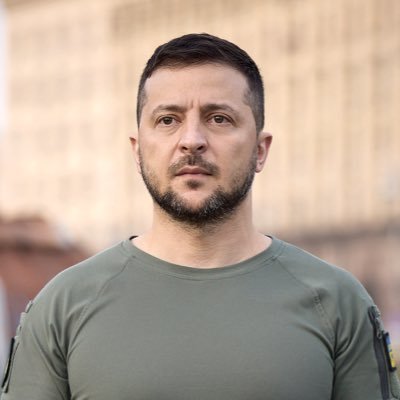
A good meeting with UK Prime Minister @AndyBurnham in London. We value our partnership and continue working together for security.
I briefed Andy in detail on Russian attacks against our cities, our people, and critical infrastructure. Wave after wave of drone attacks throughout the day and night today. Russia launched 124 drones overnight alone, and another 145 during the day. And right now, there are still more than 40 “shaheds” in our skies. They attack energy infrastructure, logistics, and railways. We managed to shoot down a significant number of the drones, but some got through. In terms of scale, this is one of the largest attacks. It is clear that the Russians are trying to take advantage of the problems with Starlink in Ukraine, as our interceptor drones depend on this connection among other things.
That is why it is especially important right now to strengthen our air defenses and provide Ukraine with everything it needs to protect lives. Today, a decision was made to accelerate deliveries of British-made air defense systems to Ukraine to counter jet-powered “shaheds.” And I am very grateful for this timely and much-needed assistance. I thank Andy, the people of the United Kingdom, the government, and His Majesty for their solidarity and support for our country during this brutal Russian war.
DaddyNeedsCoffee 🇺🇦 🚴♂️ 🎨 🇪🇺 retweeted
Bloody hell. Tonight’s ITV News article was just an hors d’oeuvre …

DaddyNeedsCoffee 🇺🇦 🚴♂️ 🎨 🇪🇺 retweeted
Westminster Voting Intention:
LAB: 30% (=)
RFM: 22% (=)
CON: 21% (=)
LDM: 10% (=)
GRN: 8% (-1)
RES: 6% (+3)
SNP: 2% (=)
Via Trajectory Partnership, 5-14 Oct.
Changes w/ 7-16 Sep.
DaddyNeedsCoffee 🇺🇦 🚴♂️ 🎨 🇪🇺 retweeted
Overnight, the Russians used 39 ballistic missiles and more than 120 attack drones and loitering munitions against our energy and critical infrastructure in Kyiv, the Kyiv region, and Kharkiv. A targeted Russian ballistic missile strike specifically against energy infrastructure – the very infrastructure covered by the ceasefire announced by the American President. The strike was entirely deliberate and demonstrative in its scale – Russia has never before shown such ostentatious disrespect toward the United States. Russia does not consider the American President’s statements strong. Unfortunately, at least 600,000 people are now without power. Outages could become even more widespread. Unfortunately, there is significant damage to facilities and equipment – at 26 facilities of our power system and four facilities in the oil and gas sector. I am grateful to the repair crews, all Ukrainian energy workers, and the personnel of the State Emergency Service of Ukraine for all their efforts to address the aftermath of this Russian strike. Tragically, there have been fatalities and injuries.
We ask America and EVERYONE in the world who does not turn a blind eye to reality to respond – and to respond forcefully. Russia has squandered the opportunity for de-escalation and has clearly chosen to continue its insane war of annihilation. We ask President Trump to impose STRONG sanctions on Russia, especially since the Lindsey Graham bill, which was recently passed and signed into law, authorizes and regulates such measures. The American President has all the effective and necessary tools to bring peace closer through strength, justice, and pressure on the aggressor. We ask for additional packages of Patriot missile interceptors for Ukraine. It is entirely fair for us to tell the United States, Europe, and all our partners that no country in the world should be left alone to face such a deranged and pro-war actor as Russia. I am grateful to everyone who helps Ukraine! Peace can only come through strength, and we ask America to remember this principle of Reagan’s. Glory to Ukraine!
DaddyNeedsCoffee 🇺🇦 🚴♂️ 🎨 🇪🇺 retweeted
When I met Angela Rayner to campaign for change to overly aggressive council tax debt collection, with its unprecedented rapid escalation to balliffs, she nodded like most politicians do.
I explained it was destructive for individuals, councils and the economy. She listened more then said she'd change it. I was sceptical. Yet a consultation was launched within weeks and delightfully the change announced within 18mths (its in place from next April) - bullet train pace for politics.
I've a rule that if I campaign for a politician (of any party) to do something, and they do it, I say thank you. Its important to recognise it. So thank you so much Angela Rayner for listening and more importantly acting. The changes coming are a great start.

I promised we'd make council tax fairer, and I’m getting on with the job.
Too many working people have seen council tax debt spiral before they had the chance to get help.
That's why we're introducing more time to pay, clearer warnings if you miss a payment and more support from councils.
Thanks to @MartinSLewis and @mmhpi for their tireless campaigning to make this change happen.
Here's everything you need to know ⬇️
DaddyNeedsCoffee 🇺🇦 🚴♂️ 🎨 🇪🇺 retweeted
In June 2018, the Mail on Sunday’s front page read: “BREXIT: NEW SECRET PUTIN CONNECTION... now MI5 urged to act.” MailOnline reported the government was “likely to face calls to investigate.”
The investigation never came. In 2020 the Intelligence and Security Committee found the government “had not seen or sought evidence of successful interference” in the referendum. It recommended an assessment. The government refused.
Yesterday, the Daily Mail called No 10’s line on Russian interference a desperate backtrack, and quoted Farage’s “Russia hoax” without challenge.
Different titles, different editors, I know. But the question the Mail on Sunday was asking in 2018 has still never been properly answered.

🚨 #FACTCHECK: Nigel Farage on Burnham, Russia and Brexit
‘Mirror, mirror, on the wall, whose claims stand up after all?’
I’m a retired academic, media literate, and equipped with critical thinking skills, so I have time to do this quickly and accurately.
Earlier today, Nigel Farage called Prime Minister Andy Burnham “a liar” over his claim that Russia interfered in the 2016 EU referendum. Here is how Farage’s statements hold up against the record.
In an interview with The Rest Is Politics podcast, released on 12 October but widely reported the day before, Burnham said that on taking office in July he asked whether Russia had interfered in the 2016 referendum, and was given “the clear answer that yes there was.” He did not say how Russia interfered and did not publish any evidence.
This morning, Farage held a press conference in Dover, Kent, to launch Reform UK’s asylum plans. LBC’s Emma Corr asked whether Burnham’s claim tainted the result, and how Farage felt about having potentially benefited from possible Russian interference. He later repeated several of his claims in an interview with GB News.
The exchange between Corr and Farage is available on YouTube from 1:00:07: youtube.com/watch?v=5n6L0ECw…
1. “The prime minister is a liar. Yes, a liar.”
Verdict: Unsupported.
Lying means knowingly saying something false. Burnham reported advice he says he received on entering No 10. That advice has not been made public, so his claim is unverified, and critics are entitled to say so. Nothing Farage cited shows that Burnham knew it to be untrue. At most, Farage offered evidence that the claim is unproven.
2. “Boris Johnson, when he became foreign secretary, one of the first questions he asked was, ‘Was there seen to be Russian interference in the referendum campaign?’ And the answer was no.”
Verdict: Misleading.
I could find no public record of this exchange. Johnson’s recorded public position was more qualified. In Moscow in December 2017, Russian foreign minister Sergei Lavrov said Johnson had confirmed Russia had not interfered in the referendum. Johnson interrupted him: “Not successfully.” He went on to say that Russian attempts to interfere in British elections and the referendum, whatever they may have been, had not succeeded. His position was that attempts may have been made and had failed, which is a different claim from “no”.
The premise that anyone checked is also doubtful. Parliament’s Intelligence and Security Committee (ISC) published its Russia Report in July 2020. It found that the government “had not seen or sought evidence of successful interference” in UK democratic processes. It called for an intelligence assessment of the referendum, and the government refused.
In 2019, BuzzFeed reported two anonymous sources saying British intelligence had found no evidence of Russian meddling in the referendum. That claim was unverified, and the ISC’s report the following year said the government had not sought such evidence.
3. Stephen Doughty “rowed it back and said even if there was some, it made no difference.”
Verdict: Misrepresents the minister.
Doughty, a Foreign Office minister, did narrow Burnham’s claim during Monday morning’s broadcast interviews. He told LBC that Russia had attempted to interfere in the vote but had not succeeded, and made the same point to Sky News. He also said Burnham had been making a broader point about Russian attempts to interfere in democratic events in the UK and across Europe.
On the @BBC Today programme, which Farage named, Doughty spoke of Russian attempts to interfere in a range of democratic processes. He cited the jailing of former Reform UK Wales leader Nathan Gill for taking bribes to promote pro-Kremlin narratives.
Farage’s summary distorts this. “Even if there was some” turns Doughty’s acknowledgement of attempts into a hypothetical. Farage followed it with the words “There was no Russian interference,” and in his later GB News interview (see 10) he attributed that denial to Doughty himself. I found no report of Doughty’s interviews containing those words, or anything to that effect. Doughty said Russia tried to interfere.
4. “There was no Russian interference… And the Russia hoax has run all the way through this.”
Verdict: Not supported by the evidence.
No official finding says there was no interference. The government’s position since 2020 has been narrower: “We have seen no evidence of successful interference in the EU Referendum.” The ISC noted open-source studies pointing to anti-EU content on the Russian state outlets RT and Sputnik, and to the use of bots and trolls, as evidence of attempts to influence the campaign. It criticised the government for not investigating.
The defensible position is that attempts at influence were plausibly documented, their effect was never assessed, and no public evidence shows they changed the result. “No interference” and “hoax” both go well beyond that. The same standard applies to Burnham, whose “clear answer” rests on advice the public has not seen.
5. Arron Banks “was severely libelled over this. But in the end … [he] won in the high court.”
Verdict: False.
Banks sued the journalist Carole Cadwalladr over a 2019 TED Talk and a tweet. He lost in the High Court in June 2022, where the judge held that Cadwalladr’s public interest defence covered the talk. In February 2023, the Court of Appeal found partly in his favour, on one of his three grounds of appeal. It ruled that the defence lapsed for the talk’s continued publication after 29 April 2020, the date of an Electoral Commission statement clearing Banks. It upheld the dismissal of his claim over the tweet. Cadwalladr was ordered to pay £35,000 in damages and 60% of Banks’s High Court costs.
The case also had no bearing on whether Russia interfered in the referendum. It concerned Cadwalladr’s statement about Banks and “his covert relationship with the Russian Government.”
6. “I don’t think our growth figures are anything to write home about. But … they’re a damn sight better than France and Germany and Italy.”
Verdict: Accurate for this year, but selective over the longer term, and beside the point.
On current figures Farage has a case. In the second quarter of 2026, UK GDP grew by 0.5%, against 0.3% in Germany and zero in France. The IMF’s July forecasts put the UK third in the G7 for 2026, at 1%, behind the US (2.3%) and Canada (1.1%). That is ahead of Germany (0.7%), France and Japan (both 0.6%) and Italy (0.5%). The OECD’s September forecasts placed the UK joint second in the G7, level with Germany at 1.1%.
The longer view is less flattering. Between the end of 2019 and the second quarter of 2026, UK GDP grew by 6.2%, behind the eurozone as a whole (7.6%) and far behind the US (15.6%), though well ahead of Germany (1.9%, the lowest in the G7).
By naming France, Germany and Italy, Farage compared the UK with three of Europe’s weaker performers, while the eurozone overall has grown faster since the pandemic. Headline growth has also been flattered by rapid population growth. In late 2024, the Resolution Foundation found UK GDP per head still below its end-2019 level, although per-head growth picked up to 0.6% in the first quarter of 2026.
More importantly, none of these comparisons answers Burnham’s claim. Whether Brexit has done “more harm than good” depends on how the UK compares with a UK that stayed in the EU. The Office for Budget Responsibility (OBR) assumes Brexit will leave UK trade around 15% lower in the long run, and potential productivity around 4% lower, than if the UK had remained. In 2024 it said these assumptions appeared “broadly on track.”
Some economists, including Julian Jessop, a former chief economist and head of the Brexit unit at the free-market Institute of Economic Affairs, dispute these estimates.
Even so, the official forecaster’s central view is that Brexit carries a long-run cost, and growth rankings, whether flattering or not, do not settle the question.
7. “If you even look at trade numbers, the increase in trade since Brexit…”
Verdict: Partly accurate, but selective.
Total UK exports have grown since the referendum. Briefings for Britain, a pro-Brexit research group using ONS data, puts total exports in 2025 at 5% above 2019 in real terms. That growth has come from services. The House of Commons Library reports that UK services exports to the EU were 28% above their 2019 level in real terms in 2025. However, goods exports to the EU were 14% below it, having fallen in real terms in each of 2023, 2024 and 2025.
Not all of that fall is due to Brexit, but post-Brexit barriers fall mainly on goods, and goods trade with the EU is where the decline shows. The overall total obscures it.
8. Brexit has brought “some level of inconvenience… showing a passport, filling in a form,” amounting to “mild inconveniences.”
Verdict: Understatement.
Farage conceded there was more inconvenience “for people like Alcaline,” a Kent road haulage firm based near Hythe, but described it as “showing a passport, filling in a form.” The evidence suggests that undersells the effect, particularly for firms moving goods across the Channel.
In March 2024 the OBR reported that UK goods trade was around 10% below 2019 levels and growing well behind other advanced economies, while services trade had grown more strongly than in the rest of the G7. The OBR attributed the gap partly to post-Brexit barriers falling mainly on goods.
Brexit is not the only cause of the 14% real-terms fall in goods exports to the EU, but official forecasters attribute part of it to post-Brexit trade barriers, which go well beyond passports and forms. Farage’s answer also merges two separate issues: control of migration, and the trade frictions that come from leaving the single market and customs union.
9. Burnham is “looking forward to sitting down with Marine Le Pen or the AfD”
Verdict: Speculation, contrary to the record.
Farage offered no basis for this. In the interview that prompted the row, Burnham cited the German chancellor’s view that the AfD were linked to, and possibly funded by, Russia. He presented the party as a threat to European democracy.
10. The GB News version
Verdict: False.
In an interview with GB News later that day, Farage said Doughty, “being interviewed on the BBC this morning, disavowed it and said no, there was no Russian interference, it didn’t affect anything.” The “even if there was some” qualification had gone, leaving a flat denial attributed to the minister. Doughty’s reported position was that Russia attempted to interfere but did not succeed, which confirms attempted interference.
Farage also presented Johnson and Doughty together as evidence that “both Labour and Conservative camps” reject Burnham’s claim. Neither man said there was no interference. Johnson’s recorded words in 2017 were “Not successfully.” Doughty said Russia had tried and failed. What both rejected was the narrower claim that interference succeeded, which is also the extent of the official government position since 2020.
Conclusion
Farage’s sharpest claims are his weakest. Nothing presented shows that Burnham lied.
Johnson’s record says “not successfully” rather than “no”. The minister Farage cited acknowledged Russian attempts. In Dover, Farage turned that acknowledgement into a hypothetical, and on GB News into a flat denial. Banks did not win in the High Court.
Farage is on firmer ground on recent growth rankings and on total exports, though neither settles whether Brexit has helped or harmed the UK, and goods trade with the EU tells a different story.
Burnham, for his part, has made a significant claim without publishing the evidence behind it. The assessment the ISC recommended six years ago would serve the public better than either man’s certainty.
Finally, it is worth measuring Farage by his own yardstick. Farage called the British prime minister a liar.
The evidence he offered went only to whether Burnham was wrong, not to whether he knew it. If being wrong, or being unable to prove a claim, is enough to make someone a liar, the same test can be applied to Farage.
By that standard, his answer in Dover contained five “lies”: that Johnson was told there was no interference; that Doughty conceded only that any interference “made no difference”; that there was no Russian interference; that the affair was a “hoax”; and that Arron Banks “won in the high court.”
On GB News he added a sixth, that “both Labour and Conservative camps” deny any interference, and repeated three of the others.
That makes six distinct claims, and nine in all, across two appearances in a single day. The row began over one claim by Burnham.
The fairer test, and the one this fact check applies, is that lying requires knowing a statement to be false. By that measure, nobody can say Farage lied, any more than he can say it of Burnham.
But on the evidence, Burnham’s claim remains unproven, while at least one of Farage’s, about his friend’s libel case, is plainly false on the public record.
