


The oath forgotten by some but one that some of us are still stuck with. If only… 🤷🏾♂️
ብዝኾነ ሕዚውን ትግራይ ትስዕር::
#Tigray #TDF #FreeTigray
The TPF spokesperson says every "cadre" in Tigrai must report to the police station in their woreda. Those who don't will be considered ENEMY COMBATANTS and dealt with accordingly.
Nobody has defined a “cadre” and nobody will, because the word is meant to fit anyone. Support the TDF and you are a cadre. Hold a certain political view and you are a cadre. What they are really announcing is that having an opinion in Tigrai is now enough to make you a target in a war.
This is how a people get marked. It is WRONG and GENOCIDAL!
@hrw @amnesty @UNHumanRights @antonioguterres @GenocideWatch @CrisisGroup @eu_eeas @kajakallas @_AfricanUnion @Reuters @AP @AFP @BBCAfrica @AJEnglish @nytimes @guardian @dwnews @declanwalsh @SecRubio @StateAfrica @SenatorRisch @SenatorShaheen @CoryBooker @RepChrisSmith @RepSaraJacobs @POTUS @WhiteHouse @VP @StateDept @USUN @vonderleyen @eucopresident @Europarl_EN @FCDOGovUK @YvetteCooperMP @Keir_Starmer @GermanyDiplo @francediplo_EN @dfatirl @NorwayMFA @CanadaFP @AnitaAnandMP @UN @UN_HRC @UNOCHA @ICRC
#Tigray #Ethiopia #Genocide


Finan67 retweeted

The Genocidal Abiy Ahmed regime continues to massacre Tigrayans with drone strikes. Around midnight yesterday, it hit an Isuzu carrying animals, killing four people and wounding others. Drone strikes have become an ordinary fact of life.
facebook.com/photo?fbid=1547…


"ቡሃላ መጣና አይን አወጣ" ድዮም ዝብሉ ቶም ዓዲ 3 🤷🏾♂️
In 2022 I argued, in public and against the "mood of the moment", that Tigrai should give Abiy's peace a chance. The thread is below. 4 years on, Tigrai's territory is still occupied, the displaced are still in camps and the drones are always over our towns.
Abiy answered that chance with a war on Tigrai's unity. Thanks for the lesson, I guess. 🤷🏾♂️
Tigrai has been fighting fascism from every direction since 2020. Addis, Asmara and everyone they armed. That fight never ended. Except only the so called “leaders” pretending it did.
We all stood with the TDF then, I STILL DO. My allegiance is to the Tigrai Nation and the TDF is Tigrai's defense.
Nothing about that has changed, only some people are now calling it a crime. Funny how “the crime” only started when Abiy needed it to. ሃላኽ 🤦🏾♂️
#Tigray #Ethiopia


Finan67 retweeted

@Amnesty continues to receive reports that civilian infrastructure, including several schools, has been damaged or targeted during aerial attacks in Tigray, Ethiopia.
ዘይምድናቕ ኣይከኣልን:: እንተዝርድአናስባ ይንገረናሎ:: 🤷🏾♂️

እሾክን በሾክ: The Counterinsurgency Triangle
Tigray Peace Force, Gadaa Commando and Amhara Peace Force
I have been watching an interesting pattern take shape across Tigray, Oromia and Amhara. Former rebel commanders and fighters who switched sides are not simply being disarmed and sent home. They are being reorganized, armed and deployed against the movements they once belonged to.
At first, these may look like three separate regional developments, but I do not think they are. The Tigray Peace Force, Gadaa Commando and Amhara Peace Force increasingly point to a common counterinsurgency logic in which former rebels are used to penetrate, weaken and fight the insurgencies from which they emerged. The calculation has obvious advantages, as these fighters know the people they are fighting, the terrain they operate in, the networks that sustain them and the internal weaknesses outsiders may struggle to understand. What concerns me is what this strategy could produce once the immediate wars are over.
All three are state-backed armed formations built largely around former rebels who switched sides and joined the government.
The Tigray Peace Force was formed from commanders and combatants who broke away from the TPLF and turned against it after aligning themselves with the federal government. Its main objective is to confront the TPLF inside Tigray in cooperation with federal forces.
Gadaa Commando follows a similar logic. It was built largely from former OLA commanders and combatants who surrendered or defected to the government. Rather than simply disarming and demobilizing them, the government reorganized and deployed them within the counterinsurgency effort. Their primary target has been the OLA, although they have also been deployed against Fano forces in parts of Wollega.
More recently, the Amhara region announced the formation of the Amhara Peace Force, bringing together former Fano combatants who joined the government side at different times. It is reportedly commanded by Captain Masresha Sete, one of the founders and important commanders of the Amhara Fano insurgency. Other regional armed formations, including the Tekeze Guard and Raya Guard, are also reportedly expected to come under its command structure.
Former rebels offer the state advantages that conventional security forces cannot easily reproduce. They know insurgent commanders, supply routes, hiding places, recruitment patterns, support networks, communication channels and battlefield tactics from firsthand experience. Some also defected after serious disagreements with their former comrades, adding personal rivalries and unresolved grievances to their willingness to fight them.
The experience in Oromia already shows both the value and the limits of this approach. Former OLA commanders who switched sides have reportedly worked with military intelligence, national intelligence and Oromia security institutions. Their insider knowledge can help expose supply and support networks, penetrate insurgent structures and persuade fighters still in the bush to surrender or defect. Their performance as frontline combat units, however, appears less decisive than their usefulness in intelligence, infiltration and political persuasion.
In Tigray, the advantages appear more pronounced, with former TPLF fighters operating under the Tigray flag giving federal forces a locally rooted partner and helping soften the perception that the campaign is being conducted entirely by an outside army. TPF commanders also appear capable of reaching former comrades in ways federal forces cannot. Some fighters can be persuaded to defect, others to cooperate, and still others may provide information while remaining inside TPLF structures. During the latest fighting, that combination of local knowledge, political symbolism and access to former networks appears to have given federal forces an important advantage.
It is still too early to judge the Amhara Peace Force in the same way. Former Fano commanders and fighters aligned with the government have nevertheless already reportedly provided information about Fano commanders, operational methods and support networks. They have also been used in information operations intended to deepen existing divisions and exploit rivalries within the insurgency. Their formal organization now raises the possibility that former Fano fighters will increasingly confront their former comrades directly on the battlefield.
For the government, the short-term appeal is obvious, as the model can weaken insurgencies from within while giving security institutions something conventional forces often struggle to acquire quickly, trusted local access and insider knowledge. Yet the same qualities that make these formations useful today could make them difficult to manage later, particularly if they retain their weapons, commanders and separate identities after the immediate counterinsurgency mission has passed.
These are former ethno-nationalist rebels who are once again being organized into armed formations with strong regional and ethnic identities. Today their mission is to fight their former comrades. Yet the same forces are operating in a country where territorial disputes, communal tensions and competing regional claims remain unresolved.
Complaints have already emerged against Gadaa Commando over alleged attacks involving Amhara civilians. There are also reports of tensions and clashes involving the Tigray Peace Force and Raya Guard around Alamata. If the Tekeze Guard is eventually incorporated into the Amhara Peace Force, the implications could become even more sensitive along the contested western border areas.
Those immediate tensions are only part of the risk, as former rebel formations that are armed, organized, given commanders and allowed to operate as identifiable forces can begin developing interests of their own. Commanders accumulate loyal followers, fighters develop institutional identities, weapons create political leverage, and local communities may begin looking to these formations for protection or representation. A temporary security instrument can therefore acquire a political life well beyond the mission for which it was created.
This is the trajectory I am most concerned about. The rebel of yesterday becomes the government ally and counterinsurgent of today. If that ally is allowed to build an independent command structure, retain substantial weapons, develop a loyal constituency and accumulate political bargaining power, today’s government partner could become tomorrow’s autonomous armed actor and, under different political conditions, could eventually return to rebellion.
The logic of እሾክን በሾክ may therefore work in the short term. One thorn can indeed help remove another. The harder question is what happens when the second thorn remains deeply embedded after the first one has been removed.
The government needs to think beyond immediate battlefield effectiveness and establish safeguards while these formations are still dependent on state support.
1. Rehabilitation and reintegration:
Former rebels should undergo serious rehabilitation and reintegration processes to ensure they understand that they are no longer outlaws but lawful state actors, with an obligation to uphold the law, respect state authority and serve all citizens.
2. Professional command:
They should be placed under experienced, moderate and professional commanders who understand the complexities and sensitivities of Ethiopia’s multi-ethnic political environment.
3. Strict supervision:
These formations should remain under tight supervision by federal and regional security institutions, which must intervene swiftly whenever tensions or clashes emerge with other armed groups or communities.
4. Weapons regulation:
Their weapons and capabilities must be strictly regulated. They should not be armed to a level that enables them to believe they can independently challenge regional or federal security institutions.
5. Clear exit strategy:
There should be clear benchmarks and mechanisms for disarming, demobilizing and integrating these forces into the regular regional or federal security apparatus once their counterinsurgency objectives are fulfilled or when the risks they pose begin to outweigh their usefulness.
I find the broader contradiction difficult to ignore, given that the federal government dismantled regional special police forces partly amid concerns that heavily armed regional formations were deepening polarization and conflict, yet it is now helping organize former ethno-nationalist rebels into new armed formations rooted in many of the same regional and identity-based fault lines.
I understand the immediate military calculation, and it may even prove highly effective in weakening several insurgencies, but my concern is what happens afterward, particularly if these forces are not carefully controlled, professionalized and eventually integrated or demobilized. Ethiopia may discover that it solved one security problem by creating the foundations of another.
The former rebel who becomes today’s counterinsurgent could eventually become tomorrow’s armed political challenger.
Finan67 retweeted
The genocidal Regime in Addis keeps destroying Tigrayan civilian infrastructures (schools, hotels, TV stations, IDP centers), killing many. The past night, it hit 3 hotels in Adwa (Shewit, Pan Africa, and Soloda hotels), others in Shire, & in Sheraro.
facebook.com/AssociazioneAmi…
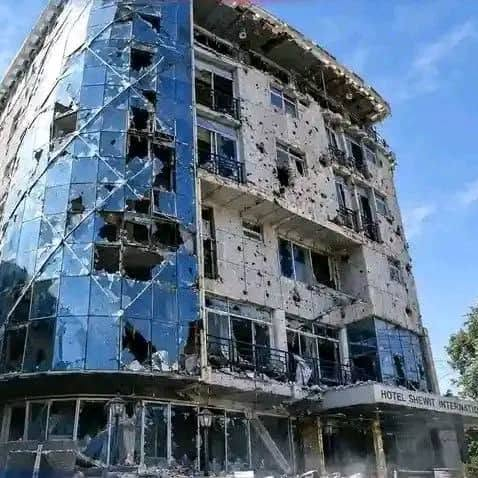

At 2:30 this morning Abiy Ahmed's drones hit a displacement shelter in Sheraro. People who had already fled once. 8 killed in their sleep, one of them a child. 6 badly wounded. This is what Abiy's army calls restraint.
#Tigray #Ethiopia
@addisstandard @AFP @Reuters @AP @BBCAfrica @AJEnglish @hrw @amnesty @UNHumanRights @volker_turk @UNOCHA @MSF @USEmbassyAddis @AsstSecStateAF @StateDept @mofauae @EUinEthiopia @EU_Commission @EUintheUS


Elitism at its finest!
Read how he writes about us. Eritrea gets motives, Egypt gets motives, Sudan gets interests, even the federal army gets credit for learning its lessons but Tigrians? Tigraians get counted. We are a "mobilisation environment" and a supply of "recruits." Our capacity to suffer is measured and found wanting.
A people with thousands of years of history is reduced to a variable in someone else's model. That is elitism. It is the superiority of a man who thinks he understands a people better than they understand themselves.
He didn’t ask hard enough about what a cause does to people. A cause turns farmers into fighters and mothers into the backbone of a resistance. It makes ordinary people carry what no army could ever force on them. Occupation feeds that cause. Every humiliation recruits more people than any “party card” ever could. He knows all of this.
In Oromia, Abiy's own home and his people have taken up arms against this government for years. Jawar himself was thrown in prison by it. If Abiy cannot make peace with the land that raised him, what makes Jawar think Tigrai will kneel to him? I’m sure he has seen/read how resistance grows among his own people.
He points to the Tigraians now fighting alongside Abiy as “proof the bond is broken”. Let’s say the arguable look at how little support that Peace Force has found among Tigraians is significant. That’s a sliver of what the TDF still holds. Look at what those “TPFs” have done. They marched into Tigraian towns beside the army that bombed their own people. That is betrayal and they will have to live with it. But they are still Tigraians. One day, they will wake up from this stupidity and see whose army is standing on their land among their mothers. Blood and memory run deeper than any of it. A wise analyst would ask “how long that alignment survives contact with Tigraian reality?” He doesn't.
Jawar writes as if the TPLF is finished. I don't believe it is. But “even if he is right”, who stops the stories? In every Tigraian household, children will hear what was done to their people and who stood where. Nations remember. Shame does not dissolve with a press release. It gets passed down. And it waits.
Jawar wants to sound like a statesman of the Ethiopian state. But a state that asks a people to accept humiliation as the price of citizenship has nothing to offer them. How does any future Tigrai, with or without the TPLF, carry this shame inside that state? He never asks so because the answer ruins his conclusion.
If there is one people around the horn that knows how to get back up, it is Tigrai. We have been written off more times than anyone cares to count. We outlived every one of those obituaries.
Analyze the TPLF all you want. Just don't mistake your own wishes for the end of a people.
ህዚውን ትግራይ ትስዕር! TDF ይስዕር!
#Tigray #TigrayGenocide #Freedom #Ethiopia #Africa #HornOfAfrica
Can the TPLF Sustain Another Insurgency?
Having encountered a much more formidable ENDF force than it appears to have anticipated, the TPLF has pulled back rapidly, while federal and allied forces have advanced deep into Tigray and toward Mekelle. Battlefield sources indicate that, although the TPLF suffered significant casualties and weapons losses, its forces did not experience the nightmare of organisational collapse. They appear to have retreated largely with their command structure intact. This suggests that the TPLF may have concluded that confronting the federal army in conventional warfare was a mistake and quickly decided to change course.
But what course?
Will it retreat fully into Eritrea and attempt to wage a joint campaign? Or will it shift toward a prolonged insurgency inside Tigray, supported from bases across the Eritrean and Sudanese borders? Given that Eritrea and Sudan may be reluctant to enter an open interstate war with Ethiopia, the latter may be the more plausible option. An insurgency inside Tigray, supported by external bases and supplies. The sharp deterioration in relations between Addis Ababa and Asmara, including the severing of diplomatic relations, makes the question of external sanctuary particularly important, although Eritrea denies Ethiopian accusations that it is supporting the rebel alliance.
The more difficult question, in my view, is whether a successful insurgency is feasible in Tigray under current conditions. The TPLF has already demonstrated that losing Mekelle and conventional control of Tigray does not necessarily mean the destruction of its military organisation. After federal forces captured Mekelle in November 2020, its leadership retreated, regrouped and eventually rebuilt a resistance capable of retaking the city. But many of the political and military conditions that made that recovery possible have changed.
1. External support and sanctuary
The existence of external actors willing and able to support an insurgency is perhaps the most important enabling factor. Eritrea views the Ethiopian government as a potential threat to the survival of the Isaias regime. It also possesses significant stocks of weapons and ammunition and could potentially provide the TPLF with training, command bases, weapons, food and logistical support. But having an interest in weakening Addis Ababa does not necessarily mean being prepared to sustain an insurgency. Political support, sanctuary, logistical facilitation, weapons supply and direct participation in war are very different levels of involvement.
Eritrea’s relationship with Egypt could provide additional political and material support. Egypt, given its longstanding dispute with Addis Ababa over the Nile, has an interest in limiting Ethiopia’s regional power. Addis Ababa has accused both Eritrea and Egypt of supporting the current opposition alliance, allegations both governments deny. The diplomatic confrontation nevertheless demonstrates how the Tigray conflict is becoming connected to wider regional rivalries.
Sudan is another potential factor. The deterioration in relations between Addis Ababa and the Sudanese Armed Forces, alongside Ethiopian allegations concerning the RSF, creates a regional environment in which support for Ethiopian armed opponents cannot be excluded. TPLF-linked Army 70 has previously been reported operating from Sudan, although its current strength, command structure, and operational role remain unclear. During the previous war, the TPLF developed a powerful domestic resistance while becoming increasingly isolated from external supply. A future insurgency could face almost the reverse. Greater opportunities for external sanctuary and supply, but a much weaker domestic mobilisation environment.
Other regional actors also have interests that intersect with the conflict, particularly through the wider competition around Sudan, the Nile and the Red Sea. But strategic interest should not automatically be interpreted as willingness to support a TPLF insurgency. For these actors, weakening or distracting Ethiopia could serve different strategic objectives. Containing its regional influence, protecting their interests in Somalia and Sudan, shaping Red Sea politics, or counterbalancing the influence of their rivals. Any external support would also have to reach forces operating inside Tigray. Access through western and northern Tigray and the viability of corridors toward Sudan and Eritrea could therefore matter as much as what outside actors are willing to provide.
2. Leadership survival
The current TPLF leadership is fighting not only for political influence but potentially for its own survival. Senior leaders face accusations of serious wrongdoing and could face prosecution or political retribution from the federal government. They have also accumulated powerful enemies within Tigray.
For leaders who believe that defeat could mean imprisonment, prosecution, or revenge, insurgency could become more than a political strategy. It could become a survival strategy. That motivation could keep the leadership fighting even under very difficult conditions, but it cannot compensate indefinitely for declining recruitment, weakened political support, or the loss of capable commanders.
3. An overstretched federal state
The Ethiopian state under Abiy Ahmed is already dealing with multiple armed conflicts, economic pressures and significant security commitments. With major insurgencies continuing in Oromia and Amhara, the federal government may struggle to concentrate all its military and security resources on Tigray. That could create space for an insurgency to survive, particularly during its early stages.
The challenge for the federal government would not necessarily be capturing major towns. The present counteroffensive demonstrates that it can still concentrate considerable military power. Holding and administering territory over time while containing insurgencies elsewhere, securing supply routes and maintaining local intelligence would be a different challenge.
Tigray’s mountainous terrain would continue to favour dispersed armed groups, although geography no longer provides the same advantage it did during the TPLF’s original insurgency. The federal government now enters the conflict with substantially greater drone, surveillance and precision-strike capability, making large formations, fixed bases and exposed supply lines much more vulnerable.
4. The problem of popular support
The TPLF has dominated Tigray’s political and social life for nearly half a century. Resentment toward the party has been building for years, particularly since the death of its intellectual and strategic leader, Meles Zenawi. The party has suffered a series of political and military setbacks while failing, in the eyes of many of its critics, to acknowledge or correct its shortcomings.
Its relationship with sections of the Tigrayan intelligentsia has also deteriorated. Many have turned against the party, while others have distanced themselves from it. The TPLF also enters this conflict without the unusually broad mobilisation that developed during the 2020–22 war. The TDF that emerged during that conflict became broader than the TPLF itself, attracting volunteers who perceived the war as an existential struggle. Before the present war, reports of forced recruitment, defections and widespread war fatigue suggested a much less favourable mobilisation environment.
A significant segment of the population blames the leadership for the current war and Tigray’s continuing suffering. Without a compelling popular cause, sustaining an insurgency becomes much harder. Declining support for the TPLF, however, does not automatically translate into support for the federal government. A Tigrayan can oppose another TPLF-led war while simultaneously distrusting Addis Ababa and opposing outside interference in Tigray. What happens within this political space could become more important than simply measuring support for either side.
5. Can the leadership regenerate itself?
Age itself may not be the most important problem confronting the TPLF. The deeper question is whether an ageing and politically exhausted leadership can regenerate itself and produce a new generation of commanders and political organisers capable of mobilising Tigrayan youth. The current TPLF leadership is considerably older, with many senior figures now in their 60s and beyond. More importantly, it enters this conflict after years of internal division. Former senior political and military figures have broken with the organisation, while former TDF fighters have formed the Tigray Peace Force and other political networks opposed to the current TPLF leadership.
In 2020–22, the TPLF regenerated its military strength as much of Tigrayan society came to perceive the conflict as an existential struggle and rallied behind the resistance. That political environment no longer exists to the same extent. Sections of the Tigrayan political and intellectual elite have distanced themselves from the TPLF, while some former political and military figures have aligned themselves against its current leadership. Recreating the broad-based mobilisation of 2020–22 would therefore be considerably more difficult.
6. The internal Tigrayan factor
One important difference from 2020 is the emergence of organised Tigrayan actors actively opposed to the TPLF leadership. Former TDF commanders and fighters potentially provide the federal side with local knowledge, language, intelligence networks, familiarity with the terrain and an understanding of TPLF military structures that federal forces largely lacked during the previous war. This could make organising and sustaining an insurgency considerably more difficult.
Their conduct and the political arrangements that follow the fighting could cut in either direction. Association with revenge, abuse, exclusion or local political score-settling could deepen intra-Tigrayan divisions and generate grievances that the TPLF could exploit. If these forces instead gain local acceptance, their knowledge of Tigray and of the TPLF itself could become a serious obstacle to an insurgency.
7. War fatigue and the problem of replacing fighters
Tigrayans supported the TPLF through its 17-year armed struggle and again bore enormous costs during the 2020–22 war. In both cases, many felt that they ultimately paid a disproportionate price for political objectives pursued by the leadership.
After the 1991 victory, the leadership moved to Addis Ababa and consolidated federal power. After the 2022 Pretoria Agreement, the leadership again faced criticism for failing to adequately account for the enormous sacrifices the population made. Today, the movement is deeply divided, with no clear and coherent strategy.
There appears to be little appetite among the population for another prolonged war. Pre-war reporting already pointed to widespread war fatigue and difficulties relying on voluntary mobilisation. Resistance to mobilisation and conscription, along with reports of soldiers abandoning positions or surrendering to federal forces, could be early indications of this war fatigue.
Battlefield surrender alone, however, cannot tell us whether political exhaustion is the cause. Soldiers can abandon positions because of military pressure, ammunition shortages, tactical decisions or breakdowns in command. Over a prolonged insurgency, the more consequential question would be whether the TPLF can continue recruiting and replacing its losses. It may begin with thousands of experienced fighters and still gradually contract if another generation is unwilling to join them.
8. What did the federal government learn from 2020?
The federal government made major mistakes after capturing Mekelle in 2020. The appointment of unpopular or ineffective local administrations, premature declarations of victory, failure to anticipate a renewed insurgency, and the absence of an effective counterinsurgency strategy allowed the TPLF leadership to survive, regroup and eventually launch a successful campaign to retake Mekelle and threaten Addis Ababa. The presence and conduct of Eritrean and other allied forces, civilian suffering and widespread anger also contributed to an environment in which resistance expanded beyond the organisational core of the TPLF.
This time, however, the federal government appears to be approaching the political dimension differently, although it is still too early to know whether this represents a coherent strategy or will be sustained. The experience of fighting insurgencies in Oromia and Amhara may also have contributed to a more sophisticated approach.
The involvement of commanders and soldiers who previously fought alongside the TPLF could also give the federal side access to local knowledge and networks it largely lacked in 2020. The avoidance of overtly hostile rhetoric is another notable difference. The real test, however, will come after territorial control is established. Current TPLF unpopularity cannot simply be assumed to remain permanent. How civilians are treated, whether their property is protected, whether looting and revenge are prevented, how former fighters are handled, whether communications, banking, hospitals and other basic services are restored, and whether credible local administration emerges could determine whether the TPLF remains politically isolated or finds a new constituency for resistance.
These conditions could deprive a potential TPLF insurgency of one of its most important sources of mobilisation. The perception that Tigray is once again facing an existential threat. Their failure could produce the opposite effect and recreate some of the political conditions that helped transform the TPLF’s military defeat in November 2020 into a much broader Tigrayan resistance.
9. What would people be fighting for?
The TPLF may still have the organisational capacity to wage an insurgency, but organisational capacity is not the same as political capacity. An insurgency needs more than weapons, external sanctuaries and experienced commanders. It needs recruits, intelligence networks, logistics, local legitimacy and, above all, a population willing to absorb the enormous cost of another war.
It also needs a political objective that people understand. Would another insurgency be fought for the survival of the TPLF, control of Tigray, implementation of the Pretoria Agreement, removal of the federal government, or the broader political objectives of the new opposition alliance? Mobilising people for a prolonged war becomes much harder when the political end state itself is unclear.
I think this is where the TPLF faces its biggest challenge. In 2020, it lost Mekelle but subsequently found a political and social environment in which its military organisation could regenerate. In 2026, it may enter the next phase with better possibilities for external sanctuary but a substantially weaker domestic mobilisation environment. The decisive question may therefore not be whether the TPLF can launch an insurgency, but whether it can generate enough popular support to sustain one.
The question is not simply whether the TPLF can go underground, but whether enough of Tigray is willing to go underground with it.
Finan67 retweeted

Since August, there's been an escalation in airstrikes in Tigray.
The resumption of hostilities in northern Ethiopia heightens concerns about unlawful attacks and the grave threat posed to civilians.
HRW's @LaetitiaBader spoke to @BBCNews' Focus on Africa:
Finan67 retweeted

At least 52 civilians have been killed during three days of heavy fighting around Alamata in Ethiopia's northern Tigray region, hospital sources have told the BBC
bbc.co.uk/news/articles/c6gr…

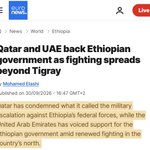
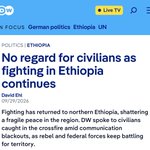
Qatar and the UAE called for protecting civilians. Both condemned the fight against federal forces. Neither said a word about the bombing of Tigraian civilians.
The UN says five Tigrai schools were hit in one day. “Protect” civilians while backing the army bombing them? Joke!
#Tigray #Ethiopia #Qatar #UAE
@euronews @MofaQatar_EN @mofauae @AJEnglish @BBCWorld @BBCAfrica @Reuters @AP @AFP @CNN @FRANCE24 @dwnews @VOANews @guardian @nytimes @UN @UNHumanRights @volker_turk @UNOCHA @_AfricanUnion @ICRC @hrw @amnesty @StateDept @SecRubio @USEmbassyAddis @AsstSecStateAF @SenateForeign @HouseForeign @SenShaheen
euronews.com/2026/09/30/qata…


