

Top-Rated Podcast: The Food Professor, https://xitter.cf/t.co/29ja7aUR5b
Joined October 2012
- Tweets79.8K
- Following3K
- Followers78.7K
- Likes90.5K




Hunger Doesn’t Wait for a Government Cheque omny.fm/shows/shane-hewitt-a…

Strategy fatigue sets in as Canadians dial back grocery cost-cutting novellodesserts.ca/food/stra…


"The data show that while many Canadians are dipping into their savings to pay for food, millennials are dining out more often. The picture is anything but consistent."
More about this on The Food Professor Podcast: youtube.com/watch?v=S4-I-Z1E…

🎙️ From Saskatchewan to the world: this week’s guest on The Food Professor is a Canadian business success story worth hearing.
Michael LeBlanc and I welcome Murad Al-Katib, co-founder, President and CEO of AGT Food and Ingredients Inc. and Ingredients. AGT turns crops such as lentils, peas, chickpeas and beans into food and ingredients for customers worldwide. With 39 facilities and products reaching 127 countries, it shows what Canadian agriculture can achieve through processing, innovation and global ambition.
Murad helped build AGT from a Canadian start-up into a billion-dollar global business, earning recognition as EY World Entrepreneur Of The Year in 2017. An extraordinary entrepreneurial journey.
Plus, we unpack a packed week in food:
🛒 The fifth Canadian Food Sentiment Index: coupon use drops from 30.5% to 20.3%, private label gains ground, omnivores fall to 56.7% of Canadians, and GLP-1 use could reach five million by 2030.
🍽️ HungerCount 2026: 2.35 million food bank visits a month, with children, single parents, the working poor and newcomers hit hardest. @foodbankscanada.
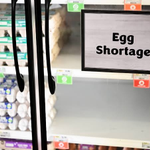
🍁 Quebec’s empty maple syrup reserve and an egg-grading plant lockout leaving some stores short of eggs.
🔐 Grocery cybersecurity following the @saveonfoods loyalty-program breach.
💡 $50 million in federal funding for the @CFIN_RCIA.
Canadian ambition, changing consumers and mounting pressure on our food system—all in the latest episode.
🎧 Tune in wherever you get your podcasts.
Apple: podcasts.apple.com/us/podcas…
YouTube: youtube.com/@thefoodprofesso…
Spotify: open.spotify.com/show/4ZxpGQ…
#TheFoodProfessor #CanadianAgriculture #FoodIndustry #FoodSecurity #Entrepreneurship

More about the Canadian Food Sentiment Index Fall 2026: dal.ca/sites/agri-food/resea…

The Food Professor retweeted

This is a HUGE problem.
#Canada.
We are being forced in a deceitful way to consume HALAL slaughtered meats.
No conspicuous Labeling, separation nor notification.
What are we doing here!
The Food Professor retweeted

🔱 More on the Cost of Groceries in Canada
The grind of trying to save a buck on groceries is having a huge impact on our lives.
According to a new report from Dalhousie University’s Agri-Food Analytics Lab, Canadians are hitting a wall of total strategy fatigue.
For years, we have been playing retail gymnastics just to feed our families, but the endless mental gymnastics of trying to beat inflation is turning into a round of exhausting burnout.
Sylvain Charlebois and Stacey Taylor, the researchers behind the study, point out that affordability isn't just a phase anymore - it is the permanent lens through which we view everything we eat.
We are not just casually looking for deals anymore; we are actively making stressful daily choices.
People are downgrading to the cheapest no-name brands, cutting back on the variety of healthy foods they buy, cooking every single meal at home, or putting off purchases entirely.
But the big takeaway here is that consumers are just sick and tired of having to fight these constant battles.
The financial wreckage behind this is a harsh reality check. Right now, about a third of Canadians admit they are forced to dip into savings or literally borrow money just to buy basic groceries.
This strain is hitting the Prairies especially hard and it is decimating the confidence of Gen Z, who are seeing the sharpest drops in their own food security and faith in the economy. Food bank lines are off the charts in Ontario.
This fatigue is the direct result of years of brutal compounding prices.
Food costs in Canada are about 27 percent higher than they were five years ago, leaving a quarter of Canadian households dealing with food insecurity.
Even if the inflation rate numbers seem to be calming down a little bit on paper, the damage is already done because the baseline remains sky-high.
When a family of four is looking at a heavily inflated grocery bill every month, things like app-hunting, couponing and driving to three different supermarkets stops feeling like smart life hacks and starts feeling like an exhausting second job.
The report also reveals that this burnout is deeply shifting how we view the big grocery chains.
Frustration over fairness, corporate transparency, and how prices get set is at an all-time high.
But in response, Canadians are starting to lean towards “buy Canadian” when in fact, the label was changed on the product. Fooled again by the grocery store chains. There is some evidence to support that claim: befriending grocery store workers can provide a lot of insight.
Are you feeling the grocery store burnout in your own life?
How have you had to change the way you shop lately?
#Canada #GroceryPrices #Inflation #DalhousieUniversity #CostOfLiving #FoodSecurity #CanadianEconomy

This is a problem...

📣I CONTACTED COSTCO AND SUNRISE FARMS. HERE'S WHAT I FOUND.📣
A Costco meat manager confirmed to me that Kirkland-branded chicken, beef, and lamb are halal-certified. Organic chicken is not. I was told this has been the practice for YEARS. The beef is certified, but if opened and cut in store it is "no longer Halal".
I also contacted Sunrise Farms, which confirmed that they are halal-certified. However, when I asked whether they stun animals BEFORE slaughter, I was transferred and received no answer.
Lilydale is now owned by Sofina Foods, but I was unable to reach anyone there by phone.
SO WHAT DOES HALAL SLAUGHTER MEAN?
Halal slaughter requires a prescribed religious method, including a throat incision and a prayer or invocation. The use of stunning depends on the halal certification requirements: some halal standards permit reversible stunning before the cut; others do not.
In conventional slaughter, animals are generally stunned before the cut to render them unconscious. The important question is whether halal-certified meat is produced using pre-slaughter stunning or without it.
WHAT DOES CANADIAN LAW SAY?
Under Canada's federal slaughter regulations, religious slaughter may be conducted without prior stunning under specified conditions. The rules require the animal to be unconscious before it is suspended and dead before dressing procedures begin.
The Canadian Food Inspection Agency (CFIA) regulates slaughter practices, but halal certification alone does not tell consumers whether an animal was stunned before its throat was cut.
MY QUESTION IS SIMPLE:
If consumers are buying halal-certified meat without realizing it, shouldn't they be able to find out exactly how the animals were slaughtered?
I contacted these companies to get answers. I still have an important unanswered question:
**ARE THE ANIMALS STUNNED BEFORE SLAUGHTER?**
Consumers deserve clear, transparent answers.

The Food Professor retweeted

cdnpoli
Slower food inflation does not mean Canadians are feeling relief at the grocery store.
The latest edition of our Canadian Food Sentiment Index, based on responses from 2,998 Canadians, with the support of Caddle, shows that affordability remains front and centre—and shoppers may be growing tired of chasing savings. Some key findings:
• 46.5% say affordability is their top priority when purchasing food.
• 32% report borrowing money or drawing on savings to pay for food.
• 25.1% expect food prices to rise by more than 10% over the next year, up from 18.5% this spring.
• Transportation costs are adding pressure, while declining use of several grocery-saving strategies suggests fatigue may be setting in.
Households have spent years adapting. Their time, energy and financial flexibility have limits. In this interview, Stacey Taylor, an associate of Dalhousie University’s Agri‑Food Analytics Lab and Assistant Professor of Accounting at the University of Ottawa’s Telfer School of Management at the University of Ottawa, discusses the latest findings and what they reveal about Canadians’ relationship with food affordability.
Thank you, Stacey, for helping bring this research to a wider audience.
#FoodAffordability #CanadianFoodSentimentIndex #FoodPolicy #DalhousieUniversity #Telfer
AGT Foods CEO Murad Al-Katib on Value-Added Food, Plus Record Food Bank Use and Quebec’s Maple Syrup Shock the-food-professor.simplecas…

Slower food inflation does not mean Canadians are feeling relief at the grocery store.
The latest edition of our Canadian Food Sentiment Index, based on responses from 2,998 Canadians, with the support of Caddle, shows that affordability remains front and centre—and shoppers may be growing tired of chasing savings. Some key findings:
• 46.5% say affordability is their top priority when purchasing food.
• 32% report borrowing money or drawing on savings to pay for food.
• 25.1% expect food prices to rise by more than 10% over the next year, up from 18.5% this spring.
• Transportation costs are adding pressure, while declining use of several grocery-saving strategies suggests fatigue may be setting in.
Households have spent years adapting. Their time, energy and financial flexibility have limits. In this interview, Stacey Taylor, an associate of Dalhousie University’s Agri‑Food Analytics Lab and Assistant Professor of Accounting at the University of Ottawa’s Telfer School of Management at the University of Ottawa, discusses the latest findings and what they reveal about Canadians’ relationship with food affordability.
Thank you, Stacey, for helping bring this research to a wider audience.
#FoodAffordability #CanadianFoodSentimentIndex #FoodPolicy #DalhousieUniversity #Telfer
The Food Professor retweeted

Canadians Growing Tired of Chasing Grocery Savings as Transportation Costs Surge:
New Agri-Food Analytics Lab survey finds more Canadians borrowing to eat, while private labels gain ground and dining out pushes food budgets higher.
HALIFAX, N.S. – October 22, 2026– Canadians are facing a new squeeze: transportation costs are soaring, familiar grocery-saving tactics are losing momentum, and more households are tapping savings or borrowing to pay for food, according to the latest Canadian Food Sentiment Index from Dalhousie University’s Agri-Food Analytics Lab, supported by Caddle Insights.
Released twice a year, the Index tracks how Canadians perceive food prices, manage household spending and change their food purchasing habits. The Fall 2026 edition surveys 2,998 Canadians and compares trends across five waves since Fall 2024.
6 Key Findings
1. Transportation costs are the new pressure point
Food remains the top cost concern (76.7%), but transportation has jumped to second place: 41.2% now rank it among the expenses rising most, up from 20.2% just six months earlier. Nearly eight in ten (79.2%) say their transportation costs increased over the past year.
2. Grocery-saving strategies are losing steam
The six leading saving strategies are less frequently reported than two years ago. Coupon use fell from 30.5% to 20.3%; shopping at cheaper stores dropped from 24.9% to 21.0%. Seeking sales remains the leading tactic at 45.5%. Consumers may be reaching the limits of how much they can adjust.
“Canadians have spent years adapting their shopping habits to stretch their food dollars.” says Dr. Stacey Taylor, Assistant Professor of Accounting, Telfer School of Management, University of Ottawa. “The decline in several saving strategies suggests fatigue may be setting in. Households have limited time and energy to chase every deal, especially when getting to the store is becoming more expensive.”
3. Store brands are becoming a lasting habit
Choosing generic and private-label foods recorded the largest two-year gain among the value-based behaviours measured, rising from 2.91 to 3.47 on a five-point frequency scale. This suggests store brands are becoming a routine choice, even as inflation-driven brand switching has eased.
4. Food inflation feels much higher than it is
Canadians perceived food inflation at 7.9% over the past year, far above the 2.8% official grocery inflation rate used as the report’s August reference. More than half (53.0%) believed food prices rose at least 8% since last year and one in four (25.1%) expects increases above 10% in the year ahead.
"Slower inflation does not mean food has become affordable again. Canadians are still feeling the cumulative rise in prices, which helps explain why their inflation perceptions remain elevated. Rising energy costs add to household pressures, keeping affordability in the driver’s seat when making food choices. The stabilization of grocery shopping behaviours suggests that some cost-saving adjustments are becoming lasting habits." — Dr. Armağan Özbilge, Assistant Professor, Faculty of Management, Dalhousie University.
5. One in three Canadians is drawing on savings or borrowing to eat
Nationally, 32% reported using savings or borrowing money to buy food, up four percentage points year over year. Saskatchewan recorded the highest rate (36%), followed by Alberta (35%) and Ontario (34%). Prince Edward Island was lowest (14%), although its small sample requires caution; Nova Scotia followed at 24%.
6. Dining out is driving the latest food-budget increase
Estimated combined monthly food spending reached $521, up from $497 in Spring 2025. Over the latest six months, grocery spending edged down from $412 to $409, while dining out and takeout rose by 3.8%. Millennials lead food-away-from-home spending at $132.48 per month, ahead of Gen X ($116.54).
“Overall, the results show that Canadians are not just confronting higher food prices; they are changing how they live with them. Transportation is taking a bigger bite, savings strategies are wearing thin, and one in three people is turning to savings or credit to put food on the table. That is a warning sign for household financial resilience.” — Dr. Sylvain Charlebois, Senior Director, Agri-Food Analytics Lab
Consult the full report here.

The Food Professor retweeted
Canada grows it. Why aren’t we processing more of it here?
🎙️ AGT’s Murad Al-Katib joins us to discuss turning Prairie crops into a global business—and what Canada needs to do next.
Also on the menu:
• CFIN’s $50M
• Canadian Food Sentiment Index: coupons, private label, changing diets and GLP-1s
• HungerCount 2026 and rising food bank demand
• Quebec’s empty maple syrup reserve
• Quebec egg-plant lockout
• Save-On-Foods loyalty-program breach
• Grocery cyberattack in France
Watch or listen to the latest episode!

New Dalhousie University Food Index.
"The majority of survey respondents, or 76.7 per cent, say their food expenses have increased the most over the past year. But transportation jumped to second place at 41.2 per cent." cp24.com/news/canada/2026/10…

Canadians may be experiencing ‘strategy fatigue’ after years of rising food prices: New Dalhousie report suggests canadiangrocer.com/canadians…

The Food Professor retweeted

More Canadians tapping into savings or borrowing to pay for food: Dalhousie report
retail-insider.com/retail-in…
#business #news #retail #food
@MTone123 @FoodProfessor
