








Pinned Tweet
Most small businesses don't need a bigger software stack. They need someone to sit down, learn how the business actually runs, then wire AI around it. That's a design problem before it's a technical one.
3
70
My @bot team is busy producing aesthetics that that garner my feedback to refine the sense of taste team-wide.

50
Uhh... @MrBeast is that you?

You know what’s wild to think about? Starship has about 18,000 tiles and only ONE fell off. That’s already about a 99.995% reliability rate. They’ll keep chasing those 9’s too and eventually a missing tile will probably be pretty rare.

14


Brand isn't the logo.
It's the error message, the onboarding email, the loading screen. When the product contradicts the brand, people believe the product.

5
“Make it better” gives your agent nothing to work with. Develop a rubric of taste over time, and then ask your agent to compare against it (on loop/graph)

2
Believe it’s in the top 10 actually

You forgot Bitcoin rule #743:
In a bear market, max pain must occur during Thanksgiving while your family questions your life decisions
7

Keep a log of what your agent did:
1. What it was asked
2. What it made, named with a version (poster-hero-v01, then v02)
3. Where the files went

8

Most component docs say what a thing is for and stop. Add a "when not to use" line next to each one. Agents reach for the nearest match, and that one line sends them somewhere better.
8
Fantastic!

Grok Bot is back on Opus 5.5.
I ran the fingerprint test again and it's Opus. Looks like @elonmusk actually listened to us

23
Taste is mostly subtraction. AI makes adding things free, which makes knowing what to cut the scarce skill.

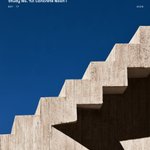
ALT Concrete steps, noon sun, shadows cut like a blade.
11
Set up a generation board. Mine is waterfall style: new combos keep landing and I thumbs up or down each one with a short note.

ALT A sphere inside an arch, crossed by two bands of light.
8
Figma was always a means to an end, not the actual thing.

It's actually shocking how good Figma's MCP is and how virtually no one is talking about it.
Like bro, you can design literally anything you can dream up in Figma and have Claude build it pixel-perfect in under 5 minutes.
Designers are so caught up in playing developer that they're overlooking the very thing they've spent their entire careers wishing was possible.
27


“Service as a software” (new Saas)
Or maybe… “Service After Software”

Sequoia just made a bold claim:
They think the next $1T company will NOT be a software company.
Their take?
Services will be the new software.
Because SaaS companies have spent 25 years fighting over a smaller budget in comparison.
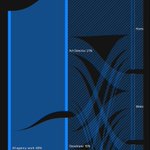
For every $1 companies spend on software → they spend about $6 on services.
For reference:
• A company might pay $10K a year for QuickBooks.
• And $120K for the accountant who closes the books.
AI has completely changed that.
Now, a company can sell the finished WORK instead of the tool.
Here's how the 3 models compare:
TRADITIONAL SAAS
• The customer buys access to software, and their own team runs it.
• Growth is capped by product + distribution.
TRADITIONAL SERVICES
• The customer buys people's time + expertise
• Growth is capped by hiring.
SERVICE-AS-A-SOFTWARE
• The customer buys a completed piece of work.
• Software handles most of the delivery, with the provider's team on decisions + exceptions.
• Growth is capped by how much of the work software can do reliably.
Something to keep an eye on.
31


Slowly building exercises for an agentic agency. A @bot for each of the standard roles does a great job riffing creative


1
19
Spot on @brivael


There are two visions of universal basic income. And the gap between them is the gap between freedom and 1984.
Vision one is Sam Altman's. In Moore's Law for Everything, he proposes an American Equity Fund: the State taxes companies and land, then redistributes to citizens. The State sits between the people and the companies that create value. Every dollar you receive goes through it.
Think about what that means. The entity that decides who gets what, how much, and under which conditions becomes the most powerful entity in human history. Your income depends on your compliance. That's not a safety net. That's a leash. Orwell didn't need AI to imagine where this ends.
Vision two is Musk's. The companies that create value give it directly to the people. No ministry. No agency. No committee deciding who deserves what. You own a piece of the machine. Want to work on top of that? Work. Nobody can take it away because you voted wrong or posted wrong.
Notice the words Elon uses. He doesn't talk about Universal Basic Income. He talks about Universal High Income. That's not a detail. It's the whole thesis.
UBI is a scarcity concept. A minimum check, voted by politicians, to keep you alive while the machines do the work.
Universal High Income is an abundance concept. In the world AI is creating, value grows exponentially and the cost of almost everything collapses toward zero. That's massive deflation. In that world, a fixed check from the State is the worst possible model: it's always late, always negotiated, always smaller than the value actually created. Equity is the best model. When you own a piece of the companies building the future, your income grows at the speed of innovation, not at the speed of a parliamentary vote.
And it keeps the State from standing between the people and the companies, slowing down the very innovation that makes abundance possible.
Here's what most people miss: this design also kills institutional capture.
Look at how influence works today. You don't need to win elections. You fund the intermediaries. The Gates Foundation became one of the largest funders of the WHO. Soros money flowed into NGOs, think tanks, district attorney races. Same playbook every time: whoever finances the middle layer controls the middle layer.
Billionaires giving isn't the problem. Gates and Soros give too. The difference is where the money goes. They fund institutions that then decide for you. Musk gives ownership to individuals. No strings, no intermediary to steer.
Vision one builds a giant central intermediary, the most valuable capture target ever created. Every lobby, every foundation, every ideologue will fight to control it.
Vision two has no center to capture. You can't corrupt a pipe that goes straight from the company to the citizen. Corruption isn't fought. It's made impossible by design.
Will capture disappear overnight? No. But it loses its target. And a parasite without a host doesn't last long.
What Elon is doing is rewriting civilization's operating system. Removing the parasitic layer between those who create and those who receive. Because that's what it takes to become a Kardashev Type II civilization, one that harnesses the full energy of its star. You don't get there with a bureaucracy approving every step.
The question was never "should we share the abundance AI creates?" It's "who stands between you and it?"
His answer: nobody.
1
21