

Legends Dont Retire They Reinvent
Subotica, Srbija
Joined August 2012
- Tweets3.9K
- Following2.4K
- Followers293
- Likes14.3K
Levy retweeted

🚨🚨🚨 AKO JE MUŽ MINISTARKE, SIVA EMINENCIJA EPS-a i MUZIČKIH MANIFESTACIJA u državi ovo radio, pa šta su tek radili Andrej Vučić, Nikola Petrović, Siniša Mali i prvi ešalon vlasti za ovih 14 godina ? Evo kako je Damir Handanović kaže da je na kladionici "zaradio" MILION EVRA 👇

Levy retweeted

Najstarija fotografija beogradskih studenata.
Snimljena je 1863. godine, baš kada je Licej prerastao u Veliku školu.
📷 Anastas Karastojanov (Anastas Stojanović).


Levy retweeted

My favorite military historian is Hans Delbruck. He wrote a four-volume History of Warfare, which is really good, and I recommend it to everyone. His volume of "The Barbarian Invasions" is still the seminal work on the Germanic tactics and strategies that finally destroyed Rome. Everyone else just talks about how Rome failed. And while Rome DID fail, the barbarians deserve some credit too. Anyway if you only read ONE set of old military history books these are the ones.
During World War I, he got in big trouble with the German government and while he wasn't imprisoned (hey, they weren't Nazis) he did lose his standing. But here are the things he argued for:
1) Germay should only fight on the East Front. They should launch absolutely no attacks in the West - just defend. Once Russia falls (which he knew it would), seek peace. He said this war can't be won by conquest. If Germany hadn't scrapped the Schlieffen Plan, and hadn't attacked at Verdun, they could have sent those resources to the East - how much faster might Russia have fallen? So much quicker I bet we might never have seen the Bolsheviks rise.
2) Germany should not engage in unrestricted submarine warfare. The British weren't that big a threat (before 1918, their tactics were too clumsy to penetrate German lines), and if the Americans joined the war it would be a disaster. So the submarine war wouldn't help that much and could ruin everything. Which it did.
3) He said Germany should be nice to Poland. Offer the Poles autonomy, or even independence. The last time France was nice to Poland was under Napoleon, and they were loyal for like a century afterwards, so if Germany is genuinely nice to them we'll have the Poles as our firm friends forever.
4) In 1916 is when Delbruck got in the most trouble, when he said that Germany could absolutely lose the war if they didn't change their strategy. He went on to say that since Germany was doing pretty good in 1916, they should negotiate a favorable peace NOW and end it. For this he got cancelled.
But you'll notice that every single time Delbruck was right. Compare to our modern "military experts" who are largely buffoons.


Levy retweeted

Nadajmo se da će nadležno tužilaštvo momentalno pokrenuti krivični postupak protiv još uvek aktuelnog direktora BIA Orlića👇🏻

EKSKLUZIVNO: Dokument otkriva da je redakcija bila pod merama
🚨BIA prisluškivala glavnu urednicu i novinare Radara.
Piše: Vuk Z. Cvijić
radar.nova.rs/drustvo/bia-pr…


Levy retweeted

Pobeda SL je revolucija koja prelazi granice 🇷🇸 i izučavaće se na fakultetima, ali je i revolucija koja liči na Februarsku u carskoj 🇷🇺 1917. Sada treba sprečiti Oktobarsku revoluciju. Specijalni Georeport o izborima u 🇷🇸 i 🇺🇸 na @velikeprice
👇
youtu.be/90rh6VDp0e4?is=FUNg…
👇
Levy retweeted

European exploration began long before Columbus.
This incredible animated map shows how Europeans explored and mapped the world over 1,200 years, from Viking voyages to the first photographs of Earth from space.
Watch the map come to life!

Levy retweeted

Izborna noć u Srbiji razriješila je jednu neizvjesnost - rezultat izbora. Pobjedom studentske liste otvara se prilika za reformski zamah.
Srbija treba dovršiti demokratsku tranziciju što će biti veliki izazov za novu vlast. Jedna stvar je riješiti se autokratske vlasti, a posve druga odstraniti društvene okolnosti koje su autokraciju dovele na vlast.
Rušenje ograda tzv Ćacilenda je možda srbijanski ekvivalent rušenja Berlinskog zida.
n1info.hr/regija/tonino-picu…

Levy retweeted

How fantastic to see democracy alive in Serbia!
The Serbian Student List victory in Sunday’s snap election quickly saw 12-year strongman, pro-Russian nationalist Aleksandar Vučić concede.
This comes after he allowed convicted genocidal war criminal Ratko Mladić a hero’s funeral last month.
Like in 2000 when Serbian student protest movement Otpor defeated wartime leader Slobodan Milošević, young people have come out again to determine their future. And in Brazil too.
In both countries, the defeated candidates were Trump favourites.
Levy retweeted

I have just spoken by phone with the leaders of the Students' List @studentblokade, who won the elections in Serbia, to congratulate them on their victory. I assured them of Hungary’s support. I was delighted to hear how much strength our victory in April had given them during this difficult struggle.
Levy retweeted
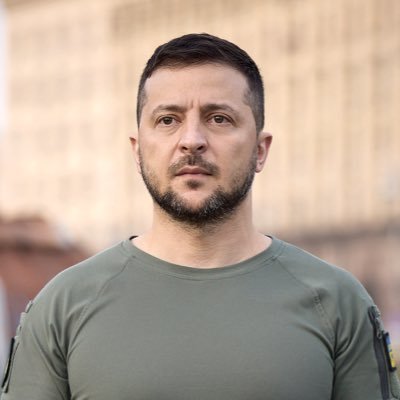
There have been changes in Serbia – a victory of the Student List @studentblokade. And this is clearly a new chapter in the history of the country and its people. We wish Serbia success, real development, and warm relations with the European community. We in Ukraine thank Serbia for respecting our people, our state, and our independence. And we always celebrate our shared achievements – everything that strengthens our societies and gives people more opportunities. We are ready to continue expanding our cooperation, and may all the good hopes of the people of Serbia come true!
Levy retweeted

Kako jedna uspešna politička kampanja izgleda:
Španski premijer Pedro Sančez stoji ispred Gernike, brani antiratni stav svoje zemlje i osuđuje zločine u Gazi. 👏👏👏
Levy retweeted

Two army cooks of the 4th Australian Division stand in a landscape of waterlogged trenches on Westhoek Ridge during the Third Battle of Ypres (Passchendaele), 9 October 1917.IWMEAUS 1091

Levy retweeted

Neutralni

The most dystopian fitness video on the internet just dropped. 🚨💀
Paris is literally burning, protesters are shutting down the streets, and this woman is casually jogging past a burning barricade like it’s a treadmill session. She is literally running through thick black smoke because hitting her daily step count is a higher priority than whatever revolution is happening around her.
Pure, unfiltered main character syndrome. The absolute disrespect to the entire riot.
Levy retweeted

Vasili Mitrokhin (1922-2004), a Soviet KGB archivist who secretly copied and compiled thousands of classified intelligence files during the Cold War...
Every evening between 1972 and 1984, a quiet, bespectacled archivist named Vasili Mitrokhin walked out of the KGB’s foreign intelligence headquarters in Moscow with crumpled slips of paper tucked into the soles of his shoes. Past armed guards, metal detectors, and internal security checkpoints, the fifty-something bureaucrat flashed his pass and stepped out into the Moscow cold. Under his arm sat no classified briefcase; in his pockets lay nothing suspicious. But stuffed into his socks and underwear were minute, handwritten notes detailing the Soviet Union's deepest global operations: assassination directives, illegal networks, foreign political bribes, and clandestine weapons caches buried across NATO territory. For over a decade, while the most paranoid surveillance state on earth hunted Western moles, an unassuming clerk was methodically stealing the entire KGB archive from the inside out.
Mitrokhin had spent his early career as an undercover operative in the Middle East before an ideological clash saw him sidelined to the archive section of the First Chief Directorate. Disillusioned by Nikita Khrushchev’s 1956 denunciation of Stalin’s terror and permanently radicalized by the brutal 1968 invasion of Czechoslovakia, Mitrokhin viewed the Soviet apparatus as a criminal conspiracy against humanity. In 1972, fate handed him the keys to the kingdom: the KGB began transferring its vast foreign intelligence archives from the cellars of the Lubyanka to a new, sprawling complex at Yasenevo. Mitrokhin was assigned the monumental task of cataloging, verifying, and sealing roughly three hundred thousand secret files.
Working entirely alone in windowless vaults, surrounded by decades of operational espionage, Mitrokhin began his silent counter-revolution. Because photocopying machines were strictly guarded and heavily audited, he copied files by hand onto scraps of paper, transcribing names, operational code words, dead-drop locations, and cipher systems in microscopic handwriting. At the end of each workday, he concealed the stolen notes on his body and walked through the security checkpoints without raising suspicion.
Back at his modest family dacha outside Moscow, Mitrokhin spent his nights transcribing the scribbles onto an ordinary typewriter. He packed the carbon copies and typed sheets into steel milk churns, tin trunks, and aluminum containers, sealing them with tar paper. Late at night, beneath the floorboards of his dacha and under the flowerbeds of his garden, he dug deep pits and buried the metal containers, carefully tamping down the soil so not even his wife suspected what lay below. By the time he retired in 1984, Mitrokhin had assembled over twenty-five thousand pages of KGB history, creating the single largest unauthorized intelligence breach in Soviet history.
When the Soviet Union collapsed in late 1991, Mitrokhin knew his hour had arrived. In early 1992, carrying a sample of handwritten notes hidden in his luggage, he boarded a train to the newly independent Baltic states. In Estonia, he walked into the United States Embassy in Tallinn offering to trade his secret archive for political asylum; the CIA officer on duty dismissed him as a crank peddling forged documents and turned him away. Undeterred, Mitrokhin traveled to Riga, Latvia, and walked into the British Embassy. There, an MI6 officer took one look at the authentic operational codes, poured Mitrokhin a cup of tea, and recognized the intelligence discovery of the century.
Within months, British intelligence exfiltrated Mitrokhin and his family to the United Kingdom. Soon after, under the noses of Russian security forces, MI6 operatives quietly entered his Moscow dacha, pried up the floorboards, and dug up six heavy milk churns and trunks packed with thousands of classified pages.
#archaeohistories

Levy retweeted

Adolf Hitler in Paris, June 23, 1940.
Adolf Hitler visited Paris on 23 June 1940, just days after France’s surrender. It was his only trip to the French capital, and he toured the city in the early morning hours to avoid crowds. Accompanied by architect Albert Speer and sculptor Arno Breker, Hitler visited landmarks such as the Eiffel Tower, the Opéra, and Napoleon’s tomb at Les Invalides.
The visit was staged as both a personal triumph and a symbol of Nazi dominance. For Hitler, Paris represented the height of European culture, and standing in the conquered city fulfilled a long-held ambition. Yet his tour was brief, lasting only a few hours, before he returned to Germany.
The photographs of Hitler in Paris stand as haunting images of the occupation: a dictator walking the boulevards of a subdued capital, emblematic of both France’s defeat and the extent of Nazi power at that moment in the war.

Levy retweeted

Kenneth Clark’s "Civilisation" (1969) remains one of television’s greatest achievements: a luminous, 13-part journey through Western art, architecture, and ideas from the fall of Rome to the 20th century. Clark’s cultivated yet deeply personal narration pairs with stunning location filming of cathedrals, paintings, and landscapes to show how culture has shaped history. More than a survey of masterpieces, it argues that civilization is a fragile, hard-won achievement worth understanding and defending. Watching it sharpens the eye, expands historical imagination, and offers a rare model of intelligent, humane cultural commentary. Few documentaries have matched its grace clarity.

