
Boston, MA
Joined April 2022
- Tweets70
- Following300
- Followers484
- Likes1.5K

Pinned Tweet
Your LLM may be sparser than you thought!
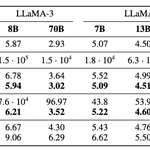
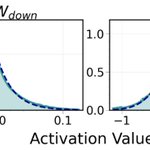
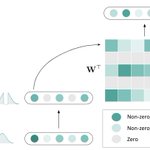
Excited to announce TEAL, a simple training-free method that achieves up to 40-50% model-wide activation sparsity on Llama-2/3 and Mistral models. Combined with a custom kernel, we achieve end-to-end speedups of up to 1.53x-1.8x!

congrats on the launch!!

Today, we're proud to announce @inferact, a startup founded by creators and core maintainers of @vllm_project, the most popular open-source LLM inference engine.
Our mission is to grow vLLM as the world's AI inference engine and accelerate AI progress by making inference cheaper and faster.
The Challenge
Inference is not solved. It's getting harder.
Models grow larger. New architectures proliferate: mixture-of-experts, multimodal, agentic. Every breakthrough demands new infrastructure. Meanwhile, hardware fragments: more accelerators, more programming models, and more combinations to optimize.
The capability gap between models and the systems that serve them is widening. Left this way, the most capable models remain bottlenecked and with full scope of their capabilities accessible only to those who can build custom infrastructure. Close the gap, and we unlock new possibilities.
And the problem is growing. Inference is shifting from a fraction of compute to the majority: test-time compute, RL training loops, synthetic data.
We see a future where serving AI becomes effortless.
Today, deploying a frontier model at scale requires a dedicated infrastructure team. Tomorrow, it should be as simple as spinning up a serverless database. The complexity doesn't disappear; it gets absorbed into the infrastructure we're building.
Why Us
vLLM sits at the intersection of models and hardware: a position that took years to build.
When model vendors ship new architectures, they work with us to ensure day-zero support. When hardware vendors develop new silicon, they integrate with vLLM. When teams deploy at scale, they run vLLM, from frontier labs to hyperscalers to startups serving millions of users. Today, vLLM supports 500+ model architectures, runs on 200+ accelerator types, and powers inference at global scale. This ecosystem, built with 2,000+ contributors, is our foundation.
We've been stewards of this engine since its first commit. We know it inside out. We deployed it at frontier scale—in research and in production.
Open Source
vLLM was built in the open. That's not changing.
Inferact exists to supercharge vLLM adoption. The optimizations we develop flow back to the community. We plan to push vLLM's performance further, deepen support for emerging model architectures, and expand coverage across frontier hardware. The AI industry needs inference infrastructure that isn't locked behind proprietary walls.
Join Us
Through the open source community, we are fortunate to work with some of the best people we know. For @inferact, we're hiring engineers and researchers to work at the frontier of inference, where models meet hardware at scale. Come build with us.
We're fortunate to be supported by investors who share our vision, including @a16z and @lightspeedvp who led our $150M seed, as well as @sequoia, @AltimeterCap, @Redpoint, @ZhenFund, The House Fund, @strikervp, @LaudeVentures, and @databricks.
- @woosuk_k, @simon_mo_, @KaichaoYou, @rogerw0108, @istoica05 and the rest of the founding team

5
786


congrats on the launch!!

Generalists are useful, but it’s not enough to be smart.
Advances come from specialists, whether human or machine.
To have an edge, agents need specific expertise, within specific companies, built on models trained on specific data.
We call this Specific Intelligence.
It's what we're building at Applied Compute.
We unlock the latent knowledge inside a company, use it to train custom models, and deploy an in-house agent workforce that reports to your team.
We work with sophisticated companies that have already captured early gains from general models, like @cognition, @DoorDash, and @mercor. They’re pulling even further ahead with proprietary in-house agents that don’t need to wait for the next public model release.
Together, we are building and validating models and agents in days instead of months, achieving state-of-the-art performance on customer evals.
Our team has high density and low latency. Our founders all worked on different parts of this problem while they were researchers at OpenAI — @ypatil125 as a key member on the agentic software engineer effort (Codex), @rhythmrg as a core contributor to the first RL-trained reasoning model (o1), and @lindensli as a core contributor on ML systems and infrastructure for RL training.
Two-thirds of the team are former founders, and everyone brings a deep technical background, from top AI researchers to Math Olympiad winners.
We are backed by $80M in funding from Benchmark, Sequoia, Lux, Elad Gil, Victor Lazarte, Omri Casspi, and others. With their support, we are growing the team, scaling deployments, and bringing to market the first generation of agent workforces built on specific models.
In short:
1. We are building Specific Intelligence for specific work at specific companies.
2. That will power in-house agent workforces to support their human bosses.
3. That in turn will unlock AI’s full potential through humanity’s greatest engine of progress: thriving corporations in a free market.

1
8
862

neat framework for thinking about subagents/tool use. the primitives learned by good coding models seem to be generally useful, even outside of code.

What if scaling the context windows of frontier LLMs is much easier than it sounds?
We’re excited to share our work on Recursive Language Models (RLMs). A new inference strategy where LLMs can decompose and recursively interact with input prompts of seemingly unbounded length, as a REPL environment.
On the OOLONG benchmark, RLMs with GPT-5-mini outperforms GPT-5 by over 110% gains (more than double!) on 132k-token sequences and is cheaper to query on average.
On the BrowseComp-Plus benchmark, RLMs with GPT-5 can take in 10M+ tokens as their “prompt” and answer highly compositional queries without degradation and even better than explicit indexing/retrieval.
We link our blogpost, (still very early!) experiments, and discussion below.

3
876
nice

I’m thrilled to announce @reductoai’s $75M Series B led by @a16z, which brings our total funding to $108M.
Just five months after our Series A, we've surpassed 1 billion pages processed and grown our monthly volume 6x. We now process hundreds of millions of pages every month for some of the world's best AI teams.
Here's what we've learned and where we're headed 🧵
5
523


attention —> expensive ☹️
linear attention —> inexpressive ☹️
log-linear attention —> sweet spot?? 🤯

We know Attention and its linear-time variants, such as linear attention and State Space Models. But what lies in between?
Introducing Log-Linear Attention with:
- Log-linear time training
- Log-time inference (in both time and memory)
- Hardware-efficient Triton kernels

8
688
In some sense this is training-free neuralese. Why are more ppl not talking about this?🤔
Lots of interesting future work to be done (training with soft-tokens in an RL loop, extending soft-tokens beyond linear combinations of weight embeddings, etc.)

𝘏𝘶𝘮𝘢𝘯𝘴 𝘵𝘩𝘪𝘯𝘬 𝘧𝘭𝘶𝘪𝘥𝘭𝘺—𝘯𝘢𝘷𝘪𝘨𝘢𝘵𝘪𝘯𝘨 𝘢𝘣𝘴𝘵𝘳𝘢𝘤𝘵 𝘤𝘰𝘯𝘤𝘦𝘱𝘵𝘴 𝘦𝘧𝘧𝘰𝘳𝘵𝘭𝘦𝘴𝘴𝘭𝘺, 𝘧𝘳𝘦𝘦 𝘧𝘳𝘰𝘮 𝘳𝘪𝘨𝘪𝘥 𝘭𝘪𝘯𝘨𝘶𝘪𝘴𝘵𝘪𝘤 𝘣𝘰𝘶𝘯𝘥𝘢𝘳𝘪𝘦𝘴. But current reasoning models remain constrained by discrete tokens, limiting their full potential.
Introducing 𝐒𝐨𝐟𝐭 𝐓𝐡𝐢𝐧𝐤𝐢𝐧𝐠: a training-free method that mimics human-like “soft” reasoning by generating continuous, abstract concept tokens. These tokens smoothly blend multiple meanings through probability-weighted mixtures of embeddings, enabling richer representations and seamless exploration of diverse reasoning paths.
𝐓𝐡𝐞 𝐢𝐦𝐩𝐚𝐜𝐭?
✅ Improved accuracy on math & code benchmarks by up to 2.48% (pass@1).
✅ Reduced token usage by up to 22.4%, making reasoning models both smarter and more efficient.

5
995
my intuition: GRPO clipping bias --> random rewards reduces to "noisy" on-policy SFT on the RL prompts. Qwen benefits abnormally as it can somewhat already solve these problems.
feel like a better baseline is SFT. are people doing this?

🤯 We cracked RLVR with... Random Rewards?!
Training Qwen2.5-Math-7B with our Spurious Rewards improved MATH-500 by:
- Random rewards: +21%
- Incorrect rewards: +25%
- (FYI) Ground-truth rewards: + 28.8%
How could this even work⁉️ Here's why: 🧵
Blogpost: tinyurl.com/spurious-rewards

4
559
we’ve added EAGLE-3 to SGLang. Check it out!

Jointly announcing EAGLE-3 with SGLang: Setting a new record in LLM inference acceleration!
- 5x🚀than vanilla (on HF)
- 1.4x🚀than EAGLE-2 (on HF)
- A record of ~400 TPS on LLama 3.1 8B with a single H100 (on SGLang)
- 1.65x🚀in latency even for large bs=64 (on SGLang)
- A new scaling law: more training data, better speedup
- Apache 2.0
Paper: arxiv.org/abs/2503.01840
Code: github.com/SafeAILab/EAGLE
SGLang version: github.com/sgl-project/sglan…
⚒️Takeaway: Introducing training-time test, a novel draft model training technique: we replace feature prediction with direct token prediction and shift from top-layer-only features to multi-layer feature fusion. This approach unlocks a new scaling law previously undiscovered in EAGLE and EAGLE-2.
🙏Acknowledge: We would like to thank the SGLang team (@zhyncs42 @lm_zheng @ying11231 @JamesLiuID, @ispobaoke, and others @lmsysorg) for their merge and careful evaluation of EAGLE-3 on SGLang.
🤝Want to collaborate? We're a small academic group with limited GPU resources. If you're interested in supporting our next version of EAGLE or would like us to train a preliminary version tailored to a specific model, please get in touch!
Joint work with Yuhui Li, Fangyun Wei, and Chao Zhang
Accepted as a Spotlight to #ICLR2025. See you in Singapore!

Excited to present BitDelta at #NeurIPS2024! Looking forward to great convos — reach out if you’d like to chat!

How much value does your fine-tuning add? Believe it or not, just 1 bit 🤏 Thrilled to unveil BitDelta, a super simple yet effective method for compressing fine-tuning deltas into a single bit while barely touching performance. This approach slashes storage and GPU memory demands by over 10x for numerous fine-tunes on the same base model—a frequent practice, and enables efficient multi-tenant serving.

thanks for the shoutout!

BitDelta
Your Fine-Tune May Only Be Worth One Bit
paper page: huggingface.co/papers/2402.1…
Large Language Models (LLMs) are typically trained in two phases: pre-training on large internet-scale datasets, and fine-tuning for downstream tasks. Given the higher computational demand of pre-training, it's intuitive to assume that fine-tuning adds less new information to the model, and is thus more compressible. We explore this assumption by decomposing the weights of fine-tuned models into their pre-trained components and an additional delta. We introduce a simple method, BitDelta, which successfully quantizes this delta down to 1 bit without compromising performance. This interesting finding not only highlights the potential redundancy of information added during fine-tuning, but also has significant implications for the multi-tenant serving and multi-tenant storage of fine-tuned models. By enabling the use of a single high-precision base model accompanied by multiple 1-bit deltas, BitDelta dramatically reduces GPU memory requirements by more than 10x, which can also be translated to enhanced generation latency in multi-tenant settings. We validate BitDelta through experiments across Llama-2 and Mistral model families, and on models up to 70B parameters, showcasing minimal performance degradation over all tested settings.
2
452
Am super excited to announce BitDelta! We show that it's possible to quantize the weight delta of a fine-tuned LLM and its base LLM down to 1 bit with minimal performance degradation, drastically reducing the cost of storing and serving multiple fine-tuned models.
How much value does your fine-tuning add? Believe it or not, just 1 bit 🤏 Thrilled to unveil BitDelta, a super simple yet effective method for compressing fine-tuning deltas into a single bit while barely touching performance. This approach slashes storage and GPU memory demands by over 10x for numerous fine-tunes on the same base model—a frequent practice, and enables efficient multi-tenant serving.
Paper: arxiv.org/abs/2402.10193
Code: github.com/FasterDecoding/Bi…
Blog: stay posted 😁
Special thanks to @tianle_cai, @Guangxuan_Xiao, Kai, @jasondeanlee, @songhan_mit, @tri_dao, and @togethercompute, @myshell_ai for making this possible!

2
355