
Co-founder, investigative and data journalist at @irpimedia & Granata da legare
Italia
Joined June 2013
- Tweets682
- Following537
- Followers459
- Likes746





Lorenzo Bodrero retweeted

Its very simple.
Future historians will write:
1) NATO never intended to admit Ukraine (despite annual summit resolutions saying its future was inside the organisation).
2) This left Ukraine stranded in a Grey Zone of insecurity which induced Russia to invade in 2014 .
3) Russia saw the Western response was weak and Western countries wished to continue business as usual. NATO General Secretary Rutte, then Dutch Prime Minister, joined Germany in continuing to build Nord Stream 2 after 2014.
5) Russia assumed the Western response in 2022 would be similarly weak as in 2014, which encouraged it to launch a full-scale invasion.

🇺🇦 Qualche riflessione dopo un mese in Ucraina
linkedin.com/pulse/cos%C3%A8…

23
Lorenzo Bodrero retweeted

Der Ukraine fehlen Abfangraketen. Das Drohnen-Regiment @413_raid greift russische Militärbasen und Ölraffinerien an - um russische Angriffe zu stoppen, bevor sie die Ukraine erreichen.
Mit @LoreBodre waren wir bei einer geheimen Deep Strike Mission dabei:
stern.de/politik/ausland/ukr…

👇

My thoughts in KyivPost. Another Major Corruption Scandal Shakes Ukraine▶kyivpost.com/opinion/89436

2
32
Lorenzo Bodrero retweeted

Water, but no electricity or heating. Light, but no water or heating. The luckiest may get two out of three, but usually without heating. Depending on district, one may get nothing at all.
It's 6°C during the day & 1°C at night.
Welcome to the daily lottery of life in Kyiv.
Lorenzo Bodrero retweeted

Today, Ukraine’s independent anti-corruption agencies, NABU and SAPO, released investigative materials that have shocked the country.
But beyond the horrifying details, they reveal four important truths about Ukraine’s fight against corruption.
When Ukrainians created NABU and SAPO, we imagined they would investigate high-level white-collar corruption involving ministers, oligarchs, and senior officials. Few of us imagined they would uncover allegations of such brutal organized crime.
The recordings released as part of Operation Carthage-2 include discussions of attacking investigative journalists and activists with acid, assaulting a Mariupol defender and former prisoner of war with hammers, and accounts of people being brutally beaten, including a woman attacked with a metal pipe on the street at night.
These materials expose something much larger than a criminal investigation.
First, independent institutions inevitably begin exposing corruption within the old institutions.
NABU and SAPO were created to investigate top-level corruption. Yet some of that corruption involve law enforcement officials protecting organized criminal networks rather than dismantling them.
Second, organized crime systematically seeks protection across the entire unreformed law enforcement system. Earlier investigative materials pointed to alleged prosecutorial protection of fraudulent call centers. The latest materials raise questions about connections involving the Security Service of Ukraine (SBU) and the Ministry of Internal Affairs. This is expected.
The alleged criminal activities protected by corrupt law enforcement officials extend beyond fraud to drug trafficking, counterfeit currency, and violent attacks.
Third, fighting corruption is part of Ukraine’s struggle to break with its Soviet and Russian past.
The Soviet legacy left behind criminal networks operating across borders, often intertwined with security and law enforcement structures.
The alleged involvement of a Russian criminal figure alongside Ukrainian officials illustrates why dismantling these networks is also a matter of national security. There is also a mention of how Russian FSB was used by criminals to attack a NABU detective.
I repeatedly explain this during international meetings: Ukraine’s anti-corruption reforms are not merely about good governance. They are part of our strategic separation from Russia and the Soviet system.
Fourth, the political dimension demands further investigation.
The recordings contain references to political contacts, including a former interior minister, as well as a former health minister and possible meetings with MP David Arakhamia.
Such references do not establish wrongdoing by those politicians. But they raise legitimate questions about the political connections that criminal networks believed they could rely upon.
Those connections must be investigated further.
Ultimately, the question is how deeply has organized crime penetrated Ukraine’s law enforcement and political institutions?
This is precisely why the independence of NABU and SAPO matters. Ukraine must have institutions capable of investigating powerful networks, regardless of their connections.
As a member of NABU’s Public Oversight Council, I am proud of the work these institutions are doing and grateful for their courage.
And I am happy that Ukrainians successfully defended independence of NABU and SAPO by peaceful protests in the streets during a full-scale war.
The work of NABU and SAPO is about our democratic resilience and defending our sovereignty.


Ero su quei binari 7 gg fa. Se io e la mia collega tedesca fossimo tra le vittime, ci sarebbero stati più titoli sui media 🇮🇹 perché siamo europei, o la morte di altri 14 civili ucraini è un numero accettabile, dopotutto? E forse anche quella dei due 15enni a Chernihiv?

Stamattina la Russia ha sferrato un attacco contro la stazione ferroviaria di Dnipro colpendo dei treni passeggeri e uccidendo diversi pendolari in attesa sui binari. Si contano almeno 13 morti. A Chernihiv in un altro attacco sempre nella mattinata sono morte due ragazze di 15 anni, mentre a Kremenchuk alcuni droni lanciati contro edifici residenziali ha ucciso due persone e ne ha ferite almeno altre 11.
LA RUSSIA È UNO STATO TERRORISTA.
LA RUSSIA È IL MIO NEMICO


2
29
👇

This has been Putin's dream for years: That his country, with GDP per capita lower than Poland, unable to conquer Donbas since 2014, will be treated as an equal to the US and China.
wsj.com/world/russia/putin-f…

10
Lorenzo Bodrero retweeted
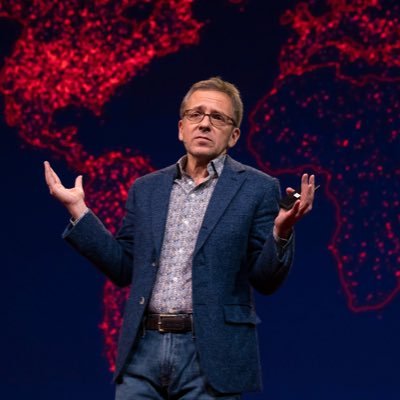
us special envoy steve witkoff to president putin: “you talk so much about my president, president trump, being a humanitarian. you are a humanitarian also, sir, and i salute that.”
truly hard to watch.
Lorenzo Bodrero retweeted

TRAVAGLIO MENTE, LO CONFERMA L'ORDINE!!!
Per la prima volta l'Ordine dei Giornalisti mette nero su bianco che Travaglio non dice la verità ed i suoi interventi, inclusi quelli televisivi, sono "apertamente orientati" (tradotto, è anche fazioso).
Il Consiglio di Disciplina dell'OdG del Piemonte mi ha dato ragione su tutta la linea, scrivendo chiaramente che quella dei cinque miliardi della Nuland - spesi dagli USA in 22 anni in Ucraina e non per finanziare Maidan, come invece scritto falsamente dal Fatto - è un'affermazione "inesatta" (cioè una bufala), che "può indurre in errore" il lettore. A rafforzamento del concetto, l'Ordine aggiunge anche che "appare indubbio che Travaglio abbia usato la dichiarazione di Nuland sui finanziamenti all'Ucraina in una sintesi scorretta dal punto di vista formale".
Si tratta, va detto, di una vittoria di Pirro, perché la decisione presa è di "non luogo a procedere", cioè nessuna azione disciplinare. La ragione è che - la supercazzola qui è straordinaria - proprio in ragione della faziosità di Travaglio non si può certo pretendere che faccia informazione neutrale e perché, anche se quella frase era falsa, "il suo ragionamento ha un'ampiezza che oltrepassa quella singola locuzione". Inoltre - prendiamola a ridere - la rettifica dovrebbe chiederla la Nuland!!!
Una capolavoro pilatesco che da un lato seppellisce il nostro codice deontologico, trattando menzogne alla stregua di opinioni, ma dall'altro mette una pietra tombale sulla credibilità di chi sulla questione Ucraina scrive e dice cose che non hanno alcuna attinenza con la realtà.


Lorenzo Bodrero retweeted

Hoy desvelamos en @elmundoes que Rusia lleva meses planeando matar al ajedrecista y líder disidente Garry Kasparov en Estados Unidos. elmundo.es/internacional/202… Este verano las autoridades de EEUU comunicaron al fundador de Free Russia Forum que era "objetivo" de un plan del Kremlin para matarlo y se le puso protección especial por primera vez desde que se exilió y se instaló en Nueva York en 2013, según han desvelado fuentes de su entrono.
Más avanzados estaban los planes para asesinar a Ilya Ponomarev, él único diputado ruso que votó contra la anexión de Crimea y que desde el exilio ha colaborado sobre el terreno con la defensa armada de Ucrania.
(En Vilna, dos exiliados rusos en la mirilla. Uno recibió protección cuando la red de asesinos se puso en marcha en 2024)
Un reclutado a las órdenes de Moscú filmó dos emplazamientos de una de las víctimas en EEUU, respondiendo a instrucciones precisas formuladas en clave: "medir terreno"= grabar, "construir"=matar. Cada tarea tenía un precio, pero no hubo acuerdo para la segunda.
@ElMundoInter


Lorenzo Bodrero retweeted

Another of the cities Putin stated publically had recently been "liberated" by Russia, Liman.


Lorenzo Bodrero retweeted

Rape of girls as young as 4 and women as old as 82. Routine genital electrocution of male Ukrainian prisoners.
This is just a fragment of the absolutely nightmarish stuff from the just-released UN report on sexual violence in Russia's invasion of Ukraine:
• Violations detailed in the report include rape, gang rape, genital mutilation, electric shocks, and genital beating
• Russian forces are responsible for the vast majority of sexual violence in Ukraine
• The majority of victims are Ukrainian men. In a common form of torture against Ukrainian POWs detailed in the report, Russian forces electrocuted men's genitals using tasers or a Soviet-era military field telephone known as a 'tapik.'
• Women and children, primarily in Ukrainian territory occupied by Russian forces, also fell victim to rapes and sexual assault. The youngest documented rape survivor was a four-year-old girl, and the oldest was an 82-year-old woman, with both cases perpetrated by Russian forces.
kyivindependent.com/abhorren…

È tutto qui, in queste semplici parole, il significato del conflitto in corso. Quella ucraina è Resistenza a un aggressore. La "pace" si fa preventivamente, non si impone all'aggredito quando gli bombardano le case quotidianamente. Quest'ultima si chiama "resa".

Lo scrittore ucraino pacifista Artem Chapeye, arruolatosi all’inizio dell’invasione russa, risponde alla segretaria dei Giovani Democratici, Virginia Libero:
«Fanno bene i giovani a rifiutare le guerre di aggressione mosse dai loro governi. Ma la resistenza a un’invasione non è “la vostra guerra di destra”. È la stessa guerra che fecero i vostri partigiani. Onestamente, ne ho abbastanza di rispondere a formule astratte di persone privilegiate, che non si rendono nemmeno conto di quanto lo siano a non dover prendere decisioni così difficili come le nostre e a potersi limitare a fare retorica teorica. Spero davvero che gli italiani non si ritrovino mai più nella stessa situazione in cui siamo noi. Solo ora comprendo il significato profondo di quest’espressione, e da una città in guerra ve lo auguro sinceramente: la pace sia con voi». (La Repubblica)

32
Lorenzo Bodrero retweeted

Lo scrittore ucraino pacifista Artem Chapeye, arruolatosi all’inizio dell’invasione russa, risponde alla segretaria dei Giovani Democratici, Virginia Libero:
«Fanno bene i giovani a rifiutare le guerre di aggressione mosse dai loro governi. Ma la resistenza a un’invasione non è “la vostra guerra di destra”. È la stessa guerra che fecero i vostri partigiani. Onestamente, ne ho abbastanza di rispondere a formule astratte di persone privilegiate, che non si rendono nemmeno conto di quanto lo siano a non dover prendere decisioni così difficili come le nostre e a potersi limitare a fare retorica teorica. Spero davvero che gli italiani non si ritrovino mai più nella stessa situazione in cui siamo noi. Solo ora comprendo il significato profondo di quest’espressione, e da una città in guerra ve lo auguro sinceramente: la pace sia con voi». (La Repubblica)
Useful takes about the Witkoff/Kushner - Putin meeting in Moscow 👇

Some further thoughts on the new round of peace negotiations with Putin over Ukraine.
Moscow is offering the United States not "peace in exchange for business," but rather "business in exchange for war." The Kremlin is offering Washington major Russian-American deals, access to energy resources, the Arctic, critical minerals, infrastructure and investment projects. The main objective is to buy American consent to the normalization of the war Russia is waging against Ukraine.
Kirill Dmitriev is effectively selling Washington precisely this model of future relations. The head of the Russian Direct Investment Fund and Putin’s special envoy has been systematically working through the channels of Steve Witkoff and Jared Kushner, whose value lies exactly in their direct access to Trump’s inner circle. Following the meeting with Putin on September 5, the Kremlin once again separately reported that major Russian-American projects had been discussed in detail.
At the same time, Moscow is offering an entire package of economic "normalization." It includes Arctic oil and gas, LNG, heavy oil, lithium, copper, nickel, platinum, rare earth metals, nuclear energy, infrastructure and aviation. Long-term purchases of American aircraft have been discussed, which would require the lifting of aviation sanctions, as well as compensation for American companies for losses incurred after leaving Russia.
Energy and the Arctic are the central components of the proposal because this is where Russian and American interests could potentially be linked for decades. Russia needs technology, capital and sanctions relief to develop difficult oil and gas fields and LNG projects. American companies are being offered access to resources. For the Kremlin, the main benefit would come when American companies invest billions of their own dollars in these projects. After that, imposing new sanctions on Russia would also mean losses for American businesses.
Sakhalin-1 demonstrates how Moscow is trying to create such mutual interests in practice. On August 15, 2025, the day of the Trump-Putin summit in Anchorage, Putin signed Decree No. 559, which opened a legal pathway for the return of foreign investors. For Exxon, this concerns its former 30% stake and approximately $4.6 billion written off after the company left Russia. Exxon has publicly denied plans to return, but talks continued: Reuters reported on a non-binding framework agreement between Exxon and Rosneft, while the Wall Street Journal reported contacts between Neil Chapman and Igor Sechin, and Darren Woods discussed the issue with Trump. Putin has meanwhile extended the deadline for transactions involving the stake until January 1, 2027. Moscow is effectively offering Exxon the opportunity to recover billions in lost value in exchange for restoring an economic relationship with Russia.
Gentry Beach and Novatek show that such a model can be put into practice. According to The New York Times, the Dallas-based investor, who has ties to the Trump family, signed an LNG agreement with Novatek after the Anchorage summit. Beach himself said that the project had been discussed “at the highest levels” in Moscow and Washington. This is already a concrete American private-sector interest for which improved relations with Russia have financial value.
Moscow is using critical minerals to exploit American dependence on China. Putin has offered American companies access to Russian deposits of lithium, nickel, platinum and rare earth metals. But in February 2025, he explicitly included the so-called “new territories” - the Ukrainian territories occupied by Russia - in the proposal. This makes the Russian offer particularly revealing: American businesses are effectively being offered an economic interest in resources located in territories seized by Russia as a result of the war.
The Zaporizhzhia Nuclear Power Plant illustrates even more clearly how business can become an instrument for normalizing the consequences of the war. Bloomberg reported on options involving American participation in or control over the plant, with the electricity it generates potentially being divided between the parties. In other words, a Ukrainian facility seized by Russia is no longer being discussed solely as an issue of occupation, but also as the subject of a potential economic agreement.
Even the proposals concerning aluminum follow the same model - access to the Russian market in exchange for the lifting of restrictions. In February 2025, Putin proposed returning approximately 2 million tonnes of Russian aluminum per year to the US market.
Separately, he proposed an approximately $15 billion project in Russia’s Krasnoyarsk Krai involving a hydroelectric power plant and new aluminum production.
There are also more extravagant proposals designed to sell Trump the image of a grand historic deal. In October 2025, Dmitriev proposed a “Putin-Trump tunnel” beneath the Bering Strait: 112 km long, costing approximately $8 billion and taking up to eight years to build, potentially with the involvement of Elon Musk’s Boring Company. The economic feasibility of such an estimate is questionable. But the political product is obvious: a major project, Trump’s name and a symbol of a new US-Russia partnership.
The same function is served by the $14 trillion figure Dmitriev uses to describe the potential of economic cooperation. It emerged after Zelenskyy said on February 6, 2026, that Ukrainian intelligence had obtained documents concerning a so-called “Dmitriev package” worth approximately $12 trillion. Following The Economist’s publication, Dmitriev called the $12 trillion figure “fake news,” but immediately raised the estimate to more than $14 trillion and claimed that American businesses had already lost more than $300 billion because of sanctions. There is no documentary evidence confirming the realism of this figure. For now, it is a populist argument aimed at an American audience: confrontation with Russia costs you money, while cooperation could bring in far more.
And American capital is already responding to the opportunities, although so far largely outside Russia itself. On January 29, 2026, Lukoil announced a deal with Carlyle to sell LUKOIL International GmbH, which holds international assets with a book value of approximately $22 billion. The deal is subject to OFAC approval. Reuters also reported competing bids from Chevron and Quantum Capital, as well as interest from Exxon and ADNOC. In other words, when Russian assets become available and the Treasury allows a transaction to proceed, major American businesses immediately show interest.
On the other hand, the Carlyle example currently demonstrates the willingness of American capital to buy Russian assets, rather than the willingness to invest in Russia. Lukoil is selling its foreign assets precisely because of sanctions pressure. This is effectively a consequence of pressure on Russia, rather than evidence of successful normalization. For the Kremlin, the next step is much more important: to ensure that American money flows not into the purchase of assets from Russia, but into new projects inside Russia itself.
OFAC demonstrated another vulnerability in the sanctions system in 2026: American interests can outweigh the desire to maintain pressure on Russia. In March, General Licenses 133 and 134 were issued, followed later by 134B and 134C, allowing transactions involving certain shipments of Russian oil, including cargoes belonging to Rosneft, Lukoil and sanctioned tankers. The reason was the US-Israeli war against Iran, problems surrounding the Strait of Hormuz and the threat of an oil shortage. Dmitriev did not cause this. But Moscow saw the lesson clearly: if Russian oil is needed by the US to solve another problem, sanctions can become secondary.
The main obstacle to the Russian model currently lies in Congress. On August 7, the Senate voted 86-11 in favor of the Lindsey O. Graham Sanctioning Russia and Iran Act of 2026, which provides for increased pressure on Russia’s energy sector, financial system, shadow fleet and major buyers of Russian energy. A companion bill introduced by McCaul and Hoyer has already been submitted to the House of Representatives. The 86-11 vote shows that, outside the president’s inner circle, the idea of a rapid return to business as usual with Russia does not yet have political consensus.
Moscow is therefore not currently working with the entire American system, but with its most receptive elements.
Opposing this are a significant part of Congress and the security establishment. The Treasury Department is taking a more situational approach: sanctions can be eased when broader American interests require it.
Why does Moscow need economic cooperation with the US if China and Chinese capital are available next door? China already buys Russian resources, but it cannot lift American sanctions, return Russia to the dollar-based financial system, or weaken the transatlantic sanctions regime. American investment offers the Kremlin much more: capital and technology, political legitimacy, less dependence on China, and potentially an American lobbying constituency interested in maintaining stable relations with Russia.
Moscow already has some initial results, but they remain contradictory.
There is Beach-Novatek, the negotiations surrounding Sakhalin-1, Carlyle and Lukoil’s international assets, interest from Chevron and Quantum, and a series of OFAC exemptions. But Carlyle is benefiting from a sanctions-driven asset sale, Exxon is seeking to recover its own losses, and OFAC eased restrictions because of an energy crisis. This is still not the systemic normalization that the Kremlin wants.
Moscow’s real success will begin when American businesses start investing new money directly into Russia and become interested in protecting those investments from future sanctions. An even more significant threshold will be reached if American capital becomes willing to enter projects connected to occupied Ukrainian territories and assets seized during the war.
The struggle is therefore no longer about whether individual US-Russia deals are possible - they are. The question is whether the Kremlin can turn these deals into a system in which American domestic interests emerge that would favor accepting Russia’s aggressive policy on the European continent.

33
Lorenzo Bodrero retweeted

🚨🪖🇷🇺🇺🇦 Vladimir Putin può provare. Può davvero aspettare il prossimo inverno, credere che sarà il momento giusto per spezzare la resistenza degli ucraini, ripetere (e ripetersi) che l'Ucraina, dopotutto, "non è un vero Paese". Ma come tentò di spiegargli inutilmente l'ex direttore della CIA, Bill Burns, poche settimane prima che l'uomo del Cremlino lanciasse la sua invasione, "beh, i veri Paesi si difendono". In 46 secondi di filmato c'è la dimostrazione di questo assunto. Vladimir Putin può provare. Gli ucraini continueranno a combattere, a cercare spazi di libertà e bellezza davanti al terrore.

🚨🪖🇷🇺🇺🇦🇺🇸 IL SOFFIO DEL CREMLINO, IL SUONO DELLA GUERRA.
COM'È ANDATA (DAVVERO) LA MISSIONE DI WITKOFF E KUSHNER TRA MOSCA E KYIV.
LE ULTIME INFORMAZIONI DI INTELLIGENCE
Nei 7 minuti di sessione aperta alle telecamere, la voce di Vladimir Putin è poco più di un sussurro, appena un soffio. Persino l'interprete che sempre l'accompagna in queste occasioni, l'uomo che più ne conosce le pause e i cambi di tono, ha il suo bel da fare per cogliere tutte le parole pronunciate dal numero uno in modalità soliloquio. Sembra di assistere a uno strano spettacolo, a un monologo svogliato, a una seduta di ipnosi. No, il Presidente non vuole saperne di alzare il volume. Ma chissà se Steve Witkoff e Jared Kushner sanno come leggere il loro interlocutore.
Almeno fino a qualche anno fa, negli USA, era in voga l’abitudine di prepararsi a un incontro di questo livello passando attraverso giorni, se non settimane, di studio. Se avesse fatto i compiti a casa, il duo di inviati speciali saprebbe osservare le apparenze, ma anche andare oltre.
Perché lo sguardo di Putin sembra perdersi nel vuoto quando la parola passa agli emissari americani?
Perché guarda sul tavolo, in direzione dei suoi appunti?
E cosa tradisce questo tono di voce impercettibile per il resto dell'uditorio?
Buona lettura agli iscritti al Blog: dangelodario.it/2026/09/07/i…

Lorenzo Bodrero retweeted

C’è qualcosa di molto più serio, nel titolo del Fatto su Lipsia, del solito sensazionalismo: «2 sospettati, però nessuna prova».
Perché le prove ci sono.
Sul luogo del tentato attentato gli investigatori hanno trovato una drone carico di esplosivo, circa 600 grammi di Semtex, tracce di DNA sul contenitore e sulla drone, un’antenna che sarebbe servita a guidarla. Quelle tracce hanno contribuito a identificare uno dei sospettati; di entrambi sono stati ricostruiti movimenti e collegamenti.
tagesschau.de/investigativ/n…
tagesschau.de/investigativ/n…
Berlino è arrivata all’attribuzione alla Russia incrociando tre livelli diversi: caratteristiche dell’operazione, indagine di polizia e intelligence. Il portavoce del governo tedesco ha detto una cosa molto precisa: ognuno dei tre filoni, da solo, sarebbe stato sufficiente per attribuire l’attacco a Mosca.
Naturalmente non tutto il materiale d’intelligence viene reso pubblico durante un’indagine. Ma «non tutto è pubblico» e «non esiste alcuna prova» sono due frasi completamente diverse.
auswaertiges-amt.de/de/newsr…
La vicenda ci riguarda anche più direttamente. Uno dei sospettati, bielorusso e titolare anche di passaporto russo, sarebbe entrato nell’area Schengen con un visto turistico rilasciato dall’Italia a Minsk. La Farnesina sta verificando; dalle informazioni italiane non risulta che l’uomo sia poi passato fisicamente dall’Italia.
ansa.it/english/news/general…
Non significa che “l’Italia ha fatto entrare l’attentatore” . Significa però che Schengen funziona così: la qualità dei controlli di uno Stato diventa un problema di sicurezza per tutti gli altri.
Ed è qui che comincio a preoccuparmi dell’Italia come possibile ventre molle europeo. Non soltanto per i controlli. Anche per l’ambiente nel quale queste operazioni vengono raccontate.
