

The last Document AI you'll ever need.
London
Joined June 2023
- Tweets2.3K
- Following318
- Followers2K
- Likes1.4K





PageIndex retweeted

If you are feeling brave, I just pushed a v0 Recursive Decision Model module for @DSPyOSS available now on my fork rawwerks/dspy
uv add "dspy[typesafe] @ git+github.com/rawwerks/dspy"
from dspy.experimental import RDM



PageIndex retweeted
Ask any questions about this proof: app.pageindex.ai/share/doc/c…

PageIndex retweeted

$NVDA ’s latest Q2 FY27 10-Q is now live on PageIndex.
Ask anything about the latest filing and get straight to the source.
#nvidia
app.pageindex.ai/explore/nvi…

PageIndex retweeted
$GOOGL's latest Q2 2026 10-Q is now live in the Pagelndex Public Library.
Ask anything about the filing-from Gemini and Google Cloud to Al infrastructure, risks, and financials.
Every answer comes with line-level references.
#Google #GoogleCloud
chat.pageindex.ai/explore/go…
PageIndex retweeted
We collected the @ycombinator SAFE documents into one public library to help founders understand and compare them more easily.
Free to use: chat.pageindex.ai/explore/y-…
#SAFE #startups #founders #fundraising #YCombinator

PageIndex retweeted

PageIndex seems to be able to become an industry standard index method in the AI era, which is similar position as B-tree earned in the RDBMS era.
Standing on the shoulders of giants is the right way to build something new.
PageIndex retweeted

You can now search a 500-page PDF without chunking or embedding anything.
Andrej Karpathy floated an idea recently.
What if your knowledge base worked like a wiki instead of a vector database?
OpenKB is the open-source CLI built on that exact concept.
It compiles raw documents into a structured, interlinked wiki using LLMs.
Knowledge accumulates instead of being rebuilt every query.
Traditional RAG rediscovers context from scratch each time. The system flips this.
Long PDFs get parsed by PageIndex, a vectorless tree index that lets the model reason over document structure.
What you get out of it:
> Auto-generated summaries and concept pages
> Cross-references between documents
> Contradiction and gap detection
> Watch mode for live updates
> Obsidian-compatible markdown output
Format support covers PDF, Word, PowerPoint, Excel, HTML, and images.
Figures and tables are retrieved natively.
A single new file can update 15 wiki pages automatically.
Your knowledge base finally remembers what it already learned.


PageIndex retweeted

Context as structured data in @MystMarkdown is where ideas like LLM-wiki (@karpathy) and vectorless reason-first search (@PageIndexAI) converge. Evidentron lives in the scholarly publishing domain, but the same principles can significantly benefit agentic knowledge bases.

I will be presenting this work at the upcoming National Academy of Science, Engineering and Medicine Roundtable Action Collaboratives meeting at @hhmi_science
Below is the entire demo by @agahkarakuzu, feedback welcome! n/n
PageIndex retweeted

Reading "Rules of the Mind" by John R. Anderson — his ACT theory splits long-term memory into:
1. Declarative memory — factual, retrievable knowledge
2. Procedural memory — skill-based knowledge
Striking how closely this maps to today’s LLM systems.
chat.pageindex.ai/share/chat…

PageIndex retweeted
Thanks for the question. OpenKB is more aligned with @karpathy ’s LLM Wiki vision, while PageIndex serves as the long-document retrieval engine within that stack. They are complementary: OpenKB focuses on building and organizing the knowledge base, while PageIndex handles retrieval over long and complex documents.
PageIndex retweeted

ChatPDF finds similar sentences.
DocDetective understands your document's structure.
Upload any PDF → it builds a reasoning tree → answers with page references.
Zero vector DB. Zero chunking. 98.7% accurate.
@PageIndexAI is underrated.
Try It 👇
PageIndex retweeted

@AlbionVC's, Sebastian Hunte on why reasoning-based retrieval is a step change from vector search:
"A vector database works by taking a bunch of information, throwing it into this massive vector space and doing k-nearest neighbour. You match the query embedding against embeddings in that state space and pull the nearest ones."
"So you do this kind of implicit assumption that similarity means relevance."
@PageIndexAI takes a different approach. Instead of matching embeddings, you build a hierarchical tree over your data, then let the model reason through it at inference time.
"Think of it like a book. There's a table of contents. There's a natural hierarchy to how we, as humans, would try to find certain information."
The trade-off is cost. But with inference getting cheaper, the tailwinds are in your favour.
PageIndex retweeted
We've seen the same shift in RAG — not only for code, but for documents too — so we built PageIndex: vectorless, agentic, reasoning-based RAG, with a document tree index.
No vector DB, no chunking needed.
github.com/VectifyAI/PageInd…

PageIndex retweeted

PageIndex, a new open-source framework, achieves 98.7% accuracy on complex document retrieval by using tree search instead of vector embeddings. The approach eliminates the need for dedicated vector databases.
venturebeat.com/ai/this-tree…


PageIndex retweeted

Vector databases might be the wrong abstraction for document retrieval.
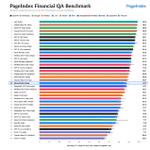
A new open-source approach called PageIndex just hit 98.7% accuracy on a financial benchmark, beating traditional RAG by 30+ points. No embeddings. No chunking. No vector DB.
The insight: when a 10-K says “see Note 15 for debt details,” vector search has no idea what that means. It retrieves whatever text looks similar to your query, not whatever text actually answers it. Similarity and relevance are different things.
PageIndex builds a hierarchical tree from document structure, then uses LLM reasoning to traverse it. The model asks “where would an expert look?” instead of “what text looks similar?”
The math is stark. Traditional RAG systems hover around 60-70% on FinanceBench. That 30-point gap represents every time vector search found semantically similar text but missed the actual answer buried in an appendix or cross-referenced table.
What makes this interesting: the infrastructure is simpler, not more complex. No vector DB to maintain. No embedding pipeline. No chunking decisions. Just a tree and reasoning.
Vector search was the best we had when LLMs couldn’t reason well enough to navigate document structure. Now they can. The techniques we built around their limitations are becoming the bottleneck.
For simple use cases, vector RAG still wins on speed and simplicity. But for professional documents requiring multi-step reasoning, treating structure as signal instead of noise changes everything.

Researchers built a new RAG approach that:
- does not need a vector DB.
- does not embed data.
- involves no chunking.
- performs no similarity search.
And it hit 98.7% accuracy on a financial benchmark (SOTA).
Here's the core problem with RAG that this new approach solves:
Traditional RAG chunks documents, embeds them into vectors, and retrieves based on semantic similarity.
But similarity ≠ relevance.
When you ask "What were the debt trends in 2023?", a vector search returns chunks that look similar.
But the actual answer might be buried in some Appendix, referenced on some page, in a section that shares zero semantic overlap with your query.
Traditional RAG would likely never find it.
PageIndex (open-source) solves this.
Instead of chunking and embedding, PageIndex builds a hierarchical tree structure from your documents, like an intelligent table of contents.
Then it uses reasoning to traverse that tree.
For instance, the model doesn't ask: "What text looks similar to this query?"
Instead, it asks: "Based on this document's structure, where would a human expert look for this answer?"
That's a fundamentally different approach with:
- No arbitrary chunking that breaks context.
- No vector DB infrastructure to maintain.
- Traceable retrieval to see exactly why it chose a specific section.
- The ability to see in-document references ("see Table 5.3") the way a human would.
But here's the deeper issue that it solves.
Vector search treats every query as independent.
But documents have structure and logic, like sections that reference other sections and context that builds across pages.
PageIndex respects that structure instead of flattening it into embeddings.
Do note that this approach may not make sense in every use case since traditional vector search is still fast, simple, and works well for many applications.
But for professional documents that require domain expertise and multi-step reasoning, this tree-based, reasoning-first approach shines.
For instance, PageIndex achieved 98.7% accuracy on FinanceBench, significantly outperforming traditional vector-based RAG systems on complex financial document analysis.
Everything is fully open-source, so you can see the full implementation in GitHub and try it yourself.
I have shared the GitHub repo in the replies!
PageIndex retweeted

Researchers built a new RAG approach that:
- does not need a vector DB.
- does not embed data.
- involves no chunking.
- performs no similarity search.
And it hit 98.7% accuracy on a financial benchmark (SOTA).
Here's the core problem with RAG that this new approach solves:
Traditional RAG chunks documents, embeds them into vectors, and retrieves based on semantic similarity.
But similarity ≠ relevance.
When you ask "What were the debt trends in 2023?", a vector search returns chunks that look similar.
But the actual answer might be buried in some Appendix, referenced on some page, in a section that shares zero semantic overlap with your query.
Traditional RAG would likely never find it.
PageIndex (open-source) solves this.
Instead of chunking and embedding, PageIndex builds a hierarchical tree structure from your documents, like an intelligent table of contents.
Then it uses reasoning to traverse that tree.
For instance, the model doesn't ask: "What text looks similar to this query?"
Instead, it asks: "Based on this document's structure, where would a human expert look for this answer?"
That's a fundamentally different approach with:
- No arbitrary chunking that breaks context.
- No vector DB infrastructure to maintain.
- Traceable retrieval to see exactly why it chose a specific section.
- The ability to see in-document references ("see Table 5.3") the way a human would.
But here's the deeper issue that it solves.
Vector search treats every query as independent.
But documents have structure and logic, like sections that reference other sections and context that builds across pages.
PageIndex respects that structure instead of flattening it into embeddings.
Do note that this approach may not make sense in every use case since traditional vector search is still fast, simple, and works well for many applications.
But for professional documents that require domain expertise and multi-step reasoning, this tree-based, reasoning-first approach shines.
For instance, PageIndex achieved 98.7% accuracy on FinanceBench, significantly outperforming traditional vector-based RAG systems on complex financial document analysis.
Everything is fully open-source, so you can see the full implementation in GitHub and try it yourself.
I have shared the GitHub repo in the replies!
PageIndex retweeted
Quickly understand this paper here: chat.pageindex.ai/share/chat…

PageIndex retweeted
Quickly understand this paper 👇chat.pageindex.ai/share/chat…
