

Long-term Musk bull. Tesla and SpaceX. What actually makes them hard to beat. What is noise. What is real. What is already broken.
Earth
Joined July 2018
- Tweets1.3K
- Following1.6K
- Followers1K
- Likes1.3K





Pinned Tweet
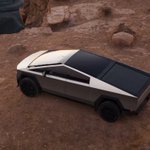
Too Far Ahead of Its Time, Out of Step with the Market: The Tragic Fate of Tesla’s Cybertruck
On November 6, 2026, Elon Musk announced that Tesla plans to gradually wind down Cybertruck production at its Texas Gigafactory by mid-2027 to make room for expanded Cybercab production.
It was an almost offhand announcement, yet one that cast a tragic shadow over the Cybertruck’s story.
With its futuristic design, stainless-steel body, steer-by-wire system, rear-wheel steering, 48-volt electrical architecture, and powerful electric drivetrain, the Cybertruck turned heads everywhere when it was unveiled. For technology enthusiasts, it was a dream machine.
But the more spectacular the entrance, the more tragic the exit.
In this article, I’ll take a look back at the Cybertruck’s journey and explore why a vehicle that once inspired so much excitement ultimately struggled so badly in the marketplace.
The United States is one of the world’s most important pickup truck markets. Ford’s F-Series, Chevrolet’s Silverado, and Ram trucks have long ranked among America’s best-selling vehicles. With its enormous scale, established customer base, and attractive profit margins, this market is enough to make any automaker’s mouth water.
Musk was hardly going to ignore it.
In 2016, Tesla’s second Master Plan explicitly called for the development of a new kind of pickup truck, expanding the company’s reach into additional vehicle segments.
In 2019, the Cybertruck made its debut. The originally announced starting prices were just $39,900 for the single-motor rear-wheel-drive version, $49,900 for the dual-motor all-wheel-drive version, and $69,900 for the tri-motor version.
Those prices made one thing clear: Tesla wasn’t trying to build an expensive toy for a handful of wealthy enthusiasts. It wanted to enter one of America’s largest and most competitive automotive segments and challenge traditional gasoline-powered pickups head-on.
Musk had enormous ambitions for the Cybertruck. During Tesla’s October 2023 earnings call, he projected that annual production could reach 250,000 vehicles in 2025.
Reality, however, proved brutally unforgiving.
According to Kelley Blue Book, part of Cox Automotive, Cybertruck sales in the United States totaled 38,965 vehicles in 2024 before plunging to just 20,237 in 2025, a staggering 48.1% decline.
The downward trend continued in 2026. Sales during the first three quarters totaled approximately 11,586 vehicles, fewer than Tesla had sold in the fourth quarter of 2024 alone.
Even more striking, the Cybertruck’s actual US sales in 2025 amounted to just 8.1% of Musk’s earlier annual production target of 250,000 vehicles.
A revolutionary product once expected to disrupt America’s traditional pickup market was now facing the prospect of leaving the production line less than three years after its first deliveries.
Far from challenging the dominance of established pickup manufacturers, the Cybertruck found itself trapped by disappointing sales, high costs, and an increasingly awkward market position.
Was it simply too expensive? Was its design too unconventional? Or had Musk taken his obsession with technological innovation too far?
I believe each of these explanations captures only part of the problem.
The Cybertruck’s deeper predicament was that Musk attempted to launch a pickup truck revolution before battery technology was truly ready for it. At the same time, he poured enormous resources into innovations that many customers did not urgently need, creating a fundamental mismatch between the product and the market it was supposed to serve.
1. Americans Are Willing to Pay Premium Prices for Pickup Trucks. So Why Aren’t They Buying the Cybertruck?
In 2019, Musk promised to challenge America’s established pickup market with a starting price of $39,900.
When the Cybertruck finally arrived in 2023, its announced entry-level price had risen by 53% to $60,990. The all-wheel-drive version available in the initial rollout started at an even steeper $79,990.
But attributing the Cybertruck’s commercial struggles primarily to its price would underestimate the purchasing power of American pickup buyers.
Entry-level full-size pickups in the United States typically start around $40,000, while well-equipped, high-performance versions routinely cost $70,000 to $80,000, and sometimes more than $100,000.
The existence of vehicles such as the Ford F-150 Raptor and premium Ram 1500 models demonstrates that American consumers are perfectly willing to spend serious money on pickup trucks.
The real question is why they’re willing to pay premium prices for conventional pickups but haven’t embraced the Cybertruck with the same enthusiasm.
To answer that, we need to return to a more fundamental question: Why do Americans buy pickup trucks in the first place?
If all you need is a vehicle for commuting, taking the kids to school, or grocery shopping, a regular sedan or SUV will usually do the job.
Of course, many Americans use pickups primarily as everyday transportation. Their spacious cabins, comfortable interiors, commanding presence, and the cultural appeal of pickup ownership are all part of the attraction.
But what truly distinguishes a pickup from an ordinary passenger vehicle is its ability to handle tasks that other vehicles simply cannot.
Hauling lumber and building materials during a home renovation. Towing a boat to the lake for the weekend. Pulling a travel trailer across the country on vacation. Transporting equipment around farms and construction sites. Heading into remote areas for camping, hunting, or off-road adventures.
These activities may not happen every day, but they represent an important part of what makes a full-size pickup valuable.
A truck owner might tow a travel trailer only a dozen times a year. That doesn’t mean towing capability is unimportant. Quite the opposite: those dozen trips may be precisely why the owner bought a pickup in the first place.
What customers are buying isn’t merely transportation. They’re buying the freedom to take on different tasks whenever the need arises.
That’s why a pickup truck cannot be judged solely by its acceleration, software features, or exterior styling. It has to be evaluated against the situations in which people actually use it.
From an engineering perspective, the Cybertruck is undeniably remarkable.
Its steer-by-wire system and rear-wheel steering give this enormous vehicle impressive maneuverability.
Its 48-volt low-voltage electrical architecture represents a significant advance in automotive electrical systems.
Its stainless-steel body, air suspension, and powerful electric drivetrain give it capabilities and characteristics quite unlike those of conventional pickups.
The electric drivetrain, in particular, delivers extraordinary instantaneous torque, enabling breathtaking acceleration and substantial towing capability.
But how many of these innovations are things traditional pickup buyers urgently need?
For everyday commuters, steer-by-wire and rear-wheel steering certainly improve the driving experience. But are those improvements compelling enough to justify paying tens of thousands of dollars more?
For construction workers and farmers, shaving a few seconds off acceleration matters far less than durability, ease of repair, and the ability to keep working throughout the day.
For people towing travel trailers and boats, tremendous torque is certainly impressive. But what matters more is how far the truck can travel with a heavy load and how conveniently it can refuel or recharge along the way.
There’s nothing wrong with technological innovation. The problem is that innovation must translate into practical value that customers can recognize and are willing to pay for.
This is precisely where the Cybertruck lost its way.
Musk packed it with advanced technology, increasing both engineering complexity and manufacturing difficulty, without adequately addressing some of the needs that matter most to traditional pickup buyers.
It went too far in areas where customers felt little urgency, while falling short in situations where they needed their trucks the most.
2. Too Far Ahead of Its Time: Battery Technology Isn’t Ready for the Demands of a Full-Size Pickup
If price and technological sophistication are open to interpretation, long-distance towing presents a much harder reality to escape.
Certain Cybertruck configurations have a maximum rated towing capacity of 11,000 pounds, or roughly five metric tons.
That’s an impressive figure, sufficient for towing many travel trailers, boats, and equipment trailers.
But towing capacity and towing range are two very different things.
In one test, American automotive publication MotorTrend found that a Cybertruck towing a travel trailer weighing approximately 3,170 pounds achieved a range of only around 160 miles, or 257 kilometers.
Here was a truck rated to tow roughly five tons, yet pulling a trailer far lighter than its maximum capacity already caused a dramatic reduction in range.
For anyone planning a long road trip with a travel trailer, that means potentially frequent charging stops.
Now consider a conventional gasoline-powered pickup.
Towing a trailer also increases fuel consumption significantly and reduces the distance it can travel on a tank. But a gasoline truck can replenish its fuel at stations along the route, usually in a matter of minutes.
The Cybertruck, by contrast, requires drivers to locate suitable charging stations, consider charging speeds and waiting times, and determine whether the charging stalls can accommodate a vehicle with a trailer attached.
If a charging station lacks pull-through spaces designed for trailers, the driver may even have to unhitch the trailer before pulling into a charging stall.
This is no longer merely a difference in energy costs. It’s a substantial difference in convenience and time efficiency.
For families who occasionally take their trailers on vacation, it means more route planning and more waiting. For professionals who depend on their trucks for work, it means higher time costs and fewer productive hours.
More troubling still, simply installing a larger battery is not an easy solution.
A bigger battery adds weight and cost. That additional weight can reduce usable payload and undermine energy efficiency.
Gasoline stores enormous amounts of energy in a relatively lightweight system. Batteries still lag far behind liquid fuels in energy density.
Electric motors can already match or surpass the power of conventional pickup engines, but battery technology has yet to provide an equally capable supply of sustained energy for demanding applications.
This is what I mean when I say the Cybertruck was too far ahead of its time.
And long-distance towing is merely one of the situations in which the problem becomes most obvious.
Consider the major ways Americans use full-size pickup trucks.
For daily commuting, the Cybertruck is perfectly capable. For owners with home charging, it may even offer a better experience than a gasoline truck. Charging overnight and avoiding routine trips to the gas station are genuine advantages.
For short-distance hauling in urban areas, such as transporting furniture or construction materials, the Cybertruck is also quite practical. Its bed and payload capacity can satisfy many ordinary owners’ needs.
But once the job involves long-distance towing, heavy-duty transportation, or work in remote areas, the limitations begin to emerge.
If you’re towing a travel trailer or boat across state lines, the Cybertruck’s range and charging convenience fall noticeably behind those of conventional gasoline pickups.
If you’re heading to a remote farm, mountain region, or wilderness area, access to charging infrastructure may become a serious constraint.
If you’re working long hours at a construction site or in another demanding professional environment, energy availability, ease of repair, and vehicle downtime all become critical considerations.
The Cybertruck’s advantages depend heavily on favorable conditions. Conventional gasoline pickups generally require far fewer such conditions to be useful.
A Ford F-150 can handle the daily commute, tow a boat on weekends, pull a travel trailer across the country during vacation, and work on a farm or construction site when needed.
It may not lead in every technical specification, but it can move between these different roles with relative ease.
And refueling is especially important.
Whether commuting or towing heavy loads, a gasoline pickup will consume fuel at different rates and experience changes in range. But the basic way it refuels remains the same.
The widespread availability of gas stations, the maturity of the refueling network, and the speed of filling a tank allow conventional pickups to move relatively freely between different use cases.
The Cybertruck is different.
For daily commuting, home charging may make ownership exceptionally convenient. But when long-distance towing or remote work enters the picture, reduced range and limited charging convenience can become problems at the same time.
And these aren’t obscure, peripheral features of pickup ownership. For many customers, they’re among the very reasons to buy a pickup in the first place.
For professional users, the problem becomes even more serious.
How much equipment a truck can tow is only one measure of its capability. Whether it can complete transportation tasks throughout an entire working day, replenish energy conveniently at a remote job site, and return to service quickly after a breakdown matters just as much.
Under heavy workloads, a conventional gasoline pickup primarily incurs higher fuel consumption and operating expenses. The Cybertruck may impose additional costs in both time and convenience.
For people who earn their living with their vehicles, time is productivity.
The Cybertruck’s problem, therefore, isn’t simply that it has a narrower range of suitable applications.
More importantly, it has significant weaknesses in some of the very situations that best define the value of a full-size pickup truck.
How can a vehicle hope to challenge the established leaders of the pickup market when it fails to establish an advantage in these core applications—and may even be less convenient than its competitors?
Why should customers pay more for that?
This, I believe, is the Cybertruck’s hardest problem to solve.
3. A Market Mismatch: More Than Ordinary Buyers Need, Less Than Serious Truck Users Require
We can now understand the awkward position in which the Cybertruck finds itself.
For an ordinary family that mainly needs a vehicle for commuting, shopping, and short trips, the Cybertruck’s enormous towing capacity, sophisticated chassis technology, and extreme acceleration are often more capability than they will ever use.
Why not simply buy a less expensive Model Y or another conventional SUV that already provides an excellent ownership experience?
Yet for customers who genuinely need the specialized capabilities of a pickup, the Cybertruck’s impressive power comes with compromises in long-distance towing, remote-area charging, and sustained heavy-duty operation that conventional gasoline pickups don’t impose to the same degree.
More than ordinary buyers need. Less than serious truck users require.
That simple observation captures the heart of the Cybertruck’s positioning problem.
It couldn’t attract mainstream customers with an affordable price, nor could it win over traditional pickup buyers by offering superior all-around practicality.
Instead, the people most likely to be captivated by the Cybertruck turned out to be technology enthusiasts, individualists, Musk admirers, and affluent buyers willing to accept its practical limitations.
That is a real market. But it is not a particularly large one, and it is nowhere near the entire American pickup market Musk originally hoped to conquer.
In other words, the Cybertruck set out to become a mainstream pickup but ended up looking more like a premium product for technology enthusiasts.
As its market position shifted from mainstream to niche, its potential sales ceiling fell accordingly.
Low sales volumes make it difficult to spread development expenses, production equipment costs, and factory overhead across enough vehicles. High costs, in turn, limit the room for price reductions.
Technological complexity, high costs, and a narrow customer base reinforce one another, creating a vicious cycle that is difficult to break.
From the perspective of automotive engineering, the Cybertruck represents a series of bold experiments in electrical architecture, steering technology, and manufacturing processes. Some of these innovations may eventually find much broader applications.
But technological breakthroughs and commercial success have never been the same thing.
America’s traditional pickup market has evolved over decades, and customer expectations are well established.
Competition among Ford, General Motors, and Ram has long been about far more than engine horsepower or exterior styling. It encompasses towing, payload, reliability, comfort, service networks, and total operating costs.
Traditional pickups have maintained their importance in the American auto market not because they boast the most dazzling technology, but because they do an excellent job of meeting the needs of their customers.
To displace such established products, a newcomer must do more than introduce astonishing innovations. It must demonstrate that it can deliver at least the same level of convenience in critical situations—and preferably a better experience.
The Cybertruck clearly failed to achieve that across the board.
Advanced technology does not automatically make an advanced product;
An advanced product does not automatically translate into commercial success.
A truly great product should put advanced technology to work for its customers, rather than asking customers to change their habits to accommodate the technology.
What ultimately constrained the Cybertruck wasn’t just the physical limits battery technology has yet to overcome, or the practical shortcomings of today’s charging infrastructure. It was also the simple, down-to-earth needs of American pickup buyers.
The Cybertruck has tremendous power and can tow heavy loads with ease. Yet its range drops sharply under load, and charging while towing a travel trailer can become an ordeal. In harsher professional environments, keeping it working reliably over extended periods can be difficult as well.
And none of these problems can be solved with quicker acceleration, more futuristic styling, or additional automation features.
Too far ahead of its time: a conflict between technology and reality.
Out of step with the market: a conflict between the product and its customers.
The Cybertruck proved that Elon Musk could build a pickup unlike anything the world had ever seen.
But the market delivered its own verdict:
What customers need isn’t necessarily the most technologically advanced pickup truck. It’s a truck they can count on to get the job done when it matters most.
Image credit: Tesla


Tesla will be winding down production of the Cybertruck at Gigafactory Texas around the middle of next year to make room for increased Cybercab production
45
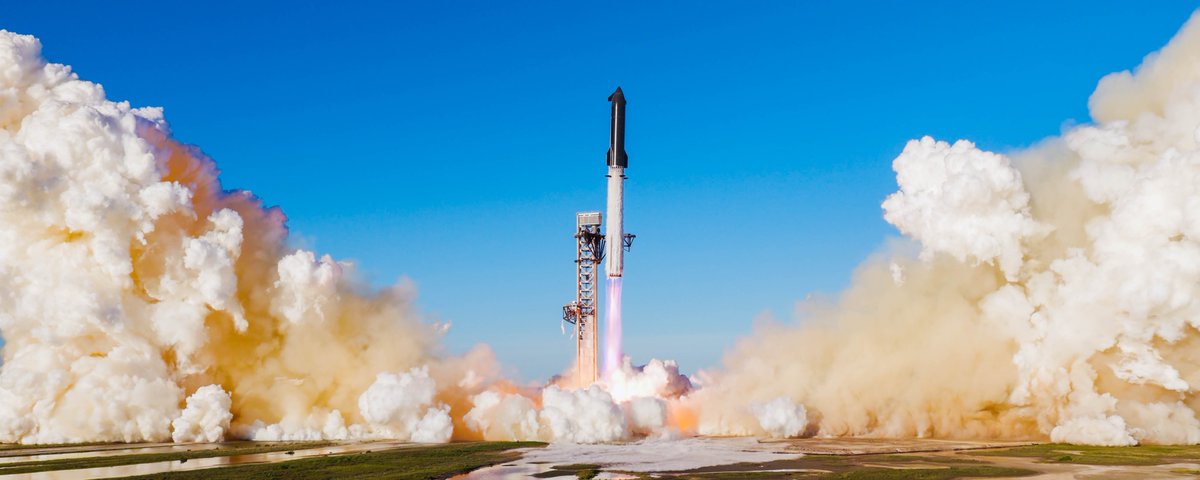
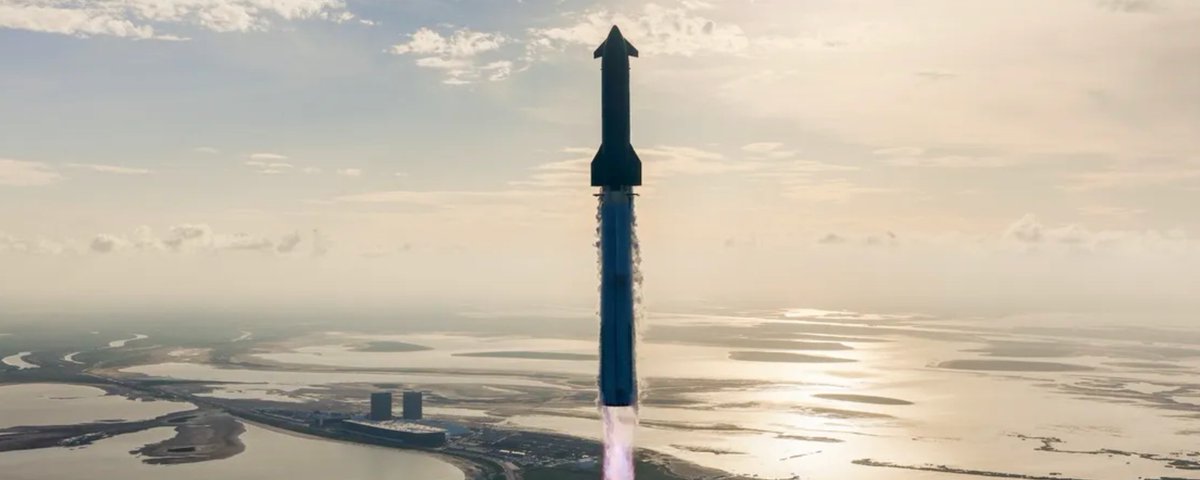
☀️ Under the sunlight, the jet-black Starship glistens with gold, like a warrior in black armor draped in a golden cape, standing tall and majestic.
At this moment, the sheer size of Starship makes the smallness of humanity almost tangible.
🌌 Yet against the vastness of the universe, even this giant of a spacecraft is no more than an insignificant grain of sand.
And still, it was tiny human beings who built this enormous Starship, setting out from their little corner of the world to explore the universe faster and better than ever before.
🌍 Our blue planet, our home. We've stayed here for far too long.
The history of human aviation is barely a century old. Our history in space spans just a few short decades.
🌕 The Moon is practically on our doorstep, yet we've only just set foot on it. Mars is a little farther away, and no human has ever reached it.
🌎 Gravity is incredibly powerful. So powerful that even jumping off the ground takes a tremendous effort, let alone lifting yourself into the sky and flying freely. Since the dawn of humanity, gravity has kept us firmly bound to this vast Earth.
🚀 To break free from gravity's grip takes resources. It takes money. A great deal of money. Above all, it takes every ounce of human ingenuity to rise from this land and escape the embrace of Mother Earth.
Some say space exploration is a terrible waste of money when so many people on Earth are still going hungry.
But let's not forget: in our pursuit of the unknown, in our desire to uncover the mysteries of the heavens, generations of people have pushed forward, enduring hunger, pouring out their sweat, and shedding their blood. Step by step, they carried humanity into space, even if only for a fleeting stay.
✨ Starship has ushered in a new era in human spaceflight. At last, it gives us the chance to begin a new chapter in building human outposts beyond the sky, right at the edge of our cosmic doorstep.
🛰️ The International Space Station today is more like a laboratory. Impressive, mysterious, but nowhere near enough.
What humanity truly needs are space bases: places for research, manufacturing, energy and fuel replenishment, and waystations for our journeys deeper into the universe.
🚀 Thank you, Elon Musk. Thank you, SpaceX.
Perhaps the Moon and Mars will no longer seem quite so impossibly far away.

2
55

Play Dirty or Play Saint? Will Waymo Pass Up a Chance to Slow Down Cybercab?
Put yourself in the shoes of a Waymo executive. If you had a perfectly legal way to delay Cybercab’s mass rollout, would you pass it up?
On October 30, 2026, Tesla submitted its response to the National Highway Traffic Safety Administration (NHTSA) just before the deadline, requesting that all supporting materials remain confidential.
The assignment wasn’t an easy one.
On September 10, NHTSA sent Tesla 21 questions about how Cybercab, a vehicle without a steering wheel or brake pedal, could comply with Federal Motor Vehicle Safety Standards (FMVSS). Tesla asked for an eight-week extension. It got only 30 days.
So what exactly is Tesla worried about?
Protecting trade secrets, certainly. But perhaps there’s another concern: its competitors.
If Cybercab cannot demonstrate compliance with applicable safety standards, Tesla would have to seek an exemption under the current rules. And the existing temporary exemption program allows no more than 2,500 vehicles per manufacturer per year.
For a company planning to mass-produce Cybercab, that could be a devastating bottleneck.
Waymo, meanwhile, has taken a very different approach. Its current mainstream fleet retains steering wheels and pedals, staying within the existing regulatory framework rather than challenging it.
And criticism of Tesla from the Waymo camp has been coming in waves.
On March 14, 2025, former Waymo CEO John Krafcik publicly questioned Cybercab’s design and the authenticity of Tesla’s Robotaxi service.
On August 26, 2026, Waymo VP Srikanth Thirumalai published 10 AI Lessons from 200 Million Miles of Fully Autonomous Driving. He stressed the importance of multiple sensor types and described the idea of progressing from Level 2 driver assistance to Level 4 autonomy as a “false summit.”
Then, on October 28, Canadian tech entrepreneur Brad Templeton, who had been involved in Waymo’s early autonomous-driving efforts, published a Forbes article questioning whether Tesla’s Robotaxis were truly operating without human supervision—or still relying on continuous remote monitoring.
Vehicle design, technology strategy, real-world operations. Between them, these critics have questioned nearly every critical element of Cybercab’s path to commercialization.
But anyone who thinks Waymo only knows how to fight over technology is underestimating the company.
In January 2022, Waymo sued California’s Department of Motor Vehicles to prevent the disclosure of autonomous-driving safety documents it considered trade secrets.
An even more revealing example came in July 2026, during a dispute over proposed Robotaxi legislation in Washington, D.C.
The bill would require autonomous vehicle operators to complete at least 180 days and 250,000 miles of testing, along with paying substantial licensing fees.
Waymo had already met those testing requirements. Tesla opposed them.
According to TechCrunch on July 19, if the bill passed in its proposed form, Waymo could gain at least a six-month head start over competitors.
That’s the beauty of using regulation as a competitive weapon—legally.
Waymo wouldn’t have to block Tesla outright. It could simply support rules it already satisfies, while its competitors are left scrambling to catch up.
Now that Cybercab is facing federal regulatory scrutiny, could the same playbook come into play again?
Waymo could legally challenge Cybercab’s safety architecture, redundancy systems, and compliance claims, pushing regulators to demand more rigorous scrutiny.
If regulatory approval falls behind production, Tesla could find itself in an awkward position: plenty of Cybercabs rolling off the assembly line, but no way to deploy them at scale.
Every extra year would give Waymo more cities, more vehicles, more customers, and more market share.
Tesla, for its part, seems well aware of the risks.
In December 2024 and June 2025, Tesla sought to keep sensitive regulatory information from public disclosure, citing trade secrets and the risk of competitors exploiting its data. Its latest confidentiality request for Cybercab follows the same pattern.
Business competition isn’t confined to products, technology, or pricing.
Sometimes it’s about spotting your rival’s Achilles’ heel—and kicking it as hard as you can.
So what will Waymo choose this time?
Play the calculating schemer, or play the principled saint?
We’ll see.

20
Judged by its original product positioning and market ambitions, Cybertruck has undoubtedly failed. It never entered the mainstream pickup market at the promised price, let alone challenged the dominance of traditional gasoline-powered trucks.
But from an engineering and innovation perspective, Cybertruck is far from a failure. In fact, it represents a significant achievement.
Consider a few examples: pioneering the large-scale adoption of a 48V low-voltage electrical architecture in a production vehicle; introducing a fully steer-by-wire system with no mechanical connection between the steering wheel and the wheels; boldly adopting a stainless-steel exoskeleton body; and integrating front- and rear-wheel steering.
These innovations represent not only technological breakthroughs but also valuable engineering experience for the future of the automotive industry.
Cybertruck may have failed commercially, but it has secured its place in automotive engineering history.

再见👋 cybertruck: 赛博皮卡是失败的产品吗?马斯克刚宣布明年终结产线!还补了一句:Cybertruck 车队还能开很久。
前一句他已经宣布:德州超级工厂明年年中收掉 Cybertruck 产线,腾给无人出租车 Cybercab。
这台不锈钢皮卡 2023 年底才开始交付。老马当初吹过一年卖 25 万辆。Cox Automotive 估美国销量:2024 大约 3.9 万,2025 掉到约 2 万。目前只在德州这一家厂做。
有意思的是,去年大买家里有他自己的 SpaceX——按财报花了约 1.31 亿美元,按建议零售价把车买走。
粉丝喊「时代结束了」,他回 True,然后马上补后半句:路上那些车还会开很久。
$TSLA
产线已经让位给 robotaxi。

37
If these AI giants paid just a little more attention to local residents when building their data centers, gave them a slightly greater share of the benefits, made a little more effort to minimize disruptions to their daily lives, and offered some financial compensation and emotional reassurance, they wouldn’t have provoked so much public outrage.
For AI data centers involving investments of tens of billions of dollars, the cost of building good relationships with local communities could be far lower than the losses caused by project delays or even outright cancellations.

下午跟几位熬夜不睡觉的美国老哥,打了电话,聊了聊这波叫停 AI、数据中心潮,他们说身边绝大多数本地居民和同事,都非常支持暂停这东西。
因为它不仅让当地人,支付了更多的电费,而且这玩意也无法产生大量就业。
而科技创业者们又天天炫耀,自家靠 AI 裁员了很多人,结合不断上涨的物价,让大家极为抵触。
站在不炒股,只是普通打工人的视角,AI 革命的新闻,反而增加人们进一步负面的看法,毕竟世界上互联网从业者仍是极少数。
最倒霉的就是本来在农场好好住的老哥,几十年下来,社区一直非常安逸,然后突然发现自家社区不远荒置的农场,盖了超大数据中心,不停的施工,不断出入的卡车,大老远就能听到轰鸣声,根本无法让人安心休息。
而且他们给我讲了一个案例,说是某个地方开发商跟地方官员签了保密协议,居民最后才知道,然后这事闹的很大,导致大家更加对此进行排斥。
所以既然阻止不了,就干脆全投民主党,也不管民主党什么政策,只要把支持 AI 和数据中心的,搞下去就行,于是就上演了本轮的中期选举结果。


29
If changing the world meant sacrificing time with your family, would you be willing to pay that price?
Elon Musk doesn’t seem to believe in work-life balance in the conventional sense.
For him, work is more than a way to build wealth. It’s a mission. His dream of making humanity a multiplanetary species has shaped not only his extraordinary ambitions, but also the cultures of SpaceX and Tesla.
Relentless work intensity, remarkable execution speed, and an unwavering sense of purpose attract some of the world’s brightest minds.
Yet those same qualities may eventually drive some of them away.
I can understand why talented engineers and executives choose to leave after years of dedication. It doesn’t mean they’ve lost their passion or stopped believing in Musk’s vision. Perhaps they simply want to reclaim a better balance between work and life.
You can believe in a great mission without devoting your entire life to it.
Our priorities also change as we grow older.
In our twenties, we may chase ambitious dreams and work tirelessly to prove ourselves. In our thirties and forties, family and personal responsibilities may take on greater importance. By our fifties and sixties, we may value health, companionship, and freedom more than ever.
None of these choices is inherently better than another. Different stages of life bring different dreams and priorities.
Musk has his dream of Mars. It has inspired him to build an extraordinary business empire and pursue goals most people would never dare to imagine.
We can admire his ambition without feeling compelled to live the same way.
But what about us?
What is your dream?
To change the world? To build a happy family? To achieve financial freedom and finally live life on your own terms?
And if your ambitions came at the cost of precious time with the people you love, what would you choose?
There is no single right answer.
Listen to your heart. Choose the life that feels right for you.
You don’t have to live like Elon Musk, or anyone else.
Because this is your life.
🤖 Made with AI

30
Beyond the Narrative retweeted

币安刚刚发布了初步调查报告,梳理了他们是如何被朝鲜黑客,盗取了 60 多亿美金。
某位币安软件工程师,在求职网站上挂着简历,结果一位自称项目总监的人,主动联系他,说有个潜在岗位想聊聊。
对方安排了一位 HR 跟他视频面试,真人露脸。为了让他放下戒心,这位 HR 还把自己的社交账号发给了他,上面有他本人的生活照和视频,看着就像真实存在的人。
然后到了第二轮面试,对方换到一个常用的聊天软件上,跟一位自称是这家公司 CEO 的人聊,但其实公司是假的。
等面试快结束时,对方让他下载一份代码题,作为技术测试,结果这位币安员工,在工作电脑上下载运行了它。
这份代码,在安装环节偷偷自动执行,把电脑上一个正常的开发工具 pyenv,换成了带木马的版本,然后跟黑客的服务器连上,还会自己清理痕迹。
就连币安当时的杀毒软件,也没查出来。
从这台电脑开始,朝鲜黑客一步步渗透内部,摸进了交易所的钱包系统,一个多月后币安被盗了 60 多亿美金。
关键是现在领英上,还有一群币安在职员工的信息,这些估计都是朝鲜黑客的潜在欺诈对象。



Beyond the Narrative retweeted

BOOM 🚨 Elon Musk just replied to Shaun Maguire's SpaceX article with one sentence that blows up the scale of the whole conversation. To see why, let’s start with the units.
Maguire's model measures AI data centers in gigawatts. A gigawatt is roughly what a large nuclear plant puts out, and the biggest AI clusters being built today are about that size.
Elon is talking about petawatts. A petawatt is a million gigawatts.
To put that in perspective, all of humanity uses around 20 terawatts of energy, counting every source combined. A petawatt is about 50 times that. Earth just doesn't have the land, the grid, or the power plants to support it.
So where does it go? Deep space is the answer, where the Sun never sets and you can unfold as many solar panels as you want.
The tricky part is getting the hardware out there, and that's where the Moon comes in.
A mass driver is a long electromagnetic track, kind of like a giant maglev rail, that speeds up cargo until it's moving fast enough to fly off into space. It doesn't need a rocket or any fuel, just electricity, and the Moon can pull that straight from the Sun.
The Moon is ideal for this because it has no air to slow things down and only a sixth of Earth's gravity. Escaping Earth takes about 11.2 km per second, while escaping the Moon takes about 2.4. Since energy goes up with the square of speed, that works out to roughly 20 times less energy per kilogram, and that's before you count air drag or the fuel a rocket burns just to carry its own fuel.
The plan Elon has laid out before is to build AI satellites in factories on the Moon using lunar materials, then launch them into deep space one after another.
"Petawatt per year" means adding that much computing power every single year, the same way the solar industry tracks gigawatts installed each year.
That's where the last part of his reply comes from. Earth's entire economy runs on about 20 terawatts. If intelligence scales with energy, a system that adds way more than that every year could eventually create more value than everything happening on Earth put together.
For more than half a century, the Moon has been a place we visited and then left. In Elon's version of the future, it becomes the launch pad for the biggest machine humanity has ever built.


Could Tesla really have 8 million Robotaxis operating by 2030?
That forecast is a major pillar of a $4,100 Tesla stock price prediction for 2031.
Is it realistic—or is it crazy?
Let’s examine what would actually have to happen.
Beyond the Narrative retweeted
@wholemars,man, do you think my assessment of Mr. Brad Templeton is fair?
MR. Brad Templeton, with the utmost respect for your ability to distort reality—a hundred times greater than Steve Jobs’s—I endured intense discomfort to finish reading your magnificent masterpiece.
Your hostility toward Tesla and Cybercab has twisted your entire perspective.
The twisted logic of your article resembles that of someone suffering from persecutory delusions, who interprets even people whispering nearby or simply walking past as evidence of persecution directed at them.
How pitiful.

Beyond the Narrative retweeted

这就是我用真金白银支持马斯克的附加值,第一是有巨大的升值空间,其次是科技在帮助改变世界
10月30日,马斯克在X上正式命名公司前两款产品:
Telepathy(第一款):通过思维实现与电脑或其他人的高速沟通,未来输出带宽有望远超人类说话或打字速度。基于近期ALS患者语音恢复试验数据推进。
Blindsight(第二款):帮助完全失明甚至从未见过光的人“看见”,通过刺激视觉皮层绕过眼睛。工程上已就绪,等待监管批准(2024年已获FDA Breakthrough Device Designation)。首批人体植入预计6-12个月后(视审批而定)。
Brad Templeton’s Six Pieces of Ironclad Evidence: When the Conclusion Comes Before the Evidence
I carefully read Mr. Brad Templeton’s article, “Tesla’s Cybercab Robotaxi Is Probably Not ‘Unsupervised.’ Here’s Why.” Although waves of absurdity kept rushing straight to my head, I forced myself to endure the discomfort and finish reading it.
My immediate impression was that Mr. Templeton’s accusations against Cybercab resembled the thinking of someone suffering from persecutory delusions.
Mr. Templeton, I am not saying that you personally suffer from any such condition. I am talking about the way you constructed your article.
You presented six pieces of supposedly ironclad evidence to support your suspicions. Each one is certainly ironclad—at least in your imagination. But to make them fit your conclusion, you demonstrated an extraordinary ability to distort reality.
Even Steve Jobs would have to bow before you and call you the founding master of reality distortion!
Now, let us examine what these six pieces of ironclad evidence actually prove.
1. Cybercab Has Starlink, Therefore It May Be Under Continuous Remote Supervision
Cybercab is equipped with Starlink and has remote communication capabilities. That is a fact.
But possessing communication capabilities and actually employing continuous remote supervision are two entirely different things.
Does the ability to transmit live video mean someone must be watching it around the clock?
Having the capability does not mean actually using it.
Mr. Templeton, your first piece of ironclad evidence proves that Cybercab can communicate remotely.
Nothing more.
2. Tesla Has Remote-Driving Technology, Therefore It May Be Continuously Supervising Cybercab
Tesla possesses remote-driving technology. That, too, is a fact.
But remote driving, continuous remote supervision, and on-demand remote assistance are three different operational models.
You distinguished between them yourself, yet provided no evidence establishing which model Cybercab actually uses.
More importantly, remote control faces an unavoidable constraint: communication latency.
At 60 km/h, a vehicle travels five meters in just 300 milliseconds. Video encoding, network transmission, human judgment, and the return of control commands all take time.
When sudden hazards arise, real-time safety decisions must still be handled by the onboard AI.
Waymo’s operational experience also demonstrates that human remote assistance does not require one operator per vehicle.
You have established that Tesla possesses remote-driving technology. You have not established that Cybercab is under continuous remote supervision, much less that one human operator per vehicle is necessary.
3. FSD Branding and the Teleoperated Optimus Demonstrations Suggest Tesla May Be Concealing Human Supervision of Cybercab
The name FSD, by itself, neither proves that Tesla has achieved full self-driving nor establishes that Tesla has deceived consumers.
As for the 2024 Optimus demonstration, Musk described future applications for humanoid robots, but he did not explicitly claim that every movement and verbal interaction at the event was already fully autonomous.
Investors are entitled to question whether the demonstration was sufficiently transparent. But they also have a responsibility to ask questions and verify facts rather than treating their own assumptions as promises made by the company.
Let us go one step further.
Even if I accepted every criticism you have made of Tesla’s historical marketing practices, so what?
Does a history of controversial marketing prove that Cybercab is currently under continuous remote human supervision?
Past controversies may provide grounds for suspicion. They do not constitute evidence of a specific present-day accusation.
4. Robotaxi Expansion Is Slow, Therefore Remote-Supervision Staffing Must Be the Constraint
Musk and Tesla’s AI team have explicitly emphasized that Robotaxi expansion must be governed by safety requirements, with operating hours and service areas expanding as AI capabilities improve.
Now look at what is actually happening.
As of October 27, 2026, 573 Cybercabs had been registered in Texas, up from 126 in late September.
That represents an increase of approximately 355%, bringing registrations to 4.55 times their previous level in less than a month.
You may still believe expansion is too slow.
But on what basis do you conclude that remote-supervision staffing is the limiting factor?
Vehicle production, software validation, operating territories, and safety requirements can all influence the pace of expansion.
You have provided no remote-operator headcount, no vehicle-to-operator ratio, and no evidence that human supervision has become a bottleneck.
5. Tesla Is Extremely Concerned About Safety, Therefore It Probably Retains Continuous Remote Supervision
I completely agree with the first half of this argument.
Of course Musk does not want Robotaxi to suffer a major safety incident.
But why does prioritizing safety necessarily imply that continuous remote supervision must be retained?
Remote operators cannot replace onboard AI in handling most sudden hazards.
How much additional safety continuous remote supervision can actually provide requires evidence, not imagination.
You even assume that remote supervisors could prevent 90% of relevant accidents, thereby increasing the distance between accidents tenfold.
Where does that 90% figure come from?
What real-world operational data supports it?
If this crucial parameter has no evidentiary basis, then no matter how mathematically precise the subsequent calculations appear, the conclusion still rests on an assumption.
Safety is the objective. Continuous remote supervision is merely one possible means that you have hypothesized. Yet you treat the existence of the objective as evidence that the means must exist.
6. Tesla’s Safety Data Is Insufficient, Therefore Continuous Human Supervision Cannot Be Removed
There is no denying that Tesla’s historical disclosures of autonomous-driving safety data have lacked sufficient transparency.
But Tesla has recognized the importance of safety-data transparency to regulators and the public.
In October 2026, Tesla launched a dedicated Robotaxi safety-reporting website, beginning to disclose operating mileage, accident data, driving conditions, and statistical methodology.
Tesla is beginning to make up for its shortcomings.
Of course, publishing a safety report does not automatically prove that Cybercab is sufficiently safe.
But here is the question:
If the available safety data is insufficient to prove that continuous human supervision can be removed, does that somehow prove that Tesla is still using continuous human supervision?
Mr. Templeton, your extraordinary ability to distort reality is giving me a headache.
After Six Pieces of Ironclad Evidence, Where Is the Evidence?
After examining all six arguments, I discovered that you have established six things:
Cybercab possesses remote communication capabilities.
Tesla possesses remote-driving technology.
Tesla has faced controversies over its past marketing practices.
Robotaxi expansion has fallen short of your expectations.
Tesla places enormous importance on safety.
And the available safety data still has limitations.
But even if I accepted every one of these facts and judgments, they would still fail to establish your central conclusion:
Cybercab is probably still under continuous remote human supervision.
Let alone a one-operator-per-vehicle arrangement.
You have not established that continuous remote supervision actually exists.
You have not established the actual vehicle-to-operator ratio.
And you have not established that human supervision is constraining Cybercab’s expansion.
You are certainly entitled to question Tesla. You are equally entitled to demand greater transparency about its operations.
But suspicion can be the starting point of an investigation. It cannot substitute for the conclusion of that investigation.
Your article is titled:
“Tesla’s Cybercab Robotaxi Is Probably Not ‘Unsupervised.’ Here’s Why.”
You promised readers an explanation of why Cybercab is probably not genuinely unsupervised.
Yet after examining all six arguments, what I see is not six pieces of evidence that collectively support your conclusion, but six attempts to transform possibilities into judgments about what is probably happening.
Six unproven suspicions do not magically add up to a proven conclusion.
Mr. Templeton, your problem is not a lack of professional knowledge.
It is that you allow your predetermined position to dictate how the facts must be interpreted.
When the conclusion has already been written, every piece of evidence becomes nothing more than a prop enlisted to serve it.

It’s surprising how many people are still in denial that Tesla launched a Robotaxi.
In this Forbes article the author, an early Waymo employee, claims that the Cybercab — a car with no steering wheel — is actually not unsupervised.
He argues that Cybercabs must be secretly remotely driven, because there’s no way the AI can do it. This is a laughable argument.
First off, all autonomous vehicles can be tracked by the operator, and they can receive commands remotely. This does not mean they’re being driven over the internet, which would be unreliable and barely work at all.
Just go try FSD (Supervised), which has no remote monitoring or assistance. Watch how it drives you around safely for thousands of miles and then tell me with a straight face that remote assistance is required.
It’s also not true that remote help only happens at early stages. all operators including Waymo still do it, and in most cases are required to have the capability by law.
To claim autonomous cars are secretly being driven over the internet is, at this point, tinfoil hat stuff. The AI is driving the car, not a human.
Supervised means someone is in the car responsible for taking over if something goes wrong. Unsupervised means there is not someone in the car supervising. Cybercab without steering wheel is always unsupervised because there is no way to drive it manually.


42
Paid Premium+ since the anomaly began: reach collapsed, Quotes broken, and almost no real complaint path.
1) Reach
Since ~2026-09-26, reply/quote impressions collapsed—about 11K → ~4.3K on a 7-day basis. There is no formal account-level reach appeal. Under the Hood looks normal—no restriction labels—yet Quotes and reach are still abnormal. I was told it might clear in about a month. It is 2026-10-30. It has not.
2) Quotes feature broken
Same quote: present in the API, missing from the Quotes UI.
My quote:
Original: teapawt.org/tslaming/status/210618…
Ticket PSDM-1038372 escalated ~Oct 3 for quote visibility; same-day reply pivoted to the checkmark. Closed ~Oct 5; defect continues through Oct 30.
3) Complaint channels missing
@Premium is gone. Account-level throttling has no appeal queue. @Support requires a follow, then their approval, before DMs—paid users locked out. Help forms have no Quotes-defect option; the appeal path is “locked or suspended” only, and rejects non-suspended accounts. What’s left is help.x.com/en/forms — and even “paid features” dumps into a FAQ. Paying for incomplete product features with nowhere effective to escalate.
I don’t want a free reach boost. I want non-discriminatory treatment, a fair shot for paying creators, paid features that work as documented—and a support path that takes user reports seriously instead of locking them out.
@petersellis @elonmusk @Support @Subscriptions
teapawt.org/Riverwindview/status/2…


169 licensed Cybercabs is good news.
But Texas is testing something much bigger than fleet size.
The question is no longer whether Cybercab can drive itself. It’s whether autonomy can become a repeatable business.
Fleet operations. Charging. Cleaning. Maintenance. Insurance. Regulation. Unit economics.
Texas is where Tesla gets to break this system, fix it, and prove it works.
If it does, the real milestone won’t be 169, 500, or even 1,000 Cybercabs.
It’ll be whether Tesla can copy the Texas playbook into the next city.
And once NHTSA opens the gate, everyone will want in.
Future fleet owners, you might want to get in line early. 😄
2
42

Why Could ARK Be Far More Harmful to Tesla Bulls Than the Bears?
Tesla bears may cause investors to miss out on gains. But extreme bulls like ARK could leave investors suffering devastating losses even when they get the long-term direction right.
In 2022, ARK predicted that Tesla would reach $1,533 per share by 2026. Even in its bear case, the target was $967.
Now, with just two months left in 2026, Tesla is trading at around $400.
Is that target still achievable?
On October 19, 2026, ARK served up another piping-hot Tesla valuation model, predicting a share price of $4,400 by 2031!
Utterly insane. Utterly absurd.
Every prediction seems to earn them another slap in the face from the market. I wonder how their cheeks are holding up.
As a long-term Tesla investor, I believe these irresponsible, wildly optimistic forecasts may do far more damage to genuine Tesla bulls than those who openly bet against the company.
Why?
1. Bears Put You on Guard. Extreme Bulls Make You Drop Your Guard.
When bears predict that Tesla’s stock will collapse, bulls usually look for evidence and scrutinize their arguments.
But when ARK predicts that Tesla will rise tenfold in five years, many bulls’ first reaction may be excitement. Extreme excitement.
Because everyone loves hearing what they want to hear.
And it feels like finding an ally fighting alongside you in the same trench.
After all, ARK isn’t some random account on X. It’s a professional investment management firm.
Its reputation, models, and data lend additional credibility to its wildly optimistic forecasts.
When an opponent attacks, your instinct is to defend yourself. But when an ally encourages you, you may let your guard down completely.
That is precisely what makes extreme bullish forecasts so dangerous.
2. Even the Best Company Must Be Bought at the Right Price
Warren Buffett’s value investing philosophy teaches us that even the greatest company must be bought at a reasonable price.
Even if Tesla is a great company, that doesn’t mean it’s worth buying at any price.
Yet ARK’s $4,400 forecast could create an illusion: at $400 today, Tesla looks unbelievably cheap.
Even if the stock rises to $600 or $800, you might still think you’re getting a bargain.
So you put all your money into Tesla at $400.
But what if the stock subsequently falls to $300, or even $200?
It wasn’t that long ago that Tesla traded in the $200s in both 2025 and 2026.
Not only would you have to endure a 25% or 50% paper loss and a prolonged psychological ordeal, but worse still, when genuinely low prices finally appear, you’ve already run out of ammunition.
And with the same $40,000, you could buy only 100 shares at $400, but 200 shares at $200.
You may have correctly predicted the company’s future, yet because of the wrong purchase price and poor capital allocation, end up earning far less than you expected.
What long-term investors truly need is not some astronomical price target that makes them rush to buy, but a valuation framework that helps them accumulate more shares at reasonable prices.
3. Getting the Direction Right Doesn’t Mean Getting the Timing or Valuation Right
In 2022, ARK predicted that Tesla would reach $1,533 by 2026.
Four years later, how much of the Robotaxi commercialization that underpinned that valuation has actually materialized?
Even today, Cybercab still faces compliance issues under the Federal Motor Vehicle Safety Standards.
The current FMVSS 135 still requires a foot-operated service brake control, while Cybercab has no brake pedal.
If the relevant standards remain unchanged and Tesla cannot find another legal pathway to large-scale deployment, Cybercab’s annual production cannot exceed 2,500 vehicles.
I wonder whether Tesla shareholders are satisfied with that.
Has ARK adequately accounted for these risks in its model?
In 2024, ARK projected a base-case Tesla share price of $2,600 by 2029. But without Robotaxi, that target fell to approximately $350.
And in its latest model, published on October 19, 2026, ARK estimates that Robotaxi will account for roughly 80% of Tesla’s enterprise value in 2031.
When the vast majority of a company’s projected value depends on a business that has yet to mature, deviations from the commercialization timeline can produce enormous valuation errors.
Robotaxi’s enormous potential value does not mean it has already created that value for the company.
Investors may correctly anticipate Robotaxi’s long-term direction, yet buy Tesla at the wrong price because they trusted an inaccurate commercialization timeline.
Getting the direction right doesn’t mean getting the timing right. And getting the timing right doesn’t mean the price is reasonable.
4. How Many of ARK’s Predictions Have Actually Been Right?
Let’s review ARK’s Tesla price forecasts over the years:
2021: Predicted $1,000 by 2025.
2022: Predicted $1,533 by 2026.
2023: Predicted $2,000 by 2027.
2024: Predicted $2,600 by 2029.
October 19, 2026: Predicted $4,400 by 2031.
All share prices have been adjusted for stock splits.
2025 has already come and gone. ARK’s $1,000 prediction never materialized.
2026 is almost over. Tesla’s current share price of around $400 remains nowhere near ARK’s $1,533 target, and is even far below its bear-case target of $967.
I have a question for ARK:
Do you take responsibility for your predictions? If you don’t, then what value do your forecasts have? Where is your professionalism?
You have sophisticated models, enormous amounts of data, and professional research teams. Yet behind the facade of professional research, you keep producing utterly unreliable forecasts.
Investors need valuation models that can withstand the test of reality, not one absurd prophecy after another designed to be more outrageous than the last.
Cleverly crafted disclaimers may limit your legal liability, but you’ve already thrown your reputation right out the window.
Shame on you! @ARKInvest
Conclusion: The Knife in the Back From an Ally
The real danger often comes not from the enemy across from you, but from the knife driven into your back by an ally standing beside you.
Is ARK really a bull? Or is it a Trojan horse disguised as one?
1
2
74
ARK, you’ve once again come up with an astonishing valuation: Tesla shares reaching $4,400 by 2031!
More than a tenfold increase in less than five years.
OK, is your reasoning really that solid? Will the market actually buy it?
Before rushing to talk about 2031, let’s revisit your 2022 forecast.
Back then, you predicted that Tesla would reach approximately $1,533 per share by 2026 (adjusted for the stock split). Even in your bear case, the target was around $967.
Now it’s almost November 2026, and Tesla is trading at only about $404.
With just two months left in the year, the stock would need to rise another 279% to reach your original target.
The actual share price isn’t even half of what you predicted in your bear case!
What’s even more worth questioning is the enormous valuation weight you assigned to Robotaxi back then. Four years have passed. How much progress has Robotaxi actually made toward commercialization?
Even today, Cybercab, a vehicle designed specifically for autonomous driving, still faces fundamental questions about compliance with Federal Motor Vehicle Safety Standards.
Cybercab has neither a steering wheel nor a brake pedal. Yet the current FMVSS 135 standard still requires a foot-operated service brake control.
NHTSA has proposed amendments to the relevant requirements, but those changes have not yet taken effect.
Tesla has chosen to move forward with Cybercab commercialization through self-certification, while NHTSA has formally opened an investigation, asking Tesla to explain how the vehicle complies with existing federal safety standards.
In other words, Cybercab’s plans for large-scale commercial operations still depend on unresolved regulatory issues.
Now, let’s run a bear-case scenario of our own.
What happens if FMVSS 135 remains unchanged for an extended period, and regulators reject Tesla’s current interpretation of compliance?
If Tesla ultimately has to rely on temporary exemptions to commercialize Cybercab, how could the usual annual exemption limit of 2,500 vehicles possibly support a production plan involving hundreds of thousands, or even millions, of Cybercabs?
If Tesla is forced to redesign Cybercab, adding brake pedals and other manual driving controls, how much additional cost would that impose? And how far would it push back the original commercialization timeline?
Did ARK account for these questions in its $4,400 valuation model?
If so, what assumptions support your conclusions? If not, how credible is the model?
Of course, we’ll add a disclaimer to our own bearish forecast:
This scenario assumes that the relevant requirements under the current FMVSS 135 remain in force and that Tesla cannot obtain another compliant pathway sufficient to support large-scale deployment.
After all, those requirements are still in effect today.
Now, let’s return to ARK’s forecasts.
Every time I see the distance between your price targets and Tesla’s actual share price, it feels like there’s an entire galaxy between them.
You keep painting these enormous, enticing pictures of the future for long-term Tesla investors, potentially leaving those who genuinely believe your forecasts disappointed, or even furious.
I know you’ve already prepared carefully crafted disclaimers and risk disclosures.
But beyond legal liability, isn’t there such a thing as professional responsibility?
If Tesla fails to reach $1,533 by the end of 2026, how exactly do you intend to apologize?
Will you perform a headstand while washing your hair?
And if Tesla also fails to reach $4,400 by 2031, will you simply come up with tons of reasons and excuses, then announce an even more distant year and an even more astonishing price target?
Faced with one aggressive forecast after another, shouldn’t you feel ashamed?
Forget $4,400 in 2031 for a moment. How are you going to explain your $1,533 target for 2026?

This week I wrote about Tesla and SpaceX earnings. Notably, Tesla's Q3 attach rate for FSD looks very impressive compared to other benchmarks. And SpaceX one-upped its impressive compute buildout with higher near term guidance. More below!

1
85