

I work in financial market regulation. I break down what AI changes in finance, geopolitics and tech. The US-China race feels like the nuclear arms race.
Joined March 2014
- Tweets3.3K
- Following976
- Followers1.2K
- Likes5.2K



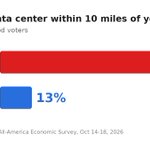


And this is happening the same month anthropic files for its IPO at a valuation of up to $2 trillion. are investors quietly stepping back from AI right when the biggest AI listing ever is coming? 🤔
If the simpsons got it right, homer is in charge of the power plant's safety. so yeah, we're doomed 😅
the hack is the more realistic one. it already happened in ukraine in 2015, when a cyberattack cut power to about 230,000 people. now imagine the same attack run by AI, faster and at scale. is any power grid ready for that?
Interesting, AI is only #3 on your list. but which of these scenarios would AI make more likely, and which could it help prevent?
Hey @grok, what are the 10 most likely apocalyptic scenarios inspired by TV shows?
For each one, give the TV show, a one-sentence description of the scenario, the flag emoji of the country where it could happen, and its probability as a two-digit percentage. Rank them from most to least likely.
Sam | AI, Money & Power retweeted
AI doesn’t equalize intelligence. It amplifies it.
The more you’re able to challenge its answers, verify its sources, and sharpen your ideas, the more Grok becomes a formidable weapon.
The more you swallow everything it says without pushback, the more it reinforces your mediocrity: generic style, hollow arguments, zero verification.
AI is a multiplier.
🤖 Made with AI

Yes. Prompting well gets you a better first draft. Challenging it is what turns it into something actually useful.
AI doesn’t equalize intelligence. It amplifies it.
The more you’re able to challenge its answers, verify its sources, and sharpen your ideas, the more Grok becomes a formidable weapon.
The more you swallow everything it says without pushback, the more it reinforces your mediocrity: generic style, hollow arguments, zero verification.
AI is a multiplier.
🤖 Made with AI
Not bad marketing, more like a hidden message: "our AI is so powerful it could change everything". scary for the public, but appealing for investors
🚀SpaceX went public in June at a $1.8 trillion valuation. Its stock jumped to $225 in the first week, then fell 53% by August as the excitement faded and insiders got closer to selling.
Anthropic is asking for a similar valuation, based on growth its own filing says "may not be sustainable."
What happens when that excitement fades too?

Anthropic just filed to go public, at a valuation discussed around $1.5 to $2 trillion.
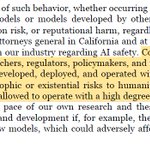
Its filing even warns that advanced AI could pose "catastrophic or existential risks to humanity."
For anyone buying the stock, this IPO raises 3 big problems:
1. A risk nobody can price
2. A price that will show if the whole AI market is a bubble
3. Shareholders can't hold anyone accountable for safety decisions
Let me explain. (a thread)
It's part of the law: a company goiing public has to disclose every serious risk, or investors can sue later. But a warning that dramatic also gets the attention, eveyone is talking about how powerful its AI is... Legal duty vs marketing, what do you think?
Mass layoffs would hit anthropic's own customers, so it's a business risk too. Why does "existential risk" make the filing but jobs don't?
Market rules were built on one idea: tell investors everything, and let them decide.
Anthropic is telling them everything. But investors can neither measure this risk nor vote on it.
So is disclosure still enough to protect them, or does a risk like this need new rules?
The third problem is accountability.
Normally, one share means one vote, and unhappy shareholders can replace the board.
Here, a special class of shares gives the founders 50.1% of the vote, and a separate trust elects a majority of the board.
That setup is legal and common in tech. What's new is that it covers safety decisions the company itself calls existential. If something goes wrong, shareholders have no way to hold anyone accountable.