
Solar activity, daily sunspot records, images of sun, forecasts of solar flares, etc.
Joined October 2012
- Tweets22
- Following38
- Followers114
- Likes8



SolarMonitor.org retweeted

Our latest paper has been published in ApJS, on super resolution of magnetograms.
iopscience.iop.org/article/1…
@DIASAstronomy @samaloney

Another power failure, IT working to restore servers, storage and network - both SolarMonitor.org and solmon.dias.ie will be down for a while
We can certainly look to add something like that. How you you like it work enter a number and go the date of first appearance?
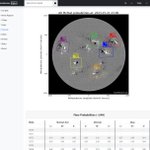
Flare forecast are now live 🚀thanks to @waaalasdair hard work solmon.dias.ie/forecast?date…

Feed back, questions, suggestions welcome github.com/solarmonitor/sola…
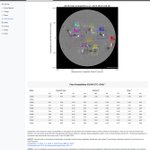
Preview of flare probabilities coming extremely soon to solarmonitor2.
solmon.dias.ie

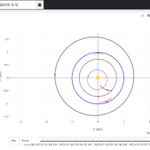
Flare table (solmon.dias.ie, bottom of page) and orbit plots (solmon.dias.ie/orbits) now live 🚀Issues, requests or other feedback here github.com/solarmonitor/sola…


Big uptick in activity on solarmonitor2 since our soft-launch last week. Join us at:
solmon.dias.ie
send us feedback.

The SolarMonitor2 Alpha website is now available at: solmon.dias.ie
The site is under continuous development and feedback is more than welcome.
To achieve a higher data cadence SolarMonitor 2 relies on async processing using Celery.
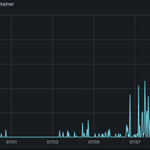
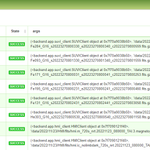
Flower dash shows instrument ingest commands launching celery tasks to process each data file. Image processing/create cutouts etc performed async before saving end products to the database.

SolarMonitor.org retweeted

🚨 JOB Alert 🚨
3 year Post doc using deep learning on active regions and flares - dias.ie/2022/11/09/postdocto…
1 year scholarship working on solarmonitor.org/ - dias.ie/2022/11/09/postdocto…
@DIAS_Dublin @DIASAstronomy @SolarMonitororg @ARCAFF_EU
SolarMonitor.org retweeted

Final review by @esa @esaspaceweather of our phase 0 study of space weather cubesat mission SURROUND. Great collaboration between DIAS Science and Manchester Engineering teams @samaloney @albertocaniz91 @JovianDW @drsophiemurray @ciara_mcgrathx @CrispyNick dias.ie/cosmicphysics/astrop… – at Dublin City, Ireland

SolarMonitor 2 ingests its full suite of data every hour, more easily allowing you to do things like track the evolution of ARs:
0.3 release of #solarmonitor all wrapped up, 0.3 is the last internal release before the public beta which will come alongside v0.4

SolarMonitor 2 relies on existing community python projects. In particular @SunPyProject Map and submap are used to plot our full disk and AR cutout images.

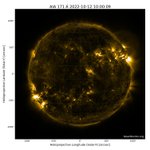
ALT AIA 171 full disk image

ALT HMI continuum AR cutout
While we move ever closer to a beta for SolarMonitor 2.0 we offer some sneak peaks at the last year+ of work.
Solarmonitor 2.0 uses a PostgreSQL database to store data products, these are served to the website via a RESTful API:

