

head of strategy @MeckaAI | prev building YC of Canada @meet_syndicate
Joined July 2025
- Tweets995
- Following740
- Followers1K
- Likes2.4K
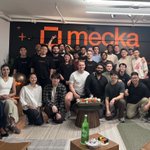

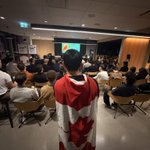



"The final frontier is organic." - @joshavata
Thanks for letting us tell our story @sonyatweetybird!
Excited to be teaming up with @sequoia to accelerate general purpose robotics!

Biological intelligence to bootstrap robotic intelligence?
If robotics is about to enter its golden age, @MeckaAI is one of the companies feeding it, by sensorizing humans to train robots.
The biggest challenge robotics faces is the data flywheel cold start problem. LLMs got a free cold start from the internet: trillions of tokens, already written. Robotics gets nothing. Someone has to go create the training data to jumpstart the system.
@joshavata is the co-founder and CEO of Mecka, the data and deployment company for physical AI. Josh read every robotics paper he could find in late 2024, visited the labs, and made a bet: humans and humanoids look the same, so humans could act as the training fleet. Egocentric data, first-person video of people doing real work, could become vital fuel.
Two years ago, the biggest egocentric dataset was Ego4D at 4,000 hours. The field is now in the millions of hours, thanks in part to Mecka. We’re probably still orders of magnitude of training data away from robotics nirvana. But every rung on the physical intelligence ladder unlocks real commercial tasks. And eventually, Josh imagines a world with an order of magnitude more robots than people, of a plurality of shapes and sizes and use cases, as the Hitchhiker’s Guide to the Galaxy foretold :)
A few things we cover in this conversation.
- Why robotics has no cold start: pixels, actions and logic, and why pre-training data is a real market in robotics in a way it never was for LLMs
- What “teaching robots about carbon life” means: in sci-fi the final frontier is organic. The human brain runs on 20 watts and self-heals
- The egocentric bet: teleop couldn’t scale, humans and humanoids share a form, so Waymo-fy the humans. The first pilot was aunties and uncles recording themselves cooking on a mobile app
- Force data: video can’t tell a robot how hard to squeeze an egg. Wrist cameras are a hack. Mecka built the gloves instead
- Inside the data factory: a consumer app that streams your tasks, a B2B engine recruiting across “the taxonomy of all physical human work,” 100-gigabit upload lines, hundreds of petabytes
- Millions of hours vs. Tesla’s decade on two degrees of freedom, and why it’s a slow creep up, not a GPT-3 moment
- The home has the most data and is the hardest place to deploy. Laundry folding and assembly-line pick-and-place get solved in the next year or two
- Useful robots already exist: hotel delivery and cleaning bots in China and Southeast Asia, industrial cleaning in the US. Humanoids are the terminal state, not the first step
- Deployment diffusion: a modern systems integrator whose installed robot does something next week it couldn’t do last week. If Mecka ever helps deploy a robot that mines an asteroid, they’ve done their job
- The data pot of soup: a million hours of human data, tens of thousands of UMI, a few hours of in-domain teleop. Tactile and simulation haven’t entered the mix yet
- Move 37 for robotics: AlphaGo went behavior cloning, then self-play, then magic. The catch is the rules of the game are the entire physical world, and we don’t have the simulator yet
- Will the AGI labs steamroll robotics? “It takes a lot of courage to scale up data with imperfect information.”
- The Kawasaki Corleo, the robot panther-dog-horse on Mecka’s conference room wall, and why the future of robotics looks like Hitchhiker’s Guide to the Galaxy
Timestamps:
0:00 – Introduction
1:46 – What Mecka is: pixels, actions and logic
2:45 – Is robot data economically feasible without the internet?
4:15 – Teaching robots about carbon life
5:27 – Cloud kitchens, stablecoins and the path to robotics
7:03 – Entering robotics with a fresh lens
8:45 – What egocentric data is and why Mecka bet on it
10:09 – The first pilot: aunties and uncles with a mobile app
10:42 – Force data and tactile gloves
11:55 – Inside the operations of a data factory
14:41 – Heat-mapping the taxonomy of human work
15:42 – Quality gates, fraud and the McDonald’s POV videos
17:44 – Earning a margin as a data intermediary
19:33 – Millions of hours vs. Tesla’s decade
20:55 – Why it isn’t binary: unlocking commercial tasks along the way
22:02 – Home data is plentiful; home robots are the hardest
23:24 – Useful robots can be deployed today
24:35 – When robotics gets an FSD-style flywheel
26:42 – Deployment diffusion and the modern systems integrator
28:21 – Favorite vertical robot categories; mining an asteroid
30:08 – The hardware slate: Waymo-fying people
30:55 – EgoVerse
32:04 – The data pot of soup: the converged training mix
33:54 – Move 37 for robotics: AlphaGo and Federer
36:02 – World models and the training mix
36:58 – Will scaling the current mix get us to the promised land?
39:05 – Will the AGI labs steamroll robotics?
40:50 – Sci-fi roots and the Kawasaki Corleo
42:44 – How many robots in a decade?

LFG

We’re bringing the magic of Waymo to Toronto! 🇨🇦
In the coming days, you’ll begin seeing Waymo’s all-electric vehicles driving through Toronto’s streets as we lay the groundwork for our ride-hailing service.
Our goal is to begin serving riders in 2028.
Sign up for future updates: waymo.com/waymo-in-canada

Pretty confident all these data brokers looking to spent millions are just all the NFT meme coin pumpers from 2022
Ty retweeted

The winning robotics data business has a much higher terminal value than investors are underwriting today.
Robotics will be a long race with many twists and turns, but when the ChatGPT moment hits, the winning data player will be in a very strong strategic position to capture token value. They will have large revenue, a strong balance sheet, talent density, deployments experience, and hardware supply chain knowledge. When it comes time to blitzscale they will be amongst the players that can capture the most value.
The reason this is misunderstood today is because most people are using traditional LLM data businesses as a prior for robotics data businesses and what their terminal value could be. I posit this is incorrect framing. Because the model and harness are integrated in LLMs, there is very little room for data players to play meaningfully in the token value flow in the long term.
In robotics this is exactly the opposite, the model and harness (hardware) are separate, the pretraining era is just beginning, there are many more dependencies on distributors/deployers, and there is a large surface area for other players than just models to capture value. Open source will also play a larger role earlier in the robotics race, as all prior LLM learnings will be incorporated as the race is run. This also creates opportunities for long term infrastructure players.
There is a massive amount of terminal value in winning robotics data and participating in the path of the industry from a position of strength.
From first principles:
The endgame of robotics will take place over the next decade. Empirically, today, no player has enough data, enough model intelligence, or sufficient hardware to facilitate a fast revenue takeoff in the field. No player has reasoned through the right sales motion either, which can take years to develop pilots and move to production. Serious players are correctly focused on scaling up pretraining/deep learning vs. who has the best model, deployment, or hardware today.
The robotics data business takes participants on a global hunt to build data, supply chains, and hardware. Along the way it also teaches deployment and deep knowledge of SOTA model development. Winning data participants also get the first crack at the still nascent robotics RL market, which will likely be the next large revenue stream after pretraining. As they compete to win data, data players must develop incredible talent density across both Asia and the US. The winning data business will have both Asian and North American DNA. Canada 🇨🇦 encompasses an interesting cultural mixture of both of these parts of the world. Bullish Canadian Robotics Mafias, more specifically Waterloo/Toronto.
So:
What would constitute a strong strategic position to capture value once the ChatGPT moment of robotics hits? You need a large revenue base, a strong balance sheet, and talent density + experience across data, deployments, hardware, supply chain, and RL. The hyperscalers, the frontier labs, and the winning data player all qualify.
Anyone under time pressure in what will be a long race is in a weaker strategic position in my view. Given the costs of integrated hardware+software+deployment, this would actually be most robotics-native players. They will depend on VC interest, which can be fickle.
We don't miss!

Frontier models still struggle to accurately understand human video data for robotics
The biggest gap is actions: GPT-Astra hits 71.5% accuracy, Meckas custom trained model achieves 94%
@tkkong + @philhchen evaluates Meckas video understanding model against the frontier below

We let our work speak for itself 🫡

Today, we're sharing results from our partnership with @MeckaAI to see if frontier models can label egocentric videos for robot learning.
We had five frontier models caption 200 clips with human grading.
GPT-6 Astra which performed the best got 43.5% of clips fully correct.

We're building a killer media team @MeckaAI.
The types of people we're looking for:
- gone viral multiple times on TikTok, IG, YouTube
- written a killer substack, medium page or Beehiiv newsletter. Shoutout to GPTEA iykyk
- built community and scaled across North America
- hosted crazy events. I’m talking Mr. Beast-level stunts
- down to travel globally
Dm me.
This is the best time to be a builder.
Since ChatGPT released in 2022,
people talked about the compression of time-to-value.
Operating at the speed of thought.
That couldn't more true @MeckaAI.
We're operating at a speed that many haven't seen before.
On top of that, we're one big family.
I hate talking about culture as it often feels impractical.
But when you have a team that believes in each other, challenges each other to be better and is willing to take on impossible challenges together, you create a surge of energy that is so addicting.
Talent density and culture is at the core of what we do.
If you want to build with a world-class team that cares about each other and is working towards shared mission, we'd love for you to join us.
We have arrived!

No matter how much success a person can attain. No matter the wealth one can accumulate. Time is your most valuable asset. Don’t forget that. Spend it wisely.

I often get asked what I think about the future of education and how children need to adapt to make it in the world since AI will “take everyone’s jobs”.
Well it probably looks something like the @theacademysf.
@gaganbiyani announced himself as the CEO today.
Co-founder of @MavenHQ an education and learning platform where people can learn from domain experts.
Also co-founder of @udemy, one of the most popular MOOCs platforms back in the day.
He clearly cares deeply about education and has scaled several companies in this domain to success.
I would enroll my kid in this and not the wonderful experience that is public education in either Canada or the US today where teachers aren’t allowed to give any negative critiques to students today.
The next generation is cooked unless we invest in our kids today.
Love to see it and we need more of this!! 👏👏👏
As Jesse would say, yeah science!!
Wet labs, drug discovery and bio about to go cray cray
