







Pinned Tweet
The economic consequences of the second Trump administration: A preliminary assessment
@GaryGensler @baselinescene @upanizza @bweder
ow.ly/XMzZ50WbrAk

Oil shocks no longer hit the US economy as they used to
Diego Känzig @drkaenzig @NUEconomics, James Stock @Harvard, Luca Zanotti @NUEconomics
ow.ly/oZKy5100T2n

Historic monetary tightening, benign output dynamics: Rising R-stars across the Atlantic
Mátyás Farkas, Zoltan Jakab, & Jesper Lindé @IMFNews
ow.ly/jyC45100SUS

Changes in the health and longevity of the elderly in the US
Liran Einav @Stanford, Amy Finkelstein @MIT
ow.ly/VuvX5100Srq

Chasing far-right does not pay for the centre-right parties: Evidence from Germany’s 2025 election
Nina Nikiforova @Unibocconi
ow.ly/Wanm5100S9q

Global imbalances, the status of the dollar, and the stability of bond markets are putting pressure on the international financial system. But are we witnessing a rupture, or a transition?
In the latest episode of #VoxTalks Economics, Valentina Bruno (@KogodBiz, CEPR) and Cédric Tille (@GVAGrad, CEPR) join Tim Phillips to discuss the findings of the 29th Geneva Report on the World Economy.
They examine why stocks, the dollar, and US Treasuries all fell following Liberation Day in April 2025, why this could happen again, and what can be done about it.
🎧 Listen to the podcast: ow.ly/VfEE5100zk8
📖 Read the 29th Geneva Report on the World Economy, Changing Structure and Challenges of the International Financial System: Imbalances, Currencies, and Financial Stability, available to download for free from CEPR: ow.ly/6Fk05100zk7
#InternationalFinance #FinancialMarkets

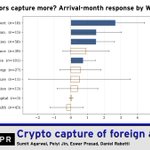
Crypto capture of foreign aid
Sumit Agarwal @sumit_prof @NUSingapore, Peiyi Jin @NUSingapore Eswar Prasad @EswarSPrasad @Cornell, Daniel Rabetti @NUSingapore
ow.ly/Ux3k5100oYb

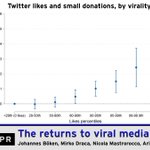
The returns to viral media
Johannes Böken @warwickecon, @mirko_draca @warwickecon, @mastrorocconick @Unibo, @ariannaornaghi @thehertieschool
ow.ly/w2zk5100owc

Mind the gap: Bringing EU debt into the Stability and Growth Pact
Astrid Lemmer, Alexander Mahle, Karsten Wendorff @bundesbank
ow.ly/Ssqe50ZZYTU

Establishment-level evidence on California’s fast-food minimum wage
Vitor Melo @ArchbridgeInst @RANDCorporation, David Neumark @NeumarkEcon @UCIrvine, Liam Sigaud @WestVirginiaU, @_WagnerG_
ow.ly/gcQu50ZZYzL

Investment screening reshapes rather than shrinks foreign investment
Feicheng Wang @univgroningen, Vera Eichenauer @ETH_en
ow.ly/taSA50ZZApE

Lower capital requirements are no shortcut to European competitiveness
Suzanne Vissers & Henrik Zaunbrecher @CPBnl
ow.ly/nxsc50ZZAll

Taming original sin redux: The role of benchmark-driven flows
Serkan Arslanalp @IMFNews, Stijn Claessens @YaleSOM, Daniela Klingebiel
ow.ly/PRyr50ZZckS

What happens to innovation after Big Tech buys a startup
Florian Ederer @florianederer @BUQuestrom, Regina Seibel @ReginaSeibel4 @UofT, Timothy S. Simcoe @BUQuestrom
ow.ly/fTSM50ZZcaL

Here, there, and everywhere: Remote work and the employment of disabled and older workers in the UK
Ian Burn @LivUni, Melissa Gentry @USouthFlorida, Joanna Lahey @TAMU
ow.ly/K4rg50ZZc8C

Forward guidance and the limits of public information
Thomas Lustenberger @FINMA_media, Enzo Rossi @SNB_BNS @UZH_en @UZH_ch
ow.ly/PFyE50ZYQ6Y


How much does inheritance law shape who ultimately receives our wealth?
In much of the world, people are not entirely free to decide who inherits their estate. In many civil-law countries, minimum shares are reserved for children, spouses and, in some cases, parents. Switzerland loosened these rules in 2023, reducing the compulsory share for children by one third and removing it altogether for surviving parents.
In another episode of #VoxTalks Economics, @Marius_Brulhart (@HECLausanneEcon) joins Tim Phillips to discuss what these changes can tell us about inheritance, the diffusion of wealth, and the trade-offs between giving people greater freedom over their estates and using inheritance taxation to redistribute wealth. With his co-author, they analysed almost 17,000 anonymous wills written before and after the reform to see how people responded to this greater freedom.
🎧Listen to the episode now: ow.ly/enns50ZPBrQ
#VoxTalks #Economics #Inheritance #WealthInequality

Fiscal consolidation: Temporary costs versus lasting scars
Luiz de Mello @Luizdemello2 @OECD @OECDeconomy, João Tovar Jalles @iseglisbon @ULisboa_
ow.ly/pciB50ZYPin

Never let a good crisis go to waste: Term limits and banking reforms
Orkun Saka @_OrkunSaka @CityStGeorges, Yuemei Ji @ucl, Clement Minaudier @CityStGeorges
ow.ly/ATcF50ZYPfT

The cost of job loss in carbon-intensive sectors: Evidence from Germany
César Barreto @WorldBankGroup, Robert Grundke & Ze’ev Krill @OECD @OECDeconomy
ow.ly/LPKw50ZYl2F
