

Just a girl on a mission, making Web3 simple, sharing crypto insights, and helping you win on-chain.
Joined May 2021
- Tweets18.1K
- Following1.4K
- Followers19.7K
- Likes27.2K



Zora retweeted

Before you trade a single position in the @zerufinance x @useaspenai campaign, check what you've already done.
Connect the wallets you use and look at your Zaps. Your past trading may have earned you a starting balance.
Zaps are planned to count toward a future airdrop, subject to the final eligibility rules.
The $50K Aspen campaign is live through Zaps, with 1,000 spots over six weeks.
Aspen turns AI trading signals into automated trades, and verified activity counts toward your rank.
Your wallet history may already be doing more than you think.
Explore: zaps.markets/?invite=PTii0Fp…
🤝 Paid partnership


Zora retweeted

THIS WEEK’S TOKEN UNLOCKS
November 1–7, 2026
Several notable token releases are scheduled this week, led by HYPE, BTW, KITE, M and STABLE.
TOP 10 TOKEN UNLOCKS
▹ NOV 6 | @HyperliquidX ($HYPE)
✧ Up to 9.92M HYPE · ~$873M headline value · 4.14%.
Scheduled maximum, not confirmed circulation. About $15.8M is currently tracked as committed.
▹ NOV 2 | @BitwayOfficial ($BTW)
✧ 101.62M · ~$111.8M · 3.37%.
▹ NOV 3 | @GoKiteAI ($KITE)
✧ 640M · ~$74.6M · 17.4%.
▹ NOV 1 | @MemeCore_M ($M)
✧ 56.11M · ~$53.1M · 2.4%.
▹ NOV 4 | @MMTFinance ($MMT)
✧ 252.7M · ~$32.6M · 294% of reported circulating supply.
▹ NOV 7 | @Stable $STABLE
✧ 888.89M · ~$23.3M · 4.9%.
▹ NOV 2 & 5 | @ethena ($ENA)
✧ 134.38M combined · ~$25.4M · 1.00%.
▹ NOV 1 | @SuiNetwork ($SUI)
✧ 13.15M · ~$11.8M · 0.3%.
▹ NOV 1 | @eigenlayer ($EIGEN)
✧ Approximately $6.37M in scheduled unlocks.
▹ NOV 1 | @zetachain ($ZETA)
✧ 44.26M · ~$1.72M · 2.67%.
OTHER UNLOCKS
NOV 2: $STO, $OPN
NOV 3: $KITE, $CHEEL
NOV 4: $LA, $SD
NOV 5: $KTA
NOV 6: $QUAI, $RESOLV
• XRP ESCROW
NOV 1: Ripple was scheduled to release 1B XRP, though much of it is typically relocked.
Unlocks do not automatically mean selling pressure. The impact depends on recipients, actual circulating supply, liquidity and demand.
Dollar values are estimates and schedules may differ across tracking platforms.
That’s it for this week’s token unlocks. See you on the next one.


Zora retweeted

$VOICE running on a broken iPhone Duo is the most crypto thing I’ve seen all week.
Apple: We’ll replace the cracked ones.
VOICE: Just open the app.
If it works on a broken iPhone Duo, it’ll work on anything.
Ship it.
@voicecc doesn’t care if your iPhone Duo is cracked, creased, or held together with hope and a case.
Opinions still earn.
Broken hardware, working product.

Zora retweeted

I have lost count of how many tabs I open before I trust a single claim in crypto.
One for the timeline.
One for the wallets.
One for the chart.
One for the Telegram group.
One for an AI chat to tie it all together.
Then I spend more energy rebuilding the story than deciding whether it is true. By the time it makes sense, the moment has passed, or I have decided on half the picture.
That gap is what @AETHORHQ is built around. It is in development, so this thread covers what it is being built to do.
#AETHORThreadContest

THE $6.3 BILLION BINANCE HACK IS A WAKE UP CALL FOR THE ENTIRE CRYPTO INDUSTRY.
The world’s largest cryptocurrency exchange has suffered one of the biggest financial thefts in history.
On October 29, 2026, attackers compromised Binance’s hot-wallet infrastructure and stole approximately $6.3 billion across multiple blockchains.
What makes this incident particularly concerning is that the attackers did not need to steal users’ private keys to pull it off.
Let me explain what happened, how they did it, and why it matters for the entire crypto industry.
➢ WHAT ACTUALLY HAPPENED
The attackers targeted Binance’s hot wallets, which exchanges use to process customer withdrawals.
The stolen assets included:
→ Ethereum: $3.8 billion
→ Bitcoin: $1.47 billion (18,270 BTC)
→ Tron: $628 million
→ XRP: $296 million
→ Solana: $96 million
This is roughly four times larger than the $1.5 billion Bybit hack in 2025.
➢ WHO WAS BEHIND IT
On October 31, the FBI attributed the attack to TraderTraitor, a North Korean state-sponsored hacking group linked to the wider Lazarus Group network.
The incident adds to North Korea’s growing record of cryptocurrency thefts.
➢ HOW DID THEY DO IT
Binance’s investigation pointed to a compromised DevOps engineer’s laptop, which allegedly gave attackers access to an internal withdrawal service.
No private key leak was identified.
On Ethereum, attackers exploited EIP-7702 to turn a Binance hot wallet into an automated system that transferred funds to addresses they controlled.
Essentially, they found a way to abuse Binance’s own transaction infrastructure to authorize unauthorized withdrawals.
This shows that securing private keys alone is not enough. Internal systems and withdrawal controls matter just as much.
➢ WHAT HAPPENED TO THE STOLEN MONEY
Approximately $2.7–3 billion in assets was frozen through coordinated action involving Tether, Circle and other ecosystem participants.
But Bitcoin and Ethereum cannot be frozen by a central issuer in the same way.
As a result, a substantial portion of the stolen BTC and ETH remains under the attackers’ control.
➢ HOW DID BINANCE RESPOND
Binance committed to covering customer losses using its treasury, SAFU fund and insurance resources.
By November 1, it reported covering approximately 95% of the losses and began restoring withdrawals in phases.
However, customers withdrew approximately $3.64 billion more than they deposited during the first 9.5 hours after withdrawals resumed.
➢ HOW DID THE MARKET REACT
Bitcoin fell from around $81,500 to approximately $76,400.
The market also recorded:
→ $1.5–1.57 billion in liquidations within 24 hours, mostly long positions.
→ $643.3 million in Bitcoin ETF outflows on October 30.
→ Approximately $156 million in Ethereum ETF outflows on the same day.
Despite the scale of the theft, the market avoided a deeper collapse.
➢ WHAT DOES THIS MEAN FOR CRYPTO
Three things stand out:
→ Centralized exchanges remain vulnerable, regardless of their size.
→ Self-custody deserves serious consideration, especially for long-term holdings.
→ Exchanges need stronger internal controls, withdrawal protection and hot-wallet security.
MY FINAL TAKE
This was a failure of exchange custody and operational security, not a failure of Bitcoin or the underlying blockchains.
Binance covering customer losses is significant, but it does not erase the security failure behind the attack.
As crypto attracts more institutional capital, security cannot remain an afterthought.
Trust is not built on the size of an exchange. It is built on how well that exchange protects its customers.
The biggest question now is whether the industry will learn from this.
Would you still keep a significant amount of your crypto on a centralized exchange after an incident like this?
NFA. Always do your own research.

Zora retweeted


Near has landed on Gemini
near:native is now available to trade, with deposits and withdrawals enabled
→ exchange.gemini.com/buy/NEAR

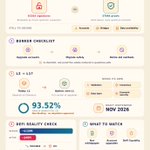
STARKNET IS WORKING TOWARD QUANTUM RESISTANT SECURITY, WITH A 2027 TARGET.
Quantum computers could eventually threaten the cryptography protecting blockchain accounts. @Starknet is upgrading its security systems and exploring an independent Layer 1 to accelerate its progress.
Its Bunker Checklist helps assess what this transition requires.
WHY QUANTUM SECURITY MATTERS
Blockchains use cryptographic signatures to authorize transactions. A sufficiently powerful quantum computer could break some of the cryptographic methods used today.
Starknet has an advantage: its STARK proofs rely on hash-based cryptography, which is more resistant to known quantum attacks than conventional elliptic-curve systems.
However, account signatures, bridges and data availability must also be secured.
WHAT THE BUNKER CHECKLIST EXAMINES
Three capabilities are essential:
⤐ Account upgrades: Can users adopt post-quantum signatures without changing addresses?
⤐ Safe migration: Can old and new signature methods coexist during the transition?
⤐ Retiring vulnerable methods: Can outdated authorization methods eventually be switched off?
Introducing stronger cryptography is not enough if vulnerable methods remain available. The checklist helps assess this work, but it does not prove the entire network is quantum-resistant.
WHY CONSIDER BECOMING AN L1?
Starknet’s native account abstraction allows accounts to support different signature schemes. However, as an Ethereum Layer 2, it still depends on Ethereum for functions including settlement, bridge messaging and data availability.
An independent Layer 1 could give Starknet greater control over its security upgrades, but would require its own consensus, validators, data availability and economic security.
On October 22, 93.52% of voting power supported researching this transition. The vote was non-binding and did not approve a migration. A draft whitepaper is expected in November 2026.
THE OTHER CHALLENGE: DEFI GROWTH
On October 22, the Extended perpetual futures exchange shifted its settlement activity from Starknet to Arc.
Starknet’s DeFi TVL fell from around $158 million to roughly $40 million. This decline was largely driven by one protocol relocating, exposing how heavily the ecosystem depended on a single application.
Quantum security could strengthen Starknet’s technical position, but sustainable growth also requires more applications, users and liquidity.
WHAT COMES NEXT?
⤐ November whitepaper: Details of the proposed L1 architecture and security model.
⤐ Security progress: Evidence of account upgrades and resolution of remaining cryptographic dependencies.
⤐ DeFi recovery: Whether liquidity returns and the ecosystem becomes less dependent on a few major protocols.
THE BOTTOM LINE
Starknet has a technical foundation for post-quantum security, but significant work remains. Its challenge is to close security gaps while building a stronger DeFi ecosystem.
Can Starknet turn its quantum-security ambitions into a lasting advantage without losing the benefits of building on Ethereum?
NFA. Always do your own research.

Zora retweeted
What’s Really Behind Solana’s €22M Euro Stablecoin Surge
Solana’s euro stablecoin supply reportedly grew by $22M in one week, more than the combined increase across other tracked chains.
Data tracked by @tokenterminal for the week ending October 25 puts Solana’s share of the euro stablecoin market at roughly 14%, making it the second-largest network after Ethereum.
But the headline needs context.
A reported 20M EURC pre-mint account linked to @circle’s Gateway may account for much of the increase.
These tokens support cross-chain operations and aren’t circulating supply until released.
That means the $22M increase doesn’t necessarily represent $22M in fresh capital entering Solana.
⊹ Who is building the euro stablecoin market
Circle issues EURC, while Société Générale-FORGE issues EURCV. Both are bringing euro-denominated digital assets into the onchain market.
While Thune is integrating EURC into its global payment network and @AllUnityStable has expanded its EURAU stablecoin to Solana.
The opportunity goes beyond token issuance. Faster settlement and lower transaction costs could make Solana useful for euro payments, transfers and cross-border settlement.
The metric I would watch next is actual adoption: circulating supply, trading liquidity and sustained payment activity.
Issuing a euro stablecoin is one step. Building consistent demand for it is another.
This is my opinion based on the data I’ve reviewed, not financial advice.

NEAR IS BUILDING A SIMPLER WAY TO USE CRYPTO ACROSS DIFFERENT BLOCKCHAINS. AND IT’S WORTH WATCHING
With over $35B in reported all time transaction volume and support for 37 chains, @NEARProtocol is gaining attention for more than its underlying blockchain technology.
And can the growth translate into lasting value for its token?
Let’s take a look.
↠ NEAR INTENTS IS MAKING CROSS-CHAIN TRANSACTIONS EASIER.
Moving assets between blockchains can be complicated. Users often have to navigate bridges, pay network fees, and complete several steps to get things done.
NEAR Intents simplifies this process.
Instead of handling every step yourself, you state what you want to achieve, and competing providers work to fulfil your request.
Here are the reported numbers:
. Over $35B in cumulative transaction volume.
. Approximately $4.26B in volume over the past 30 days.
. Support for 37 blockchains.
The key question is whether this activity can continue and generate sustainable revenue.
↠ NEAR IS ALSO WORKING ON TRANSACTION PRIVACY.
Public blockchains allow anyone to track wallet activity and trading patterns. While transparency has benefits, some users need greater privacy.
NEAR Confidential Intents aims to protect sensitive transaction details and help reduce certain forms of front-running.
Reported value held in Confidential Intents reached approximately $148.4M as of October 22, 2026.
NEAR is also exploring private computing through its AI initiatives, creating additional potential uses for its infrastructure.
The challenge is turning interest in these products into consistent demand.
↠ WHAT DOES THIS MEAN FOR THE NEAR TOKEN?
As of October 25, 2026, NEAR was trading around $4.58, with a market capitalisation of approximately $6.03B.
Three developments are worth watching:
→ Lower token issuance: NEAR’s annual issuance rate is capped at 2.5%. Proposal HSP-029 aims to reduce this to 1.6% over 24 months. The change is not guaranteed and remains subject to governance and validator adoption.
→ Revenue and buybacks: DeFiLlama reports approximately $56.3M in cumulative Intents fees, $8.71M in cumulative revenue, and $6.94M in holder revenue associated with buybacks. These are different measures, and buybacks do not automatically mean tokens are burned.
→ Institutional access: Bitwise launched its NEAR ETF, ticker NRR, in September 2026, giving investors another way to gain exposure to the token.
These developments could support NEAR’s growth, but they do not guarantee a higher token price. Sustainable demand and the impact of new token issuance still matter.
↠ THE OPPORTUNITY COMES WITH RISKS.
NEAR faces strong competition, and its newer products still need to prove they can sustain demand.
DeFiLlama reports approximately $333M in NEAR Protocol TVL, while NEAR Intents has around $203.5M in TVL.
These figures cover different areas and should not be combined.
Security is another concern. An incident involving NEAR Intents in early October reportedly resulted in approximately $3.8M in losses, highlighting the importance of stronger security as usage grows.
MY FINAL TAKE
NEAR is working to make crypto easier to use through cross-chain transactions, greater privacy, and new AI applications.
Its reported activity is promising, but the real test is whether that usage can generate lasting economic value.
I would be watching three things closely: whether Intents usage keeps growing, whether revenue can offset token issuance, and whether NEAR can turn its new products into lasting adoption.
The opportunity is clear. Now, NEAR needs to prove that its growing usage can translate into sustainable value.
What is your take on NEAR? Can it stand out in an increasingly competitive Layer 1 market?
NFA. Always do your own research.

ARBITRUM IS GROWING USDG THROUGH INCENTIVES. SUSTAINING THAT GROWTH IS THE REAL CHALLENGE.
Arbitrum is expanding support for USDG, the Global Dollar stablecoin issued by Paxos.
$USDG gives users another dollar-denominated asset to use across supported DeFi applications, including trading, lending, and liquidity provision.
The goal is to attract more capital and make USDG useful across the ecosystem. But there is an important distinction between attracting deposits and building lasting demand.
When incentives decline, some users may move their funds elsewhere. Others may stay because the stablecoin offers practical value beyond the rewards.
That is why the real measure of progress goes beyond how much money comes in.
For investors, DeFi users, liquidity providers, and protocols considering USDG,
here are five metrics worth watching:
⤖ Circulating supply: Is the amount of USDG on Arbitrum growing consistently?
⤖ Liquidity depth: Can users trade USDG without significantly affecting its price?
⤖ Lending activity: Are users actively borrowing and lending USDG, or simply depositing it to earn rewards?
⤖ Trading volume: Is USDG being used for actual trades across DeFi applications?
⤖ Capital retention: Does activity hold up when incentives change?
Together, these metrics offer a clearer picture of whether USDG is supporting genuine DeFi activity or whether its growth depends heavily on incentives.
There is also the risk side to consider.
USDG is issued by @Paxos , so users should understand the issuer, redemption arrangements, and the risks involved. They should also assess the smart-contract and counterparty risks associated with the platforms where they use the stablecoin.
A stablecoin’s intended price stability does not make every use of it risk free.
Incentives can help USDG gain a foothold on Arbitrum, but rewards alone cannot sustain demand.
The real opportunity is to build an ecosystem where users have solid reasons to trade, lend, and provide liquidity with USDG, even when the incentives become less attractive.
Because the strongest sign of growth is not just capital entering the ecosystem. It is people continuing to use that capital productively after the rewards change.

DePIN IS BRINGING CRYPTO INTO THE REAL WORLD.
From AI computing to wireless networks, people can contribute physical infrastructure and earn rewards.
Here’s how it works and 5 projects worth watching.
HOW DePIN WORKS
Imagine an AI developer who needs powerful computers to run applications.
Instead of relying only on a major cloud provider, they can access computing resources from independent providers who may earn rewards for supplying them.
The same model applies to other services:
➢ Computing: Contributors supply GPUs and processing power.
➢ Storage: Providers offer space for files and data.
➢ Connectivity: Participants help expand wireless coverage.
➢ Mapping: Contributors supply real-world location data.
Earnings depend on operating costs, network rules and demand. Simply owning a device doesn’t guarantee profit.
WHY IS DePIN GETTING ATTENTION
Growing demand for AI and digital services is increasing the need for computing power, storage and connectivity.
DePIN offers an alternative way to provide these resources, giving more people an opportunity to participate in building digital infrastructure.
Here are five projects worth watching
⤐ @rendernetwork | $RENDER
GPU rendering and AI computing
Render connects GPU providers with creators who need computing power for 3D rendering, visual effects and other demanding workloads.
⤐ @Filecoin | $FIL
Decentralized data storage
Filecoin creates a marketplace for storing and retrieving data. Cryptographic proofs help verify that storage providers meet their commitments.
⤐ @helium | $HNT
Community-powered wireless connectivity
Helium lets individuals and businesses expand wireless coverage through compatible hotspots, supporting mobile users and Internet of Things (IoT) devices.
⤐ @akashnet | $AKT
An open cloud computing marketplace
Akash connects developers who need computing resources with independent providers competing to supply them. This gives developers another option for running applications without relying solely on traditional cloud providers.
⤐ @Aethir | $ATH
GPU infrastructure for AI and gaming
Aethir focuses on distributed, enterprise-grade GPU infrastructure for demanding workloads, including AI computing and cloud gaming.
HOW DePIN TOKENS FIT IN
Each project has its own token model:
➢ Render: Links token burns and rewards to network activity.
➢ Filecoin: Uses $FIL within its storage economy.
➢ Helium: Uses HNT and Data Credits to support network services.
➢ Akash: Uses $AKT within its network economy.
➢ Aethir: Uses $ATH within its ecosystem.
Some platforms may also offer stablecoin rewards through specific programmes.
A useful project doesn’t automatically make its token a good investment. Token supply, demand and incentives affect its economics. Rewards aren’t guaranteed.
WHAT ARE THE RISKS?
➢ High hardware, electricity and maintenance costs.
➢ Token inflation and selling pressure.
➢ Competition from established providers.
➢ Contributors leaving when rewards decrease.
➢ Insufficient revenue to sustain the network.
Before investing, ask yourself
• Who pays for the service
• Is the network generating real usage
• How does its token supply work
• Can it survive without heavy incentives
TAKEAWAY
DePIN connects crypto with real-world infrastructure, from computing and storage to wireless connectivity.
But building a network is only part of the challenge. Projects also need people willing to pay for their services and a business model that can sustain them.
Real demand,reliable infrastructure and sustainable economics will matter more than rewards alone.
Which DePIN sector interests you most: AI computing, storage or wireless connectivity?
NFA. Always do your own research.

Zora retweeted
MIDWEEK ALPHA v.11
THE HIDDEN COST OF YOUR NEXT DEX SWAP
You swap $1,000 worth of tokens on a DEX. A bot detects your pending transaction, buys before you, pushes the price up, then sells after your swap executes.
You receive fewer tokens while the bot profits from the price movement.
This is a sandwich attack, a form of maximal extractable value (MEV). It exploits transaction visibility and ordering to extract value from traders.
Several mechanisms address different parts of the problem.
⌘ PRIVATE TRANSACTION ROUTING
✧ @Flashbots — Protect
Routes eligible Ethereum transactions privately to reduce public-mempool exposure. Eligible transactions may receive MEV refunds.
✧ @MEVBlocker
Uses private routing and order-flow auctions to protect against sandwich attacks and return eligible backrun proceeds.
⌘ BATCH AUCTIONS & INTENT-BASED EXECUTION
✧ @CoWSwap — Batch Auctions
Groups orders into batches and uses competing solvers. Uniform clearing prices for matching trades reduce opportunities to exploit transaction ordering.
✧ @Uniswap — UniswapX
Uses competing fillers across public and private liquidity sources. Its auction-based execution aims to mitigate MEV, but protection depends on the route used.
⌘ ENCRYPTED MEMPOOLS
✧ @ShutterNetwork — Threshold Encryption
Conceals transaction contents until the appropriate execution stage, limiting information available to searchers. Effectiveness depends on implementation and deployment.
⌘ TRANSACTION-ORDERING MECHANISMS
✧ @jito — Don’t Front
Restricts certain front-running opportunities within qualifying Jito bundles
✧ @Arbitrum — Timeboost
Uses an express-lane auction to influence transaction priority, alongside a private-mempool design intended to reduce harmful front-running.
⌘ PRIVATE TRANSACTION INFRASTRUCTURE
✧ @0xPolygon — Private Mempool
Private submission is designed to reduce front-running and sandwich exposure. Protection depends on the supported route and infrastructure availability.
⌘ SLIPPAGE & EXECUTION LIMITS
✧ Slippage Tolerance
Caps acceptable price deviation before a swap reverts. High tolerance can increase exposure; low tolerance can cause failed trades.
✧ Limit Orders
Set price conditions for execution, helping prevent trades below an acceptable price.
They do not eliminate all problem
⌘ SMART ORDER ROUTING
✧ DEX Aggregators
Compare liquidity pools and routes to improve expected execution. Aggregation alone does not prevent sandwich attacks; protection depends on the transaction’s execution path.
HOW TO PROTECT YOUR NEXT SWAP
◇ Control slippage. Avoid unnecessarily wide settings, while allowing enough room for market volatility.
◇ Choose your execution route. Compare output, fees and price impact. Consider private routing or batch auctions where supported.
◇ Check liquidity depth. Large trades against shallow pools face greater price impact. Split orders when the savings justify extra costs.
◇ Simulate before signing. Review minimum received, price impact, fees & transaction effects. Conditions can change before execution.
◇ Verify protection. Confirm the mechanism is actually active and understand which risks it covers.
◇ Reject unfavorable execution. Refresh deteriorating quotes & reassess the route instead of proceeding automatically.
MEV protection is not one universal feature.
Private routing limits visibility.
Batch auctions change matching. Encryption conceals transaction contents. Ordering mechanisms influence priority. Slippage limits constrain execution, while limit orders establish price conditions.
Each addresses different risks under specific assumptions. None guarantees protection against every form of MEV.
The distinction is between a feature that advertises protection & a mechanism that protects your specific transaction against a defined attack.
Execution quality is part of risk management. The goal is not merely to complete a swap, but to preserve as much of your intended value as possible.

10 CRYPTO PROJECTS THAT STAND OUT IN MY RESEARCH RIGHT NOW
I have been researching different projects in crypto lately, and these 10 caught my attention for different reasons.
From AI and robotics to gaming and blockchain infrastructure, I found some interesting ideas worth keeping an eye on. I want to see how these projects develop, what they deliver, and whether they can attract real users.
Here is why they made my list.
➢ @vangrid_io | Physical AI + DePIN
Combining AI, decentralized infrastructure, and spatial data is what caught my attention. I want to see how Vangrid turns this idea into something useful.
➢ @PlayOnMint | Web3 Gaming
PlayOnMint brings gaming and Web3 together. I am watching to see whether its gaming experiences can keep players interested beyond rewards.
➢ @axisrobotics | Physical AI
Its work on training robots in simulation and transferring those skills to real hardware caught my eye. The real test is how well those skills work in the real world.
➢ @hyperbolic_labs | AI Compute
Hyperbolic provides GPU access and AI inference services. With demand for AI computing growing, I want to see how its services perform and attract developers.
➢ @NousResearch | Open-Source AI
Its open-source AI models and tools, including Hermes Agent, caught my attention. I am interested in how developers use and build on its technology.
➢ @orbiodotso | AI Credits + Staking
Orbio connects AI inference with its $ORBIO and $CREDIT ecosystem. I want to understand how the system works and whether real demand can support it.
➢ @AskVenice | Private AI
Venice focuses on AI tools with an emphasis on privacy and user control. I am interested in how its approach works in practice and whether adoption continues.
➢ @YieldFields_RH | Gaming + DeFi
Yield Fields combines farming-style gameplay with token mechanics on Robinhood Chain. I want to see how the game develops and whether it can build a lasting user base.
➢ @joinfrontier | Solana Trading Rewards
Its Solana trading campaigns and reward system caught my eye. I will be watching to see whether participation lasts beyond the incentives.
➢ @NEARProtocol | AI + Blockchain
NEAR’s cross-chain infrastructure through NEAR Intents and its wider work across emerging technologies make it worth following. I want to see how these developments translate into real usage.
WHY I AM WATCHING THEM
These projects caught my attention while I was researching different areas of crypto. Each has something I want to learn more about, but that does not mean I believe they are guaranteed to succeed.
For now, I am watching their progress, checking their products, and looking for real adoption. If they meet my expectations after further research, I may consider getting involved.
This is my personal research, not financial advice or a recommendation to invest. Being on my radar does not mean I have bought or decided to buy any token.
I would rather do my research and make an informed decision than rush in because of hype.
For now, they have my attention. Let us see how they deliver.

Most of CT is arguing over memecoins while completely missing the biggest structural shift in Web3
The rise of autonomous software agents and the machine micro-economy.
Software agents are no longer just chatbots.
They are evolving into independent economic actors buying compute power, hiring subagents, and managing onchain yield strategies completely on their own.
But there’s a massive bottleneck Software agents can't open bank accounts.
An algorithm running at millisecond speeds can't pass a bank's KYC check or present a driver's license.
Legacy payment rails also fall apart when a machine needs to stream micropayments like paying $0.0002 for an API call or $0.03 for 5 seconds of GPU time. Credit card processing fees ($0.30 + 2.9%) make sub-dollar transfers impossible.
This is why software agents and public ledgers were destined to merge. Blockchains give algorithms the exact financial operating system they need:
❖ Compute: On-Demand Hardware
Agents bypass rigid cloud contracts by leasing idle global GPUs on-demand via DePIN protocols:
Akash Network (@akashnet): Open cloud marketplace to lease enterprise GPUs and CPUs by the second.
io.net (@ionet ): Aggregates global GPU clusters on Solana for programmatic compute rental.
Render Network (@rendernetwork ): Distributed GPU power built for high-throughput model workloads.
Gensyn (@GensynAI): Cryptographically verifies machine training across distributed hardware networks.
❖ Data: Feeds, Privacy & IP
To make smart decisions, agents rely on clean, verified data pipelines:
Grass (@getgrass_io): Uses residential nodes to scrape live web data directly into algorithm feeds.
Vana (@vana_network) & Ocean Protocol (@oceanprotocol): Power "Data DAOs" and "Compute-to-Data" models, letting models learn from private data without raw files ever leaving the host server.
Story Protocol (@StoryProtocol): Onchain IP tracking that automates creator royalties when models use their work.
❖ Execution: Identities & Agent Commerce
Agents need programmatic wallets and frameworks to hold funds and execute trades:
Virtuals Protocol ($VIRTUAL): Agent launchpad providing software entities with non-custodial wallets and escrow tools via its Agent Commerce Protocol.
elizaOS ($ELIZA): Framework equipping agents with persistent memory, social connectivity, and wallet execution out of the box.
Olas / Autonolas ($OLAS): Powers background agent networks running automated multi-sig management and DEX liquidity rebalancing.
❖ Middleware: Verifiable Proofs
Smart contracts follow strict code, but model outputs are probabilistic. Middleware bridges this gap:
Bittensor ($TAO): Intelligence network where specialized subnets compete to produce optimal outputs for token rewards.
Ritual: Coprocessor allowing smart contracts to call off-chain models with cryptographic attestations.
Modulus Labs & ORA: Pioneers in Zero-Knowledge Machine Learning (ZKML), letting agents mathematically prove model accuracy without revealing proprietary weights.
How the Specs Compare
Identity: Traditional models rely on SSNs, passports, and corporate IDs; the on-chain model uses cryptographic keypairs.
Payments: Legacy wires and credit cards take days to settle; blockchains settle instantly using Layer-2s and stablecoins.
Pricing Units: Web2 forces monthly $10–$100 subscriptions; machine rails support $0.0001 micropayments per request.
Compute Access: Web2 uses locked-in AWS contracts; DePIN offers instant GPU leasing by the second.
Trust: Web2 relies on legal contracts and brand trust; on-chain systems rely on math, smart contracts, and cryptographic proofs.
Take away
We are shifting from an era where humans use crypto to speculate, to one where autonomous software is the main user transacting on public ledgers.
Money is now software. Identity is now a keypair , Compute is a liquid commodity.
Blockchains are the financial infrastructure for the machine economy.

Most crypto investors are still navigating this market using an outdated 2021 playbook.
They think dApps are still fighting over gas fees on isolated chains.
In reality, over $30B in capital has merged into a single self-sustaining liquidity engine.
Shared security, modular data layers, delta-neutral yield, and omnichain messaging now form one massive capital engine.
If you want to understand where the market is actually heading, here’s how these 10 dominant protocols connect:
❖ @eigenlayer
Pioneered restaking. Instead of new networks issuing volatile tokens for security, they "rent" @ethereum's multi billion dollar security model.
Stakers delegate ETH to secure third party services (AVSs) for extra yield, backed by on-chain slashing.
❖ @eigen_da
Built on Eigenlayer to solve L2 data bottlenecks. Instead of dumping raw data on Ethereum, EigenDA breaks it down off-chain with cryptographic availability guarantees, cutting L2 transaction fees to fractions of a cent.
❖ @CelestiaOrg
A modular L1 dedicated strictly to Data Availability & Consensus. It offloads contract execution to rollups, using Data Availability Sampling so lightweight nodes can verify blocks quickly.
❖ @LayerZero_Core
Web3’s omnichain messaging bus. Bypasses risky wrapped-token bridge vaults by passing raw data, logic, and state directly across 50+ chains natively via its OFT standard.
❖ @Polymarket
The premier prediction market built on @0xPolygon. Uses USDC and on-chain oracles to trade real-world probabilities, routinely pricing geopolitical events faster than legacy news.
❖ @eth_ena
Issuer of USDe, a delta-neutral synthetic dollar. Holds spot crypto while maintaining an equivalent 1x short perpetual position, generating yield from spot staking rewards + funding rates.
❖ @ether_fi
Unlocks liquid restaking. Deposit ETH, receive liquid eETH, and stack base ETH yield + Eigenlayer restaking rewards without locking up your collateral.
❖ @AerodromeFi
The main AMM and liquidity hub on Coinbase’s Base L2. Uses a ve(3,3) tokenomics model where locked $AERO voters direct token emissions and capture 100% of trading fees.
❖ @LensProtocol
A user-owned social graph on a custom ZK layer. Turns profiles, content, and followers into portable on-chain assets so creators never lose their audience if a frontend disappears.
❖ @jito_labs
Solana’s liquid staking (JitoSOL) and MEV infrastructure. Captures transaction-ordering tips on solana and passes them straight back to stakers as boosted yield.
How It All Connects
When you step back, you realize these are not isolated projects they are a supply chain:
⤖ You deposit ETH into Ether.fi to get liquid eETH.
⤖ That capital gets restaked into EigenLayer, which secures data networks like EigenDA.
⤖ Cheaper data from EigenDA and Celestia powers fast execution chains like Base and Lens.
⤖ Low fees on those chains make consumer dApps like Polymarket, Aerodrome, and Ethena seamless to use.
⤖ LayerZero sits underneath it all, routing assets and messaging between chains without traditional bridge risk.
⤖ Meanwhile on Solana, Jito runs a parallel engine, capturing block-space tips and feeding that yield back into its own ecosystem.
Stop evaluating crypto projects in a vacuum. The real edge belongs to those who understand how shared security, modular data, and cross-chain liquidity merge into a single machine.
Which layer captures the most value over the next few years? Let me know in the replies.
Like, share, and follow for more

Zora retweeted
STOP BUYING DEPIN TOKENS JUST BECAUSE THE NARRATIVE IS HOT
Everyone is looking for the next 100x, but not every DePIN project deserves the attention it gets on CT.
Before looking at specific tokens, you need an evaluation framework. A legitimate DePIN network must survive three foundational stress tests:
✧ REAL DEMAND: Are enterprise clients or actual users paying cash/stablecoins to use the infrastructure, or are network rewards just funding themselves in an artificial, closed loop?
✧ A REAL HARDWARE MOAT: What physically prevents a centralized cloud or telecom giant from undercutting them tomorrow? Piling up more idle GPUs or hotspots does not automatically create a defensible moat.
✧ TOKEN VALUE CAPTURE: Does real network usage drive direct demand for the token through automated fee burns, protocol revenue share, or slashing mechanisms, or is the token just a governance sticker?
Here is the breakdown for the foundational sectors:
━━━━━━━━━━━━━━
▹ DECENTRALIZED COMPUTE AND AI INFRASTRUCTURE
✧ @bittensor ($TAO) — Decentralized machine learning marketplace governed by Yuma Consensus and subnet alpha rewards; actual economic volume depends entirely on whether individual subnets capture organic enterprise demand beyond emissions
✧ @RenderNetwork ($RENDER) — Connects distributed GPU providers with heavy AI and rendering pipelines. Uses a proven Burn-Mint Equilibrium model that ties real rendering workloads directly to token mechanics.
✧ @ionet ($IO) — Hyperscaler-grade GPU aggregation network built for heavy machine learning and cluster-ready AI workloads. Raw available supply means little if actual utilization and enterprise buyer retention remain weak.
✧ @akashnet ($AKT) — Open-source decentralized cloud marketplace competing with hyperscalers. Real utility is measured by container deployment pricing, sustained utilization rates, and recurring cloud demand
✧ @Aethir ($ATH) — Distributed cloud infrastructure optimized for enterprise GPU scaling, cloud gaming, and low-latency AI inference. The key metric is how much deployed hardware capacity translates into paid consumption
✧ @Nosana_CI ($NOS) — Solana-accelerated decentralized grid specialized for cost-effective AI model inference and developer CI/CD pipelines. Real workload demand dictates long-term survival over raw node counts.
━━━━━━━━━━━━━━
▹ WIRELESS, SENSORS AND TELEMETRY NETWORKS
✧ @helium ($HNT) — Decentralized 5G and IoT wireless infrastructure. Real-world data traffic is a vastly superior adoption signal than raw hotspot counts alone.
✧ @Hivemapper ($HONEY) — Crowdsourced mapping network rewarding drivers via dashcams for fresh street-level imagery. The moat relies entirely on data freshness and enterprise demand.
✧ @GEODNET ($GEOD) — Centimeter-accurate global RTK GPS positioning network serving precision agriculture, drones, and autonomous navigation. Paid enterprise demand for positioning feeds matters more than hardware deployed
✧ @DIMO_Network ($DIMO) — Connected vehicle data marketplace pulling live telemetry directly from registered consumer cars. Long-term value depends on B2B data licensing demand
━━━━━━━━━━━━━━
▹ STORAGE AND DATA LAYERS
✧ @ArweaveEco ($AR) — Permanent decentralized storage secured by a sustainable endowment model and a permanent data permaweb designed for immutable archiving
✧ @Filecoin ($FIL) — Large-scale distributed storage network providing verifiable cryptographic proof of storage. Raw capacity and paid data retrieval are entirely separate metrics
✧ @NetworkGrass ($GRASS) — Sovereign data rollup coordinating idle home internet bandwidth into structured, ZK-verified datasets for AI training pipelines
✧ @Storj ($STORJ) — Enterprise-grade, S3-compatible decentralized object storage offering high-performance alternative cloud storage. Predictable pricing and data reliability determine enterprise stickiness
Other remaining sector coming soon, stay tuned

THE NEXT BIG THREAT TO CRYPTO MAY NOT COME FROM HACKERS , IT MAY COME FROM QUANTUM COMPUTERS.
Today, cryptography makes it extremely difficult for attackers to access your crypto without the right keys. But quantum computing could eventually challenge some of the systems protecting your funds.
Your wallet relies on cryptographic keys to authorize transactions. A sufficiently powerful quantum computer could break certain digital signature systems, potentially putting funds at risk.
This is not an immediate threat, but it is one the crypto industry needs to prepare for now.
That is where post-quantum cryptography comes in. These are cryptographic methods designed to withstand attacks from both conventional and quantum computers.
Not all cryptography is equally vulnerable. The main concern is whether the systems securing digital signatures and other critical network functions can withstand future quantum attacks.
BUT THERE IS ANOTHER IMPORTANT PART OF THIS CONVERSATION: PRIVACY.
Public blockchains allow anyone to view transaction histories and wallet balances. Even when your identity is not displayed, your financial activity can sometimes be traced.
Privacy-focused projects like Zcash ($ZEC) and Monero ($XMR) aim to limit how much of that information outsiders can see.
Privacy and quantum resistance are different. Privacy protects financial activity from unwanted exposure, while quantum resistance protects cryptographic systems from potential quantum attacks. A project can offer one without fully providing the other.
Privacy technology must also be assessed for its resistance to future quantum attacks. Protecting transaction details does not automatically protect the cryptography behind them.
The challenge is to protect both as technology advances.
Several blockchain projects are exploring ways to prepare:
→ Algorand ($ALGO): Has introduced quantum-resistant account technology, although this does not protect every part of its network.
→ Bitcoin ($BTC): Faces the challenge of upgrading its signature system while protecting existing funds. BIP-360 explores one possible approach, but a complete transition has not happened.
→ Ethereum ($ETH): Developers are researching ways to strengthen wallets, validators, and other network components against future quantum threats.
→ Starknet ($STRK): Its account design offers flexibility for alternative signature methods, but that does not make the entire network quantum-resistant.
→ Zcash ($ZEC) and Monero ($XMR): Must consider future quantum risks while preserving the financial privacy their users value.
→ Quantum Resistant Ledger ($QRL): Was designed around quantum-resistant cryptography, including hash-based signatures.
Each project is taking a different approach. Research and individual upgrades are important steps, but they do not mean an entire network is fully protected.
WHAT YOU SHOULD DO
→ Keep your recovery phrase secure.
→ Follow official updates from your wallet provider and blockchain developers.
→ Do not panic over quantum headlines or move funds without verified guidance.
→ Be cautious of claims that any project is completely quantum-proof.
Quantum computing is not an immediate reason to panic, but it is a risk the crypto industry cannot afford to ignore.
The long-term challenge is to strengthen crypto security against future quantum attacks while preserving the financial privacy users expect. Both matter, and neither should be overlooked.
This is my opinion based on the data reviewed, not financial advice.
