Mom | Wife | Bariatric Surgeon | Intensivist | Founder @womensurgeonsk1 | جراحة مناظير | سمنة | عناية مركزة
Kuwait
Joined July 2012
- Tweets5.4K
- Following760
- Followers1.5K
- Likes4.4K
#ACSCC24 Creating brighter future for Women in Surgery globally together!
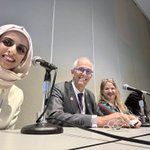
Honored to share @womensurgeonsk1 experience in the Leadership for Women in International Arena Session with esteemed speakers & panelist @SWexner @Chai_Christy Dr. Smith Dr. Berry Dr. Ordonez
Asmaa Al Rashed MD FRCSC FACS retweeted
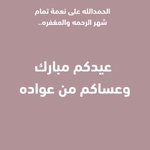
في اليوم العالمي للسكري 💙
السمنة من أهم أسباب السكري من النوع الثاني، وعلاجها جزء من علاجه.
دراسة ARMMS-T2D: بعد 11 سنة، وصل 58% من مرضى جراحة السمنة إلى هدوء السكري مقابل 3% مع الأدوية ونمط الحياة.
العلاج المبكر نتيجته أفضل.
#اليوم_العالمي_للسكري #السكري #السمنة #جراحة_السمنة
Original Article: Retatrutide, a Triple Hormone Receptor Agonist, for Treatment of Obesity (phase 3 TRIUMPH-1 trial) nej.md/4ycgSHz
Editorial: A Triple Incretin Agonist for Obesity, Osteoarthritis, and Sleep Apnea nej.md/4izSuJs
#Endocrinology #Rheumatology

ALT Two figures showing the effect of retatrutide on body weight. Panel A shows the percent change in body weight from baseline to week 80 (controlled for type I error). Panel B shows the percentage of patients with reductions in body weight of 15% or more and 30% or more (controlled for type I error), along with the percentage of patients who reached the body-mass index targets of less than 30 or less than 25 and the waist-to-height ratio target of less than 0.5 (not controlled for type I error) at week 80 for the treatment-regimen estimand.
Asmaa Al Rashed MD FRCSC FACS retweeted
#مؤتمر_علمي| وكيل وزارة الصحة الشيخ الدكتور سلمان خليفة عبدالله الصباح يشهد افتتاح البرنامج العلمي «الكفاءة الثقافية الأساسية والمعرفة الطبية القانونية في الرعاية الصحية»، الذي نظمته الجمعية الطبية الكويتية.
Asmaa Al Rashed MD FRCSC FACS retweeted
Beyond the scrubs lies a story of ambition, resilience, motherhood, and leadership🪡💜
Join us for our upcoming webinar:
“Beyond the Scrubs: A Woman, a Mother, & a Trauma Surgeon” with Dr. Qaali Hussein, a double board-certified trauma and acute care surgeon.
We’re honored to have her share her journey and insights🩺
🎤 Hosted by Dr. Ismail Abdullah, Intern
📅 Oct 24, 2026
🕗 8:00 PM
📍 Zoom Webinar
🔗Register now through the link below:
forms.gle/3FQVU3KAZzHEa9mH9
#SurgeryInterestGroup #WomenInSurgery #TraumaSurgery #AlfaisalUniversity
Asmaa Al Rashed MD FRCSC FACS retweeted
I am incredibly honored to be featured in Arab Insights Healthcare Magazine as one of the "Vascular Surgery Leaders Driving Achievement and Excellence in 2026."
Reflecting on this interview, I was reminded that vascular surgery is not just a technical pursuit—it is an intellectual exercise in duality. What continues to inspire me is the ability to move seamlessly from open heroic surgeries to elegant endovascular interventions.
But beyond the technical precision, what truly defines a surgeon is how they navigate adversity.
The journey to this point has been defined by more than just technical skill. It has been shaped by:
🔹 Trailblazing: Being the first non-Canadian trainee accepted into McMaster University’s vascular surgery residency, and now serving as the first female vascular surgeon in the Middle East with Canadian board certification.
🔹 Adaptability: Moving from Canada to Riyadh and navigating a new healthcare system & different pathologies, taught me intellectual humility, cultural sensitivity, and resourcefulness.
🔹 Balance: My background as a professional Taekwondo athlete taught me the discipline to sustain performance. Today, whether I'm operating, teaching, or enjoying equestrianism and tennis, I know that a well-rounded life sustains a sustainable career.
My leadership philosophy centers on active listening, mutual respect, and shared decision-making.
To young surgeons entering this specialty: embrace lifelong learning with curiosity, build strong mentorships, and never forget the patient behind the disease. The path is demanding, but those who enter with purpose and compassion will find endless opportunities to make a meaningful difference.
Thank you to Arab Insights Healthcare Magazine for the wonderful feature, and to my mentors and colleagues who continue to make this journey worthwhile.
lnkd.in/dmTxZs4x
#VascularSurgery #Resilience #WomenInSurgery #HealthcareLeadership #CareerJourney
Asmaa Al Rashed MD FRCSC FACS retweeted
Cardiology calls statins miracle drugs. Social media calls them poison.
Both sides cite published scientific papers. How can they be looking at the same evidence and reaching opposite conclusions?
As a cardiologist, I think both sides are are on to something. Let me explain. 🧵
Asmaa Al Rashed MD FRCSC FACS retweeted
Here we go! The first phase 3 trial for Retatrutide in obesity
Here's how it compares to the other drugs with phase 3 data
I used the treatment-regimen estimand, which measures weight loss regardless of adherence, to better represent real-world effectiveness:
Today, we shared new data from the latest Phase 3 study of retatrutide, an investigational treatment being studied for adults with obesity or overweight with at least one weight-related comorbidity.
Learn more: go.lilly.com/ow76mw
Asmaa Al Rashed MD FRCSC FACS retweeted
Experts reach consensus to rename polycystic ovary syndrome (PCOS), better reflecting the condition’s full health impacts.
Find out more 👉 spkl.io/6011ACDWW @ESEndocrinology #ECE2026
Asmaa Al Rashed MD FRCSC FACS retweeted
¿Cuándo elegir semaglutida y cuándo tirzepatida?
La EASO acaba de actualizar su algoritmo con evidencia hasta noviembre 2025 📊 @EASOobesity
Spoiler: depende del objetivo clínico. No es solo pérdida de peso.
🔗 @NatureMedicine
nature.com/articles/s41591-0…
#ECO2026
Asmaa Al Rashed MD FRCSC FACS retweeted
Full breakdown — the IJO vs. Annals reconciliation, the DXA measurement problem, the Lundgren NEJM RCT, the Tinsley & Nadolsky case series showing patients gaining lean mass on tirzepatide, and the practical clinical protocol: substance-over-noise.beehiiv…
Asmaa Al Rashed MD FRCSC FACS retweeted
Do GLP-1 drugs increase the risk of vision loss?
Specifically, a condition called NAION: a sudden loss of blood flow to the optic nerve that can cause vision loss.
We looked at this in 588,000 people.
The answer, in our new @JAMANetworkOpen paper, is yes. 🧵
jamanetwork.com/journals/jam…
Asmaa Al Rashed MD FRCSC FACS retweeted
Fluid restriction in patients with heart failure: a systematic review heart.bmj.com/content/early/…
Asmaa Al Rashed MD FRCSC FACS retweeted
In 2008, evolutionary anthropologist Katie Hinde began studying breast milk from rhesus macaque mothers. What started as a routine study turned into a groundbreaking discovery. She found that mothers raising sons produced milk richer in fat and protein, while those raising daughters had different nutrient balances. This led Katie to a radical conclusion: milk is not just nutrition—it’s information.
Her research revealed that milk shapes behavior, not just growth. For instance, first-time mothers produced milk with higher levels of cortisol, influencing their babies to grow faster but also become more anxious. Katie also discovered that milk changes based on the baby’s immune needs. When a baby is sick, the mother’s milk quickly adapts by producing more white blood cells and targeted antibodies.
Katie’s work, which challenged the scientific consensus, was largely ignored. She launched a blog, Mammals Suck Milk, to spark discussions, and her findings, including that every mother’s milk is unique, gained widespread attention. In 2017, she took her research to a TED stage, and in 2020, her work was featured in Netflix’s Babies. Today, as a professor at Arizona State University, Katie continues to revolutionize our understanding of infant development and lactation.
Katie Hinde didn’t just study milk—she uncovered a living, responsive communication system, revealing that nourishment is intelligence. Her discovery shows that sometimes the biggest revolutions begin by listening to what others ignore.
Asmaa Al Rashed MD FRCSC FACS retweeted
Smartphone addiction has negative impacts on student learning and overall academic performance.
The greater the use of a phone while studying, the greater the negative impact on learning.
The skills and cognitive abilities students needed for academic success are negatively affected by excessive phone use.
The results of this meta-analysis implied that addicted users show a diminished level in learning.
Asmaa Al Rashed MD FRCSC FACS retweeted
Higher mortality rates among surgeons may be associated with work environment, professional demands, & lifestyle. A cross-sectional study analyzes mortality rates & leading causes of death among US surgeons compared with other occupation groups.
🔗 ja.ma/3KJuNSi
Asmaa Al Rashed MD FRCSC FACS retweeted
Why Marathon Training is Shortening Your Life
Your heart isn't built for chronic punishment. The same cardiovascular stress that makes you endure pain and suffering for longer can also make you vulnerable.
Exercise saves lives. That's undisputed. But chronic high-intensity training creates a paradox: veteran endurance athletes show elevated coronary calcification, atrial fibrillation rates five times higher than sedentary people, and myocardial scarring typically seen in cardiac patients.
The mechanism is straightforward. During sustained hard efforts, your heart pumps five to six times its resting volume. After 60 minutes, this mechanical stretch overwhelms adaptation capacity.
Adrenaline spikes, free radicals accumulate, and microscopic tears appear in cardiac tissue. Do this once, it heals. Do this weekly for years, scar tissue accumulates.
Studies of marathoners completing races show over half have elevated troponin levels, a cardiac injury marker cardiologists associate with heart attacks. These are micro-tears from mechanical stress. Repeat exposure causes chamber dilation, wall thickening, and permanent fibrosis.
The data is clear. A 52,000-person study tracked runners for 30 years. Runners who covered 5 to 20 miles weekly at a comfortable pace lived 19% longer than non-runners. Those exceeding 25 miles weekly or running faster than 7.5 mph pace saw benefits disappear entirely. Running seven days per week eliminated longevity gains.
A separate Copenhagen study found moderate joggers lived six years longer than sedentary controls, but extreme exercisers showed no advantage. The relationship mirrors alcohol consumption, a U-shaped mortality curve where both extremes increase risk.
Peak fitness on a treadmill test occurs around 7 to 7.5 mph. Beyond that threshold, further cardiovascular conditioning provides no additional mortality benefit.
The plateau is real.
Marathoner autopsies reveal enlarged, scarred hearts. One legendary ultrarunner died at 50 during a routine 12-mile run. His autopsy showed idiopathic cardiomyopathy, likely accumulated damage from decades of extreme training.
A Minnesota study found 25-year marathon veterans had 62% more coronary plaque than sedentary controls despite better traditional risk factors.
Animal studies offer hope. Mice run to exhaustion daily for four months developed the same cardiac pathology. When training stopped, hearts normalized. Fibrosis reversed. Electrical instability resolved.
The prescription is simple. Walk daily, as much as possible. Run or perform vigorous exercise 15 to 40 minutes, two to five days weekly, at a conversational pace around 10-minute miles. Your peak heart rate during brief intervals is fine. Sustained Zone 4 or 5 efforts are not.
Humans evolved for intermittent intensity followed by recovery. Persistence hunting required stamina, not speed. Modern endurance culture mistakes suffering for progress. Your heart needs pulsatile stress, work followed by genuine rest, not perpetual inflammation.
The moderate exerciser lives longest. Not the sedentary person, not the Ironman finisher. The person who moves daily and occasionally pushes hard, then backs off.
Combine walking, easy zone 2 activities (swimming, biking, running, rowing) with repeated sprint interval training and you are doing the optimum.
You don't need to suffer or learn to sustain pain to be fit. You don't need to aim for a VO2 max beyond 45 to live long.
Asmaa Al Rashed MD FRCSC FACS retweeted
"Productivity, I’ve come to see, is not measured only by research papers and grants. It is also sustained by presence, rest, and the relationships that give meaning to the work." #ScienceWorkingLife scim.ag/3XR5Y9S
Asmaa Al Rashed MD FRCSC FACS retweeted
Viewpoint: #MandM conferences benefit surgeon moral development by fostering personal responsibility, reflection, and a mindset for improvement in #Surgery.
@pangelos1 @seancwightman
ja.ma/48M12rL
Asmaa Al Rashed MD FRCSC FACS retweeted
Increased surgeon physiological stress during the first 5 minutes of surgery was associated with reduced odds of major surgical complications.
Optimizing surgeon stress may provide an opportunity to improve surgical performance and patient outcomes.
🔗 ja.ma/3JKxCSm
Asmaa Al Rashed MD FRCSC FACS retweeted
Robotic hiatal hernia repair offered no short-term morbidity or mortality advantage over laparoscopic hiatal hernia repair but incurred longer operative times and a higher pulmonary embolism risk in older adults. ja.ma/4qEFHc8