

Working on AI at @LiveRamp
Little Rock, AR
Joined September 2009
- Tweets13.8K
- Following2.6K
- Followers289
- Likes69.4K
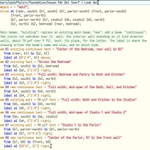





Do your house plans have go to definition? Building a little DSL over some PyNite-based structural simulations for foundation work.
I have two structural engineer reports and a stack of quotes, this is just for my own peace of mind.

To write the language, I used this lexer generator I've been working on for a different project, and yacc: github.com/cptaffe/automaton


Connor Taffe retweeted

Spotifast 0.12 is out!
Spotify, fast, in 200MB of RAM, for all OSs.
It now consumes 0% CPU when idle.
spotifast.rocks/
Connor Taffe retweeted

I've published a new, general-purpose terminal specification that gives any program a way to tell the terminal what it's doing: idle, working, waiting, finished, or failed, and why. It is easy to implement on both sides. I've written more about why: mitchellh.com/writing/progra…
The problem this solves is generic and applies in compelling ways to all sorts of use cases (e.g. package managers, build tools), but it really rears a hideous head when it comes to AI and the "agentic inbox" problem.
I found over 250 different agent orchestrators (with various goals) that all individually implement a heuristic based approach to detecting whether things like Claude Code are working, blocked, done, etc.
If you look at @herdrdev's commit history, you can see around 10 compatibility changes to detect Claude Code within just the past 3 months. (This isn't a dig at Herdr! They're doing great work with what they have, and everyone else is doing the same thing).
Heuristics are not the way. And over-indexing on agentic use cases isn't the way, because this problem is really interesting for other tools too: Homebrew, Terraform, Cargo, etc. etc.
Proprietary protocols and out of band APIs are not the way. They have an O(N) integration problem and require extra work to work over SSH or within local VMs/containers.
The program status specification (OSC 7501) solves this in a reliable, deterministic way that is general-purpose and can be easily adopted by the entire industry.
Read more: mitchellh.com/writing/progra…
Connor Taffe retweeted

this is so fun
Below: an LLM loop is hooked into the Lisp REPL, and the LLM adds functions to the REPL as needed. These functions persist across application restarts.
Instead of the entire read_file + edit_file + bash compile loop, it's now just prompt functionality in the application as it runs.
Connor Taffe retweeted

Mayor @ZohranKMamdani on cutting down wasteful budget spending:
There was waste. There's also this addiction to consulting. When we looked at the city budget, we realized we had to save money through efficiency. So we set up something called 'Chief Savings Officers' in every department. We saved $94M just by renegotiating contracts to a better rate. We saved $24M by letting go of unused office space. I believe that government has to be the most excellent, efficient version of itself to be worthy of people's trust.
Instead of growing, this approach handles overflow, worst case logarithmic lookups and possible OOM. If it’s undersized, you get many logarithmic lookups and linear key traversal they address with SIMD. The comparison to implementations for tables of any size seems misleading.


Connor Taffe retweeted


Pro software perf tip:
Doing nothing is wayyyyy faster than doing something.
planetscale.com/blog/designi…


Connor Taffe retweeted

developing with AI when you're incompetent vs developing with AI when you're competent


The reason why I'm working on that project on and off is that it's depressing as fuck. I hadn't done anything this depressing since before I wrote enterprise Java for a living.
Code generation is alright, it works. But I also need the clanker to write prompts for subclankers and oh my god it's soul-sucking.
The clanker doesn't understand the stochastic nature of AI. It feels like the subclanker will reasonably follow the prompt. It of course won't.
So you explain it to the clanker and it just puts a wall of prompt legalese into markdown files, making the subclanker reward-hack and behave even worse.
I've seen an entire ping-pong session where the clanker would encourage subclankers to do something, then forbid it completely, then encourage again etc, because each attempt would create a different set of issues.
At every step your instructions get distorted to the point where they're unrecognizable and in the end the subclanker is doing exactly what it's not supposed to be doing.
And on top of that there's the factor of LLMs being chaotic. There's never a causal relationship between the quality of the prompt and the quality of the final result. Maybe it just derailed this one time after the prompt was changed, despite the change being positive on average.
So I never actually know if things are getting better or not. Plus, I have to rely on the clanker's judgement to determine how good the results are, because if I tried to analyze them manually, I'd just drown in all that data. So I can't even be sure that a good result is a good result.
Literally nothing is certain or trustworthy.
And the worst part is that all this nonsense and suffering is still worth it, so I can't just quit.
Connor Taffe retweeted

this is a very good premise


recommended reading. i belive this to be true at this point in time.
alexn.org/blog/2026/09/22/ai…


Connor Taffe retweeted
new post: the senior engineer death spiral
sunilpai.dev/posts/the-senio…
a friend just started a big job and asked for some advice. so I braindumped a monologue about a super common failure mode I see with engineers and posted it here, hope it helps whoever it can.

Connor Taffe retweeted
The "whiteboard defense:" I should be able to pull you aside at any moment and ask you to explain any customer-facing system you've shipped. You should be able to clearly explain how it works and defend the decisions you made. This is my benchmark for responsible AI usage.
I don't expect line-level familiarity with the code. I don't care if you remember the exact function name or implementation detail. You may not even know it. I don't care.
But if I ask "why did you do X instead of Y?", "what happens if this actor behaves maliciously?", "what data structure did you use here and why?", or "where does this fail?" you should be able to answer confidently.
For PoCs, demos, experiments, whatever: I don't care. Generate 100% of it and understand none of it. Speed over quality every time in those specific scenarios.
But if you're shipping customer-facing work, you can't be shipping things you don't understand at a high level.
Connor Taffe retweeted

With agentic coding, even in the best case scenarios (where you read every line of generated code), there’s something we’ve lost, perhaps irrevocably.
That has a real cost, & not to mention, second and third order effects, that “software factories” etc don’t necessarily solve.

Connor Taffe retweeted

Lazy work used to mean too little output.
Now, with AI, it often means too much and more work for everyone else.
@tobi call it "slop grenades."
A "Slop Grenade" is when you let AI produce the work and pass it on without adding any value (including checking it).
Someone else has to wade through it, catch the mistakes, and clean up the mess.
You save time and look productive but someone else pays for it.

My third conversation with Shopify co-founder and CEO @tobi.
0:00 How Shopify Uses AI
7:18 River: Shopify's Internal AI
8:55 How to Encourage Osmosis Learning
10:52 AI Dreaming and Self-Reflection
11:53 How to Use AI for Strategic Decision Making
14:11 The One Thing AI Cannot Do
16:04 What AI is Making Worse at Shopify
19:46 Predictions: Where AI is Headed Next
21:55 The Future of AI-Powered Software
24:40 Will CEOs Be Replaced with AI?
27:54 Can Superintelligence Be Controlled?
31:13 Critical Skills in AI Age
34:22 Why Complex Solutions are Usually Wrong
36:33 Conditions Needed for True Intuition
38:02 The Best Path Doesn't Have Instant Feedback
44:51 How Affirmations Can Shift Your Behavior
50:44 The Inobvious Thing Hurting Companies
52:37 Relationship Between Beauty and Creation
56:23 How SpaceX Moves Forward By Subtraction
1:00:24 Why Companies Need Refounding Events
1:01:50 Books as Cheat Codes
1:02:39 Three Books to Change Your Thinking
Enjoy!
(Includes paid promotions.)
Connor Taffe retweeted

We love how this doomo doomonstrates real-time intelligence and what can be doone with code + AI!
~10 calls/sec = ~$7/hour
Connor Taffe retweeted

The soy sauce packet in your takeout bag isn't soy sauce. The biggest maker, Kari-Out in New Jersey, lists water, salt, hydrolyzed soy and corn protein, caramel color and sodium benzoate. No fermentation, no brewing. It's made in a couple of days by boiling defatted soy meal in hydrochloric acid, neutralizing it, then adding color and corn syrup so it looks and tastes close enough.
A lot of the bottles on the grocery shelf are the same thing. Kikkoman and the Japanese government went to the UN food standards body years ago and asked that the chemical version not be allowed to use the name soy sauce. The hydrolyzed protein industry and the USDA pushed back and it stayed. The brewed ones say naturally brewed on the label. If the bottle doesn't say it, it isn't.