

NYC
Joined September 2017
- Tweets765
- Following628
- Followers2.4K
- Likes4.1K




Pinned Tweet
New Paper: Human-like Autonomy Emerges from Self-Play and a Pinch of Human Data.
We trained self-play RL on 60 years of simulation on 1 GPU in ~15 hours. Regularizing with 30 minutes of demonstration data produces much more human-like driving policies!
Daphne Cornelisse retweeted

Making it possible to do things that were previously impossible is infinitely more exciting than speeding up things that were already possible.
Working on biology is humbling. It gives me a similar feeling to looking up at the stars at night and imagining how tiny the Earth is in relation to the rest of the universe.
Daphne Cornelisse retweeted

Using AI to write for you - start to finish - is really just you robbing yourself of one of life’s greatest joys: to think through a problem and figure out what you think about it, and in the process becoming passionate enough to take on the new challenge of solving it.
Inspiring progress. Amid the daily hype around AI, remember that scientists worldwide are working hard to improve human life.

Faster answers can make a critical difference for children in intensive care.
New Research from Great Ormond Street Hospital shows how same-day metagenomic testing can uncover hidden infections and help doctors make better-informed treatment decisions. By sequencing genetic material in respiratory samples, the approach searches broadly for bacteria, viruses and fungi, including organisms missed by routine tests.
We’re proud to celebrate three members of our Pathogen Program who contributed as co-authors to the GOSH research: First author Dr Robbie Forrest-Hammond, Dr Vicky Enne and Dr Dan Ward.
The findings demonstrate the clinical potential of metagenomics - closely aligned with our Pathogen Program’s ambition to improve the diagnosis, treatment and prevention of infectious disease.
Read more:
👉gosh.nhs.uk/news/world-first…
👉bbc.co.uk/news/articles/cw5y…
#Sequencing #Metagenomics @GreatOrmondSt

Daphne Cornelisse retweeted

Octi/Nvidia + Abhishek's lab on a generational run. dex manip will be solved with sim.

(1/6) From @GoogleDeepmind’s AlphaGo to AlphaZero, we saw machines find moves that reached beyond what we’d imagined for them. No one taught them those strategies. They emerged from reinforcement learning: playing, failing, and trying again under a single binary task reward for success or failure. Inspired by them, we couldn’t help but wonder: what might a robot discover if we gave it that same freedom to learn?
That question led us to AlphaNIST. Starting tabula rasa, with that same binary reward plus only a simple control cost, a single policy solves all 20 @NIST assembly tasks at a 98.2% success rate in simulation. More surprising still, AlphaNIST can complete 10 different tasks in a row, receiving that reward only once, after all 10 are done.
Just as AlphaGo’s strategies surprised its creators, AlphaNIST discovered dexterous strategies we couldn’t have come up with ourselves.
Paper: arxiv.org/abs/2610.13354
Website: alpha-nist.github.io
Daphne Cornelisse retweeted

In our Nature paper, we introduce the first superhuman Stratego AI, which we built using general techniques that we developed for RL & test-time compute under imperfect information. 1/N

Daphne Cornelisse retweeted

One of the worst forms of brainrot AI has cultivated is pessimism about basic research, ie the idea that important work can only happen inside a frontier/neo lab and only with 10k+ GPUs, so the rest should not even bother. What a bleak way to think about science. And it's false.
Daphne Cornelisse retweeted
Worst thing about this is we have no idea if GPT-6 was specifically post trained on Nethack or not. Zero transparency about the training data and environments. You can't independently evaluate the significance of anything without knowing this.

In all seriousness, this is a startling achievement for GPT-6 Astra. kenforthewin.github.io/blog/…
(This is GPT-6 Astra beating Nethack on its 3rd try. Nethack is the original roguelike and one of the most famously hard games of all time. I have played a lot, and I've never ascended)

Daphne Cornelisse retweeted

I'm super bored of LLM-stylized papers/blogs. I think we all are?
So I asked Claude to explain its tells: web.mit.edu/phillipi/www/cla…
Let's avoid these! I'd much rather read *your* words, see *your* rickety figures, than face down yet another of Claude's anodized corporate veneers.


Daphne Cornelisse retweeted

i'd like to keep it low key and say this is no big deal, but in reality this has to be the coolest project i've worked on maybe ever, and there's a lot more to come!
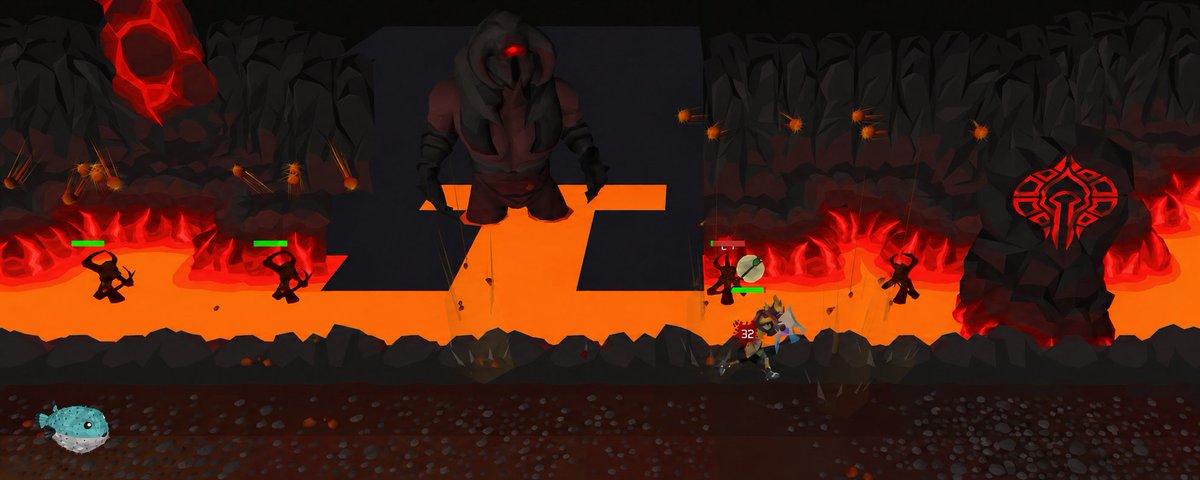
Daphne Cornelisse retweeted
Joseph and team have been pursuing a very different approach to AI compared to the mainstream. They build really fast simulators + optimizers — so fast that you can do RL from scratch, even on hard domains. It’s worth checking out! Very cool results!


Daphne Cornelisse retweeted
5 Exciting new results brought to you by our team + contributors: @spenccheng @finlay_sanders (fintern!) @ValtteriValo @daphnesolves @elliotarledge. Play with the agents at puffer.ai! All experimental data available is available in Constellation online + local.

Daphne Cornelisse retweeted

terrytao.wordpress.com/2026/…
Terry’s essay is interesting because it highlights a misalignment between AI companies and many, if not most, social groups in humanity
Many of our institutions are built around improving humanity’s understanding of how the world works and how to create things within it
AI companies like OpenAI are more concerned with producing artifacts that have historically been challenging for people to create
They don’t really care about helping people understand the world
On the one hand, its a fair point that if we can solve a key problem, like finding a cure for cancer, it shouldn’t matter if we understand the solution
on the other hand, this is a deeply antisocial approach to discovery
and one that is increasingly leaving the world — artists, writers, now mathematicians — with animosity towards AI
Rather than build AI as a tool to solve arbitrary problems, we could build it as a tool to empower people as they learn and perform tasks in the world
Some companies, eg @percepta, are taking this approach. I hope more will follow suit

A little late, but happy to share that spiced self-play was accepted to the Conference on Robot Learning (CoRL)! 🎉

Daphne Cornelisse retweeted

When the boss motor protein tells another motor protein to come see him in his office

Sweden, here we come! 🇸🇪
I’m heading to ECCV, where we’ll host our workshop this Tuesday: emerging-ad.github.io/
We have a fantastic lineup of speakers; see you there!
