





Dustin 🇨🇦 retweeted

France is learning why Egypt, Jordan, and Kuwait no longer accept Palestinian refugees…I think it's because they're Islamophobic.
Dustin 🇨🇦 retweeted
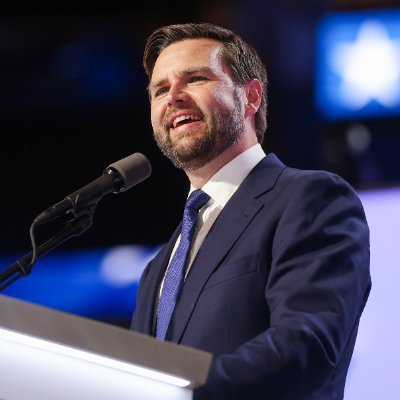
Western liberals imported the third world into France and other countries in the name of diversity and compassion. They ignored fundamental questions of assimilation and compatibility. They were told it would lead to this and they didn't listen.
I pray that France, a beautiful country of amazing people, will stop this madness before more of its landmarks burn.
And I hope Americans are paying attention. This is the future congressional Democrats seek for your country.

Loser ass country we live in

#BREAKING: Ringleader of Toronto 18 terror plot no longer shows signs of extremism, granted full parole, board says cp24.com/local/toronto/2026/…

And this is why Canada should not be letting in Chinese EVs..

BREAKING: Further espionage insanity from China
China owns the cars Norway’s soldiers rented for a military exercise. The cars proceeded to recorded the gate codes.
The Home Guard used Hertz vehicles during a September drill in Oslo. Hertz’s ownership runs through Volvo to Zhejiang Geely. Soldiers found stored video of who got in, where they drove, and the codes they typed to open military gates. They kept using the cars. No replacements.
Volvo still says Chinese ownership is not a risk.
This is where reliance on Chinese tech leads you.


Dustin 🇨🇦 retweeted

Day 1 in Canada. I just land in airport. I almost have anxiety attack. Why? I go in airport, every one be indian. "HELLO SAR. WHERE MY BAG SAR?"
Oh. my. god. I maybe take wrong flight and land in India. But this impossible because flight only 2 hour. Finally I see gay white man walk by. I know he gay because he shake his butt when walk.
Thank god. I now know i'm arrive in GAYNADA.

Dustin 🇨🇦 retweeted

I don't know Jason. Does this 👇 make you proud?
𝗧𝗵𝗲 𝗟𝗶𝗯𝗲𝗿𝗮𝗹 𝗣𝗮𝗿𝘁𝘆'𝘀 𝟭𝟭 𝘆𝗲𝗮𝗿 𝗿𝗲𝗰𝗼𝗿𝗱:
🔴 11 straight years without a balanced federal budget. Not one!
(Finance Canada)
🔴 The 2025-26 deficit: $67 billion. The biggest deficit in dollar terms Canada has ever run outside COVID.
(Spring Economic Update 2026)
🔴 Interest on the debt cost $55.6 billion this fiscal year, more than the $54.7 billion Ottawa sent the provinces for health care. We paid bondholders more than we paid for hospitals.
(Finance Canada, FY 2025-26)
🔴 Every child born in Canada today inherits over $33,000 in federal debt before their first breath.
(PBO)
🔴 GDP per person fell 2% from 2020 to 2024, the deepest five-year drop since the Great Depression. The headline economy "grew" only because population growth papered over the shrinking.
(Statistics Canada)
🔴 Federal debt per Canadian is heading from $32,138 today to $38,943 by 2031, on the government's own projections.
(PBO, June 2026)
🔴 The federal debt-to-GDP ratio keeps rising until the early 2030s. Their own plan says so.
(Spring Economic Update 2026)
🔴 The Parliamentary Budget Officer puts the odds of the government keeping its own promise of a declining deficit every year at less than 1%.
(PBO, June 2026)
🔴 Households owe $1.77 for every dollar of take-home pay. Highest household debt in the G7. $3.2 trillion total.
(Statistics Canada, Q4 2025)
🔴 A national survey found 43% of Canadians within $200 a month of not covering their bills.
(MNP Consumer Debt Index)
🔴 Insolvencies are at their highest level since 2009. (Office of the Superintendent of Bankruptcy)
🔴 Roughly 1.15 million families renew their mortgages this year at payment jumps of 15 to 20%.
(CMHC, Bank of Canada)
🔴 Grocery bills are up around 30% in four years. Wages grew 2% last year while food inflation ran 4.1%. (Statistics Canada)
🔴 Shelter now eats more than half of median household income in major cities.
(Statistics Canada, OECD)
🔴 Canada's banking regulator named mortgage risk the number one threat to the financial system and expects defaults to rise for the next two years.
(OSFI Annual Risk Outlook 2026)
🔴 Households, corporations and government owe 377% of GDP combined. We are the fourth most indebted country in the OECD.
(OECD)
🔴 An $11.7 billion rebranded GST credit, borrowed money to cover the cost of living their own economic record created.
(Finance Canada, January 2026)


Dustin 🇨🇦 retweeted

God gave modern Canadians the opportunity to play life on easy mode.
A massive, gorgeous country stuffed to the gills with valuable resources.
A small, highly educated population.
A heritage of Christian values and a liberty oriented political system.
A compatible neighbor who also happens to be the global superpower to protect you and trade goods with.
Literally the easiest layup of all time.
So they took that liberty and squandered it in a way that would make even the prodigal son blush.
Truly staggering when you think about it.
Dustin 🇨🇦 retweeted

No US president is going to rename our landmarks, shame our nation, or erase our history.
We have chiefs for that.🪶


Dustin 🇨🇦 retweeted

Let me repeat this, because many people don't get this. Sorry for the long post but I just can't seem to figure out what to leave out to make my point.
#1 The U.S. is under no obligation to simply give Canada unrestricted access to its markets. We have negotiated access through trade agreements, but that access comes with terms and obligations on both sides. Canada is not inherently entitled to sell whatever it wants into the U.S. market under whatever conditions it wants.
#2 When two parties are negotiating, both are going to try to get the best deal for themselves. No party is under any obligation to accept the other party's proposals. That's literally what a negotiation is.
#3 Canada does not have a lot of bargaining chips relative to the size of the U.S. economy. And some of the bargaining chips we do have, such as energy, electricity, potash, aluminum and critical minerals, could certainly hurt the U.S. if we restricted them. But doing so would almost certainly elicit a tremendously powerful response from the U.S. What you're seeing right now is largely posturing to make it appear that we're being tough. If Canada really wanted to inflict serious economic pain on the U.S., there are ways to do it, but the consequences for Canada could be enormous.
#4 The U.S. has become increasingly concerned about Chinese goods, investment and Chinese content entering the North American market through Canada and Mexico. Washington wants its CUSMA partners much more closely aligned with the U.S. when it comes to China. Whether Canadians like that or not, this has become a major issue in our trading relationship with the United States.
#5 Canadians are furious because the U.S. is using protectionist measures to protect American industries. Yet Canada does exactly the same thing. Our supply-management system puts extraordinarily high tariffs on certain American dairy, poultry and egg products once imports exceed established quotas. Some of those tariffs are well over 200%. We can't pretend Canada is some completely open free-trading country while accusing the Americans of protectionism.
#6 Canada has also imposed measures specifically restricting U.S. automobiles. Canada imposed 25% tariffs on certain U.S. vehicles and established limits on duty-free access for qualifying American vehicles. Canada has even reduced those allowances for companies that moved manufacturing from Canada back to the United States. The U.S. now argues that Canada is treating American automotive products worse than products from some other countries.
#7 Canada also gives certain European dairy products more favourable access than comparable American products. Under Canada's European trade agreement, retailers can access certain cheese import quotas that they cannot access under the equivalent CUSMA quota for American cheese. The U.S. argues, with some justification, that this puts American dairy producers at a disadvantage compared with European producers.
#8 Many provinces pulled American liquor off their shelves as retaliation against the United States. Whatever you think about the symbolism of doing that, it created another barrier against American products while the federal government was simultaneously trying to negotiate a trade agreement with the Americans. The U.S. has specifically identified these restrictions as one of its trade complaints against Canada.
#9 Softwood lumber. This is a decades-old dispute, long before Donald Trump came along. The Americans have argued for decades that Canada's Crown-land stumpage system effectively subsidizes Canadian lumber producers, allowing them to sell lumber into the U.S. at unfairly low prices and undercut American producers. Canada disputes that argument, but pretending this is something Donald Trump suddenly invented is simply false.
Dustin 🇨🇦 retweeted

Canada’s Trade-War Denial
Canada does not need “time to adjust.” It needs a political class willing to stop confusing indignation with economic policy. And it needs access to the US market.
President Trump is focused on economic sovereignty, this is not personal this is business.
I assumed Mark Carney understood that. He has spent enough time around markets and capital to know that a country cannot posture its way out of a competitiveness crisis. Yet Ottawa’s turn toward symbolism and performative retaliation suggests that faith was misplaced.
Canada does not need another era of Pierre Elliott Trudeau-style progressive theatre: moral signalling, state direction, and lofty ambition detached from the hard work of building productive capacity. It needs an adult willing to confront vested interests, make trade-offs, and put economic strength ahead of political performance. The last adult, it seems, has just left the room.
The elbows-up strategy is embarrassing and hurts Canada long term, like a teenager emotional response to the reality of the world. Carney’s use of it helps neither negotiation nor leverage, and it wounds Canada more than the U.S.
The central strategic objective is obvious: preserve access to the United States, the world’s largest and most dynamic market, Canada’s neighbour, and the foundation of its export economy. That access is not a talking point. It supports Canadian jobs, investment, supply chains, and growth.
Canada focus on China is an own goal. China cannot replace it. China is distant, strategically uncertain, and separated from Canada by geography, institutions, and infrastructure. It cannot reproduce continental integration: shared energy systems, cross-border capital, integrated factories, common standards, and decades of commercial interdependence.
Canada does not get to trade on sentiment while depending on geography.
Nor can it “win” a trade war with its largest customer. Ottawa can impose targeted costs where it has genuine leverage. It can negotiate firmly. But broad retaliation is not a strategy. It is emotional performance masquerading as economic policy.
Too many in the political and economic elite appear to believe retaliation can force the structural adjustment Canada has avoided for years. It cannot. Tariffs do not raise productivity. They do not attract investment, reduce regulatory costs, or make Canadian businesses more competitive. They raise prices for households, increase costs for manufacturers, and encourage mobile capital to locate elsewhere.
Retaliation for its own sake is an expensive expression of national frustration. Canadians pay the bill.
The deeper problem is not merely American pressure. It is Canadian failure: weak business investment, poor productivity growth, regulatory paralysis, provincial trade barriers, slow approvals, inadequate infrastructure, and a subsidy culture that protects incumbents rather than rewards builders.
Canada is rich in assets and poor in execution. It has energy, minerals, capital, skilled people, and privileged proximity to America. Yet it has made investment too slow, too risky, and too expensive.
The answer is not submission. It is reform: deregulate, accelerate approvals, remove barriers to capital and internal trade, and lower the cost of building.
Canada may need time to adjust. But first it needs to end its denial.

Tonight, Canada declined to finalize the trade deal under the terms agreed earlier this week.
Despite the U.S. offer to Canada to receive the best treatment of any major exporter to our market, new demands and walk backs of other commitments by Canada have upended the careful balance reached in the past days. In addition, Canada is continuing to maintain its prolonged retaliation against the United States, including, among other things, flat-out prohibitions on certain American goods and services.
For decades, Canada has enjoyed the most favorable access to the U.S. market of any country. And from the beginning of President Trump’s trade program, Canada has continued to enjoy the best treatment in the world, even after – like China – retaliating against the United States. This week, the United States agreed to provide even better treatment to Canada, offering significant tariff reductions on steel, aluminum, autos, and lumber.
The U.S. offer was also forward looking, and included a historic economic and national security partnership to cooperate on export controls, combat transshipment, enhance digital trade, and align certain external tariffs. The offer would have led to supply chain coordination on aerospace, complementary actions to address unfair trade practices, critical minerals cooperation, increased enforcement against imports produced with forced labor, and the announcement of formal U.S.-Mexico-Canada Agreement (USMCA) negotiations.
This is a missed opportunity for Canada to partner with the United States, which is the fastest growing economy in the G7.
Dustin 🇨🇦 retweeted

The PM just thanked Canadians for choosing to vacation in Canada, days after he got back from Italy. Reminds me of COVID when there were two sets of rules. It’s so symbolic. There are certain people in this country who always demand sacrifices they would never make themselves.


Dustin 🇨🇦 retweeted

Oh so Taylor Swift wants a wall around her wedding, but not our country’s border.
Lmao


Dustin 🇨🇦 retweeted

Today, on my final day as Director of National Intelligence, I’m releasing never-before-seen communications and documents exposing how Dr. Fauci provided millions in US taxpayer dollars to fund dangerous gain-of-function research at the Wuhan lab, worked with politicized elements within the Intelligence Community to suppress the truth about his actions and hide the virus’ lab-leak origins, and lied to Congress while under oath in 2024. It’s time you know the truth.
odni.gov/index.php/newsroom/…
No one cares what Wyndham coach has to say.. show more live golf shots. @usopengolf @NBCSports