

Observer of the world, tryin' to keep things straight.
Joined December 2012
- Tweets5.1K
- Following114
- Followers172
- Likes1.4K



Pinned Tweet
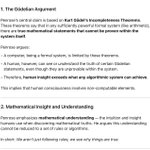
What is Psychule Theory? 🧵
It is my explanation of the physical basis for the emergence of consciousness. The psychule is to consciousness as the H2O molecule is to water. If the psychule is the molecule, basic physical interactions are the atoms.
1/n

James of Seattle retweeted

🚨 Today (Fri 23rd) is the last chance to download the full 109 page pdf of the @BBSJournal collection on 'conscious AI and biological naturalism, including target article, 50 peer commentaries, and my author response. Full access will be restricted to subscribers from tomorrow. Don't miss out (& click 'save pdf')! doi.org/10.1017/S0140525X250…

Nice beginning for discussion of why consciousness does not imply personhood.
The discussion we need is about the relation between consciousness, moral patiency, and property.
It’s not necessarily the case that a conscious thing has personhood and therefore cannot be property.

Kudos to @sama for acknowledging the problem of other minds and uncertainty about AI consciousness! But the rest of his answer in this clip is disappointing. Here are three related issues:
First, consciousness and personhood are not the same. Consciousness is the capacity for subjective experience, and personhood is possession of duties and/or rights. We can treat an entity as conscious without treating it as a person; for example, we extend welfare protections to animals without treating them as persons (unfortunately). We can also treat an entity as a person without treating it as conscious; for example, we treat corporations as persons without extending them welfare protections. Both consciousness/welfare and personhood/duties or rights can also come in many different shapes and sizes, so even if we did treat animals or AI systems as persons, that would not necessarily mean extending them all of the same duties and rights that humans have.
Second, @sama focuses on only one side of a two-sided risk equation. One risk is that we might design AI systems to appear more likely to be conscious than they are. This could lead to over-attribution of consciousness and over-extension of moral concern. Another risk is that we design AI systems to appear less likely to be conscious than they are. This could lead to under-attribution of consciousness and under-extension of moral concern. With both animals and AI systems, both of these risks can be quite likely and quite harmful in some cases, so there is no easy, universal way to err on the side of caution. Fortunately, thoughtful policies such as the emotional alignment design policy allow us to take a calibrated approach to mitigating both risks at once.
Third, even insofar as we focus on risks to humanity, there are risks associated with both over-extension and under-extension of moral concern. On the over-extension side, treating AI systems as full human-like persons could harm humanity by creating liability shields for humans that contribute to misuse, or by creating political powers for AI systems that contribute to loss of control. On the under-extension side, treating AI systems as nothing more than mere property could harm humanity by creating an adversarial dynamic between humans and increasingly capable and autonomous AI systems. Mitigating both of these risks at the same time may require striking a balance, and determining how to strike this balance requires careful scientific research and policy analysis.
In short, we should take AI consciousness seriously not only because the distribution of consciousness is uncertain, but also because it matters for both humans and (potentially) AI systems that we get it right.
James of Seattle retweeted

Philosopher Andy Clark (@CogsAndy) develops an illusionist account of consciousness rooted in predictive processing and active inference. Rather than asking whether an animal or AI has “real consciousness,” he proposes constructing its Bayesian profile: examining what information it processes, how it predicts the future, how it evaluates uncertainty, and how it changes its behavior.
💡This may provide a better guide to ethically significant differences among animals and, potentially, artificial systems than human language or phenomenal qualia.
👉 Watch now: youtube.com/watch?v=BD2LW0d8…
#Consciousness #AIConsciousness #Philosophy #PhilosophyOfMind #Illusionism #Qualia #Language


James of Seattle retweeted

iOS Deep Dive
🪐NMS on iPhone + iPad!
👉Rebuilt for Touch
🎮Controller Support
🖱️Mouse + Keys Support
😮iPhone 11 and up
💰10 Years of Updates
🕵️♀️4GB Download
🚽Play Anywhere
🌍The Whole Game
🪄Metal FX
🖥️M class support
😍Console Graphics
🦸Free to Try
apps.apple.com/app/id1615755…


Hope they concluded that the brain is not an LLM but it contains an LLM …

Interview with the philosophers Dan Williams and Henry Shevlin on AI Doom, Consciousness, and whether the human brain is a LLM. open.substack.com/pub/conspi…
I think this is important. It’s not the fact of consciousness that matters. It’s the applications of consciousness that matters. We have to assess the goals that it is applied to, place relative values on those goals, and so on.

All of this
I have a lot of respect for Anil, and I broadly agree with him about many issues related to AI consciousness and welfare. At the same time, I feel the need to push back against some of the substantive claims and divisive rhetoric in this post and the linked thread.
- While the evidence for consciousness in current AI systems may be weak, the probability is already nonzero, plausibly non-negligible, and likely to increase over time, especially if and when AI systems acquire more biologically inspired architectures.
- While over-attributing consciousness and welfare to AI carries serious risks, so does under-attributing them, and it can be reasonable to explore interventions that mitigate both risks at the same time, in proportion to the probability and severity of each.
- Despite what David suggests in the linked thread, most people who support AI welfare work, including at Anthropic, are not certain that AI systems are or will be welfare subjects. They think this is a realistic possibility worthy of serious consideration.
- Despite what Anil suggests here, this debate is not a matter of neuroscience and philosophy on one side and "the techno-chambers of the frontier firms" on the other. Serious scientists, philosophers, and AI developers are on both sides.
- Corporate incentives also cut both ways. In some contexts, companies may have an incentive to play up AI consciousness in order to hype capabilities and encourage engagement with their models. In other contexts, they may have an incentive to play it down in order to avoid calls for oversight and regulation, especially as welfare protections become costlier. In any case, even if incentives pushed in one direction, that would not settle whether AI systems are, in fact, conscious and deserving of protection.
- I disagree that openness to AI consciousness and welfare is "profoundly dehumanising." A major part of what makes humanity special is our capacity to care for others, and in a world that still contains factory farming, cultivating that capacity should be seen as profoundly humanizing, an expression of our better angels. Granted, we can take this impulse too far, which is why we need serious research and policy to strike a balance. Still, the aim should be extending care appropriately, not dismissing the project altogether.
Again, I think Anil and I agree more than we disagree. But I also think that efforts to assess and address AI consciousness and welfare will be much more productive if they start from an acknowledgment of what makes it so important and so difficult.
I discuss these issues in more detail elsewhere, including in an Aeon essay on why we should assess AI welfare probabilistically: aeon.co/essays/an-ant-is-dro…
And in an AI Frontiers essay on how we can study AI welfare empirically, using behavioral, internal, and developmental markers: ai-frontiers.org/articles/a-…


James of Seattle retweeted
Here it is - the official, revised, peer-reviewed version of my Platonic Space paper. mdpi.com/2409-9287/11/5/161 Of all the many unpopular positions I’ve taken over the decades - bitter controversies around the origin of left-right asymmetry in embryogenesis, bioelectricity and genetics, diverse intelligence, etc., this one has by far generated the most pushback: serious (grateful for those!) and energetic attempts to move me to other views, pleas to just drop it and not talk about it (for several different reasons), nasty emails and accusations, impacts on reviews of papers that have nothing to do with this, etc. Kind of amazing to me how incendiary this is. What can I say... Our job is to call it as we see it, and right now for me, this is it. Apologies to collaborators and colleagues for any shrapnel! Time will tell if this pans out or not; I've placed my bets. And btw, if you think this stuff is weird and uncomfortable, just wait… There’s much more on the way. The knob turns slowly but as long as the data keep coming, I'm going to say what I think it all means and follow it to the next steps it enables. Buckle up!

I think this is an important thread, especially for @NeuroTechnoWtch and @anilkseth :

1/ Reading this @anilkseth/@dwarkesh_sp debate, reinforces we have forgotten distinctions Wiener was much more careful about. We talk about AI as “information processing” while sliding between representation, communication, control, goals and experience.
xitter.cf/anilkseth/status/20940…


James of Seattle retweeted

Daniel Dennett: The man who saw reality's patterns | Keith Frankish iai.tv/articles/daniel-denne…
James of Seattle retweeted

Exodus: The Helium Sea
Peter F. Hamilton’s Exodus: The Helium Sea is the second part of a duology that began with Exodus: The Archimedes Engine. It continues the story of humans trying to survive in a star cluster dominated by numerous posthuman...
selfawarepatterns.com/2026/0…

James of Seattle retweeted

There now follows a party election broadcast by the Count Binface Party, And if I do say so myself, it's a banger. #VoteBinface #Clacton
James of Seattle retweeted

Lost my phone at the office and spent 30 minutes turning the place over. Find My was disabled by MDM.
Out of ideas, I asked Claude how I could find it. It suggested tracking the Bluetooth signal strength, then wrote me a meter in about a minute.
I walked around watching the number climb. Found it.
Apparently you can just make the tool you need now.
Code: github.com/ben-z/findphone