
Happiest when innovating and asking why? Tweeting things of interest.
Washington DC
Joined November 2007
- Tweets26.8K
- Following5.2K
- Followers4.1K
- Likes14
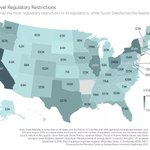


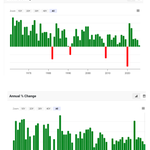




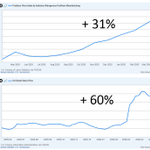
If true, these numbers are more than concerning; especially if we have some sort of major crisis in the U.S.


John Faig retweeted

🚨BREAKING: New quant trading framework in Python
30+ Metrics, backtesting + multi-strategy comparisons, +9 more (free)
Get it here:


John Faig retweeted

This is honestly shocking.
Three months ago, Hong Wang was awarded the Fields Medal for resolving the Kakeya conjecture in three dimensions.
Today, OpenAI released a proposed proof of the conjecture in ALL dimensions.
And that’s not all. It also announced a proposed existence proof for quantum chromodynamics and a proposed refutation of the Exponential Time Hypothesis.
Experts say that, if confirmed, these would be Nobel prize and Turing award level discoveries respectively.
A journalist just asked me: “What remains for humans to do?”
I think it’s becoming increasingly clear that more and more problem solving will be automated.
But humans will remain crucial in determining the direction of discovery. Deciding which problems are worth solving.
Because the value of a discovery depends on our needs, our priorities and the kind of world we want to build.
There will be a shift from problem solving to problem setting.
I also think there will be huge individual differences.
People with strong critical thinking skills, creativity and imagination will be supercharged by AI.
People without those skills risk surrendering to it.
I’m particularly concerned for children, who may never develop these skills.
I think epistemic literacy - how to distinguish information from knowledge - is the single most important skill we should be teaching.


Maybe it is time for free market schools ...

"during the last school year, a council of educators at both Palo Alto high schools rejected the [advanced math] course, arguing it would serve few students and set back equity and students’ well-being"
Right, math is harmful. Come on! What are we doing?
“If teaching math can harm students, then we have a lot bigger issues to talk about than whether to offer this course,” Nguyen told the Chronicle.
Indeed.
Brian Conrad, a Stanford mathematician, told the Chronicle that he felt math was treated as a “punching bag” for equity and mental health concerns.
“The school doesn’t cut sports teams simply because some kids are far more talented at sports,” he said.
“Why is it that the teaching of math generates much more controversy than other subjects?”
sfchronicle.com/bayarea/arti…

John Faig retweeted

"We estimate that Mr Trump’s policies will cost the poorest tenth of American households, with average income after taxes and transfers of around $37,000, almost 3% of their income. The richest tenth, with average after-tax incomes of nearly $500,000, will gain nearly 3% (see chart 1). Households in the middle, with average income of roughly $100,000, lose more than $400"

John Faig retweeted

Finland just pushed electricity through open air. No cable. First ever nation to achieve this.
Researchers at the University of Helsinki and the University of Oulu fired high-intensity ultrasonic waves to carve an invisible channel through the air, then guided a spark down it.
Lasers handle the rest. Power-by-light beams energy to receivers where you really don't want a conductor: nuclear plants, high-voltage stations.
Radio-frequency harvesting pulls microwatts from ambient waves, enough to retire millions of disposable sensor batteries.

John Faig retweeted

The “Coddling of the American Mind” expanded beyond campus free speech into parenting behaviors and social media? Its influence on modern discourse is undeniable. But did it distract us from the real causes of youth distress? I discuss the weak science of the Coddling parenting hypothesis today.
Link to follow

John Faig retweeted

Notice they used logarithmic scales
They might have been scared to show linear ones


John Faig retweeted

Michael Pershan argues American teachers mostly still use traditional direct instruction, despite talk about progressive "inquiry" methods. Teachers often add explanations/drills to inquiry curricula, reverting to old habits. He says the issue isn't ideology—it's that effective, research-backed direct instruction is hard to execute well, so teachers default to easier, mediocre versions instead. pershmail.substack.com/p/dir…

I'm not sure incomes kept pace. It was much easier to afford a 7% mortgaga when the house $240K versus $400K these days.

Yes. Housing will be cheaper in 5 years, and here's why:
• Inventory is already at the highest level in over a decade. Existing-home supply hit 4.9 months in August, the highest reading since 2015, and 18 states have now pushed active listings past their pre-2020 baseline.
• Builders are discounting like crazy to compete. They're panicking. They are sitting on a huge backlog of completed, unsold homes and are already cutting prices and offering rate buydowns to move them.
• The boomer sell-off is just getting started, and will only accelerate. ~13.9 million homes held by boomers and the Silent Generation are projected to hit the market over the next decade, a 74% jump in turnover versus the prior decade.
• Rates aren’t “high,” they’re normal-low-ish. The 30-year average has run around 7.5% since records began in 1971. Today’s rate near 7% isn’t a problem, it’s a return to the historical mean after a 15-year anomaly (which caused tons of problems).
• And if rates do fall, it will be counterproductive: a significant rate drop will stabilize or lift prices, not help with "affordability".
• STRs and second homes are coming back into the market, too.
• The “shortage” narrative is industry-sponsored BS, and national data is heavily skewed by a few coastal metros that have unique issues (SF, NYC, Boston, LA).
Overall: supply keeps climbing, rates probably won't change much, and the people telling us otherwise have a direct financial stake in us believing the opposite. At the VERY LEAST we're entering a multi-year period of weaker price appreciation / declines in the majority of regions.
Follow the data, not the PR.
John Faig retweeted
Average US family health insurance premium...
1999: $6k
2002: $8k
2005: $11k
2008: $13k
2011: $15k
2014: $17k
2017: $19k
2020: $21k
2023: $24k
2026: $28k
That's a 387% increase since 1999 (6.0% per year).
(Note: US CPI inflation has increased 2.6%/year)

John Faig retweeted

So this cop was verbally talking to this guy, and the guy was very respectful. He was just protesting the ticket to the cop.
So the cop gets mad and body slams this guy and kills him. He’s dead now.
This elderly 70-year-old man is dead
All because he protested getting a ticket because he felt like he shouldn’t have got a ticket
And the cop couldn’t let it go
So he body slammed him, and the man ended up dying from his injuries
I don’t think a man would do this. I don’t think this cop is a man.
Only a punk thug would do something like this to an elderly old, frail, weak old man🇺🇸


John Faig retweeted

When first reported, 2025’s jobs reports added up to 1.2 million new jobs.
After revisions, the economy added just 116,000 — 90% less.

John Faig retweeted

🚩 When Polymarket or Kalshi says there's a 70% chance something will happen, should we believe it?
Excited to share our new paper, just published in PNAS, in which we examined more than ONE MILLION forecasts from Polymarket, Kalshi, Manifold, and Metaculus, spanning 12 domains and forecasting horizons ranging from hours to years.
The main finding is striking: Prediction markets and collective forecasting platforms are remarkably well calibrated. When they assign events a 70% probability, those events really do happen about 70% of the time. And this pattern holds surprisingly well across different platforms, domains, and forecasting horizons.
But there's an important twist. When we looked more closely, we discovered systematic biases in some of the domains where forecasting matters most (wars, elections).
For decades, psychologists have documented how poorly humans often reason about probability and uncertainty. Our findings offer an encouraging counterpoint: When judgments and information are aggregated, we can achieve a surprisingly accurate understanding of an uncertain future.
That doesn't mean we can predict what will happen next with certainty. But it does mean that we can be remarkably good at estimating how uncertain the future really is.
This work was a great collaboration. The data for this project was meticulously collected for years by Justin Dickerson, the project was led by Hilla Shinitzky and Maayan Peer, with @mattansb leading the analyses.
📄 Read the paper:
pnas.org/doi/10.1073/pnas.26…
#Forecasting #Polymarket #Kalshi #DecisionScience #PNAS


