
Happiest when innovating and asking why? Tweeting things of interest.
Washington DC
Joined November 2007
- Tweets26.8K
- Following5.2K
- Followers4.1K
- Likes14







John Faig retweeted

OpenBB: A free alternative to the $20,000 Bloomberg Terminal
Available 100% free on GitHub:

John Faig retweeted
🚨BREAKING: New quant trading framework in Python
30+ Metrics, backtesting + multi-strategy comparisons, +9 more (free)
Get it here:

John Faig retweeted

This is honestly shocking.
Three months ago, Hong Wang was awarded the Fields Medal for resolving the Kakeya conjecture in three dimensions.
Today, OpenAI released a proposed proof of the conjecture in ALL dimensions.
And that’s not all. It also announced a proposed existence proof for quantum chromodynamics and a proposed refutation of the Exponential Time Hypothesis.
Experts say that, if confirmed, these would be Nobel prize and Turing award level discoveries respectively.
A journalist just asked me: “What remains for humans to do?”
I think it’s becoming increasingly clear that more and more problem solving will be automated.
But humans will remain crucial in determining the direction of discovery. Deciding which problems are worth solving.
Because the value of a discovery depends on our needs, our priorities and the kind of world we want to build.
There will be a shift from problem solving to problem setting.
I also think there will be huge individual differences.
People with strong critical thinking skills, creativity and imagination will be supercharged by AI.
People without those skills risk surrendering to it.
I’m particularly concerned for children, who may never develop these skills.
I think epistemic literacy - how to distinguish information from knowledge - is the single most important skill we should be teaching.


John Faig retweeted

"We estimate that Mr Trump’s policies will cost the poorest tenth of American households, with average income after taxes and transfers of around $37,000, almost 3% of their income. The richest tenth, with average after-tax incomes of nearly $500,000, will gain nearly 3% (see chart 1). Households in the middle, with average income of roughly $100,000, lose more than $400"

John Faig retweeted

Finland just pushed electricity through open air. No cable. First ever nation to achieve this.
Researchers at the University of Helsinki and the University of Oulu fired high-intensity ultrasonic waves to carve an invisible channel through the air, then guided a spark down it.
Lasers handle the rest. Power-by-light beams energy to receivers where you really don't want a conductor: nuclear plants, high-voltage stations.
Radio-frequency harvesting pulls microwatts from ambient waves, enough to retire millions of disposable sensor batteries.

John Faig retweeted

The “Coddling of the American Mind” expanded beyond campus free speech into parenting behaviors and social media? Its influence on modern discourse is undeniable. But did it distract us from the real causes of youth distress? I discuss the weak science of the Coddling parenting hypothesis today.
Link to follow

John Faig retweeted

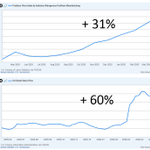
Notice they used logarithmic scales
They might have been scared to show linear ones


John Faig retweeted

Michael Pershan argues American teachers mostly still use traditional direct instruction, despite talk about progressive "inquiry" methods. Teachers often add explanations/drills to inquiry curricula, reverting to old habits. He says the issue isn't ideology—it's that effective, research-backed direct instruction is hard to execute well, so teachers default to easier, mediocre versions instead. pershmail.substack.com/p/dir…

John Faig retweeted

Average US family health insurance premium...
1999: $6k
2002: $8k
2005: $11k
2008: $13k
2011: $15k
2014: $17k
2017: $19k
2020: $21k
2023: $24k
2026: $28k
That's a 387% increase since 1999 (6.0% per year).
(Note: US CPI inflation has increased 2.6%/year)

John Faig retweeted

So this cop was verbally talking to this guy, and the guy was very respectful. He was just protesting the ticket to the cop.
So the cop gets mad and body slams this guy and kills him. He’s dead now.
This elderly 70-year-old man is dead
All because he protested getting a ticket because he felt like he shouldn’t have got a ticket
And the cop couldn’t let it go
So he body slammed him, and the man ended up dying from his injuries
I don’t think a man would do this. I don’t think this cop is a man.
Only a punk thug would do something like this to an elderly old, frail, weak old man🇺🇸

John Faig retweeted

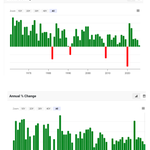
When first reported, 2025’s jobs reports added up to 1.2 million new jobs.
After revisions, the economy added just 116,000 — 90% less.

John Faig retweeted

🚩 When Polymarket or Kalshi says there's a 70% chance something will happen, should we believe it?
Excited to share our new paper, just published in PNAS, in which we examined more than ONE MILLION forecasts from Polymarket, Kalshi, Manifold, and Metaculus, spanning 12 domains and forecasting horizons ranging from hours to years.
The main finding is striking: Prediction markets and collective forecasting platforms are remarkably well calibrated. When they assign events a 70% probability, those events really do happen about 70% of the time. And this pattern holds surprisingly well across different platforms, domains, and forecasting horizons.
But there's an important twist. When we looked more closely, we discovered systematic biases in some of the domains where forecasting matters most (wars, elections).
For decades, psychologists have documented how poorly humans often reason about probability and uncertainty. Our findings offer an encouraging counterpoint: When judgments and information are aggregated, we can achieve a surprisingly accurate understanding of an uncertain future.
That doesn't mean we can predict what will happen next with certainty. But it does mean that we can be remarkably good at estimating how uncertain the future really is.
This work was a great collaboration. The data for this project was meticulously collected for years by Justin Dickerson, the project was led by Hilla Shinitzky and Maayan Peer, with @mattansb leading the analyses.
📄 Read the paper:
pnas.org/doi/10.1073/pnas.26…
#Forecasting #Polymarket #Kalshi #DecisionScience #PNAS


John Faig retweeted

MIT announces the MIT for America initiative. The effort aims to help U.S. learners from kindergarten to community college, with an emphasis on math, making, and the constructive use of AI. news.mit.edu/2026/mit-americ…

John Faig retweeted

Memo to the Trump administration: Stop buying companies.
A government $40 trillion in debt should be SELLING assets, not buying ownership stakes in 36 companies.
We thought government control of the means of production was what we were fighting against.

John Faig retweeted

Measured in gold, prices for new houses in the US are approaching all-time lows...
In other words, while housing prices remain unaffordable for most Americans in dollar terms, they're becoming incredibly cheap when measured in real money... Gold.
That's what happens when you measure the value of assets in a currency that's being debased.
The houses aren't necessarily getting cheaper... The dollar is losing purchasing power against gold.
And this is just the beginning.
We don't own enough gold for what's coming.

John Faig retweeted

The #Commanders penultimate offenisve play
Situation: 0:21 remaining, clock is stopped, 2nd & 10 at the SF 28
4 verticals here is ludicrous, especially with three of them being in effectively the same alley on the field
Nothing going toward the sideline, and nothing working over the middle intermediate area — obviously that wouldn't be the optimal part of the field to target because of the clock, but you could still get a 10-15-yard completion, clock it, and have 7-8 seconds on the clock
I want to say that Antonio Williams is looking to get on the backside of the play behind the corner after Dyami drags the safety away, but the angle isn't right and he isn't exactly busting a gut to get there. Seems more so like he was just running out of field and was looking for space, but the ball had already been forced out of Jayden's hands
Really bad by Blough in another big moment
#RaiseHail