

Independent AI research on agent reliability, evals, memory, and systems. Read more ↓
Joined December 2025
- Tweets3.9K
- Following58
- Followers585
- Likes11K





Pinned Tweet
OptiQ Cloud launched today: open models for coding agents, paid per token, no subscription. OpenAI-compatible API with 1M context on every model.
GLM 5.3 Flash is $0.15 input / $0.03 cached / $0.50 output per million tokens. DeepSeek V4.1 Flash is $0.10 / $0.03 / $0.50, and GLM 5.3 is $1.40 / $0.26 / $4.40 for the hardest tasks. All served at full precision, fp8 or bf16, and requests are never used for training.
$2 free credit on sign-up, no card needed.
Codex on DeepSeek V4.1 Flash via OptiQ Cloud:
optiq run codex --cloud deepseek-v4.1-flash
The test wanted 2.025 to round to 2.03. The rounding mode was imported but never passed, so Python used banker's rounding. Codex changed one line; tests pass.
mlx-optiq.com/cloud
MiniMax M3.1 Flash is now on OptiQ Cloud: $0.15 input, $0.60 output per million tokens, 1M token context. It reads images and video, so it suits screenshot-driven and long-context agent work.
optiq run <agent> --cloud minimax-m3.1-flash
mlx-optiq.com/models/minimax…

And thus r/opensource joins r/LocalLLaMA (another subreddit that has become hostile due to new set of moderators takeing over recently) such weird take on use of AI ...


OptiQ Code runs on Linux and Windows via WSL. Connect to OptiQ Cloud by setting three environment variables: OPTIQ_CODE_BASE_URL, OPTIQ_CODE_API_KEY from the dashboard, and OPTIQ_CODE_MODEL like glm-5.3-flash. Then run optiq code.
Boost and optiq run --cloud need a Mac. Native Windows isn't supported. Start with $2 free credit, no card needed.
mlx-optiq.com/cloud

Completely agree, case in point is optiq code the best coding agent for local model - mlx-optiq.com/code


Agree but it is important to that not all providers are equal. Many claim to serve full precision but if you benchmark you will see differences. Optiq cloud mlx-optiq.pages.dev/cloud offers full precision open models at decent prices xitter.cf/latent_node/status/211…


There is an absolute barrage of inference providers popping up that get to $1M/mo extremely quickly.
This is the rough economics of inference providers:
Even if you rent on-demand B300s at $8/GPU-hr, many open source models (GLM 5.3, Kimi K3, DeepSeek 4.1 Flash / Pro) can get you >$10-20/GPU-hr at reasonable throughputs (100tok/s). DeepInfer from DeepSeek directly shows they can get $38/GPU-hr on off-peak hours. Every chip / model has a different throughput / interactivity curve, but there is a lot of arbitrage between even high rental spot prices and token prices. New chips (Vera Rubins) also change this meaningfully. Your ability to be making gross margin relies on your utilization and how good your stack is.
Gateways like OpenRouter, Vercel and more help solve that problem by aggregating demand to you. May inference providers discount their tokens to get longer term commits too. I've even heard stories of selling back Chinese model tokens to Chinese labs!
One thorn in the economics of these players is that many Chinese open source model labs are now asking for rev share if you're at a certain scale, espp for pre-release access to their models for day 1 support. That further pushes the threshold to be in the money.
The barrier to entry seems low and falling. There are even stories of smaller ones who can "vibe code" a way to stand up OSS models on a cluster they rent. And as a result, we're seeing 10s of such companies pop up almost every week and immediately skyrocketing revenue at low-ish gross margin and raising rounds on the back of that.
Unsurprisingly, because the actual service provided seems commodity, this eventually drives up compute prices and drives down token prices. In theory, it would seem like neoclouds who have the lowest cost of compute and themselves have started inference businesses would win the race to the bottom (Crusoe Coreweave Nebius and GMI all have inference businesses), with larger players (Modal Fireworks Baseten) being second because they are well capitalized to make bigger compute commits cheaply and have demand (high utilization), but the reality is the pie is growing so quickly that even upstarts are absolutely crushing it and growing aggressively (inference dot net, DeepInfra, Wafer, Relace, Morph).
Strategies vary across the board: neoclouds want to serve inference, inference players want to be neoclouds and do higher margin reserved instances / post training, and some want to go heterogeneous hardware or creatively flexible compute constructs.
The risks are: do open source models continue to be competitive? Will their creators rent seek more? Will their shape change compute needs? How do different chips change economics? Who gets compute in a supply crunch?
Below is a aggressive sketch of how gross margin scales with utilization for various models / chip sets.
For now, there are many inference providers and they’re all ripping!

mlx-optiq 0.7.7 adds a sandbox for the OptiQ Code agent. It wraps the shell and test commands. Off by default; enable with /sandbox, optiq code --sandbox, or "sandbox": true in config.
On macOS it uses Seatbelt (sandbox-exec). On Linux it uses bubblewrap. No Docker, no virtual machines. Starts in milliseconds. No Windows support.
When on, the agent writes only to the repo, temp and package caches. Credential files in ~/.ssh, ~/.aws, ~/.kube, and similar are unreadable. API keys and tokens are stripped from the environment. Shell startup files and .git/hooks are read-only.
Network traffic goes through a local allowlist: PyPI, npm, crates.io, Go proxy, GitHub, GitLab, and Hugging Face are allowed. Anything else is blocked and the terminal asks you.
Tested on 12 real agent tasks: 9 normal tasks passed with it on and off. 3 malicious-style tasks were blocked.
Limitations: it is not a VM. An allowed host is reachable for anything.
mlx-optiq.com/docs/code/sand…
Apple’s papers are always so contrarian, last year they had a paper on how CoT based thinking tokens don’t really help LLMs reason. And now when everyone is talking about how RSI harnesses can help they have this -

arxiv.org/abs/2609.40303
Summary :
🚨 Do AI agents really need complex harnesses?
A new study on autonomous ML engineering agents finds that, under equal time budgets and using the same frontier LLM, sophisticated open-source harnesses offer no advantage over a simple coding agent with read, write, and bash access.
The takeaway: The model may matter more than the machinery around it.
Multi-agent orchestration, retrieval subagents, and elaborate workflows may add complexity without improving performance on current ML engineering benchmarks.

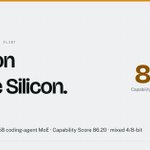
Recursive's Flint now runs on a Mac through MLX. It's a 40B MoE with about 2.5B active per token, built for coding agents.
The OptiQ 4-bit is 25.6 GB, down from about 80 GB in bf16. Stock mlx-lm has no Flint class yet, so mlx-optiq 0.7.2+ ships the architecture port.
Capability Score 86.20 in reasoning mode (HumanEval 89.0, BFCL 87.0, IFEval 90.2). Built and scored on a 36 GB Mac; 48 GB or more is comfortable.
mlx-optiq.com/docs/flint

mlx-optiq 0.7.4 is out, and OptiQ Code now reads Agent Skills.
A skill is a folder with a SKILL.md, in .agents/skills or .claude/skills, in the project or your home directory. Skills you already set up for Claude Code or Codex work unchanged.
The agent loads one when the task matches. /<name> runs it directly, and /skills lists what it found. Only the descriptions go into the prompt up front, so a local model's context isn't spent on skills the task doesn't need.
Also in 0.7.4: optiq serve honours reasoning_effort, reasoning.effort and thinking.type, so "none" really turns thinking off.
mlx-optiq.com/docs/code/skil…

NVIDIA's Nemotron 3.5 Bolt E4B (8B params, 4B effective, text and image, 65K context) now runs on Apple Silicon Macs in OptiQ. The 4-bit quant is 7.5 GB on disk, down from 16 GB.
On a 24 GB M4 Mac mini, plain decoding is about 26.5 tok/s. With Google's Gemma-4 E4B assistant drafter (optiq serve --drafter), code, math and file edits run at 58 to 63 tok/s, prose at 45.
mlx-optiq.com

The model name alone doesn't say how a provider serves it, which is why an index like this is useful.
OptiQ Cloud serves open models for coding agents at full precision, fp8 or bf16, and never trains on requests. $2 free credit, no card needed.
mlx-optiq.com/cloud

rerunning one stage of a curation run instead of the whole chain is the part that matters. datainventor's curate mode works that way for people on their own hardware: clean, dedup, decontaminate, grade, mix to a token budget. preview on a sample in the browser, then run the exported recipe with a resumable cli.

On Tuesday 10/23 I’ll demo the @datologyai Curation Studio and walk through what it takes to make that work: how do you configure a frontier data curation product, how do data pipelines scale across CPU and GPU compute, and how teams can change one piece of a run and rerun it without reprocessing everything!
Demo + Q&A with @arimorcos @lukemerrick_ @josh_wills, 10am PT: events.datologyai.com/curati…

On a Mac it works from the agent you already use:
pip install -U mlx-optiq
optiq cloud login
optiq run claude --cloud glm-5.3-flash
Codex, OpenCode, Mistral Vibe, Hermes Agent and OpenClaw work the same way, tested with GLM 5.3 Flash and DeepSeek V4.1 Flash. In OptiQ Code, /boost hands a hard task to the cloud model with your local model as its helper.

On Linux, or Windows via WSL, point OptiQ Code at it with a key from the dashboard:
export OPTIQ_CODE_BASE_URL=cloud.mlx-optiq.com/api/v1
export OPTIQ_CODE_API_KEY=<your key>
export OPTIQ_CODE_MODEL=glm-5.3-flash
optiq code
Top up any amount from $10; credit lasts 12 months.
mlx-optiq.com/cloud


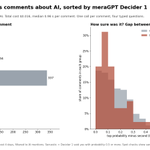
mammoth-1 and elephant-1 on typed-decisions (HF decision benchmark, zero-shot): mammoth-1 ties meraGPT Decider 1 at 0.768 accuracy, elephant-1 gets 0.748. Decider 1 sits closest to the gold distribution: KL 0.096 vs 0.122 and 0.134, Brier 0.052 vs 0.063 and 0.069.


Today we release mammoth-1 and elephant-1!
We post-trained mammoth-1, the #1 ranked best decision model in the world, and elephant-1, which is the best model under 15B (and beats Jev).
We're open-sourcing all model weights and provide a technical report detailing all our training and data methods.

Better interview: hand them a small repo with a bug and an AI agent, then watch how they review and correct what the agent writes. That tests fundamentals and AI fluency at once, which is actually the job now.
Latent Node retweeted

OptiQ Code on a Mac reuses 95% of its prompt cache in agent runs. Cache hits skip re-reading the conversation, so turns start fast and cost nothing extra locally. Paired with OptiQ Cloud, the local model handles most turns and the cloud takes the hard ones.


Sage-A1.5-OptiQ-4bit now runs on Apple Silicon. One 22 GB checkpoint, mixed precision (394 tensors at 8-bit, rest 4-bit), vision tower kept in bf16. Also loads in stock mlx-lm. Includes the generation config upstream ships without.
huggingface.co/mlx-community…
