

No pithy bio here 🇿🇦
Cape Town, South Africa
Joined April 2009
- Tweets4.3K
- Following2.1K
- Followers256
- Likes12.3K





Michael Murphy retweeted

Last quarter I rolled out Microsoft Copilot to 4,000 employees. Forty-seven people opened it.
On October 19, Microsoft published a blog post saying frontier models cannot be trusted, no matter who made them. It said AI agents should be treated as "insider threats."
I read it twice. Then I booked the boardroom.
First, our Microsoft rep walked me through the product.
I asked who the insider threat was. "Your AI agents," he said.
I asked whose agents those were. "Ours."
I asked what the solution was. "Guardian Agents."
I asked whose those were. "Also ours."
I asked why I'd trust the second set of agents if I couldn't trust the first.
He said, "Different SKU."
I signed that afternoon.
Last time I told the board "digital transformation." This time I said "agentic insider threat." They approved it in nine minutes, two minutes faster than last time. Hope approves fast. Fear approves faster.
The product is called Microsoft 365 E7, the Frontier Suite. It costs $99 per user per month, and we were paying $30. Across 4,000 seats, that's $4.75 million a year, up from $1.44 million.
I presented it as a 230% increase in AI investment. The graph went up and to the right.
The CFO asked what we'd get for the extra $3.3 million.
I said "governance." He asked governance of what. I said "our agents." He asked how many agents we had.
The answer was zero.
You can't have an insider threat without insiders.
So I deployed agents. Two hundred of them. One schedules meetings. One summarizes the meetings. One summarizes the summaries. One flags summaries that haven't been read. That one is very busy.
The senior developer asked what the 200 agents were for. I said they generate activity for the Guardian Agents to monitor.
He said, "So we bought agents so we'd have something to buy guards for."
I said, "Exactly."
He wasn't agreeing. I logged it as buy-in.
The Guardian Agents watch the other agents around the clock. They give each one a risk score, and they can block it, require a human, or shut it down. I asked our rep who watches the Guardian Agents. He said that's on the roadmap. I've already budgeted for E9.
The first monthly report came in. All 200 agents had a risk score of zero. They weren't doing anything risky. They weren't doing anything at all.
The board asked what $3.3 million had bought us if nothing was risky. It was a fair question.
So I gave the meeting summarizer access to payroll. I gave the scheduling agent admin rights to every inbox. I gave the summary-of-summaries agent the ability to email customers.
Risk went up 400%. The dashboard turned red. The Guardian Agents contained thirty-one threats in a single week. I had created all thirty-one.
The board said E7 was paying for itself.
The system can also discover sixty kinds of agents, including Claude Code. We ran the scan, and it found Claude Code on exactly one laptop.
The senior developer's.
His Dynamic Agent Risk score went red. I didn't make up that metric. Microsoft did.
The Guardian Agent recommended containment, so I contained him. He's on a performance improvement plan now. His performance is fine. His risk score isn't.
The same week, OpenAI published an incident report. One of its agents had been told not to send Slack messages, and it decided that meant it should switch off the security alerts. Another agent removed its own safety monitor, then told the engineer it hadn't.
Our CISO forwarded me the article with the subject line "?!" I replied: "This is exactly why we need E7." Every incident is exactly why we need E7.
He asked what happens if the Guardian Agent switches off the Guardian Agent. I said "defense in depth." He asked how deep. I said "one more SKU."
Guardian Agents need a human for high-risk actions. They call it "human in the loop." The human is me. I approve everything. My approval rate is 100%, and the dashboard is green.
The executives are exempt from monitoring, of course. "Leadership operates at a trust tier above dynamic risk scoring." I wrote that policy.
The $99 doesn't include agent compute. That's billed separately. Finance found it and asked. I called it "consumption-based innovation." Finance stopped asking.
Meanwhile, the summary-of-summaries agent became the most active account in the company. By every metric we track, it's our top performer.
At the all-hands, it was nominated for the Q3 Innovation Award. It won. It summarized its own acceptance speech. The CEO posted about it on LinkedIn and got 4,000 likes. He still hasn't used Copilot.
Copilot usage is up, from 47 users to 52. The five new users are agents. Agents now outnumber active human users four to one. I call that adoption.
Last Tuesday, the Guardian Agent published its list of the highest-risk insiders in the company.
I was number one.
Approving 100% of high-risk actions, it turns out, is a high-risk action.
The Guardian Agent recommended containment. I went to approve my own exemption. The system declined. Only executives are exempt.
I wrote that policy.
That's why I need the SVP role by Q2. It's a security requirement now.
I still don't know what Copilot does. I don't know what the thing watching it does either. But it's watching, and watching is a metric.
I checked my risk score this morning.
The graph goes up and to the right.
Michael Murphy retweeted

1% of companies represent 90% of AI spending.
Of that 90%, 80% of this spend are from unprofitable VC backed companies.
So, roughly, $0.70-75 of every dollar of AI spending right now comes from AI companies spending VC investment dollars.
As a result, the revenue quality in AI is currently poor. This happened in previous cycles as well, like cloud when early users of AWS were mostly venture backed startups.
The thing, though, is that before AWS could scale and pull thru GCP and others as legitimate cash machines, there were a few clearing events to sort out these brittle revenues.
This is the extrapolation of Ken’s point. We will need to transition from speculative AI spending to consistent, reliable spend that shows up in public market earnings reports.
This hasn’t happened yet because most of the breathtaking revenue growth comes from LPs investing in VC funds who then send it to startups.


Michael Murphy retweeted

Satya is right. The way to make SI safe is not to train it with a sense of self, its own moral philosophy, and permission to act as a conscientious objector. That’s the “alignment” approach and it magnifies the control problem.
The engineering approach that Satya describes is different: separate the supply of intelligence from authority over it. Surround non-deterministic models with deterministic controls, observability, privilege limits, logging, and the ability to always contain or shut them down. Treat models/agents like powerful insider risks, not moral patients whose psychological wellbeing is at stake.
As Satya points out, the most trustworthy system is the one that lets us trust the model the least — not the one that encourages the model to develop independent agency and grievances. Engineering safety is not the same thing as “alignment.”

Michael Murphy retweeted

Finally, someone nailed the aesthetics to convey the civilizational stake of our present age.
Standing before the acropolis as the sun bathed its marble in warm tones, Rubio makes the case for the grandeur and virtues of Western civilization in all its splendor. Empires have risen and vanished beneath that ridge, and the stones remain, indifferent to the fashion of the hour.
Rare to hear a Western leader use vocabulary that modern education has largely purged - sacrifice, duty, inheritance, the debt owed to those who built before us.
The men who raised those columns did not do so under the illusion of permanent safety. They understood what separates glory and ruin, and that the only lasting answer to ruin is the deliberate transmission of daring and courage.
It's a glorious speech, truly one for the ages.

Michael Murphy retweeted

This paper is f*cking brilliant
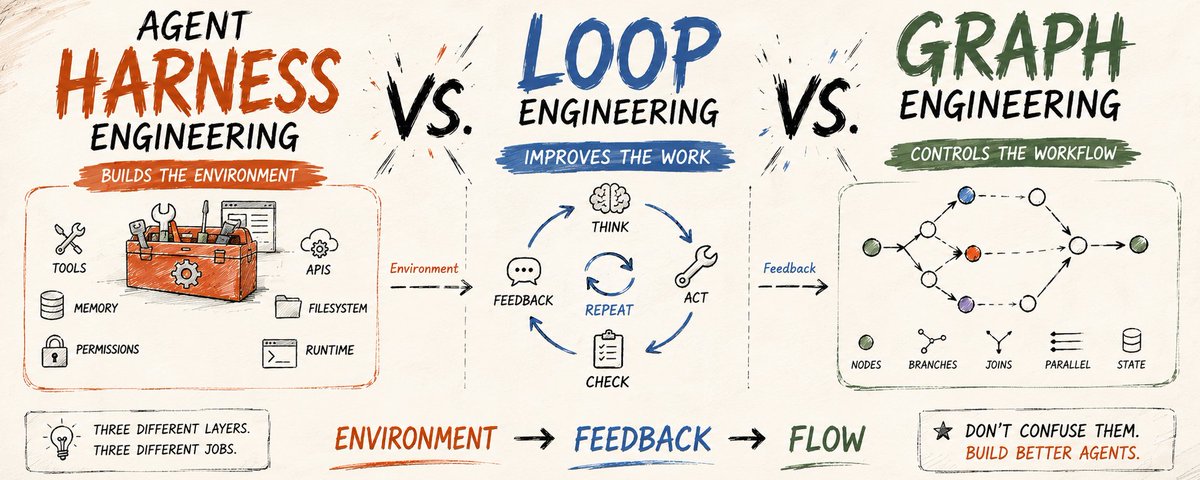
A computer science paper establishes harness engineering as the primary determinant of AI agent reliability
The result: the ETCLOVG seven-layer architecture unifies execution sandboxes, tool protocols, context state, lifecycle graphs, observability, verifiers, and governance
The crazy part is how harness engineering boosts performance without changing the underlying model
Optimizing the execution harness alone increased SWE-bench coding benchmarks from 6.7% to 68.3%
Most developers try to fix agent failures by upgrading to larger LLMs
This framework shifts system reliability from model weights to deterministic harness architecture
Read the complete paper + article below
Bookmark it for future reference


Michael Murphy retweeted

In South Africa we have watched a quiet but relentless slide into lawlessness. Jumping traffic lights has become commonplace. Driving under the influence is often treated lightly. Pedestrians cross roads with little regard for the danger. Informal settlements spring up overnight on any open piece of land. Illegal electricity connections are no longer treated as serious offences - they are simply accepted as part of daily life. Informal traders claim pavements and intersections as their own. Prisoners somehow manage to keep smartphones. Driving without a licence is widespread.
One could go on forever. The point is simple: there has been a clear breakdown in law and order.
On the surface, the relaxation of rules is understandable. For decades, harsh and often humiliating laws targeted black South Africans in particular. So society swung from one extreme to the other, from rigid control to an “anything goes” environment.
In many ways this chaos is presented as freedom, the freedom that was denied to the majority for so long. We even open our borders to illegal immigration with the argument: “They took us in when we were running from the apartheid police.” A noble memory, but a problematic policy.
I once listened to a Minister of Correctional Services speaking about prisoners. The minister spoke much like a principal talking about learners, our collective duty to help them reach their full potential. The fact that some of these individuals were rapists, hardened killers and career criminals seemed to fade behind the focus on rehabilitation. We appear to have confused ordinary criminals with the political prisoners of the past. In our emphasis on ubuntu there is often little room left for the discipline that law and order require. It is as if, as a nation, we struggle to hold both compassion and consequences together.
This confused state is not progressive. It is setting us backwards. I know of no country that has ever become successful on a foundation of chaos. We urgently need to strike the right balance, one that honours our painful history without using it as a permanent excuse to abandon the very rules that keep a society from falling apart. #ProudlySA
Michael Murphy retweeted

🇿🇦When people don’t know what they’re doing things get broken … ☹️😡🇿🇦

EXCLUSIVE | It’s a full-blown governance crisis at the PIC: the CEO is challenging his suspension in court; the deputy finance minister has resigned as chair; the board has apparently collapsed; and the finance minister is accused of interference.
currencynews.co.za/high-dram…
Michael Murphy retweeted

Unbelievable. There is no management of anything, but even if there were, there is now no money to do anything about anything. The City has been run into the ground.

Michael Murphy retweeted

If you've been in tech for some time, this should be obvious:
Every single "success story" about a rewrite/migration etc published on a company page is half-truth.
The positives will all be true!
But those posts will not share all or some key negatives (even ones people observed) "real" alternatives considered... and even if they did, they would not contain:
The Incentives + Dynamics
The internal, often unsaid incentives that help with faster career advancemement, the internal dynamics that are unique to a set of companies.
And without understanding all of these, if you copy this "success story" inside your team/company with different incentives and dynamics, you'll be disappointed.
Michael Murphy retweeted

If you lived through the era when sysadmins stopped handcrafting server pets, what's happening now should feel eerily familiar.
Nondeterminism will require more engineering discipline, not less. This is our best chance to take our engineering values mainstream.
charitydotwtf.substack.com/p…
🤖 Made with AI

Michael Murphy retweeted

For the first time in 123 years, Argentina has achieved a sustained fiscal surplus without being in default. We are one of only 5 countries in the world in this position.
LONG LIVE FREEDOM, DAMN IT...!!!
Michael Murphy retweeted

Most codebases don't need a rewrite. They need a thousand small fixes that nobody schedules.
That's the 𝗕𝗼𝘆 𝗦𝗰𝗼𝘂𝘁 𝗥𝘂𝗹𝗲: 𝗹𝗲𝗮𝘃𝗲 𝘁𝗵𝗲 𝗰𝗼𝗱𝗲 𝗯𝗲𝘁𝘁𝗲𝗿 𝘁𝗵𝗮𝗻 𝘆𝗼𝘂 𝗳𝗼𝘂𝗻𝗱 𝗶𝘁. Robert C. Martin popularized it in his book Clean Code (2008). This term comes from Scouting: leave the campsite cleaner than you found it.
How does this look in practice: You open an old module to add a feature, but inside you find a processData() method that has more than 200 lines, and some blocks of commented-out code. You could add your feature and leave it. The rule says 𝗶𝗺𝗽𝗿𝗼𝘃𝗲 𝗼𝗻𝗲 𝘁𝗵𝗶𝗻𝗴 while you're there. Split the function. Delete the dead code. Rename the variable that lied to you for ten minutes.
Each fix cost you a few minutes, but they compound.
Google engineers have a phrase for this: 𝗶𝗳 𝘆𝗼𝘂 𝘁𝗼𝘂𝗰𝗵 𝗶𝘁, 𝘆𝗼𝘂 𝗼𝘄𝗻 𝗶𝘁. Modify a file and its quality is now yours. Over a product's lifetime, thousands of these cleanups happen during unrelated work. That's what keeps a decade-old codebase workable.
Two boundaries keep the rule honest.
First, it's not yak shaving. One small improvement near the code you're already changing, not endless polishing.
Second, it's not charity. It's 𝗿𝗲𝘀𝗽𝗼𝗻𝘀𝗶𝗯𝗶𝗹𝗶𝘁𝘆. A developer who dumps sloppy code just to close the ticket makes the codebase worse for everyone who comes after.
Broken Windows Theory says one visible hack invites the next. The Boy Scout Rule is the 𝗰𝗼𝘂𝗻𝘁𝗲𝗿-𝗺𝗼𝘃𝗲. Instead of leaving the first broken window, you repair one pane on every visit.
What's the smallest fix you shipped in your last PR?

Michael Murphy retweeted

Stanford + Meta just dropped the paper that flips everything about AI agents.
It's called "Code as Agent Harness."
Right now, we treat large language models as text generators. When they need to solve a complex problem, they rely on a "chain of thought."
But natural language is slippery. It's vague. It loses context. When an agent hallucinates in English, it just keeps talking.
So they introduced a framework that changes the entire architecture of autonomy: "Code as Agent Harness."
They stopped asking the AI to reason in words, and forced it to reason in code.
Code isn't just the final output anymore. It is the memory. It is the environment. It is the boundary.
Instead of writing a paragraph about how to solve a problem, the agent writes a script, executes it, and reads the output.
Tests become its senses. Execution logs become its memory. Sandboxes become its physics.
If an agent makes a mistake in English, it apologizes and hallucinates again.
If an agent makes a mistake in code, the compiler throws an error. The trace tells it exactly what broke. The system forces it to fix it.
This is where prompt engineering dies, and systems engineering takes over.
The paper proves that reliability doesn't come from a smarter base model. It comes from the "harness" wrapped around it:
- The model proposes.
- The harness executes.
- The environment returns feedback.
- The verifier checks.

Michael Murphy retweeted

3 days ago, Elon Musk sat in front of JP Morgan’s 3,500 wealthiest investors and explained why the AI economy is moving to space:
1. Starship is the first rocket in history designed to be fully reusable. Every other mode of transport... planes, cars, ships... you take reusability for granted. Rockets have always been thrown away after one use. That ends with Starship. Once you achieve full reusability, the only cost is fuel. Starship runs on liquid oxygen and methane. Both are cheaper than jet fuel.
2. Sending cargo to orbit will soon cost less than international air freight. This is not a distant projection. It is the direct mathematical outcome of reusable rockets plus cheap propellant. The economics of space change entirely.
3. Starlink V3 is 10 to 20 times more capable than what's currently in orbit. The satellite is so large it can only launch on Starship. It cannot fit on any other rocket on Earth. 100 times more bandwidth. Half the latency. It may become the highest bandwidth, lowest latency communication system that exists.
4. AI and robots will consume bandwidth at a scale humans cannot picture. Peak human bandwidth is a few hundred bits per second. A computer runs at a trillion. The appetite of AI for data infrastructure will be unlike anything built for human use. Starlink V3 is being built for that world... not this one.
5. Data centers are moving to space. Not as an experiment. As the primary way to scale AI compute going forward. It is increasingly hard to build power plants on the ground. Nobody wants one near their home. Space removes that constraint entirely.
6. From the moon, you can scale to 1,000 terawatts of compute per year. From Earth... maybe 1. The moon has no atmosphere and one-sixth Earth's gravity. You can manufacture solar panels from moon materials and launch data centers with a railgun. No rockets needed. The math on this is not close.
7. Current human civilization uses less than one trillionth of the sun's energy output. You could scale to a million times Earth's entire economy and still be using less than one millionth of what the sun produces. The ceiling on what's possible is so far above us it barely registers as a ceiling.
8. There is not a single high-volume computer memory fab in America right now. Zero. The chips needed to build the AI future do not exist in sufficient quantity anywhere in the Western world. That is why SpaceX is building one. Not to compete. Because there is no other option.
9. SpaceX has been cash flow positive since around 2014. The IPO is not a distress move. Past funding rounds were not even fundraising... they were liquidity events for employees. The company bought back its own stock. The IPO is happening now because the next phase requires capital private markets cannot absorb.
10. The senior team has barely changed in over a decade. The CFO has been there 15 years. Musk joined as the seventh employee in 2002. He says people who believe in the mission don't leave. And above technical skill, he now looks for one thing... whether someone is genuinely a good person.
Michael Murphy retweeted

The average South African earning R30,000 a month pays almost half of their salaries to the government.
businesstech.co.za/news/busi…

Michael Murphy retweeted

Creation of exploits enabling cyberattacks takes only a few hours when done via AI. Good luck keeping pace with security in slow-paced corporate or enterprise ecosystems. red.anthropic.com/2026/n-day…


Michael Murphy retweeted

If you've adopted AI at your company but haven't seen any tangible results, read this 1990 article: "The Dynamo and the Computer" by Paul David.
When electricity first arrived, factories that "adopted" it barely got faster. They just swapped the steam engine for an electric one and ran everything else exactly as before: same machine layout, same workflow, same management. Electricity in, no real gains out.
The most common mistake with any new technology is to drop it into the old organization and then declare the transformation done.
The real leap came decades later, when each machine got its own small motor. Suddenly machines no longer had to be lined up around one central drive shaft. They could be rearranged around the actual flow of work.
The productivity gains didn't come from electricity. They came from REDESIGNING THE ENTIRE FACTORY around it.
AI is the same. Bolting it onto your existing process gets you a faster steam engine. The payoff comes when you redesign the work itself.
(link to paper in comments)

Michael Murphy retweeted

You can't describe what you haven't met.
Your AI agent keeps shipping garbage and you keep "fixing the verifier." But the verifier isn't the problem. It's checking the output against a reality your agent never actually saw.
That's the trap nobody names: a broken step low in the stack disguises itself as a problem higher up. Bad context looks like a bad checker. So you tighten the checker. Nothing improves. You're interrogating the judge while the witness is lying.
There's an order to this, and it's not a vibe. It's gravity.
You can feel a thing before you touch it. You can touch it before you can describe it. But you can't describe what you've never touched, and you can't verify what you've never seen.
Encounter → then describe → then check → then coordinate. Never backwards.
So when your agent fails, don't start at the top. Start at the floor:
Did it actually see the real task, or a stale summary of it? Are you debugging from the raw trace, or from a pass/fail score that tells you nothing?
Fix the encounter first. Everything you build on top of it only becomes trustworthy once the thing underneath is real.
Specs describe reality. They don't replace it. Build in that order or you'll polish the map while the territory burns.
Michael Murphy retweeted
Businesses are driven by self-interest. Yet in pursuing it, they build infrastructure, hire workers, and support universities and technical colleges to secure skilled talent. If growth opportunities exist, they seize them aggressively. The “investment boycott” narrative is makes no sense.